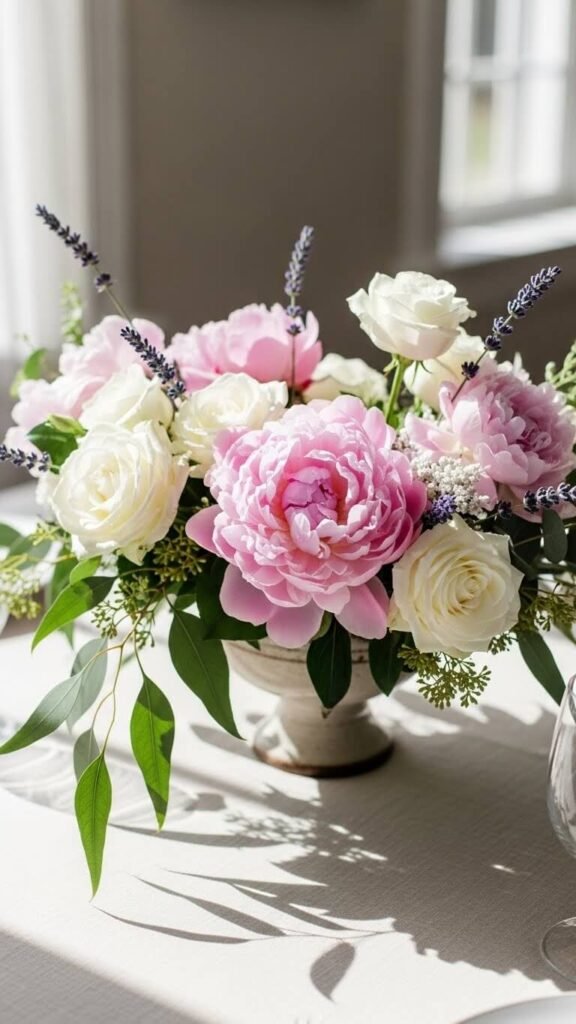
Spring tables deserve more than basic bouquets. The right centerpiece transforms ordinary meals into memorable gatherings, whether you’re hosting brunch or celebrating a milestone. You don’t need a florist’s budget to create magazine-worthy arrangements. With seasonal blooms, creative containers, and simple techniques, you can design centerpieces that capture spring’s beauty. These 25 ideas range from elegant classics to playful modern styles, each adaptable to your space and budget. Most use grocery store flowers, thrifted vases, and materials you already own. Let’s explore arrangements that bring the garden indoors.
Mason Jar Meadow Mix
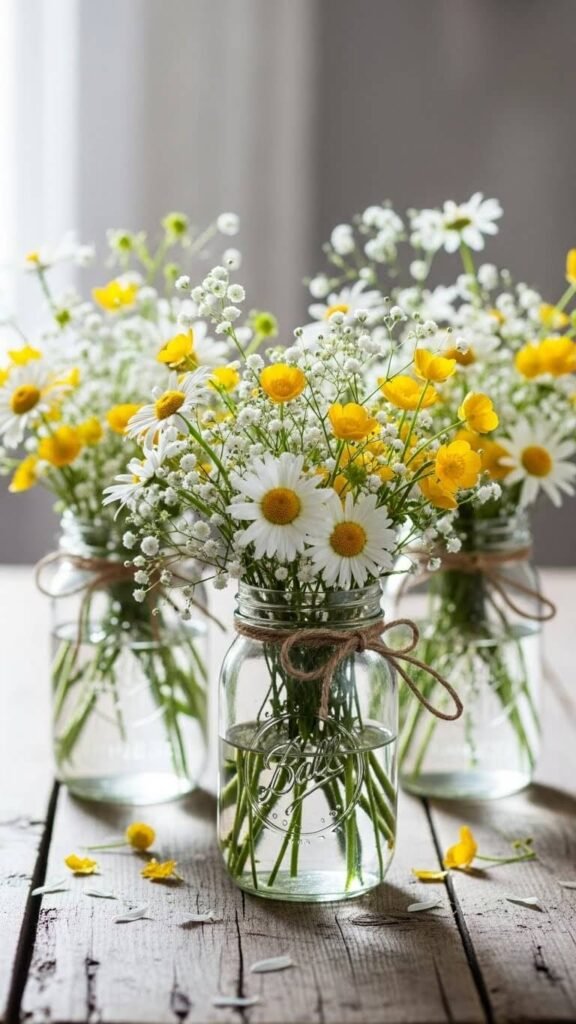
Collect three or four mason jars from your pantry. Fill each with different heights of wildflowers like daisies, Queen Anne’s lace, or cosmos. Group them down the table’s center. This works perfectly for casual dinners or backyard gatherings.
Buy a $6 mixed bouquet from the grocery store. Separate stems by type. The varying heights create visual interest without blocking conversation. Wrap jars with twine or ribbon for extra texture. Change water every two days to keep blooms perky. This approach costs under $10 and takes 15 minutes to arrange.
Floating Tulip Bowl
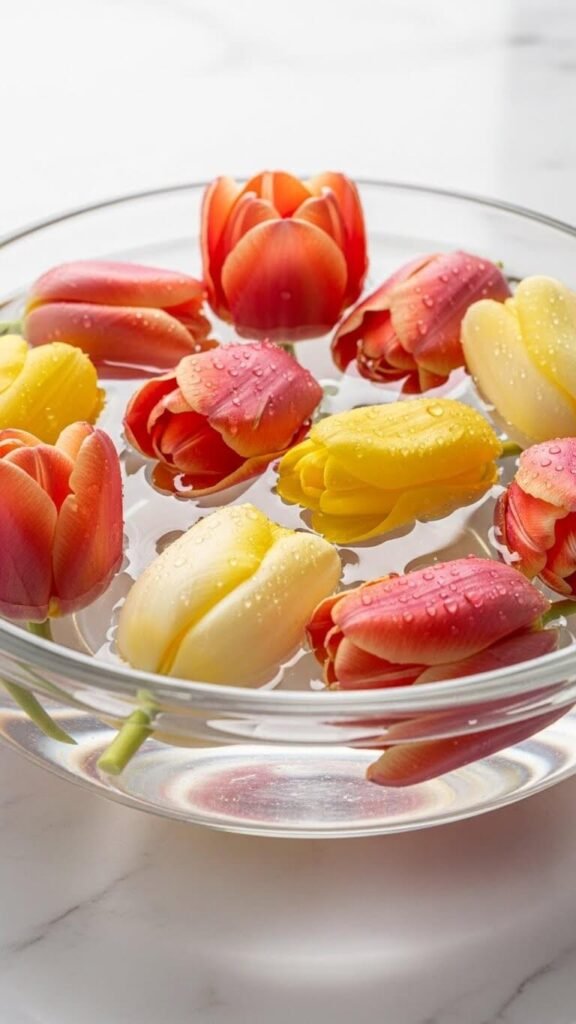
Find a wide, shallow bowl in your kitchen. Fill it halfway with water. Cut tulip heads short, leaving about an inch of stem. Float them face-up in the water. The blooms stay hydrated while creating a modern, minimalist look.
This technique uses flowers that might be wilting in a traditional vase. Tulips from the grocery store work perfectly—buy a $8 bunch and get 8-12 floating blooms. Add floating candles between flowers for evening ambiance. The arrangement lasts 3-4 days with daily water changes. Kids can help arrange the flowers, making it a fun family project.
Teacup Garden Display
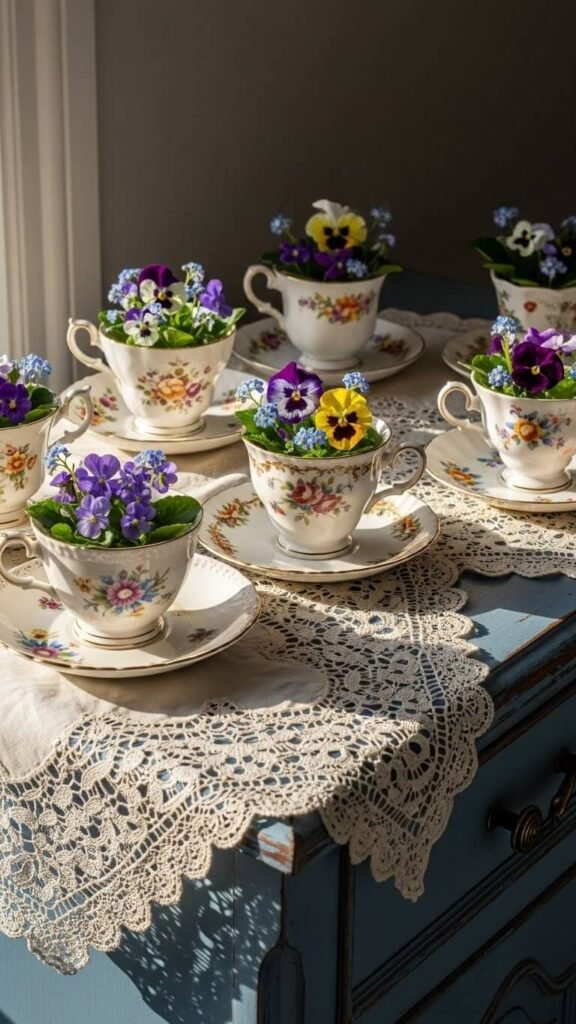
Raid your cupboard or visit thrift stores for vintage teacups. Place small bunches of violets, pansies, or miniature roses in each cup. Line them down the table or cluster at the center. This charming setup works beautifully for tea parties or Mother’s Day brunches.
Thrift store teacups cost $1-3 each. Buy grocery store mini carnations or clip flowers from your yard. Each cup needs only 3-5 stems. The mismatched patterns add personality without looking messy. After the event, use cups for their original purpose. This reusable approach beats disposable décor every time.
Citrus Slice Accents
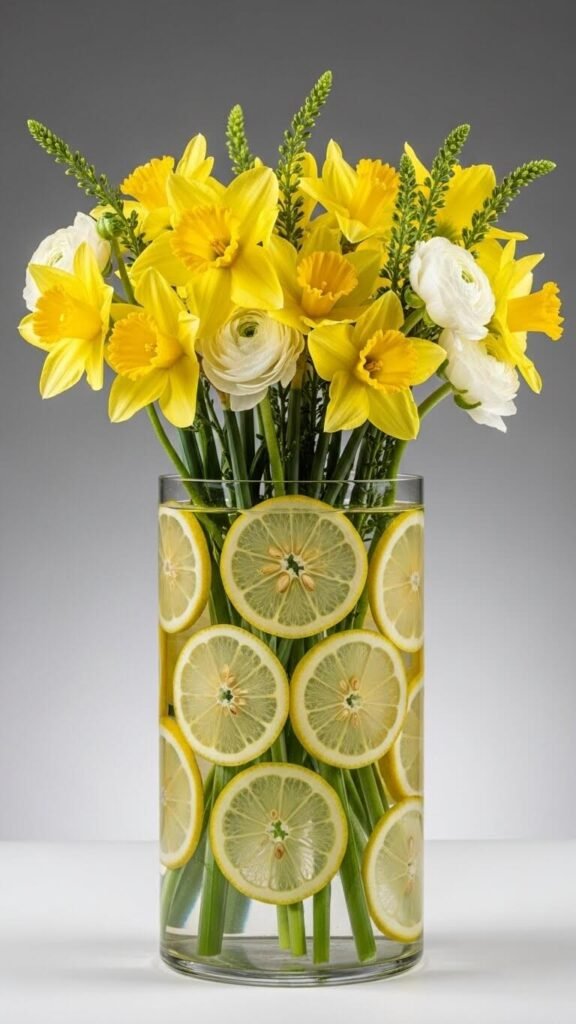
Take a clear glass vase and line the inside with thin citrus slices—lemons, limes, or oranges work great. Press them against the glass before adding water and flowers. The fruit slices add color and a subtle scent to your arrangement.
This trick makes simple supermarket flowers look expensive. Use daffodils, tulips, or any spring blooms. The citrus costs about $2 and lasts as long as the flowers. Change water every other day to prevent cloudiness. The visual effect photographs beautifully for social media sharing. Remove fruit before composting or tossing flowers.
Herb and Bloom Combo
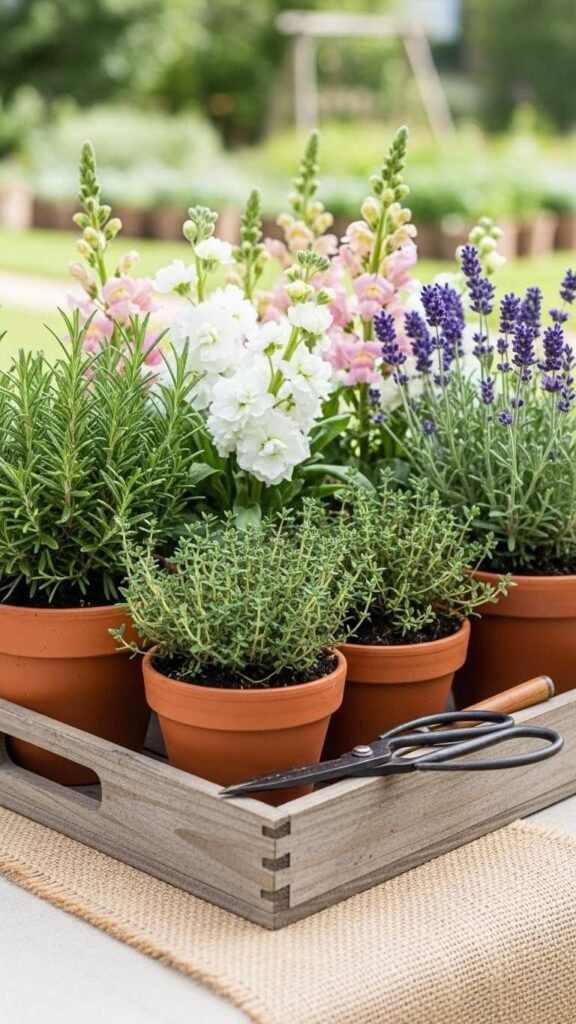
Combine fresh herbs with flowers for a fragrant, functional centerpiece. Plant rosemary, thyme, or basil in small pots. Tuck cut flowers like stock or snapdragons between the herbs. Guests can pinch herbs for their meals while enjoying the floral beauty.
Grocery store herb plants cost $3-5 each and keep growing after your event. Add $5 worth of cut flowers for color. Use a shallow tray or wooden box to corral pots together. This living centerpiece works for weeks, not days. Water herbs regularly and trim as needed for cooking. The dual-purpose design appeals to practical hosts.
Birch Bark Wrap Vases
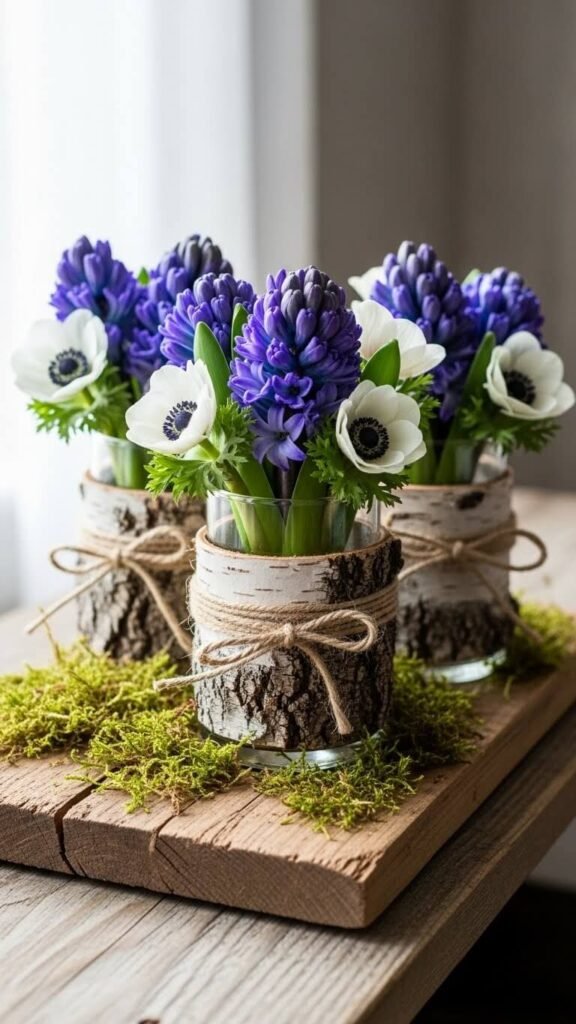
Wrap plain glass vases or cylinders with birch bark sheets. Secure with twine or raffia. Fill with spring blooms like hyacinths, anemones, or ranunculus. The organic texture brings outdoor elements inside while hiding plain containers.
Buy birch bark sheets online for $10-15 (enough for multiple vases) or collect fallen bark from parks. Use dollar store glass vases as bases. The natural wrapping transforms cheap containers into rustic décor. Hot glue works better than tape for securing bark. This technique also hides water stains or old vases you want to refresh.
Eggshell Planters
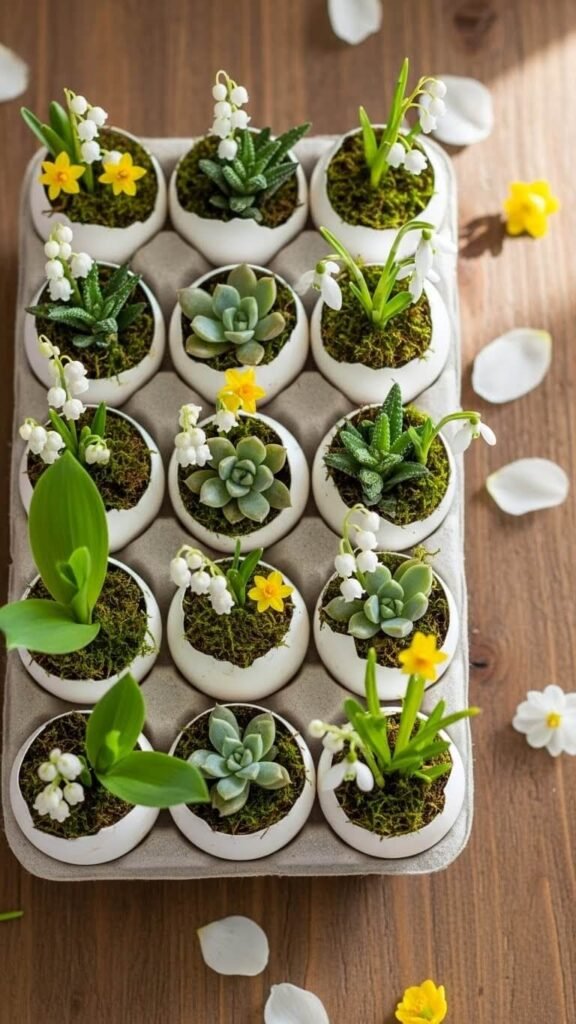
Save eggshells from breakfast. Rinse and carefully crack off the top third. Fill with soil and plant tiny succulents, moss, or small flowers like lily of the valley. Arrange in an egg carton or ceramic egg holder down the table.
This zero-waste project uses shells you’d normally toss. Add potting soil (under $5 for a bag) and clippings from existing plants. Kids love this craft project. The mini planters work for Easter, spring birthdays, or garden parties. Shells eventually break down in compost with the plants still attached.
Wine Bottle Bud Vases
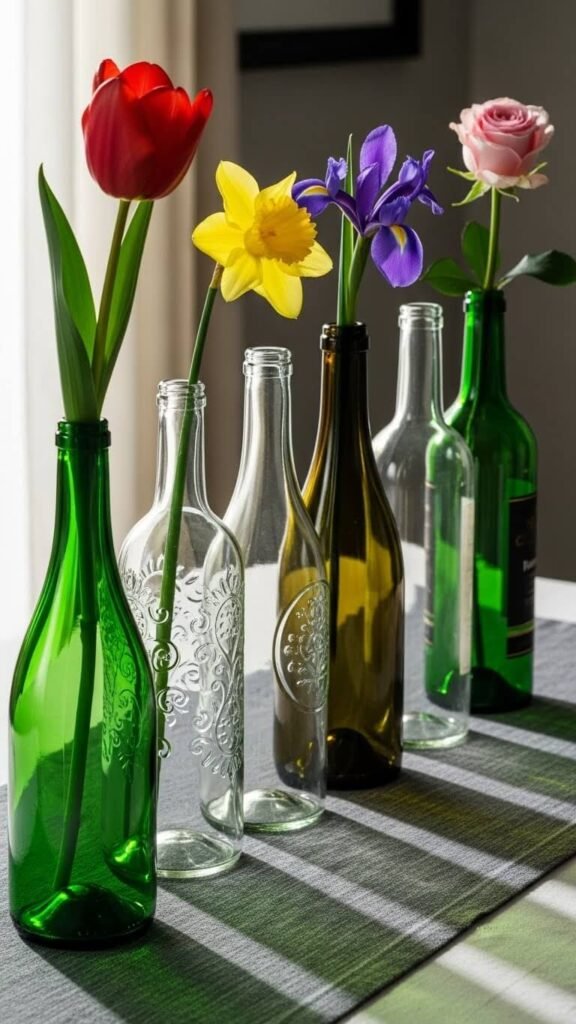
Save empty wine bottles instead of recycling them. Remove labels by soaking in warm soapy water. Place one or two flower stems in each bottle. Line bottles down the table in varying heights. The simple presentation feels modern and sophisticated.
This costs only the price of flowers—about $8-12 for enough stems. Mix flower types or stick to one variety in different colors. The bottles catch candlelight beautifully for evening dinners. Use bottles with interesting shapes or colored glass. After the event, bottles can hold cooking oils or go to recycling.
Watering Can Arrangement
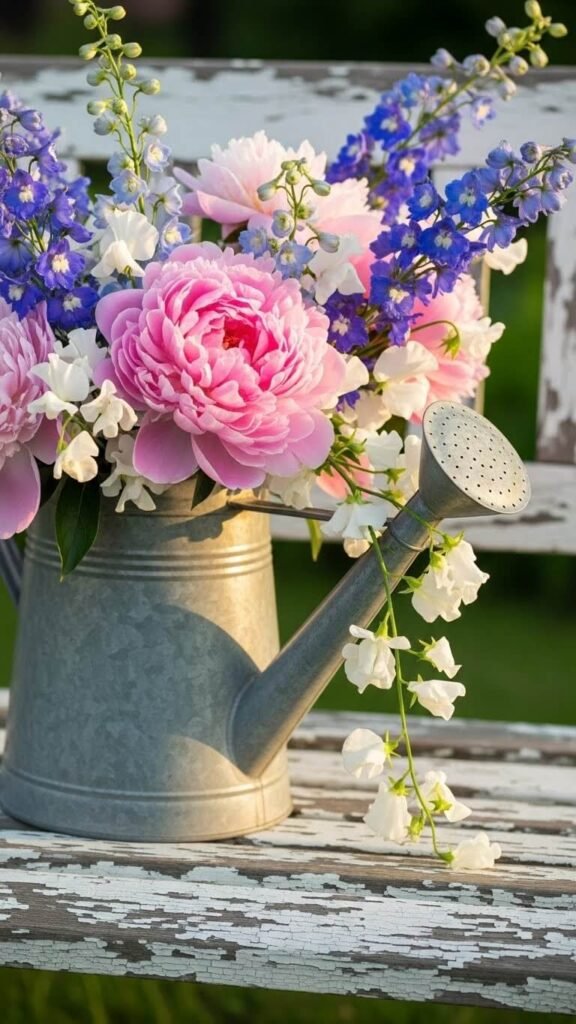
Pull out that old watering can from the garage or shed. Fill it with a big, loose arrangement of peonies, delphiniums, or whatever’s in season. Let stems spill over the spout for a garden-gathered look. This works perfectly for outdoor dining or farmhouse-style tables.
Watering cans hold plenty of water, keeping flowers happy for days. Buy a $15 mixed bouquet or clip from your yard. The container’s utilitarian charm needs no extra decoration. After flowers fade, return the can to garden duty. This approach celebrates practical beauty over fussy formality.
Succulent and Flower Mix
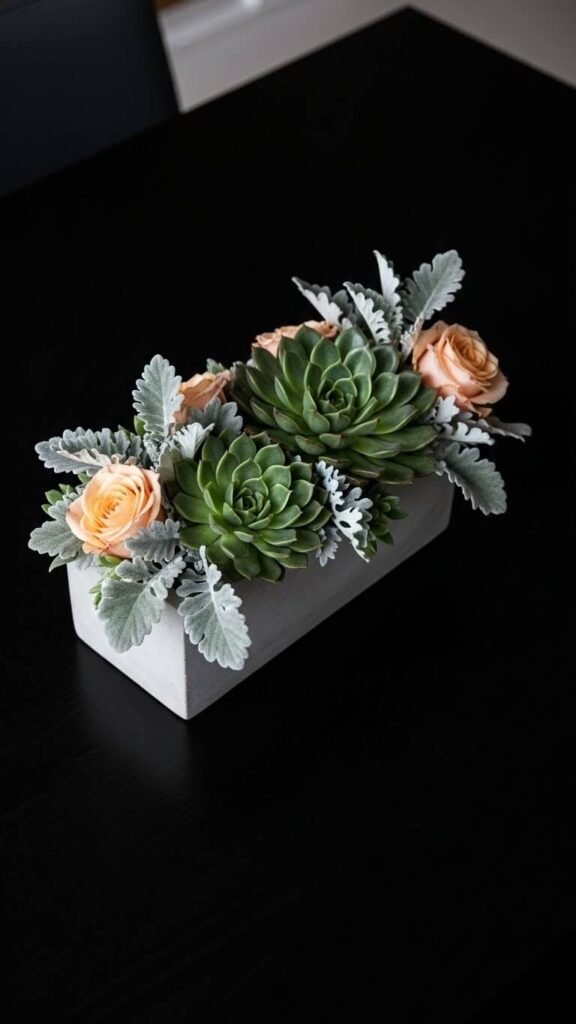
Mix succulents with cut flowers in a shallow planter. The succulents provide structure while flowers add softness and color. Use roses, carnations, or spray roses paired with echeveria or sedum varieties. This modern combo lasts longer than flowers alone.
Buy a few small succulent plants ($3-5 each) that you can replant after the event. Add $8 worth of flowers for pops of color. Use floral foam or chicken wire to hold everything in place. The succulents keep looking good even as flowers fade. This investment piece works for multiple gatherings.
Copper Pipe Holder
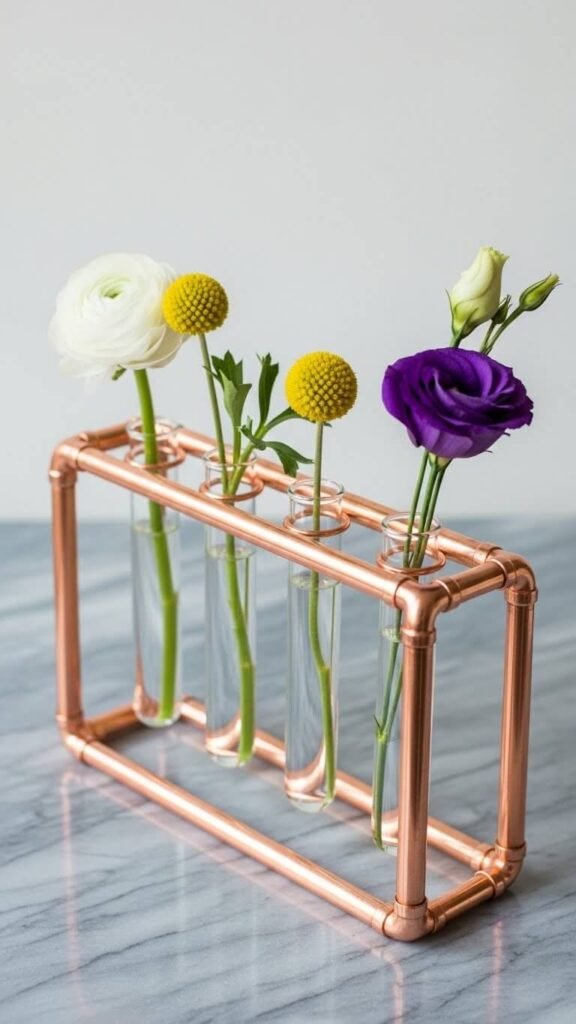
Create a modern holder using copper pipes from the hardware store. Cut pipes to different heights and connect with elbow joints. Insert glass test tubes or small vases into pipe openings. Add single stems to each tube for a minimalist, geometric look.
Hardware store pipe sections cost $2-4 each. Test tubes run about $1 each online. Build a structure in 30 minutes with no special tools. This reusable frame works year-round with different flowers. The industrial style suits contemporary spaces. Spray paint pipes gold, black, or white to match your décor.
Tiered Cake Stand Display
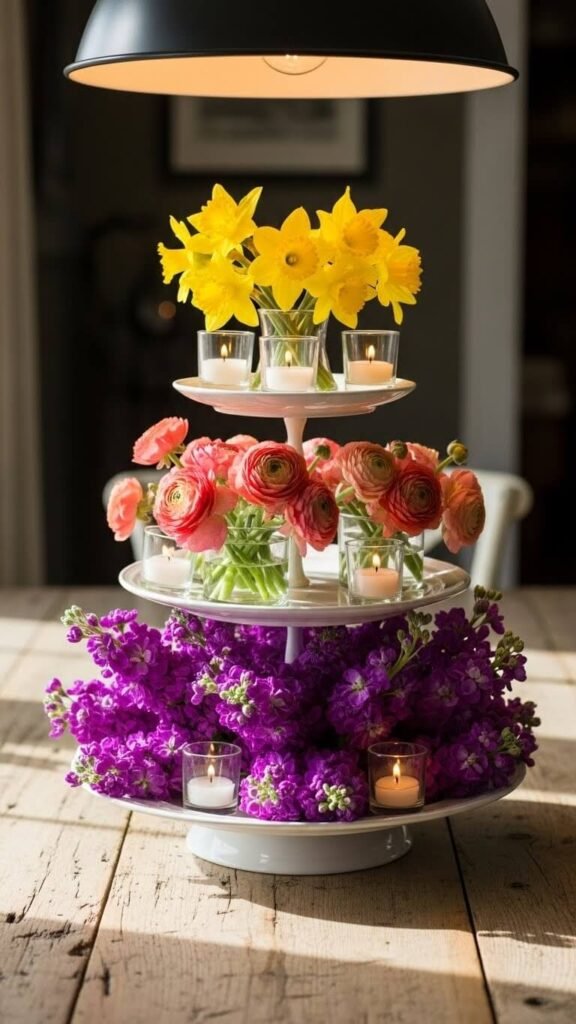
Use a tiered cake stand for flowers instead of desserts. Place small vases or jars at each level. Fill with different flower types or colors per tier. This vertical approach saves table space while creating height and drama.
Most people own cake stands that sit unused between parties. Use what you have or buy one at HomeGoods for $15-20. Small juice glasses work as vases. The layered presentation looks expensive but costs the same as a regular arrangement. After the event, wash and return to your baking supplies.
Fabric-Wrapped Cans
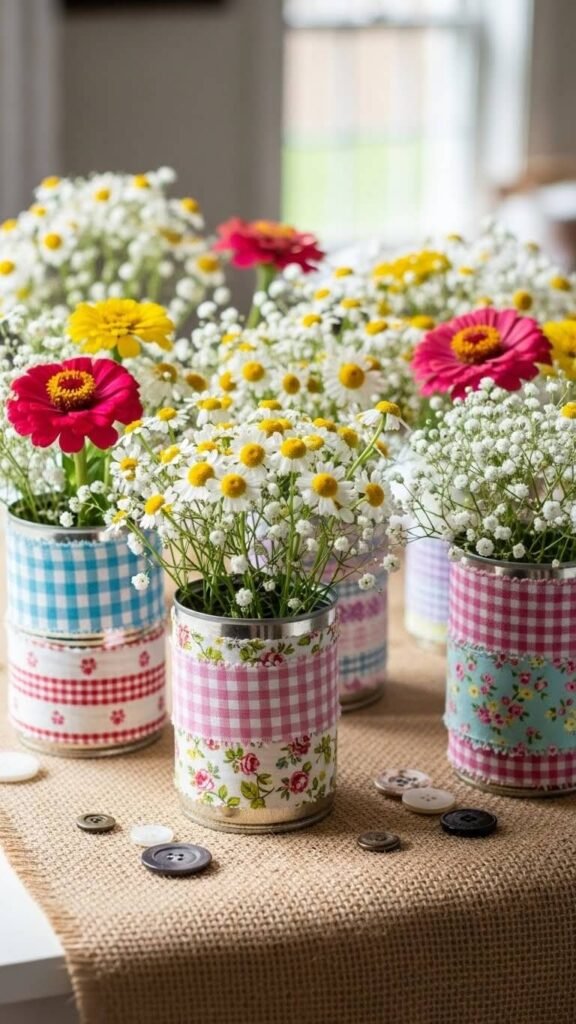
Save tin cans from the pantry. Remove labels and wash thoroughly. Wrap with fabric scraps, burlap, or lace. Secure with hot glue or double-sided tape. Fill with water and spring flowers. Group several cans together for impact.
This project uses materials you’d normally throw away or have in craft bins. Each can holds 3-5 flower stems. Choose fabrics that match your color scheme. Add ribbon or twine around the rim for polish. The casual, handmade vibe works for relaxed gatherings. Kids can help wrap cans while you arrange flowers.
Moss-Covered Base
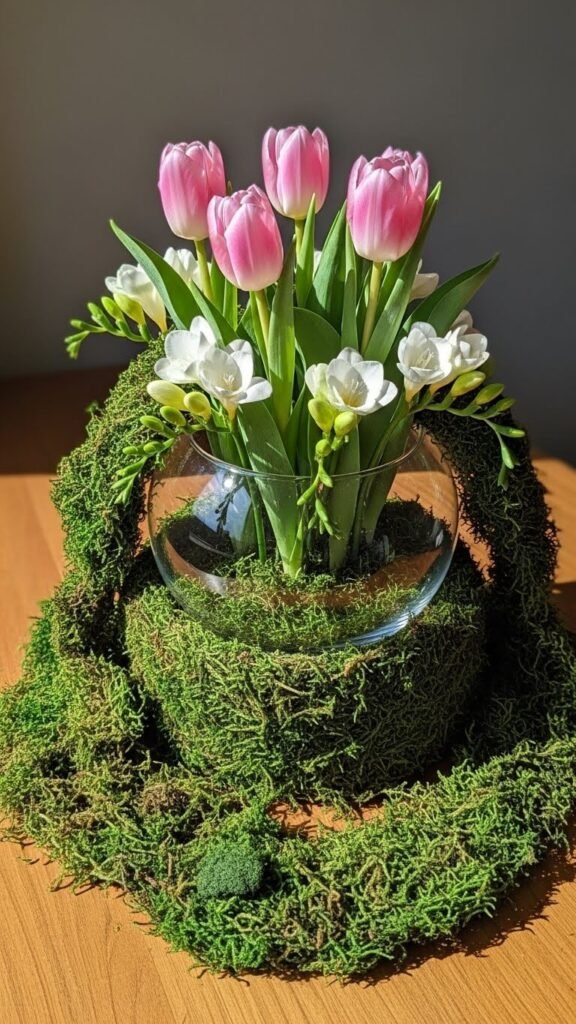
Cover your vase base with sheet moss from the craft store. Wrap moss around the container and secure with fishing line or thin wire. The natural covering hides ordinary vases and adds organic texture. Pair with simple spring blooms for a garden-inspired look.
Sheet moss costs $5-8 for enough to cover several vases. Reuse the moss for multiple events by misting to keep it supple. This technique makes dollar store vases look custom and expensive. The green base complements any flower color. Store dried moss in a plastic bag between uses.
Wooden Box Garden
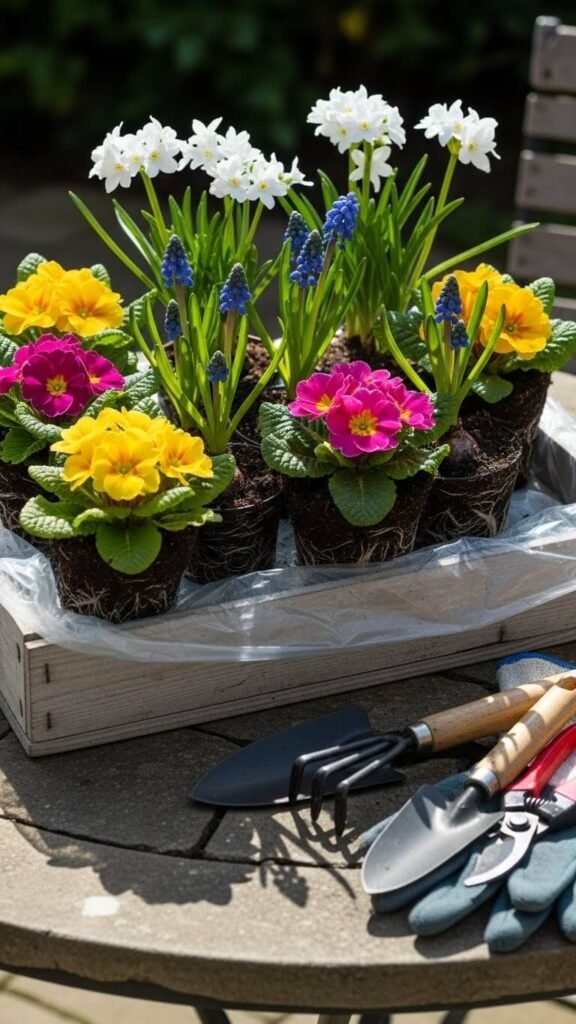
Find a shallow wooden box or crate. Line with plastic to protect wood. Plant spring bulbs or bedding plants directly in soil inside the box. The living centerpiece continues growing after your event. Water regularly and enjoy for weeks.
Wooden boxes cost $10-15 at craft stores or use fruit crates from grocery stores. Small plants run $2-4 each. This living arrangement beats cut flowers for longevity. After blooms fade, transplant to your garden. The box becomes garden storage or holds future arrangements.
Pitcher Abundance
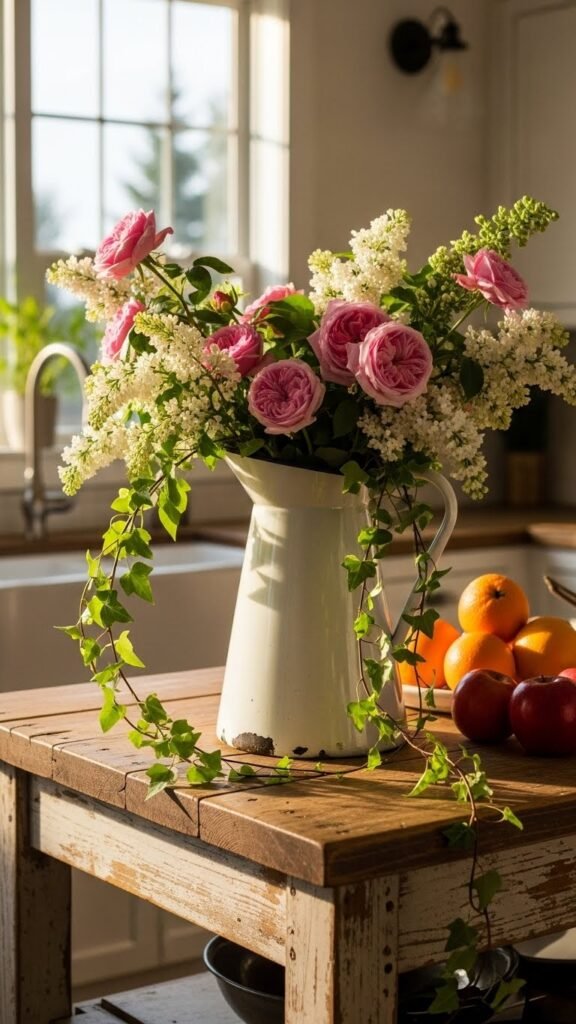
Use a kitchen pitcher as your vase. Fill it generously with a loose, garden-picked style arrangement. Let stems fall naturally over the edges. Lilacs, roses, and flowering branches work beautifully. This approach feels abundant without being precious.
Most kitchens have pitchers collecting dust in cabinets. Buy two $8 bouquets for a full look. The handle adds visual interest and makes moving the arrangement easy. This casual style suits everyday dining or weekend brunches. The wide opening makes arranging flowers simple—no special skills required.
Color-Blocked Bottles
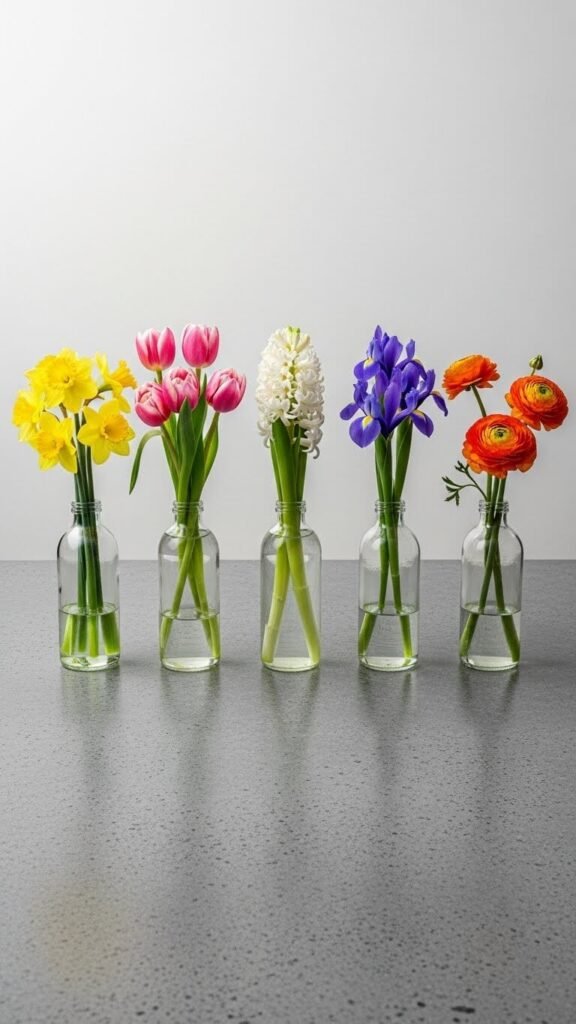
Line up identical bottles or vases in a row. Fill each with flowers of one color only. The monochromatic repetition creates modern impact. Choose five different spring colors or shades of one color. Space evenly down your table.
Buy five matching bottles at dollar stores for $5 total. Grocery store flowers come in bunches by color—buy one bunch per bottle. This technique turns simple materials into designer-looking décor. The clean lines photograph beautifully. Adjust the number of bottles to your table length.
Basket Liner Arrangement
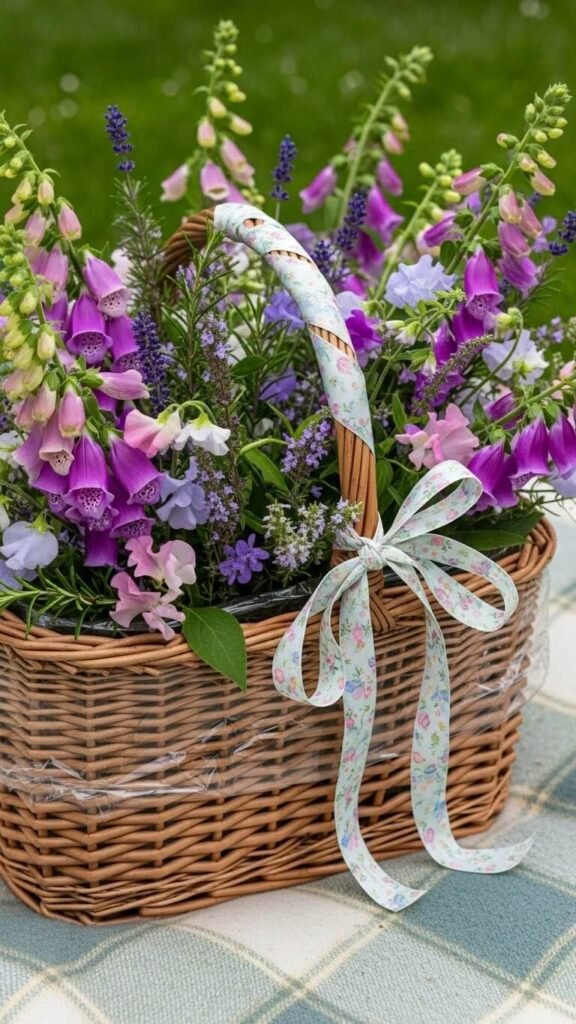
Line a wicker basket with plastic wrap or a freezer bag. Add water and a large, loose arrangement of spring flowers. The basket adds texture and hides mechanics. This cottage-style look works for casual gatherings or outdoor dining.
Most homes have baskets that can double as vase holders. Poke small drainage holes in plastic if using potted plants instead of cut flowers. The natural basket pairs beautifully with garden flowers. After the event, remove plastic and return basket to storage. This versatile container works for bread, fruit, or future arrangements.
Test Tube Wall Display
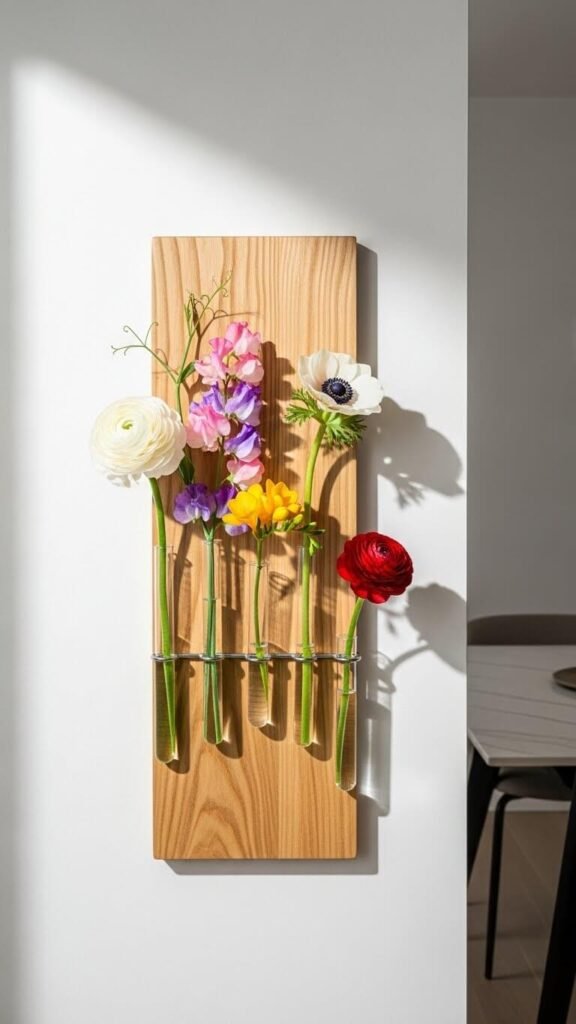
Mount test tubes to a wooden board using metal clips or leather straps. Hang vertically near your table or lay flat as a runner. Add single stems to each tube. This space-saving approach works for narrow tables or small dining areas.
Hardware stores sell small boards for $5-10. Test tubes and mounting clips cost $15 total. Build once and use repeatedly with different flowers. The vertical option frees up table space for food. Change water easily by removing individual tubes. This contemporary display suits modern or industrial spaces.
Painted Can Collection
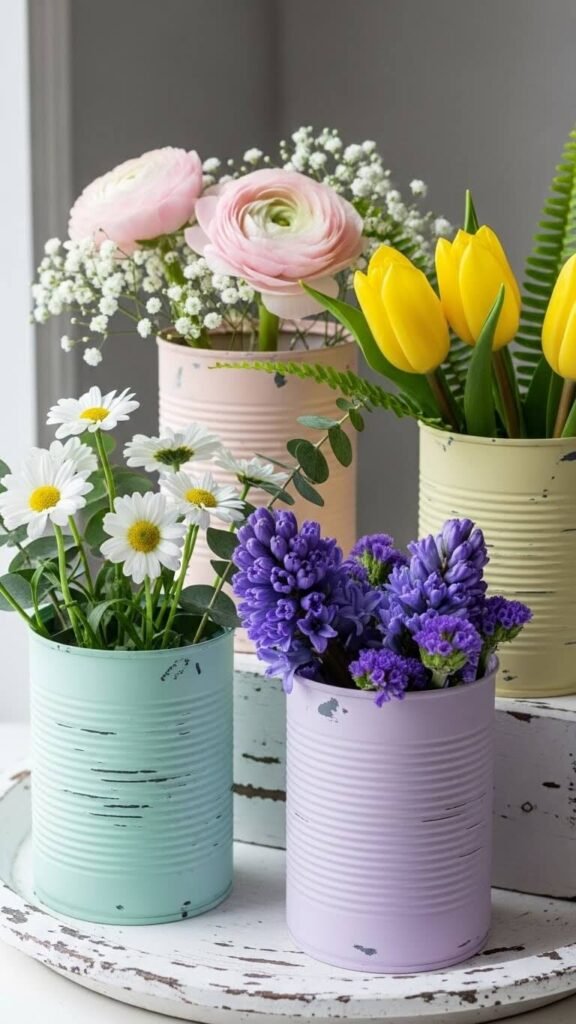
Paint clean tin cans in spring pastels. Use spray paint for quick coverage. Let dry completely before adding water and flowers. Group cans in different sizes for visual interest. The custom colors tie your table together.
Spray paint costs $4-6 per can and covers many containers. Use leftover cans from the pantry. Paint cans match your exact color scheme better than store-bought vases. Add two coats for full coverage. This customization looks intentional and professional. Store painted cans for future use.
Branch and Bloom Structure
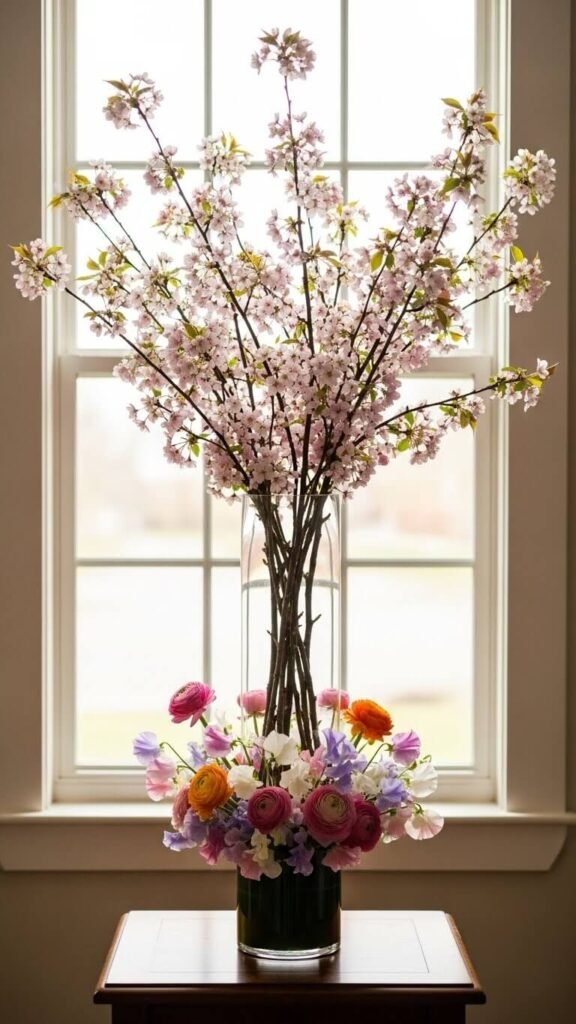
Start with flowering branches—cherry blossoms, forsythia, or quince. Anchor them in a tall vase. Add shorter cut flowers at the base. The vertical branches create height while blooms add fullness. This Japanese-inspired style brings spring indoors beautifully.
Cut branches from your yard or buy a few stems for $5-8. They last 1-2 weeks with water changes. Add grocery store flowers at the base for color. The tall arrangement makes a statement without blocking views. This technique works especially well for buffet tables or entryway displays.
Fruit-Filled Compote
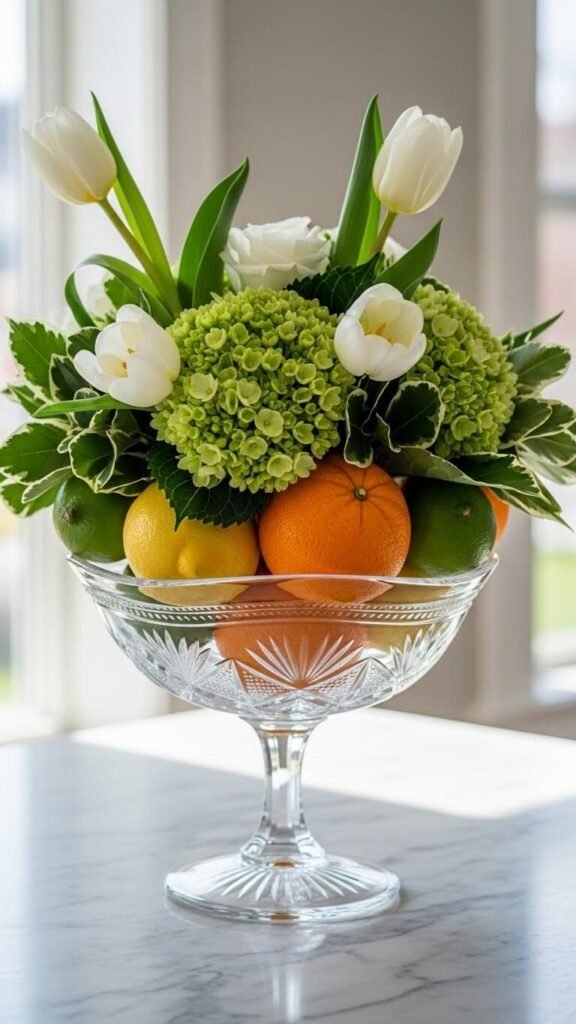
Layer fresh fruit in the bottom of a clear compote or pedestal bowl. Top with a flower arrangement that echoes the fruit colors. The visible fruit adds unexpected detail and extends the spring theme. This works beautifully for brunch or spring celebrations.
Buy fruit you’ll actually eat after the event—no waste. The compote creates height without using all flowers. Lemons and limes match white and yellow blooms perfectly. Change water carefully to avoid disturbing fruit. The layered approach looks complex but takes minutes to assemble.
Vintage Bottle Collection
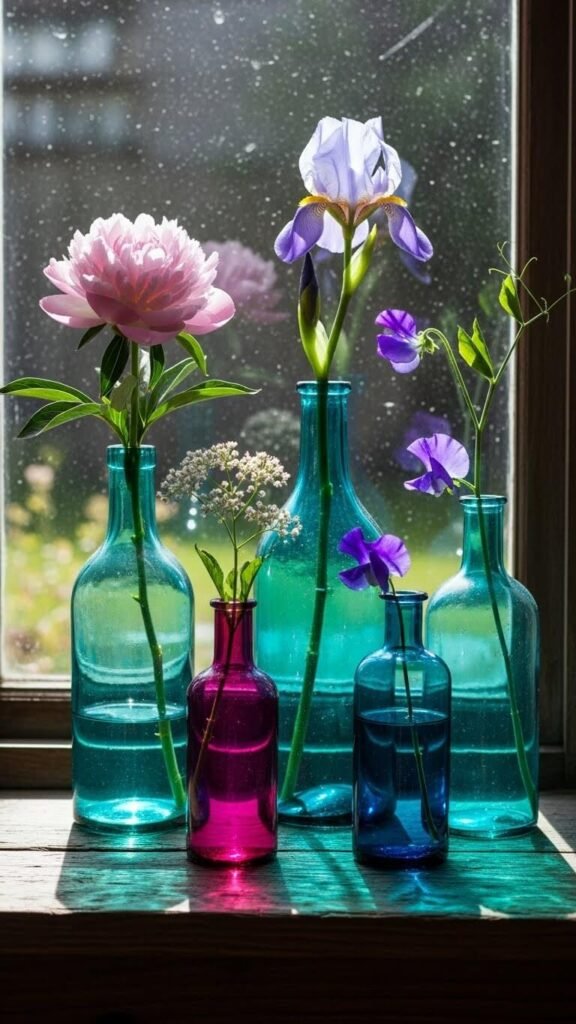
Collect vintage bottles from antique stores, flea markets, or your grandmother’s attic. The varying shapes and colors add character. Place one or two stems in each bottle. Cluster together or spread down the table. The aged glass tells a story.
Flea market bottles cost $2-5 each and become permanent décor pieces. This collection grows over time as you find special bottles. The imperfect glass catches light beautifully. No two arrangements look exactly the same. After flowers fade, bottles become kitchen décor or hold single blooms year-round.
Conclusion
Spring centerpieces don’t require professional skills or big budgets. The best arrangements reflect your personal style and make guests feel welcome. Start with containers you already own—jars, pitchers, baskets, or bottles. Add seasonal flowers from grocery stores or your garden. Focus on what feels authentic to you rather than copying magazine perfection.
Experiment with different heights, textures, and colors until something clicks. Most of these ideas cost under $15 and take less than 30 minutes to create. Remember that wilting flowers can be composted, containers reused, and living plants transplanted. Your spring table deserves something special—pick an idea and try it this weekend.