There’s something magical about those first warm days of spring—when you throw open the windows, feel that gentle breeze, and suddenly crave a fresh start everywhere you look. Your home deserves that same renewal, and there’s no better way to capture the season than with a thoughtfully crafted vignette that tells your unique story.
A vignette isn’t just a pretty arrangement of objects on a shelf. It’s a small, curated scene that reflects your personality, evokes emotion, and welcomes spring into your space with intention. Whether you’re a minimalist who loves clean lines or a collector who treasures vintage finds, your spring vignette should feel authentically you.
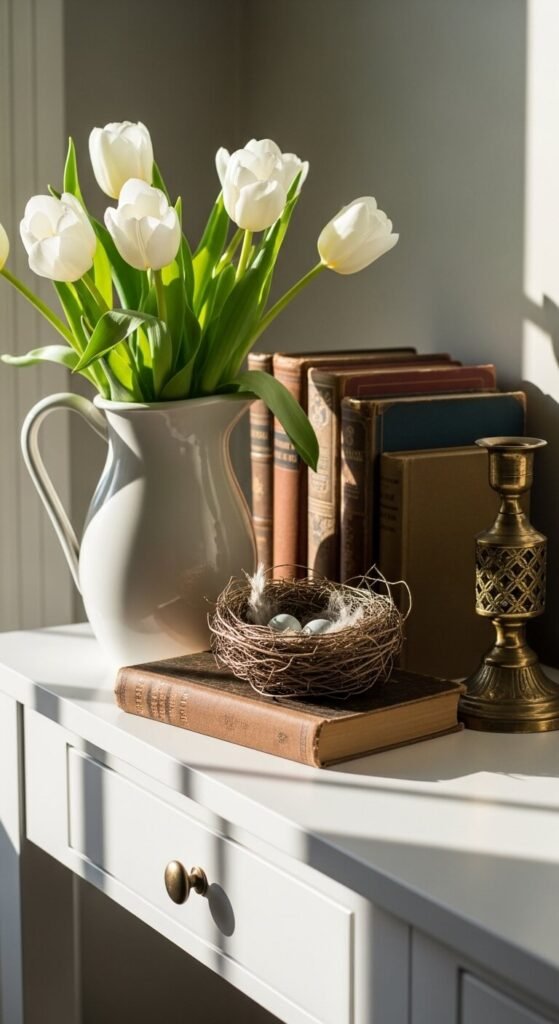
Start With a Focal Point That Speaks to You
Every great vignette begins with one standout piece—your anchor. This could be a beloved family heirloom, a unique thrift store find, or even a simple vase that makes your heart happy.
Choose something that resonates with your personal story:
- A vintage watering can from your grandmother’s garden
- A piece of pottery you made in a weekend workshop
- A framed pressed flower from your wedding bouquet
- An antique book collection you’ve been curating for years
Your focal point sets the tone for everything else. Place it first, step back, and let it guide your next choices. The beauty of a personal vignette is that it doesn’t need to follow anyone else’s rules—it just needs to feel right to you.
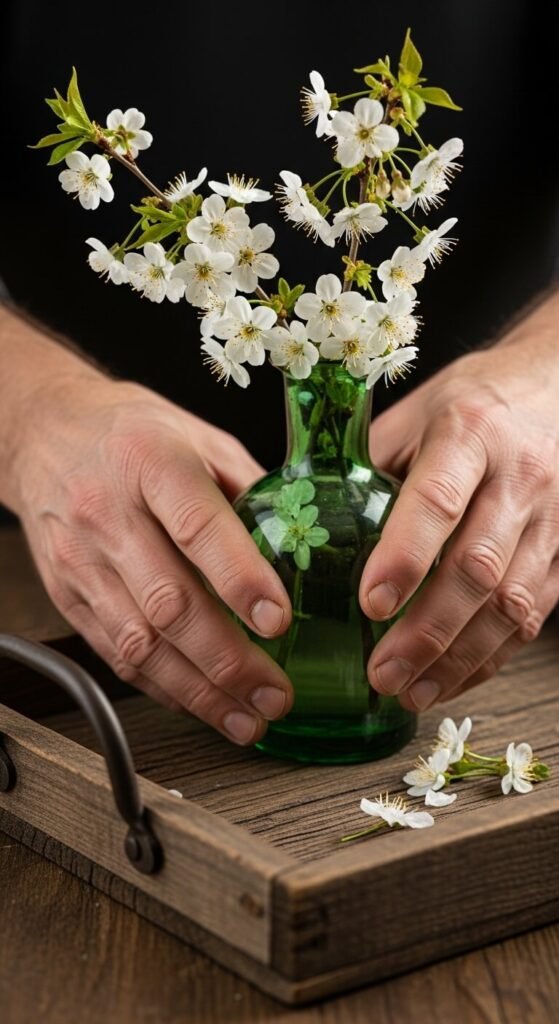
Layer in Elements of Three (But Make It Personal)
Designers love the “rule of three,” and for good reason—it creates visual balance. But don’t let this become a rigid formula. Think of three as a starting point, not a restriction.
Build your vignette with varying heights and textures:
- Tall: Fresh flowers, candlesticks, or a slender decorative bottle
- Medium: A small stack of books, a potted plant, or a textured bowl
- Low: Scattered vintage postcards, a collection of smooth stones, or a nest of eggs
The key is creating dimension while keeping everything connected to your narrative. If you’re a gardener, include seed packets or small terracotta pots. If you’re a reader, stack books with spring-themed covers or authors who inspire you.
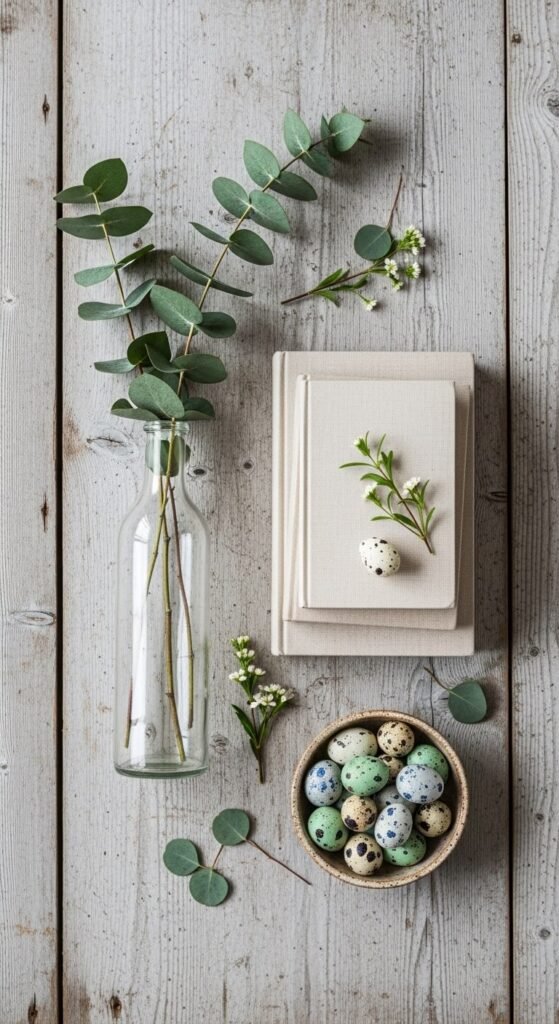
Choose a Color Story That Reflects Your Mood
Spring doesn’t have to mean pastels—unless that’s your story. Maybe your spring is bold and energetic with coral and terracotta. Perhaps it’s moody and botanical with deep greens and whites. Or classic and fresh with butter yellow and crisp linen.
Select 2-3 main colors that appear throughout your vignette. This creates cohesion without looking too matchy-matchy. Let your color choices reflect:
- The way spring feels to you (energizing, peaceful, romantic)
- Your home’s existing palette
- Colors that hold personal meaning or memories
Remember, white and natural wood tones count as colors too, and they’re perfect for letting other elements shine.
Add Living Elements for Authentic Spring Energy
Nothing says spring quite like something growing. This is where your vignette truly comes alive and connects with the season.
Fresh options to consider:
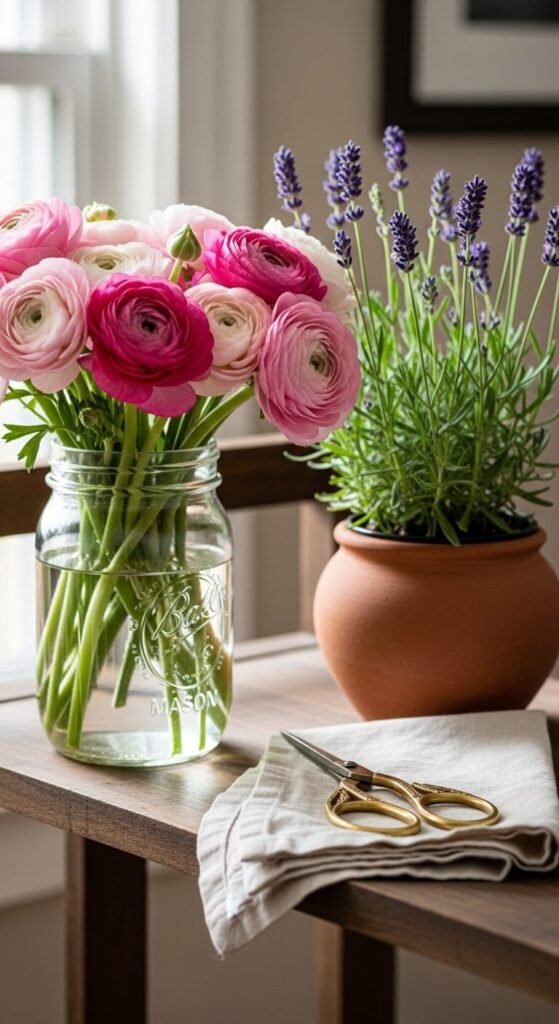
- A handful of tulips, daffodils, or ranunculus
- Flowering branches from your own yard
- Small potted herbs like rosemary or thyme
- A tiny terrarium with spring moss
- Budding branches in a simple glass bottle
Include Something With Meaning
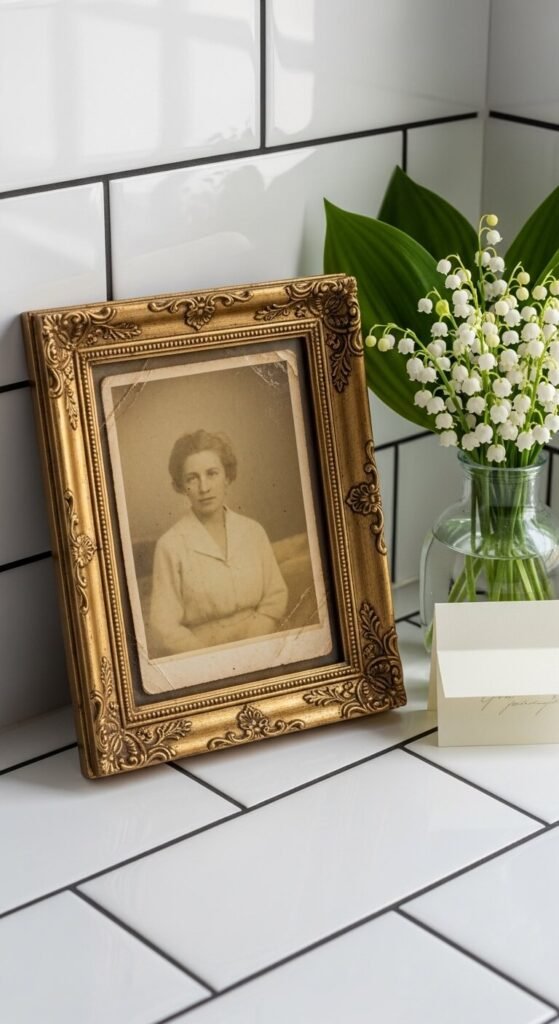
This is what transforms a pretty arrangement into your story. Include one item that holds personal significance—something that would make a visitor ask, “What’s the story behind that?”
Ideas to inspire you:
- A seashell from a memorable spring vacation
- Your child’s first drawing of a flower, simply framed
- A vintage teacup inherited from a beloved aunt
- A handwritten recipe card for spring strawberry jam
- A small watercolor you painted last season
These meaningful touches make your vignette impossible to replicate. It becomes a conversation starter and a daily reminder of what matters to you.
Keep It Simple and Let It Evolve
The best vignettes aren’t precious or untouchable—they’re living arrangements that can shift with your mood and the season’s progression. Start with fewer pieces than you think you need. You can always add, but overcrowding dilutes your story.
Give yourself permission to adjust things. Move that candlestick two inches left. Swap out wilted flowers for fresh greenery. Add a new book you’re currently reading. Your vignette should breathe and change just like you do.
Your spring vignette is a love letter to the season and to yourself—a small, beautiful space that reflects who you are and what you cherish. Don’t aim for perfection or Instagram-worthy staging. Aim for authenticity, for pieces that make you smile every time you walk past.
Save this guide and create a spring vignette that’s uniquely yours—one that tells your story better than any designer’s formula ever could.