There’s nothing quite like the heartbreak of watching your gorgeous bouquet wilt after just a few days. You know the one—the arrangement you splurged on at the farmer’s market or received as a thoughtful gift, now drooping sadly on your kitchen counter. But what if I told you that with a few simple tricks, you could enjoy those blooms for two weeks or even longer?
The secret isn’t magic—it’s science mixed with a little TLC. Whether you’re arranging supermarket stems or garden-fresh flowers, these proven techniques will transform you from a flower killer into a bloom-preserving pro.

Start With Squeaky-Clean Vases
Before you even think about arranging, grab that vase and give it a serious scrub. Bacteria is the number one enemy of fresh flowers, and even a sparkling-looking vase can harbor microorganisms that’ll clog stems and shorten vase life dramatically.
Here’s what to do:
- Wash vases with hot, soapy water and a bottle brush
- Add a splash of bleach (1 teaspoon per quart of water) for stubborn residue
- Rinse thoroughly—no soap residue allowed
- Let it air dry completely before use
This simple step alone can add 3-5 extra days to your arrangement’s lifespan.
Master the Art of the Cut
How you cut your flower stems matters more than you’d think. A proper cut opens up the stem’s “drinking straws” so water can flow freely to the blooms.
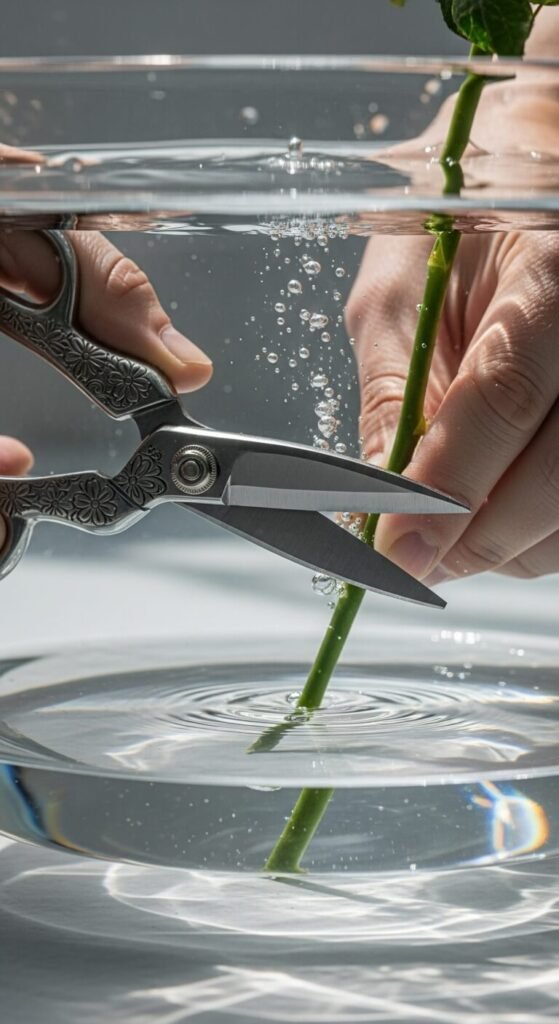
Follow these cutting rules:
- Always cut at a 45-degree angle to increase surface area for water absorption
- Cut underwater when possible to prevent air bubbles from blocking the stem
- Use sharp, clean scissors or floral shears—dull blades crush stems and inhibit water uptake
- Trim 1-2 inches off each stem every 2-3 days to keep stems fresh
For woody stems (like roses or lilacs), make vertical slits up the bottom inch of the stem to help water penetration even more.
Strip Away Everything Below the Waterline
This is non-negotiable: any leaves, thorns, or side shoots sitting in water will rot, creating a bacterial breeding ground that poisons your flowers from the inside out.
Take an extra minute to:
- Remove all foliage that would sit below the water line
- Strip off damaged or yellowing leaves
- Remove guard petals (the outer petals on roses that look bruised)
Your arrangement will look cleaner and last dramatically longer.

Feed Your Flowers (They’re Hungry!)
That little packet of flower food isn’t just a marketing gimmick—it’s actually a carefully balanced formula of sugar (for energy), acid (to maintain pH), and bleach (to fight bacteria).
If you’re out of packets, make your own:
- 1 quart water
- 2 tablespoons fresh lemon juice
- 1 tablespoon sugar
- ½ teaspoon bleach
Change the water every 2-3 days and add fresh flower food each time. If the water looks cloudy before then, change it immediately.
Location, Location, Location
Where you place your arrangement can make or break its longevity. Flowers are surprisingly picky about their environment.
Avoid these spots:
- Direct sunlight (speeds up blooming and wilting)
- Near heat vents or radiators
- Next to ripening fruit (ethylene gas is a flower killer)
- In drafty areas or near fans
Perfect spots:
- Cool rooms away from windows
- North-facing surfaces
- Dining tables in climate-controlled rooms
Think of your flowers like Goldilocks—not too hot, not too cold, just right.
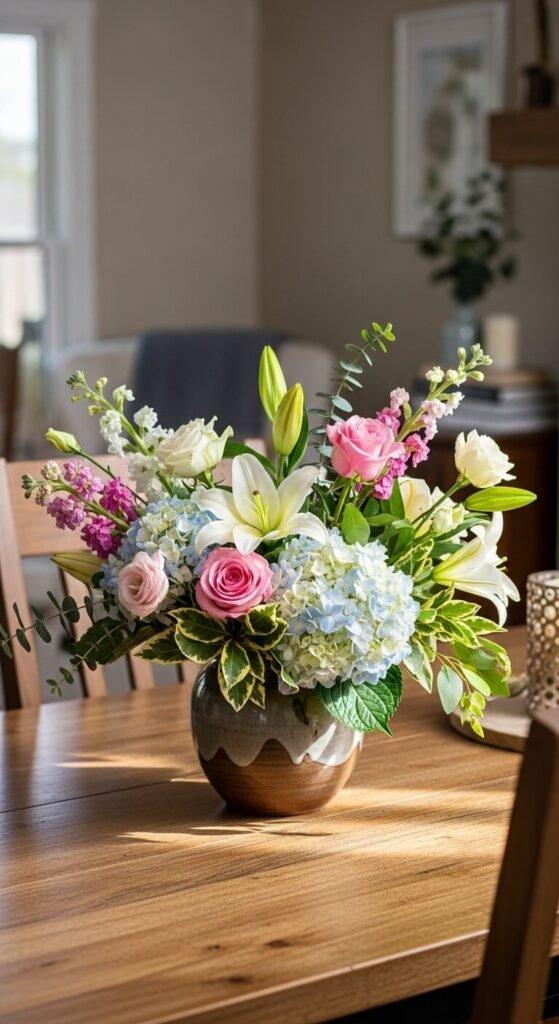
The Secret Weapon: Ice Cubes
Here’s a florist trick that seems counterintuitive but works like magic: add 2-3 ice cubes to your vase daily. The cold water slows down bacteria growth and keeps stems crisp. Some flowers (like tulips and hydrangeas) absolutely thrive with this treatment.
Revive Wilting Blooms Fast
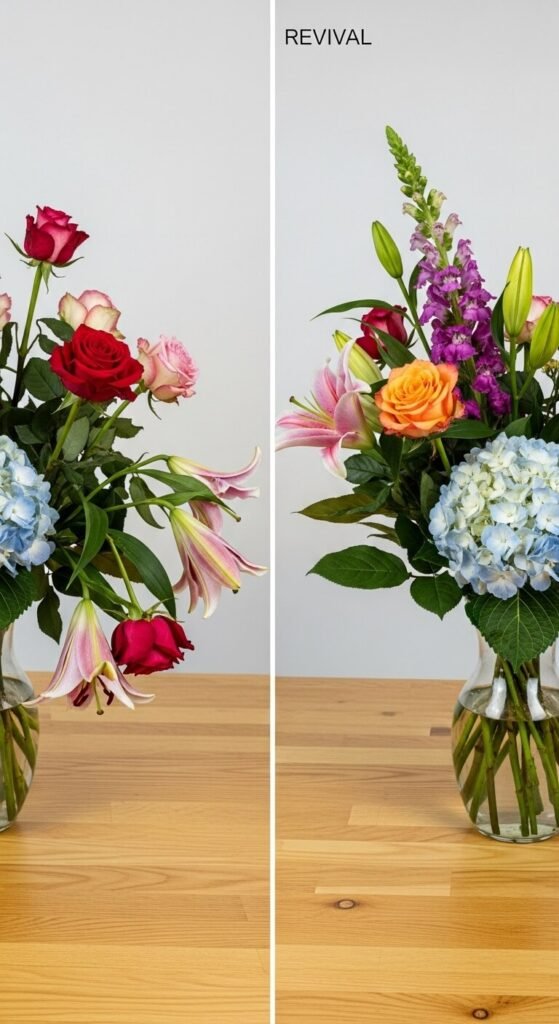
If you notice your flowers starting to droop, don’t give up! Try this emergency rescue:
- Recut stems at a sharp angle
- Plunge them into very warm (not boiling) water
- Let them sit for 30 minutes in a cool, dark place
- Transfer back to fresh, cool water with flower food
This technique can bring droopy blooms back to life within hours.
Your Flowers Deserve This
With these simple strategies, you’re not just arranging flowers—you’re creating a long-lasting display that’ll brighten your home for weeks instead of days. The best part? None of these techniques require special skills or expensive tools, just a little extra attention and care.
Ready to become the person everyone asks for flower advice? Save this guide and try it with your next bouquet! Your future self (and your flowers) will thank you.