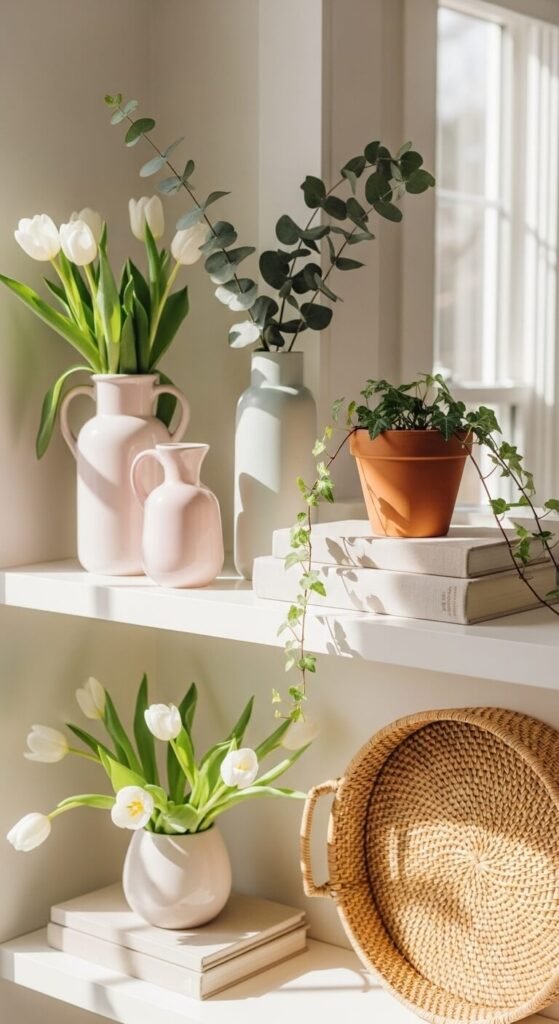
Spring is the perfect time to rethink what’s sitting on your shelves. After months of heavy textures and dark tones, your home deserves something lighter. You don’t need a big budget or a designer’s eye to make it happen. A few swaps, some greenery, and a little intention go a long way. Whether you have floating wall shelves, a bookcase, or a kitchen hutch, these ideas will help you style them with personality and purpose — without the clutter.
1. Start With a Color Story
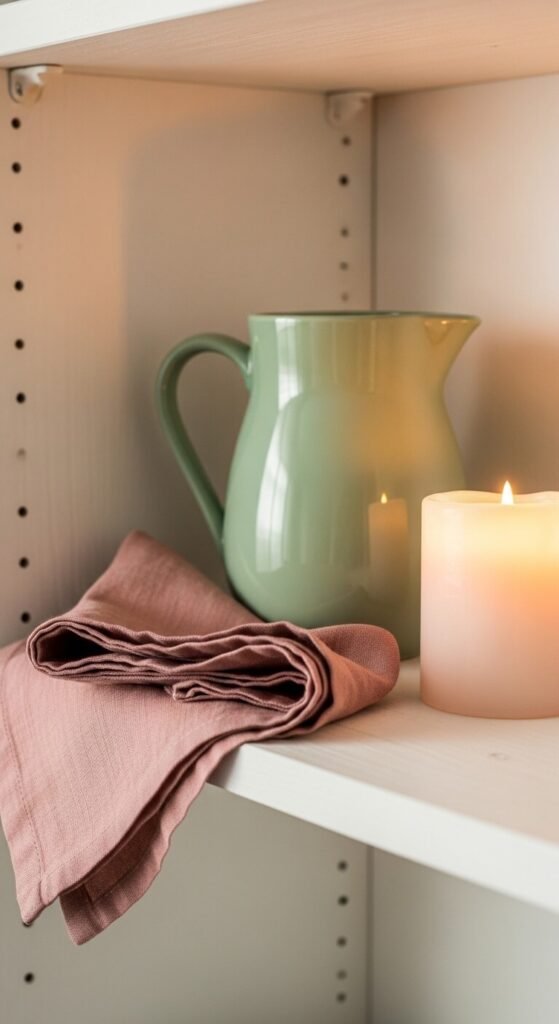
Pick two or three colors and stick to them.
Spring palettes work best when they stay soft. Think sage green, dusty rose, cream, or powder blue. Limit your palette to three tones max. This keeps shelves from looking chaotic. Walk around your home and gather items that already match. You’ll be surprised what you already own. A candle in the right color, a small dish, a folded napkin — these are free starting points. No shopping required.
2. Swap Out Heavy Candles for Taper Holders
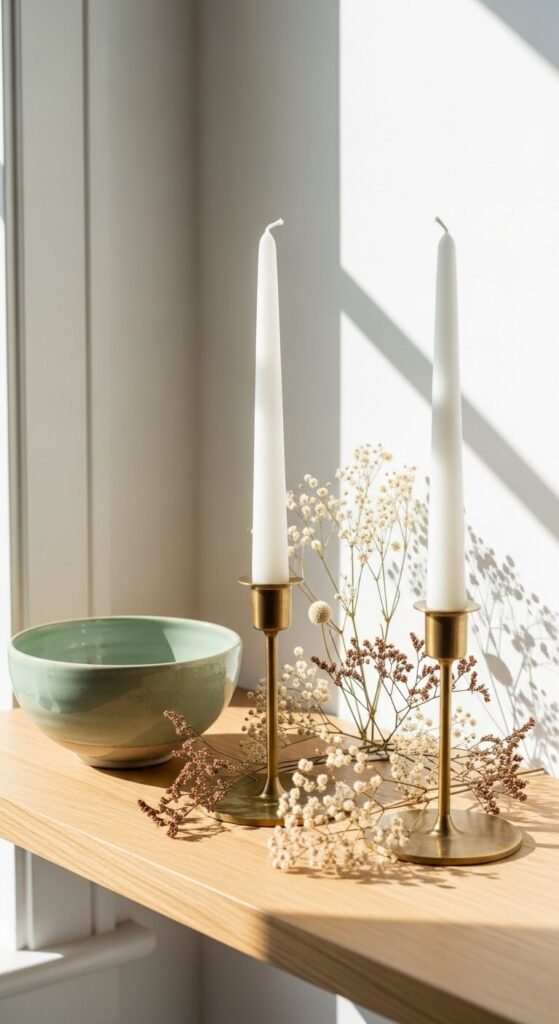
Thick pillar candles feel very winter.
Taper candles are a simple swap that signals spring immediately. Matte brass or terracotta holders work especially well. They’re easy to find at thrift stores for under $5. Group two mismatched heights together for visual interest. Even unlit, tapers add elegance to a shelf. Pair them with a small dried flower stem or a tiny bud vase nearby. The whole setup takes five minutes and costs almost nothing if you shop secondhand.
3. Add a Single Stem in a Bud Vase
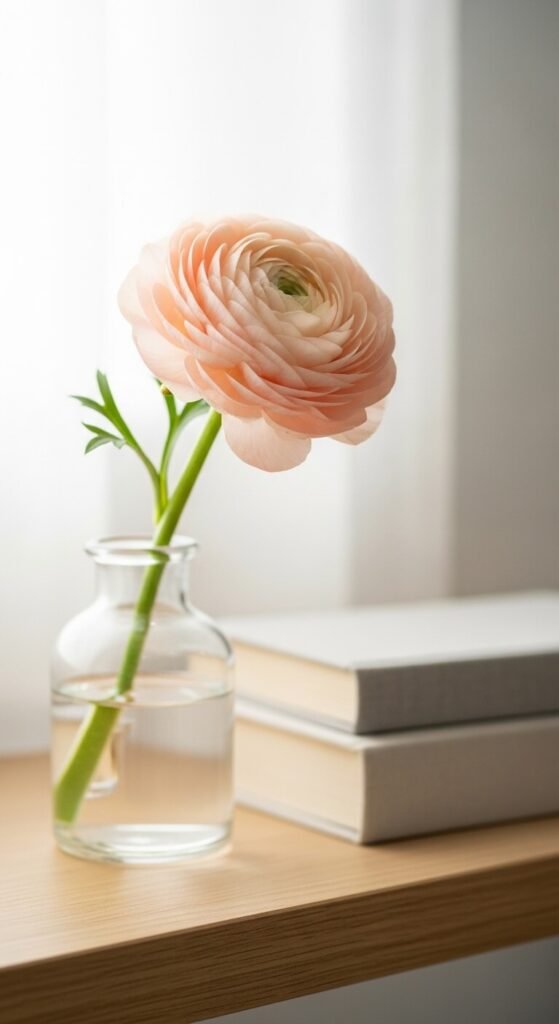
One stem. One vase. That’s it.
You don’t need a full bouquet to make an impact. A single flower in a small vase is one of the most affordable spring styling tricks. Grocery store flowers work perfectly — a single ranunculus or tulip costs under $2. Use an old glass bottle, a spice jar, or a thrifted bud vase. Change the stem every week or two to keep it feeling alive. This tiny detail adds life to even the most basic shelf.
4. Layer Books Horizontally and Vertically
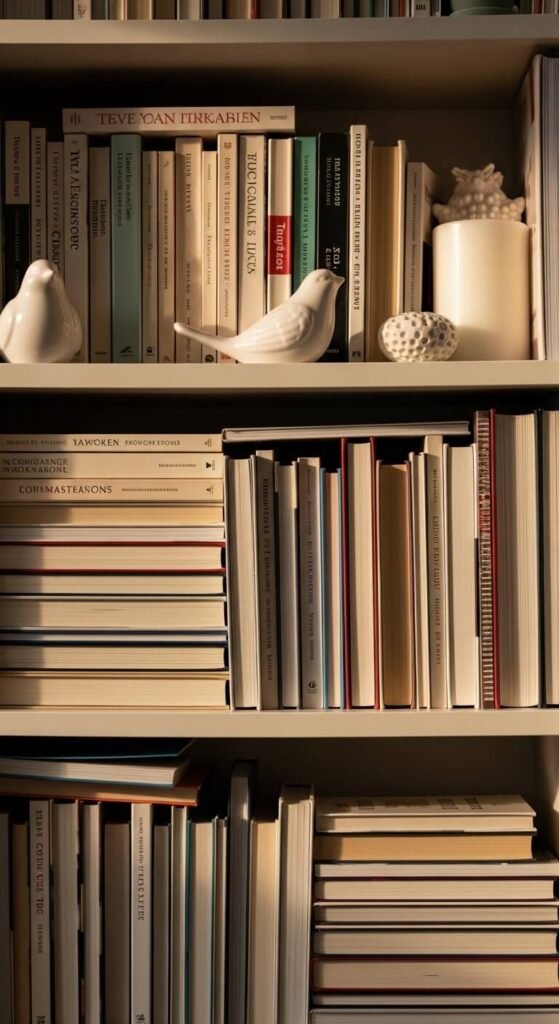
Mixing book arrangements adds depth instantly.
Don’t line every book up the same way. Stack two or three books flat, then stand one upright beside them. Use the horizontal stack as a little shelf within a shelf — place a small object on top. It breaks the monotony and adds dimension. For spring, pull out books with lighter-colored spines or covers. Face them outward if they’re pretty. The arrangement itself becomes decor without buying a single new item.
5. Bring In a Small Potted Plant
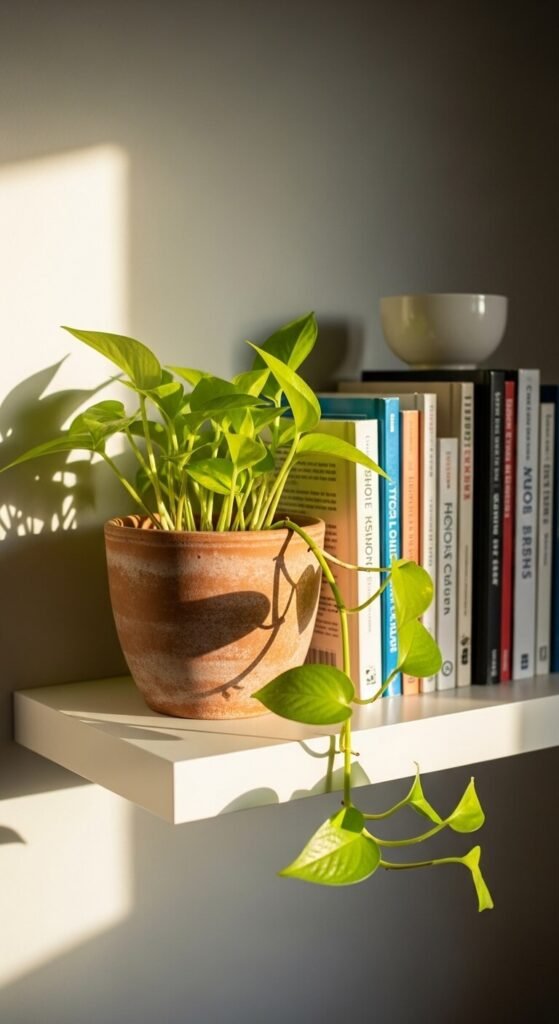
Live plants change everything on a shelf.
They add color, texture, and movement — no styling tricks required. Small pothos, succulents, or a baby peace lily all work well indoors. A 4-inch plant in a terracotta pot costs $4–$8 at most grocery stores or garden centers. Let the leaves trail slightly over the shelf edge for a relaxed, organic look. If you can’t keep plants alive, a high-quality faux option from a thrift store works just as well visually.
6. Use a Small Tray to Group Objects
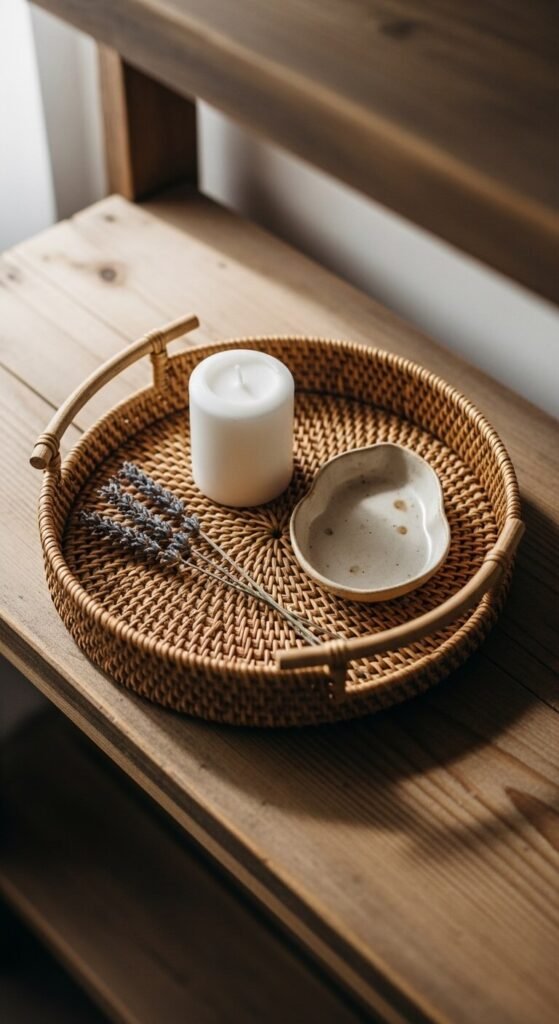
Trays make random objects look intentional.
When small items feel scattered, a tray pulls them together. A round rattan or wooden tray works beautifully for spring. Thrift stores almost always carry them. Group three to five small objects inside — a candle, a small dish, a dried stem. The tray acts as a frame. Everything inside looks curated. Keep the tray itself neutral so it doesn’t compete with what’s inside it. This is one of the easiest upgrades with the biggest visual payoff.
7. Introduce Dried Botanicals
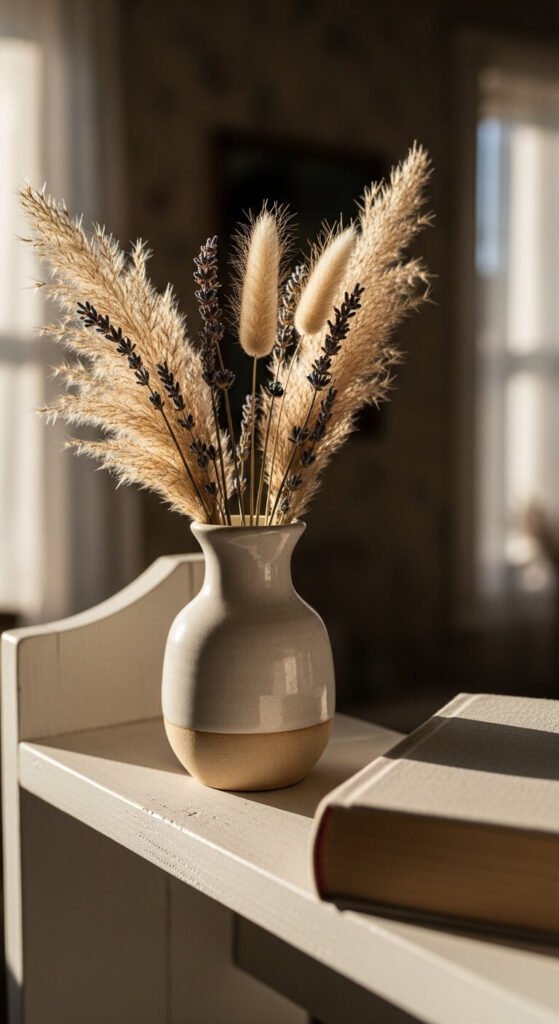
Dried botanicals last for months with zero maintenance.
They bring texture and a soft, natural tone that works perfectly for spring. Dried lavender, pampas grass, and bunny tail grass are easy to find and very affordable. A small bundle costs $3–$8 at craft stores or farmers markets. Place them in a simple ceramic vase or even a mason jar. They don’t need water, don’t wilt, and keep shelves looking styled without any ongoing effort. A great option if you travel often or forget to water things.
8. Add a Small Piece of Art or a Print
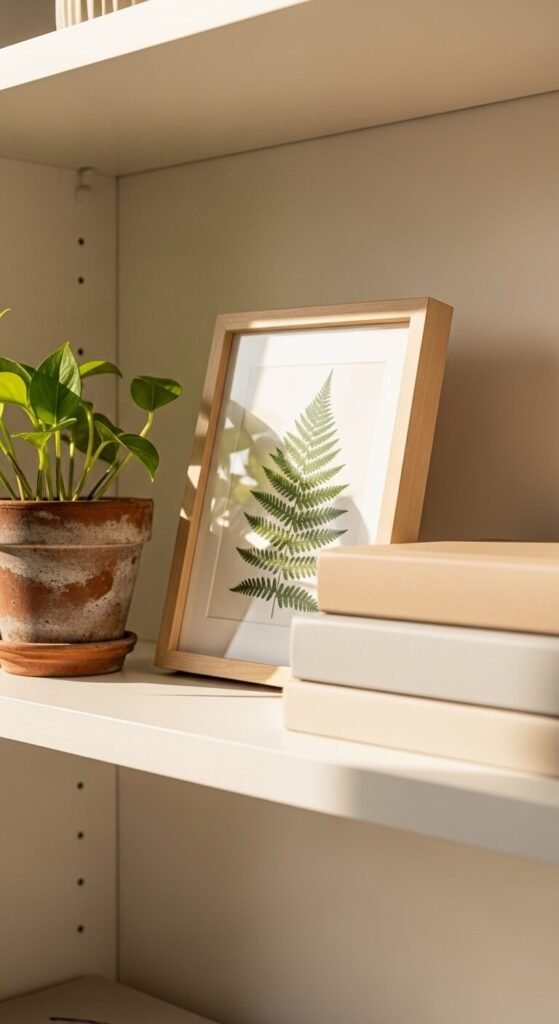
Art doesn’t have to hang on the wall.
Leaning a small framed print on a shelf is a relaxed, informal look that suits spring beautifully. Botanical illustrations, simple line drawings, or watercolor prints work especially well. Print a free image from a public domain site and frame it yourself for under $10. Try thrift stores for frames — they’re almost always available. Lean the frame toward the back of the shelf slightly. It creates a layered look without hammering a single nail.
9. Try a White or Cream Ceramic Piece
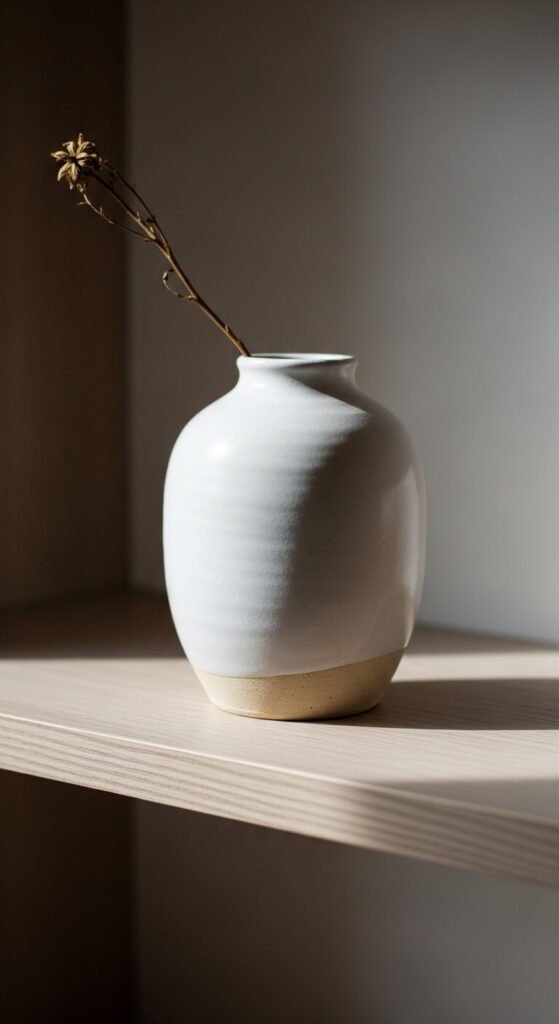
White ceramics are shelf workhorses.
They go with everything and quietly anchor a shelf without demanding attention. A matte white or cream vase, small bowl, or trinket dish adds shape and softness. Look for imperfect, handmade-looking pieces — they feel more alive than machine-perfect options. Thrift stores regularly have white ceramics for under $3. Use them empty or add a single stem. They work in every room and every season, but especially feel right in spring when everything else is light and airy.
10. Display Something from Nature
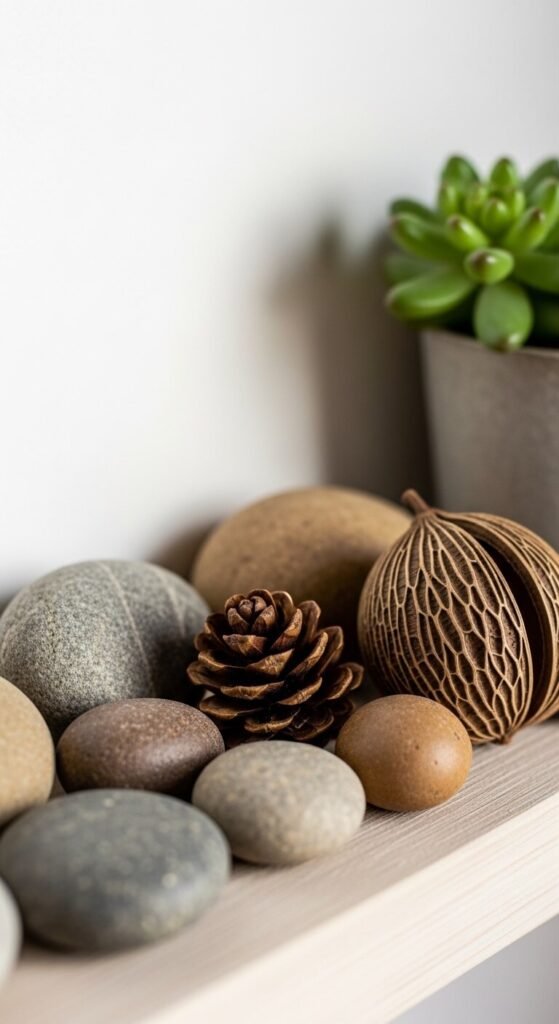
Nature offers free, beautiful shelf decor.
A few smooth stones, a small piece of driftwood, a dried seed pod, or a pinecone can add organic texture without costing a thing. Gather items from a walk outside and arrange them in a small cluster. Keep it simple — three to five pieces maximum. The key is choosing items with interesting texture or shape. Group them together rather than scattering them. A small bowl or tray underneath keeps them looking intentional rather than like you just set them down and forgot.
11. Use Varying Heights
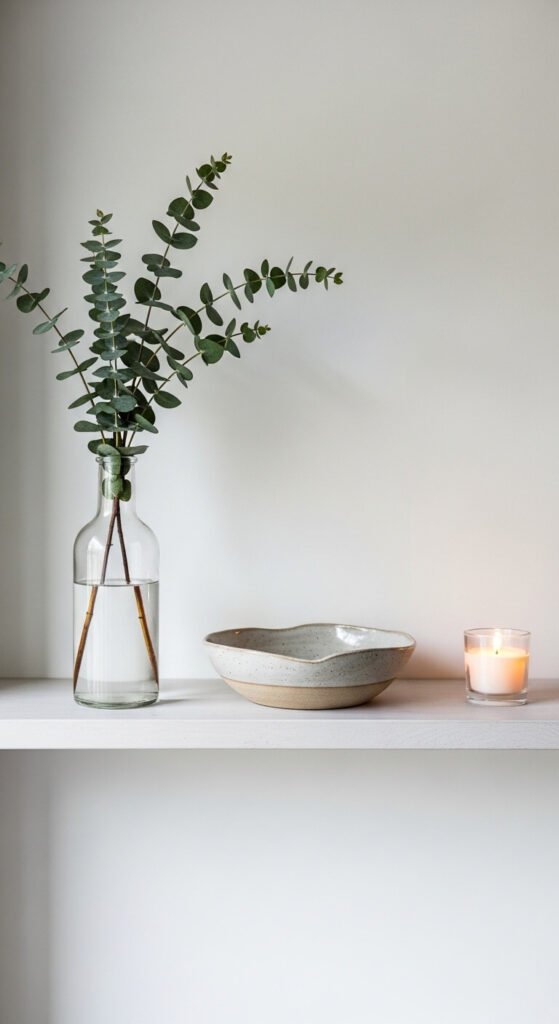
Height variation is the most underrated shelf trick.
When everything sits at the same level, a shelf looks flat and boring. Use tall, medium, and low objects together to create movement. A tall vase at the back, a medium book stack in the middle, a small candle at the front. This creates a natural triangle that draws the eye. You don’t need to buy anything new — just redistribute what you already own at different heights. It takes five minutes and makes an immediate difference.
12. Bring in a Woven or Textured Element
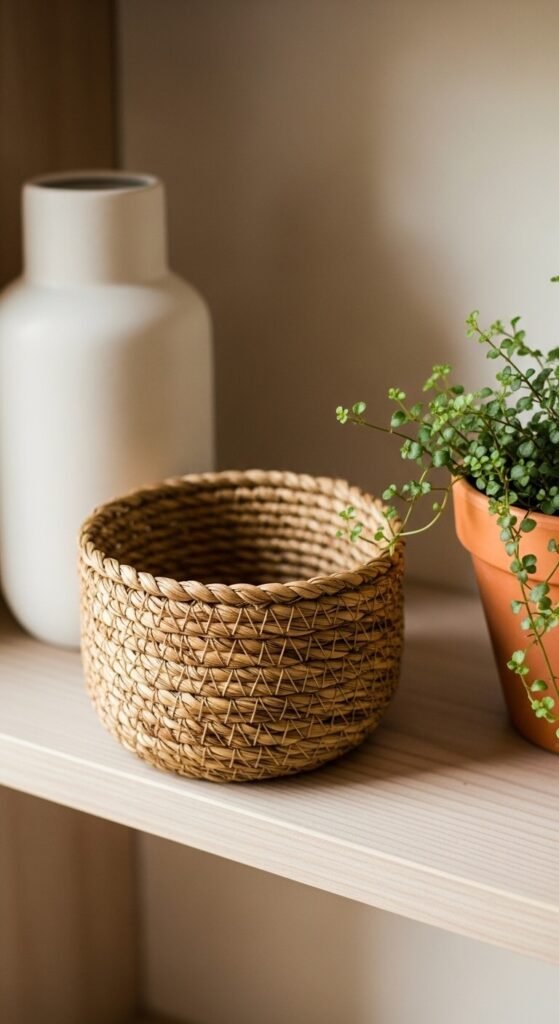
Texture keeps shelves from looking flat.
A small woven basket, a macramé piece, or a rattan object adds warmth and dimension. Woven textures are especially at home in spring — they feel natural, light, and relaxed. Thrift stores are full of small baskets for $1–$4. Use one to corral remotes or cords on lower shelves, or display it open with a small plant inside. The weave catches light differently than smooth surfaces, which automatically adds visual interest without adding visual noise.
13. Edit Ruthlessly Before Styling
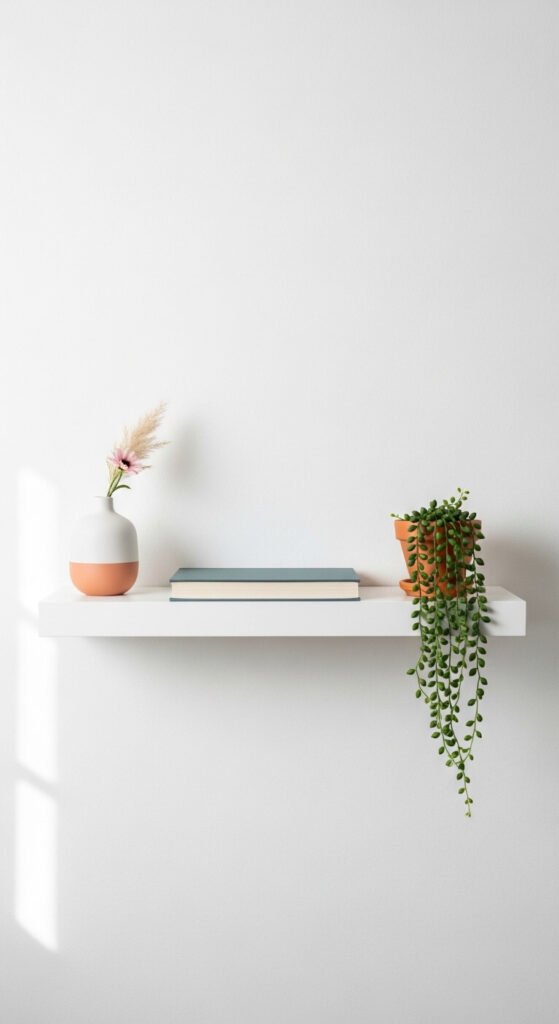
Less truly is more on a styled shelf.
Before adding anything new, take everything off. Then put back only what you genuinely love. Edit down to two-thirds of what you had. Empty space is not wasted space — it gives your eye somewhere to rest. Most over-styled shelves aren’t missing more objects; they’re missing more empty spots. This step costs nothing and often makes a bigger difference than any purchase. Give your shelves room to breathe, and the pieces you keep will finally get noticed.
14. Stack Books With Pretty Spines Facing Out
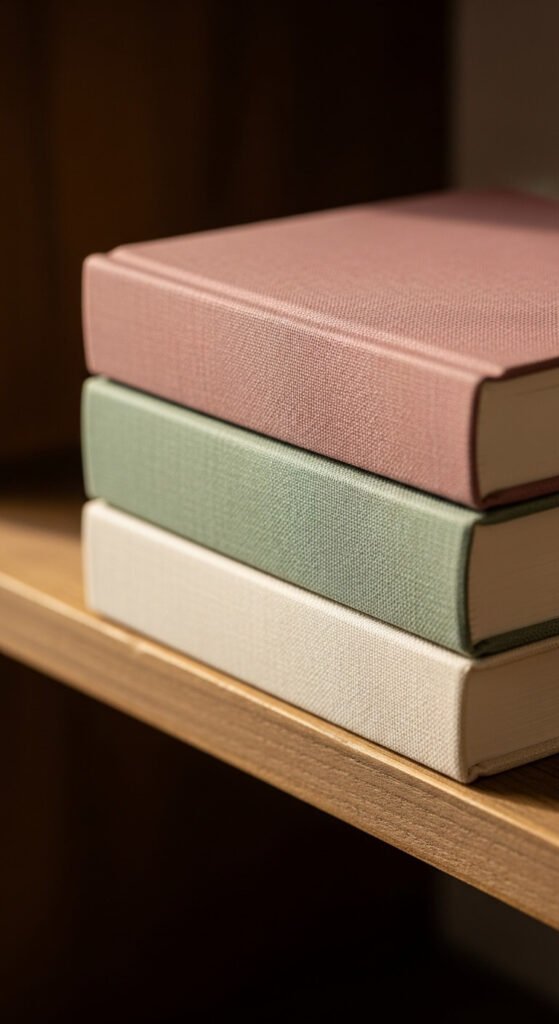
Book covers can be decor all on their own.
Most people hide book spines facing out. But books with attractive covers facing forward act like tiny pieces of art. Look through what you own for cloth-bound, linen-covered, or illustrated books. Lay them flat with the cover up. Stack two or three together on a shelf section. Coffee table books work especially well. If your books don’t have great covers, wrap them in kraft paper or fabric for a cohesive, neutral look that still adds texture and visual interest.
15. Add a Small Lantern or Candleholder
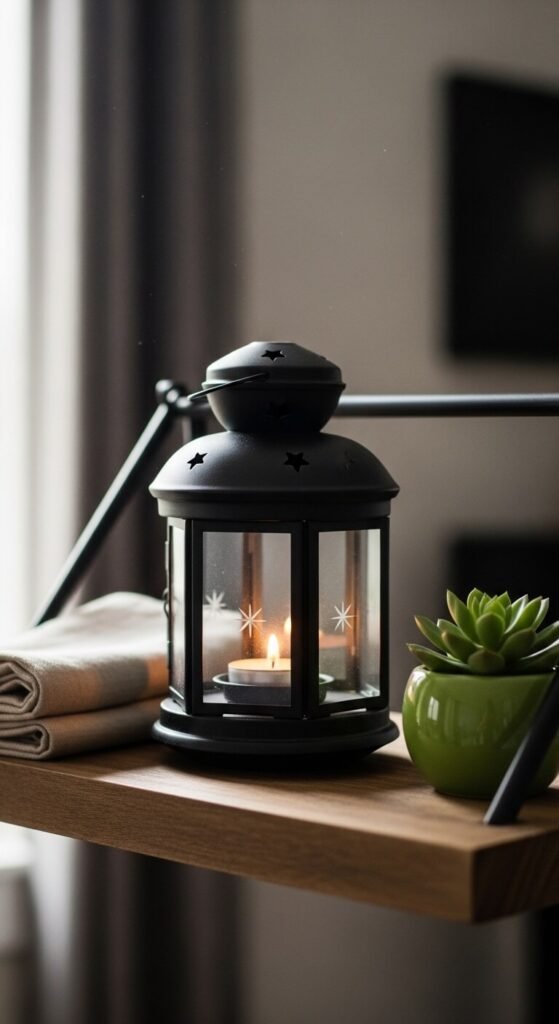
Lanterns add warmth and a sense of occasion.
A small lantern on a shelf catches light beautifully, even when unlit. Choose a simple metal or glass style — nothing too ornate for spring. Thrift stores usually carry them for under $5. Place a battery-operated tea light inside if you want the glow without the fire risk. Lanterns also work well grouped with a plant or a trailing stem. They add an architectural element that feels intentional without being fussy.
16. Incorporate a Small Clock
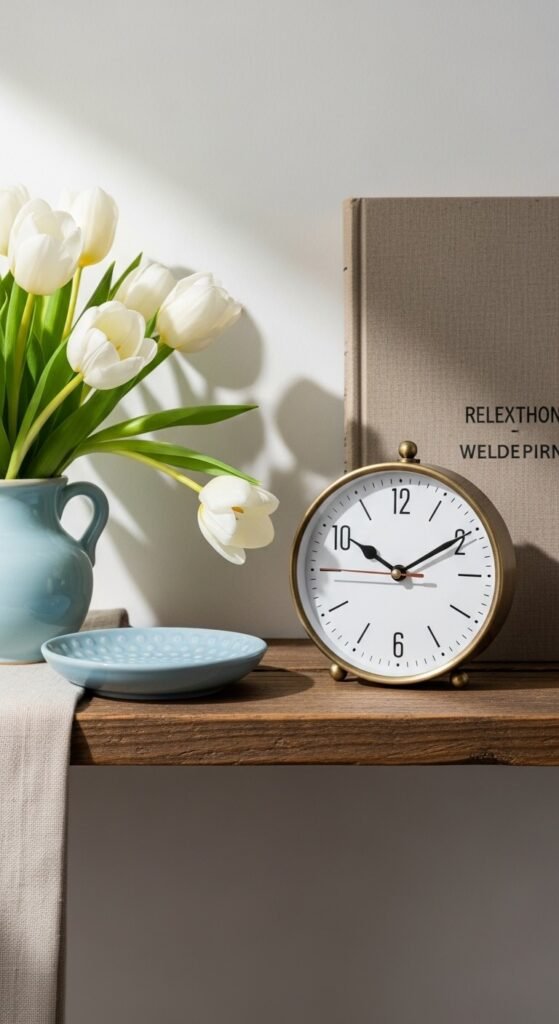
A clock is functional decor at its best.
It earns its place on a shelf by doing something useful. A small, simple clock with a clean face reads as classic and understated. Look for round faces in white, cream, or brass tones. Antique and thrift stores often have charming options for $5–$15. Position it slightly off-center in a shelf arrangement. It anchors the grouping and adds a sense of permanence. This is a great way to bring function into a shelf without it looking like you just tossed an object there.
17. Use a Small Chalkboard or Sign
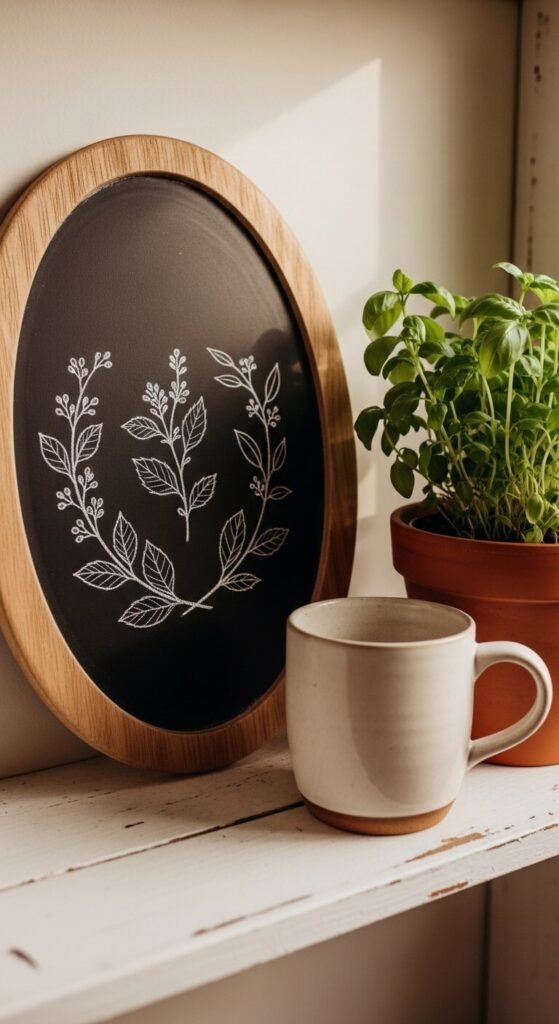
A small chalkboard adds personality without clutter.
Use a tiny chalkboard to sketch a simple floral doodle or leave it plain. The dark contrast reads beautifully against light spring tones. Mini chalkboards are easy to find at craft stores or thrift shops for under $5. You can change the sketch seasonally — draw a tulip in spring, a leaf in fall. It adds a handmade, personal touch that no purchased item can replicate. And it costs almost nothing to refresh whenever you feel like it.
18. Bring Out Your Pastel Dishware
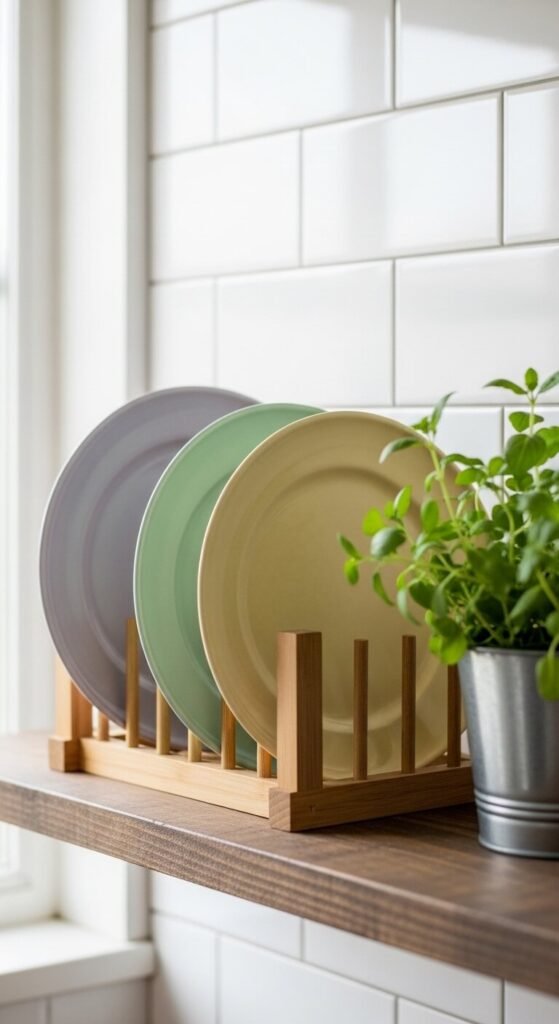
Your kitchen shelves deserve spring treatment too.
If you have open kitchen shelving, swap out dark or neutral dishware for lighter, softer pieces. Pastel plates or bowls leaned upright in a small dish stand look charming and seasonal. You may already own something with soft color — check the back of the cabinet. Even a single pale yellow pitcher or a sage green bowl changes the energy of a kitchen shelf dramatically. It’s a free restyle using what you already have.
19. Create a Mini Herb Garden Shelf
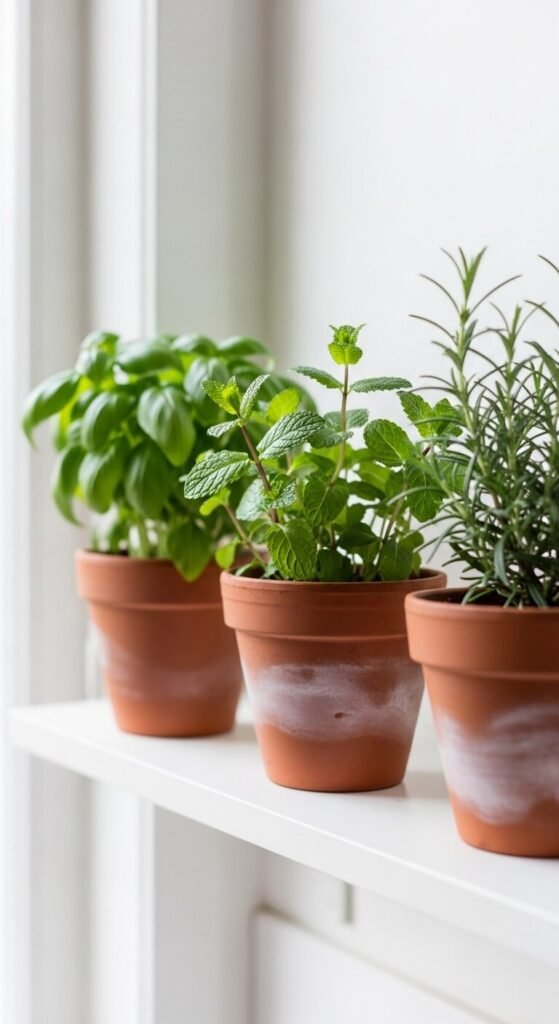
Fresh herbs are the most functional spring decor you can have.
A row of small herb pots on a kitchen shelf smells wonderful, looks beautiful, and actually gets used. Basil, mint, and rosemary all grow well indoors with decent light. A 2-inch pot costs $2–$4 at most grocery stores. Use matching terracotta pots for a cohesive look. Label them with small kraft paper tags tied with twine if you want to add a tiny decorative detail. It’s the rare shelf decor that also improves your cooking.
20. Layer With a Small Mirror
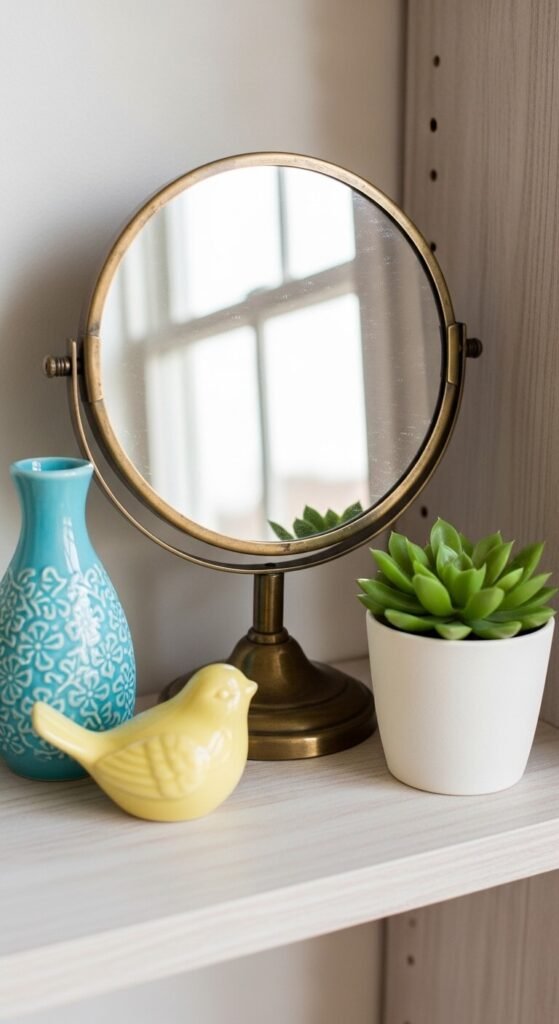
Mirrors make shelves feel larger and brighter.
Even a very small mirror leaned at the back of a shelf bounces light around the room. A round mirror with a simple brass or wood frame reads as classic and works for spring. Thrift stores almost always have small mirrors for $3–$8. Lean it against the back wall of the shelf and arrange objects in front of it. The reflection creates depth and adds a soft brightness. It’s a clever trick that makes a shelf feel more designed than it actually is.
21. Finish With Something Personal
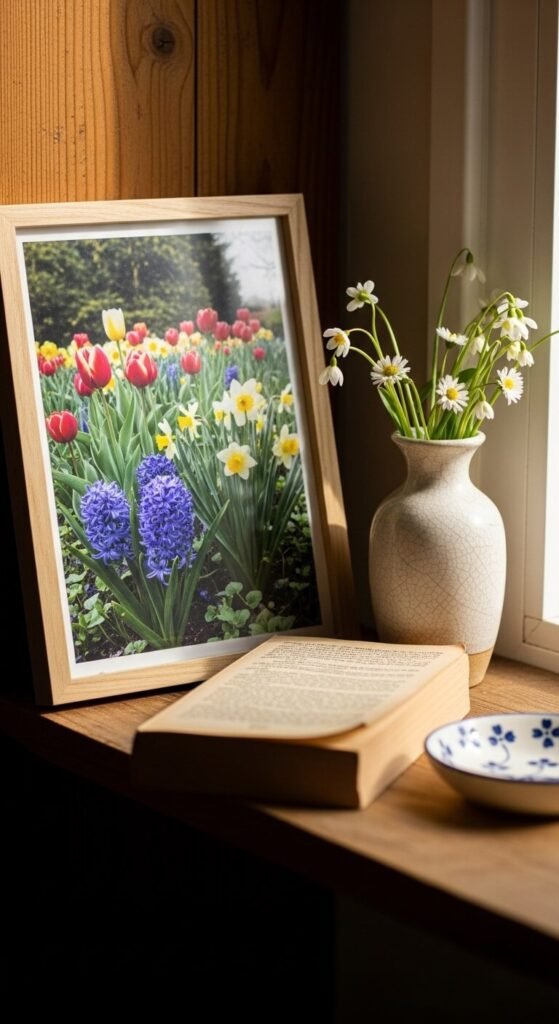
The best-styled shelf tells a story about you.
Include at least one thing that has personal meaning — a small photo, a souvenir, a handmade object, or a gift from someone you love. Styling without personality looks like a showroom. That one personal piece is what makes a shelf feel like it belongs to a real person with a real life. It doesn’t need to be displayed prominently. Tuck it in the corner of a grouping. It will be the thing people notice first and remember longest.
Conclusion
Spring shelf styling doesn’t require a spending spree or a complete overhaul. The best results come from working with what you already have — editing down, adding a little color, bringing in something alive, and making space for beauty to breathe. Whether you swap a single stem into a bud vase or restyle an entire bookcase, each small change adds up. Pick one shelf, clear it off, and start with just three objects. Go from there. Your home is already full of the ingredients — spring is simply a good excuse to arrange them with a little more care.