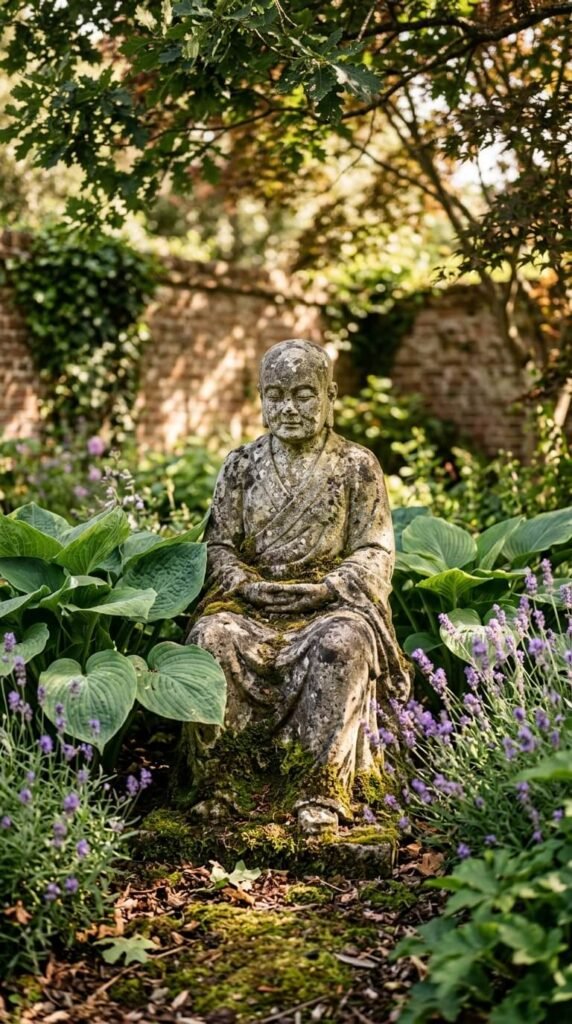
Placing a garden statue in the right spot can completely change how your outdoor space feels. It draws the eye, creates a focal point, and gives your yard a sense of personality. But a statue plopped in the wrong place just collects bird droppings and looks forgotten. This guide walks you through 22 smart, affordable ways to position garden statues so they actually work for your space — big or small, formal or wild.
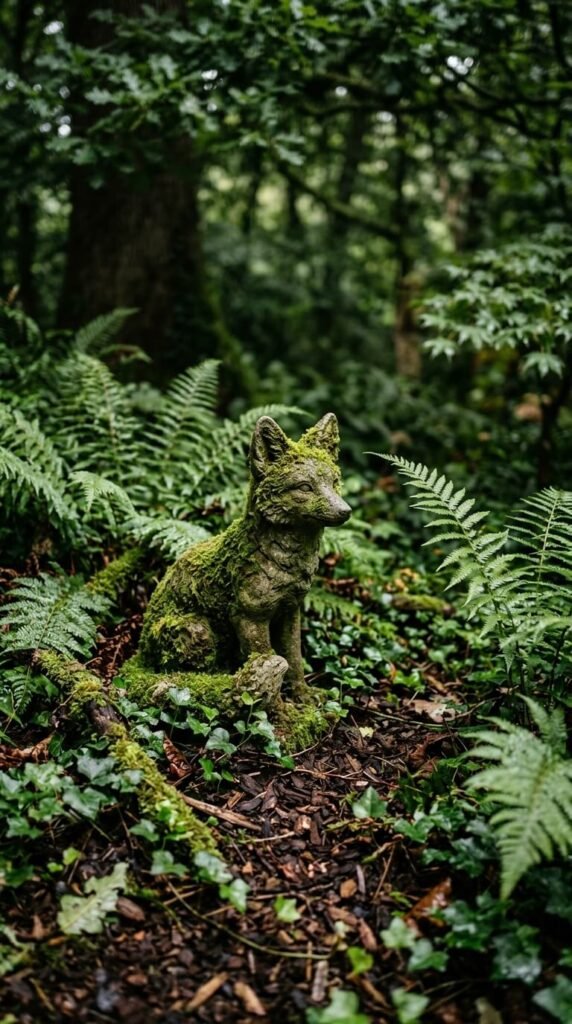
1. The Shaded Woodland Corner
Shaded corners often feel dead and neglected. A small animal statue — a fox, rabbit, or owl — changes that instantly. Tuck it between ferns or hostas so it peeks out naturally. This works especially well in yards with mature trees. You don’t need an expensive piece. A resin statue from a garden center works fine. Add a bit of moss paste (yogurt + moss) to aged concrete pieces for a woodland feel within weeks.
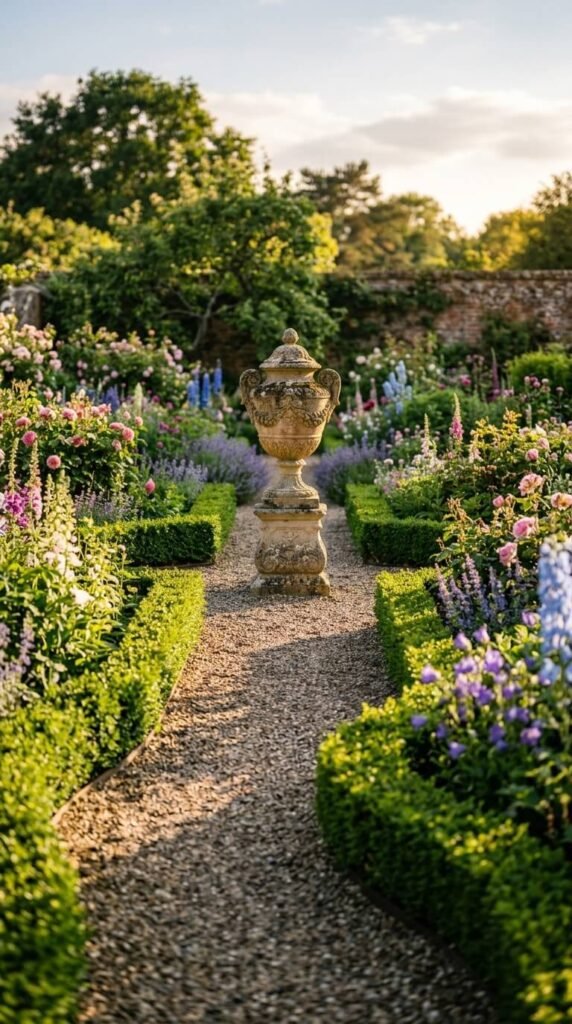
2. At the End of a Garden Path
A statue at the end of a path gives walkers a destination. It pulls the eye forward and makes even a short path feel intentional. Choose something with height — an urn, an angel, or a tall bird figure. Place it centered on the path’s endpoint. This trick works on any budget. A painted concrete birdbath pedestal with a simple top piece costs under $40 and does the job perfectly.
3. Flanking an Entrance Gate
Two matching statues on either side of a gate or doorway create instant symmetry and a formal welcome. Lions, urns, or topiary balls in pots all work. Matching is the key — asymmetry here looks accidental, not artistic. You can find affordable pairs at discount home stores or online. Seal them well if they’re resin or lightweight concrete so they don’t crack in frost.
4. Peeking Through a Hedge
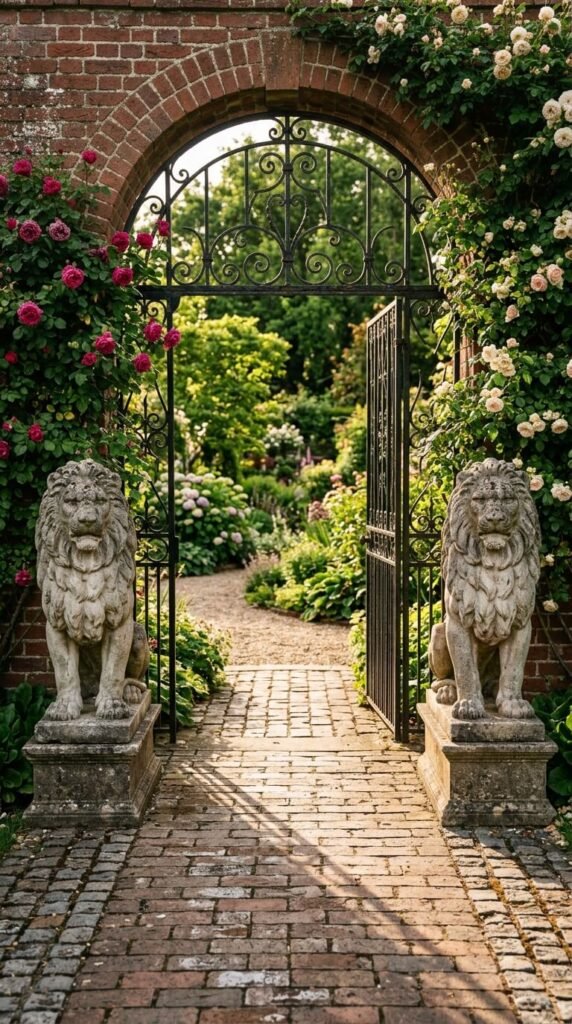
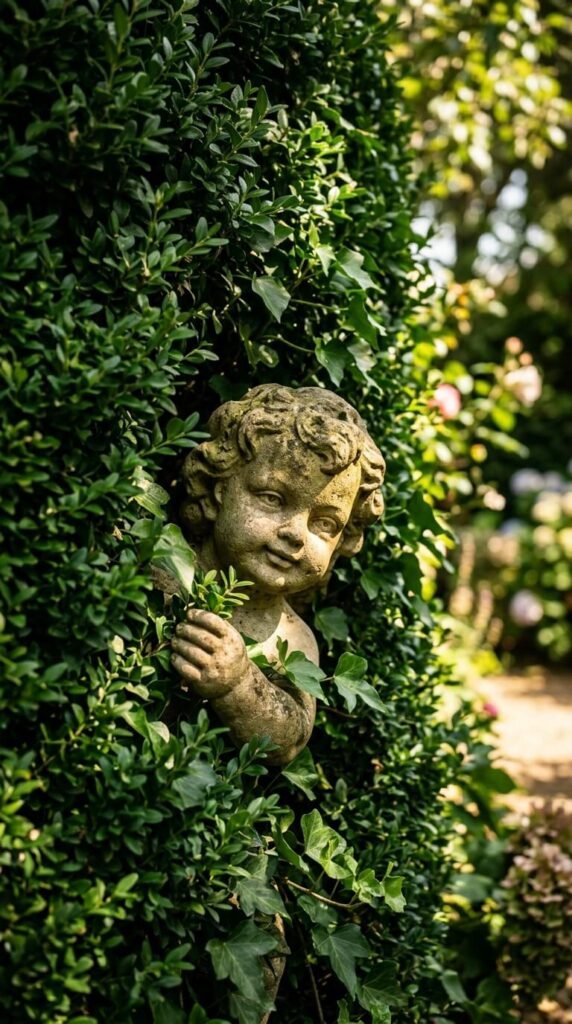
This is one of the most charming placements you can do. A small statue half-hidden by a hedge creates a sense of discovery. Guests find it and smile. It feels less like décor and more like something that belongs in the garden naturally. Use any small figure — a gnome, a fairy, or a child statue. Push it about halfway into the hedge so only part of it is visible from the main path.
5. Beside a Garden Pond or Water Feature
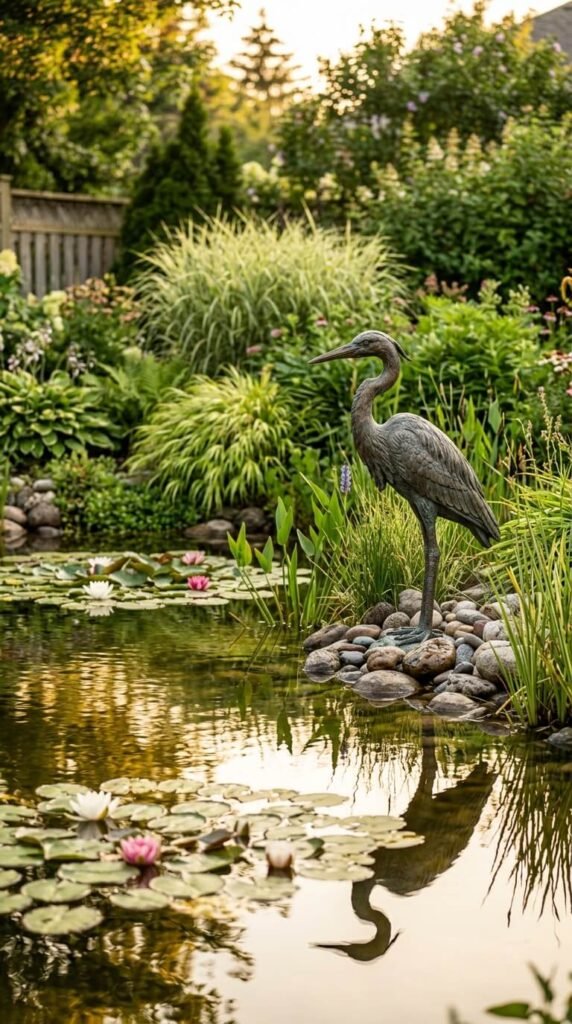
Water and statues are a natural pairing. A heron, frog, or kneeling figure beside a pond looks like it belongs there. The reflection in the water doubles the visual impact. Even a small container water garden benefits from a nearby figure. Position the statue so it appears to interact with the water — looking at it, stepping toward it, or sitting beside it. This creates a story without any words.
6. Rising from a Ground Cover Bed
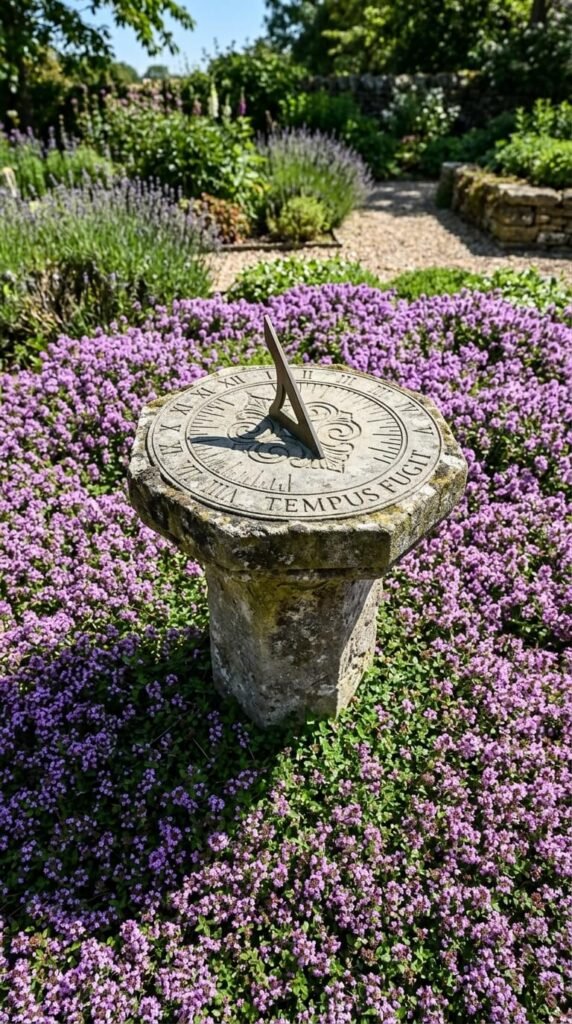
Ground cover plants like creeping thyme, sedum, or ajuga make a perfect low frame for a statue. The statue appears to grow out of the planting, which looks organic rather than staged. Sundials, stone animals, and short figurines work especially well here. Plant the ground cover first and let it establish. Then place the statue so the plants grow up naturally around its base over time.
7. As a Focal Point in a Raised Bed
A raised bed is already framed, which makes it perfect for displaying a statue. Place something tall in the center or off-center — an urn, obelisk, or abstract piece. Surrounding plants grow toward it and create a living frame. This works especially well in kitchen gardens where a decorative element gives the vegetable bed a little personality. Use rot-resistant materials if the statue sits directly in the soil.
8. Nestled in a Rock Garden
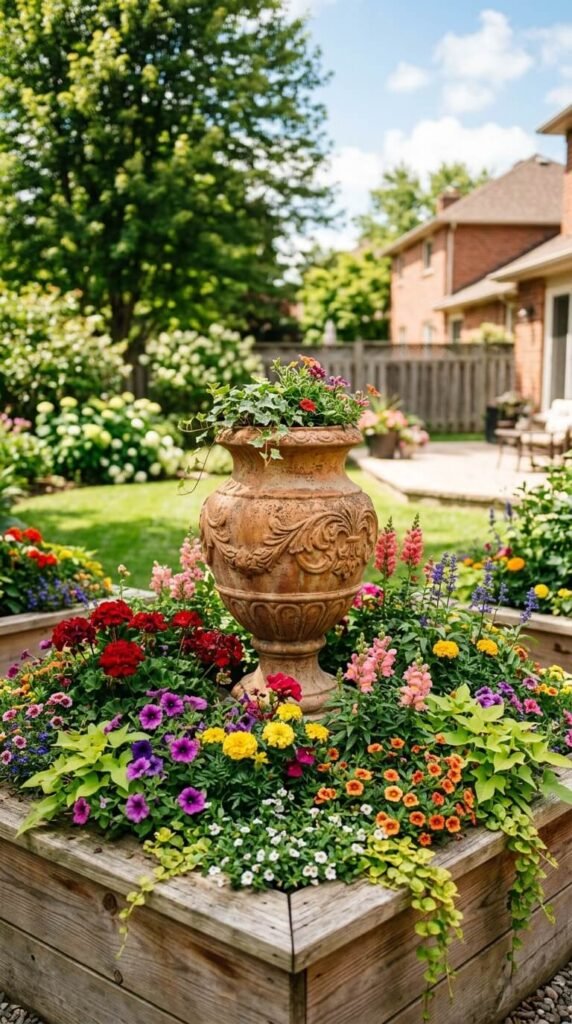
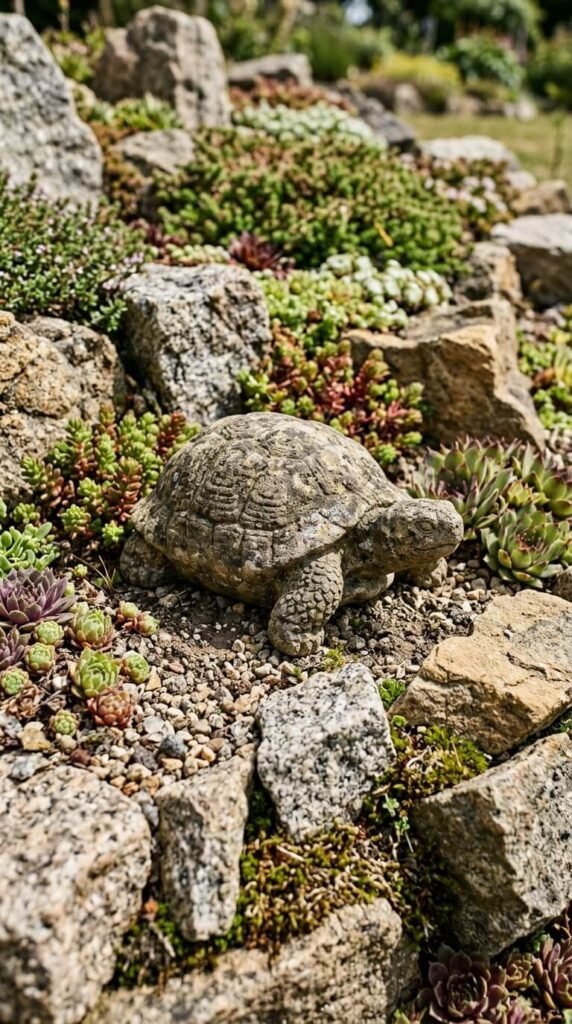
Rock gardens have a natural, rugged feel. A stone animal — tortoise, lizard, or toad — blends in like it’s simply resting there. The trick is to use a piece that matches the rock’s color and texture. Avoid bright or shiny finishes. Grey, brown, or weathered green finishes disappear into the rocks the right way. Settle the statue slightly into the gravel or mulch so it looks grounded rather than placed.
9. Under a Specimen Tree
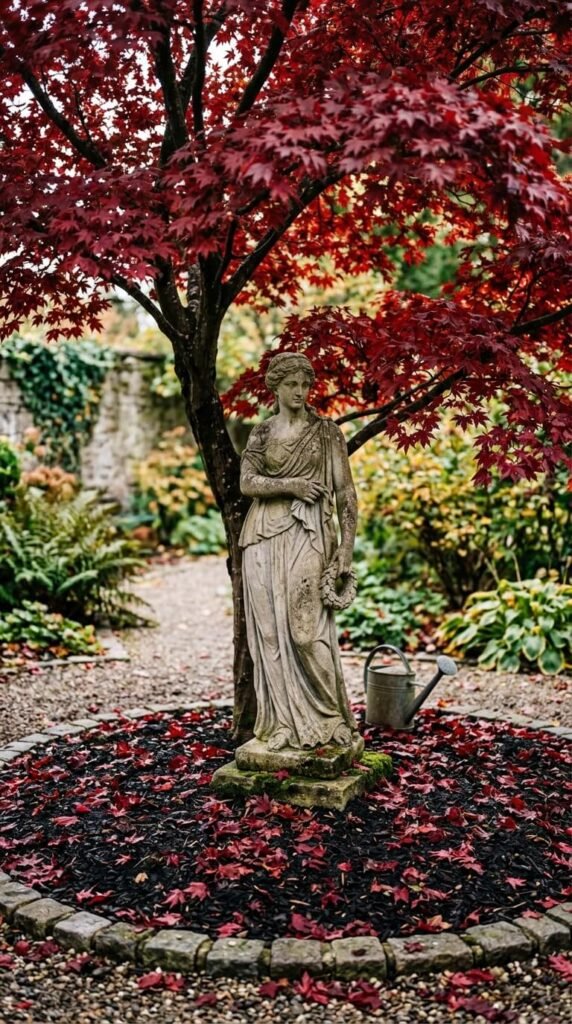
A large specimen tree — Japanese maple, magnolia, or weeping cherry — creates a natural canopy. Placing a statue beneath it makes the tree and statue feel like a composed scene. Use a circular mulch bed around the tree and position the statue at the edge or near the trunk. The changing seasons change how the vignette looks, which keeps it interesting year-round.
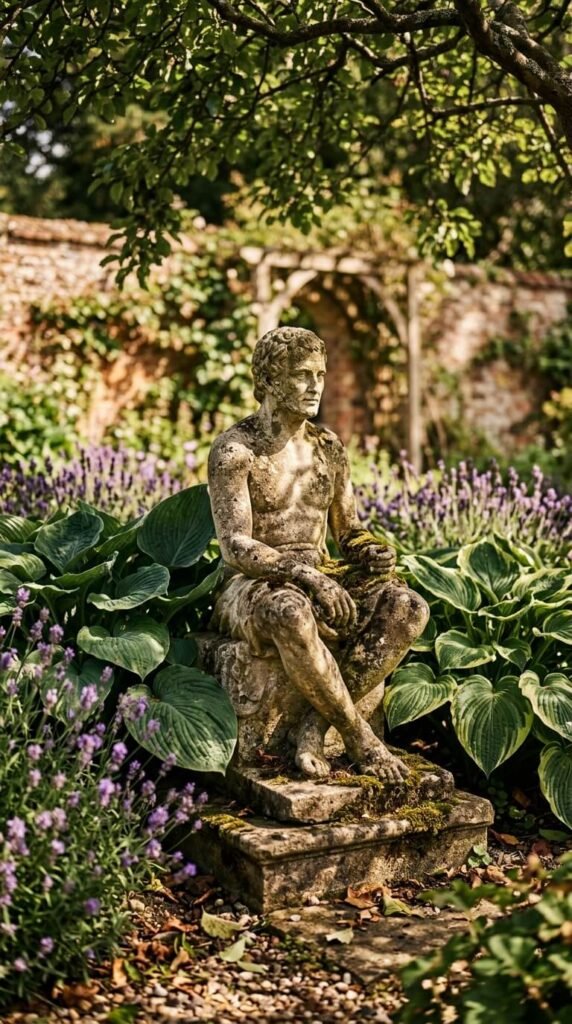
10. At a Garden Bench Companion
A seated figure beside a garden bench creates a moment of whimsy and warmth. It looks like someone is already sitting there waiting. This works especially well in cottage-style gardens. Use a figure of similar scale to a person seated — not too small. You can find resin seated figures at garden centers for $30–60. Position it at one end so there’s still room for a human to sit on the other side.
11. Framed by an Arch or Pergola
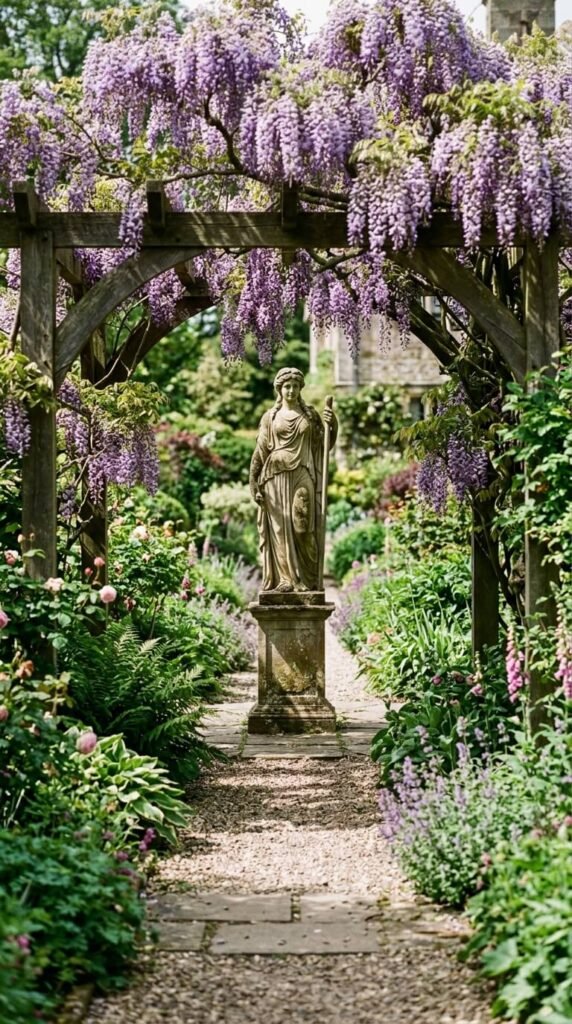
Architectural structures like arches, pergolas, or arbors create a natural frame. Positioning a statue directly beneath or just inside the frame doubles the drama. The arch acts like a picture border, drawing the eye straight to the piece. A goddess, angel, or abstract vertical form works best here. Make sure the statue is visible from a distance — this placement is meant to create a long-view focal point.
12. On a Plinth or Pedestal in a Lawn
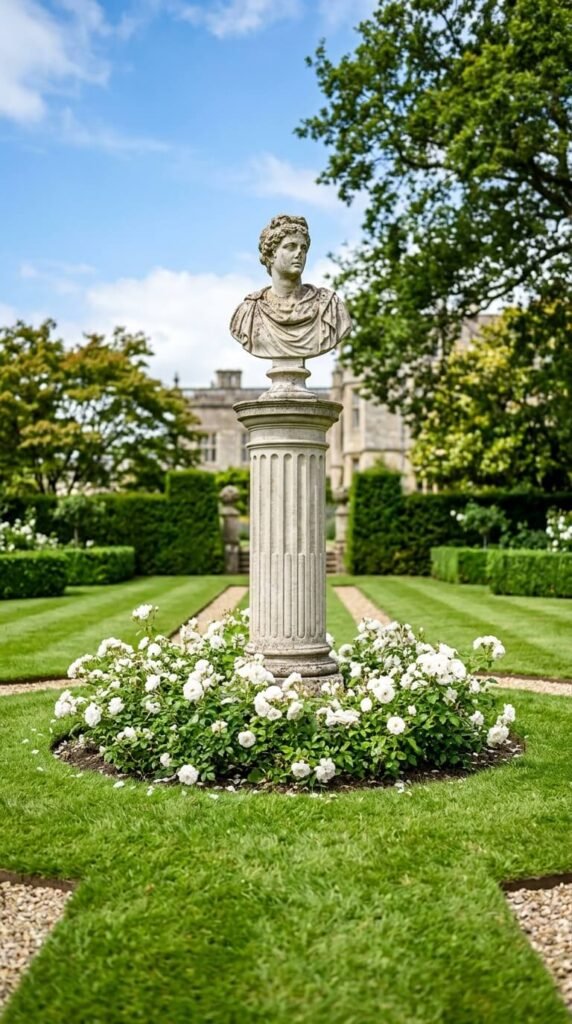
Elevating a statue on a pedestal gives it authority. It says: look at this. A plain lawn with a centered pedestal and figure becomes a formal garden moment with very little effort. You can buy or make a simple concrete block pedestal. Paint it to match the statue’s finish. The height change pulls the eye up and makes the figure far more visible from across the yard.
13. Hidden in a Flower Border
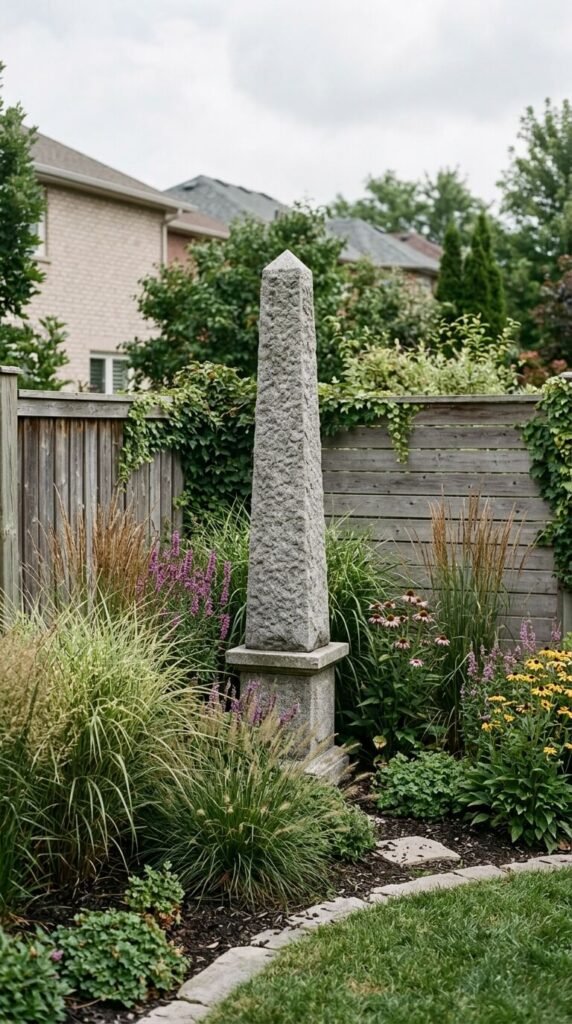
Hiding a small statue deep inside a flower border rewards curious visitors. It turns your garden into a scavenger hunt. Use small figures — fairies, gnomes, or animals — that fit naturally within the planting. Position them at mid-border so they’re visible from one angle only. This placement works especially well in dense cottage borders where the planting creates natural concealment. It’s a simple detail that guests always notice and comment on.
14. Anchoring a Corner Bed
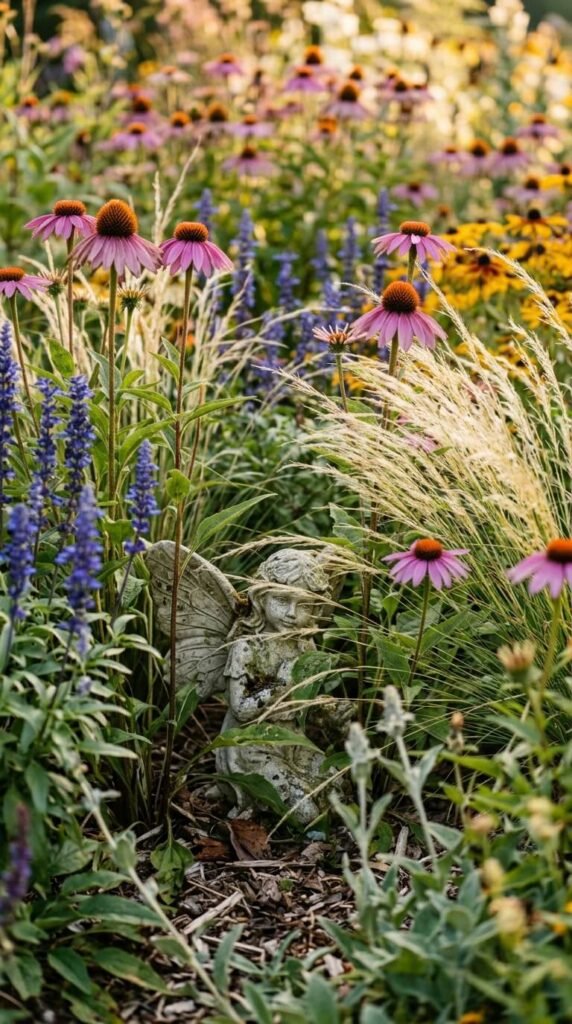
Corner beds often lack height and structure. A tall statue — obelisk, column, or vertical figure — anchors the corner and gives the bed a backbone. This also helps define the space visually. Without a vertical anchor, corner beds spread without purpose. Choose a piece that’s at least two-thirds the height of the surrounding fence. Stone, resin, or even a tall metal stake piece all work depending on your budget and style.
15. Reflected in a Garden Mirror
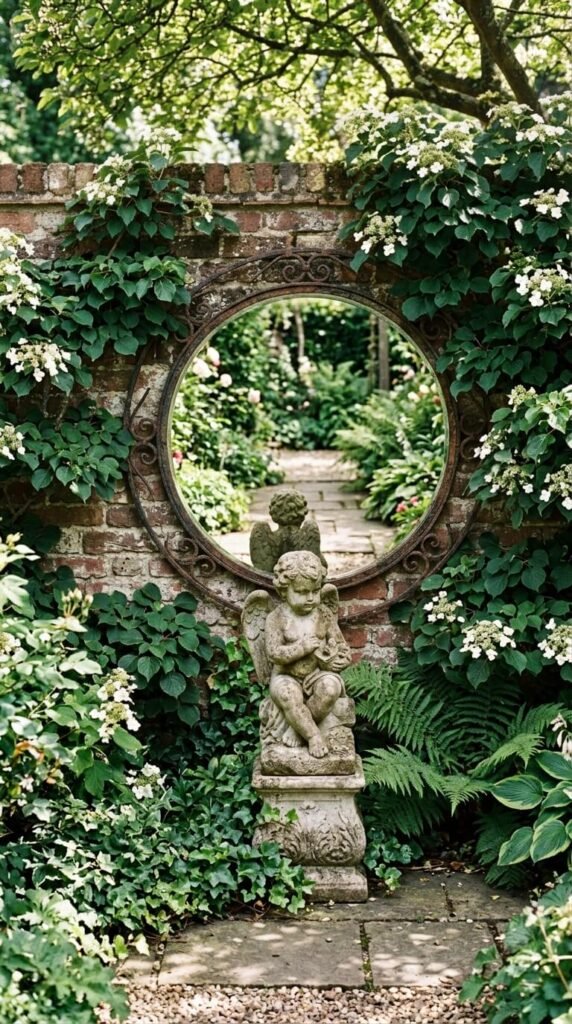
A garden mirror doubles the visual space of a small garden. Positioning a statue in front of one creates a reflection that looks like a twin figure in a deeper garden. This trick works brilliantly in small courtyard gardens or walled spaces. Use a weatherproof outdoor mirror. Position the statue close enough that the reflection is clear, but angle it slightly so visitors don’t walk directly into the mirror.
16. Marking a Garden Room Threshold
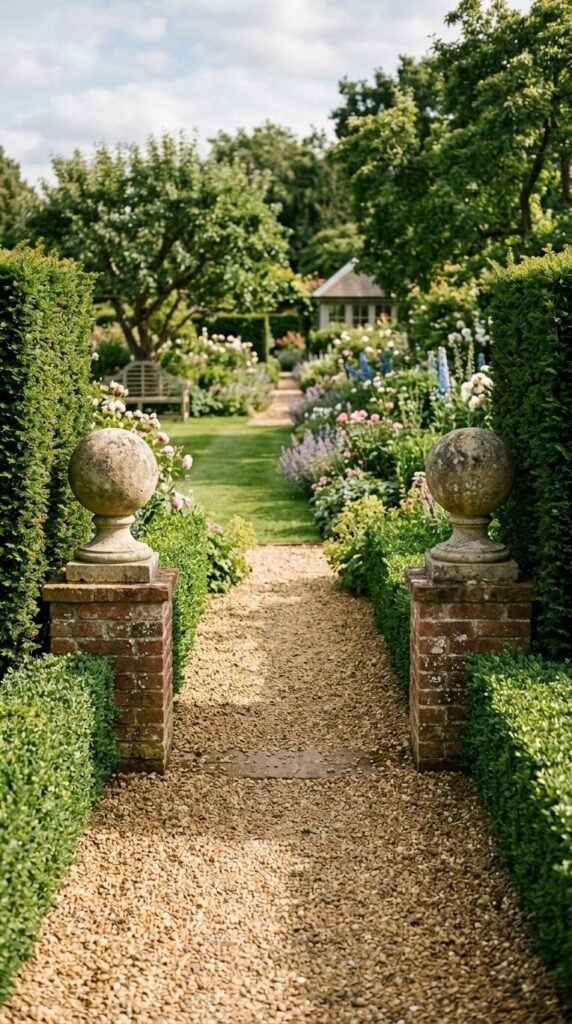
Many larger gardens have distinct “rooms” — vegetable garden, sitting area, cutting garden. Placing statues at the threshold between rooms marks the transition. Two matching pieces on low pillars or posts work perfectly. Even simple ball finials from a hardware store serve this purpose. It signals to the visitor: you are entering a different space. This is a low-cost detail that adds significant structure and intentionality to the garden layout.
17. Beside Steps or a Garden Staircase
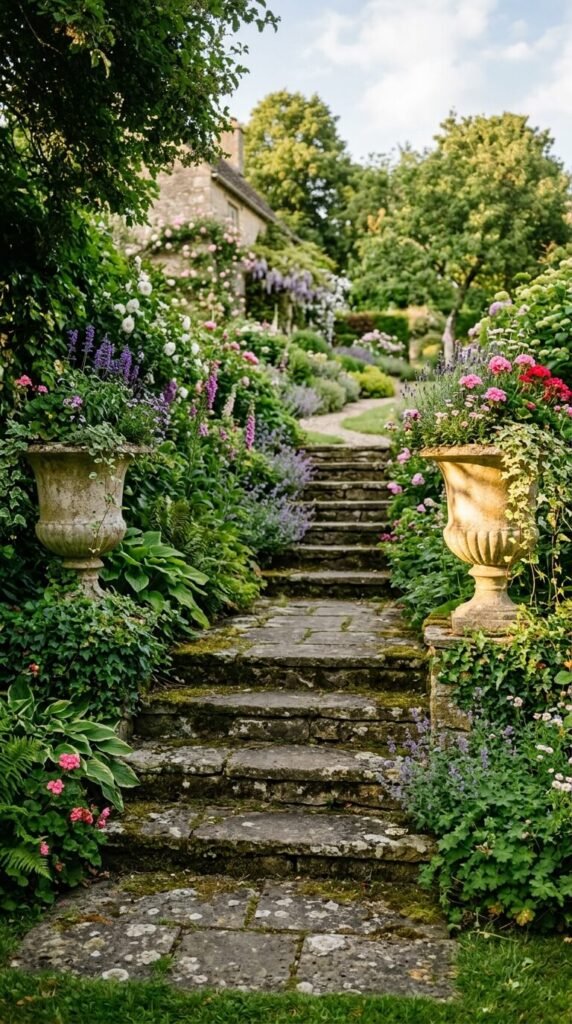
Steps need something to anchor them visually. Placing a statue or urn at the base or top of garden steps frames the transition between levels and makes the staircase feel purposeful. Urns with trailing plants are especially effective because they soften the hard edges of the steps. Secure anything placed near steps properly — topple risk is real, especially with lightweight resin pieces. Use adhesive or a weighted base.
18. Among Ornamental Grasses
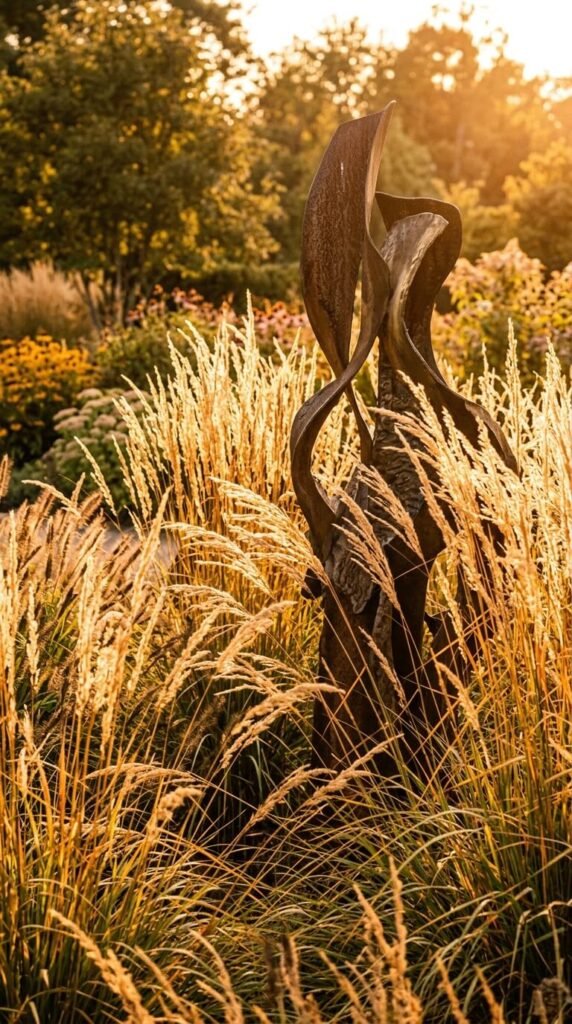
Ornamental grasses move in the wind. Pairing a still, solid statue with moving grasses creates a beautiful contrast. Abstract or geometric pieces work especially well here because they don’t compete with the organic shapes of the grass. Position the statue so it’s partially screened by the grass in summer but fully exposed in winter when the grasses die back. This gives the statue two distinct looks across the seasons.
19. At the Base of a Wall or Fence
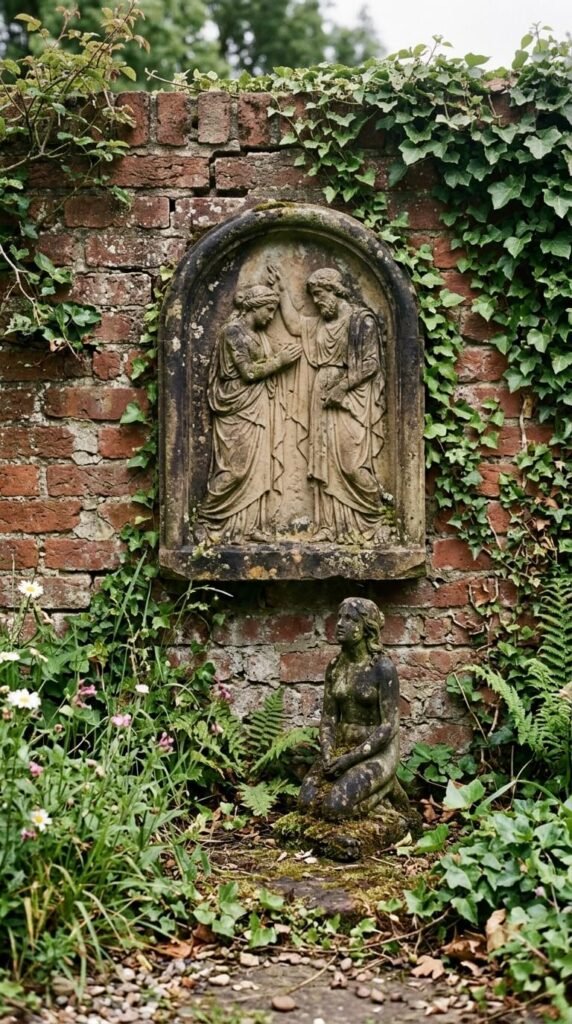
Walls and fences are often neglected vertical surfaces. A statue placed at the base of a wall, or mounted onto it as a relief piece, uses vertical space effectively. This is especially useful in small gardens with limited floor space. A small figure leaning against a wall, or a wall-mounted face with a water spout, draws the eye upward. Pair it with a climbing plant to soften the wall surface further.
20. In a Pot or Container Group
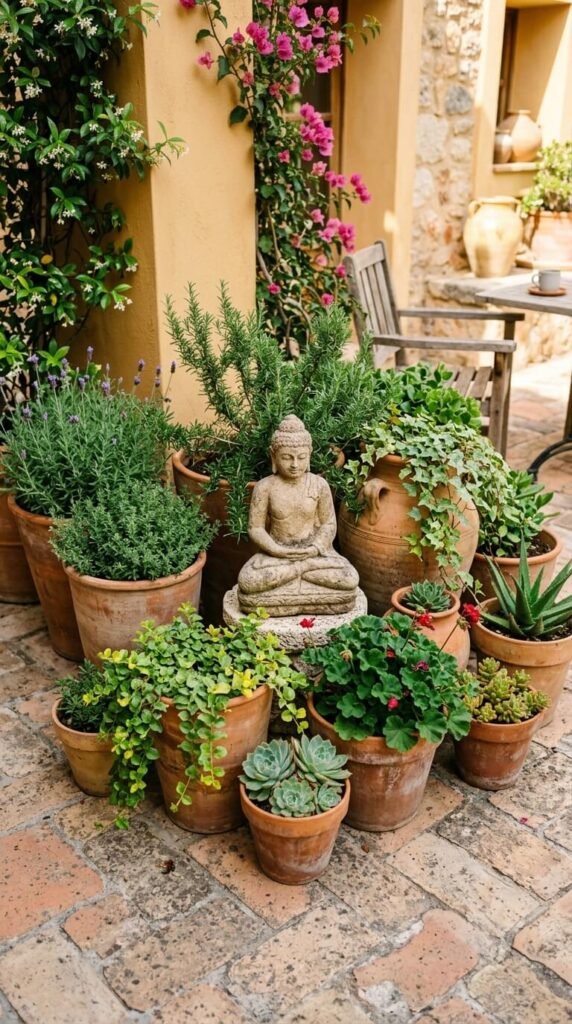
You don’t need a garden bed to display a statue. Grouping a small statue among a cluster of containers on a patio or deck is a simple and flexible approach. The surrounding pots create context and scale. Use pots of varying heights so the statue sits at a natural mid-level. This also means you can move the whole arrangement easily if you want to change things up seasonally. No planting or digging required.
21. As a Birdbath Centerpiece
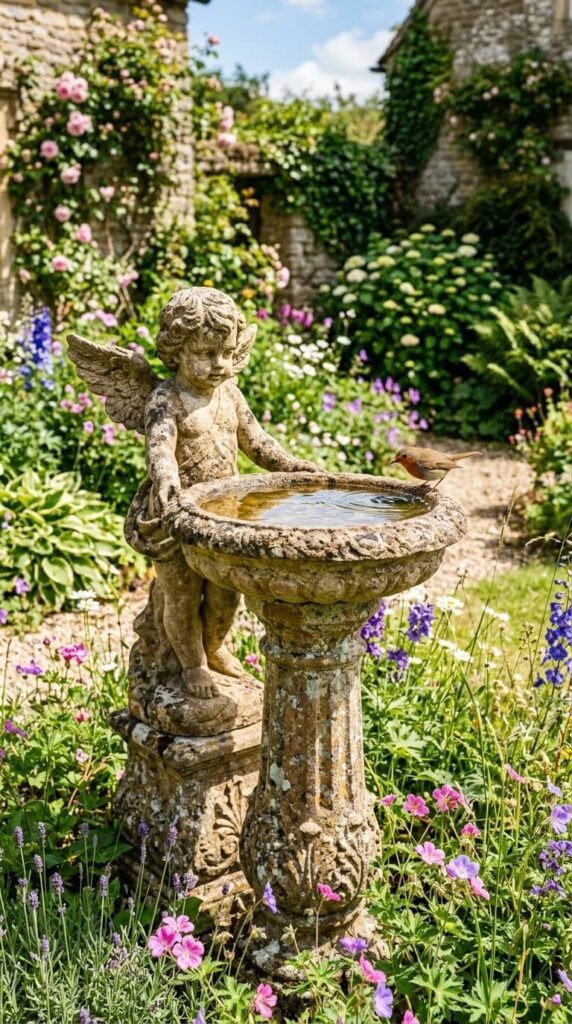
A birdbath is a statue with a function. Adding one to a sunny, open spot serves both birds and visual interest. Position it in the open, away from dense shrubs where cats can hide. Keep it at a comfortable viewing distance from a window so you can watch birds use it. Fill it regularly — birds will keep coming back. A simple concrete birdbath costs under $50 and improves any garden immediately.
22. As Part of a Themed Vignette
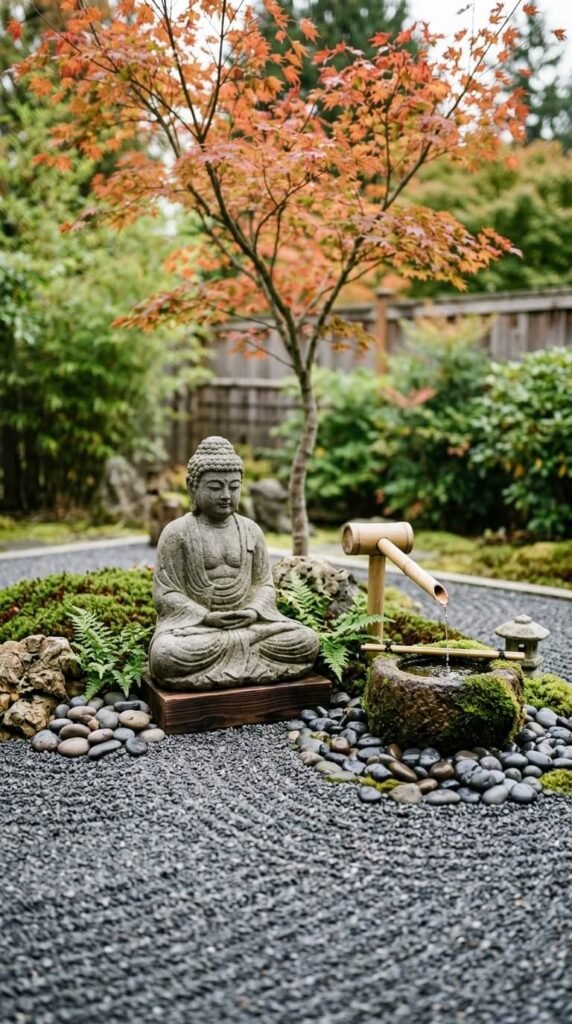
A vignette is a small, composed scene within the larger garden. Think of it as a still-life arrangement, but outdoors. Choose a theme — Zen, fairy tale, Mediterranean, woodland — and gather three to five elements that belong together. A Buddha, raked gravel, and a bamboo water feature. Or a fairy door, small toadstool statues, and moss. The statue anchors the scene. Everything else supports it. Small-scale and intentional always beats large-scale and scattered.
Conclusion
Garden statues work best when they feel like they belong — not like they were set down and forgotten. Every placement idea in this list is about giving your statue a context: a frame, a story, a companion, or a function. Start with one spot in your garden that feels flat or purposeless. Add a statue with intention. Then step back and see how the whole space shifts. You don’t need a large budget or a grand estate. You just need to pay attention to where the eye naturally goes — and put something worth seeing right there.