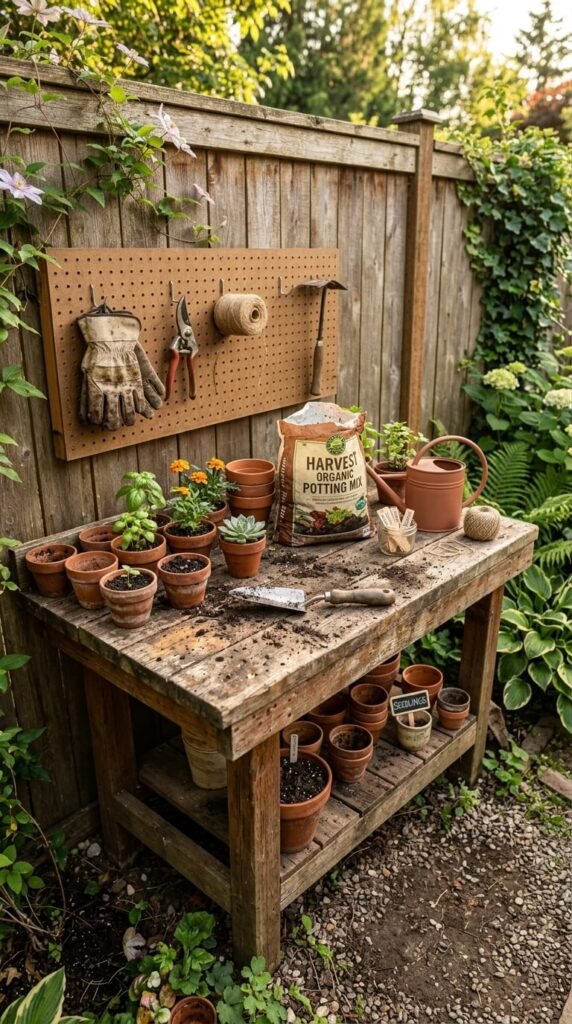
A good potting bench changes the way you garden. Instead of kneeling on hard ground or hunching over a plastic tray, you have a dedicated spot to pot, prune, and prep — all at a comfortable height. Whether you have a sprawling backyard or a tiny patio corner, there’s a setup that fits. This list covers 23 practical potting bench ideas across every style, budget, and space size. Some are weekend DIY builds. Some are $30 thrift store finds. All of them make the actual work of gardening faster, cleaner, and more enjoyable.
1. The Basic Wooden Workbench Conversion
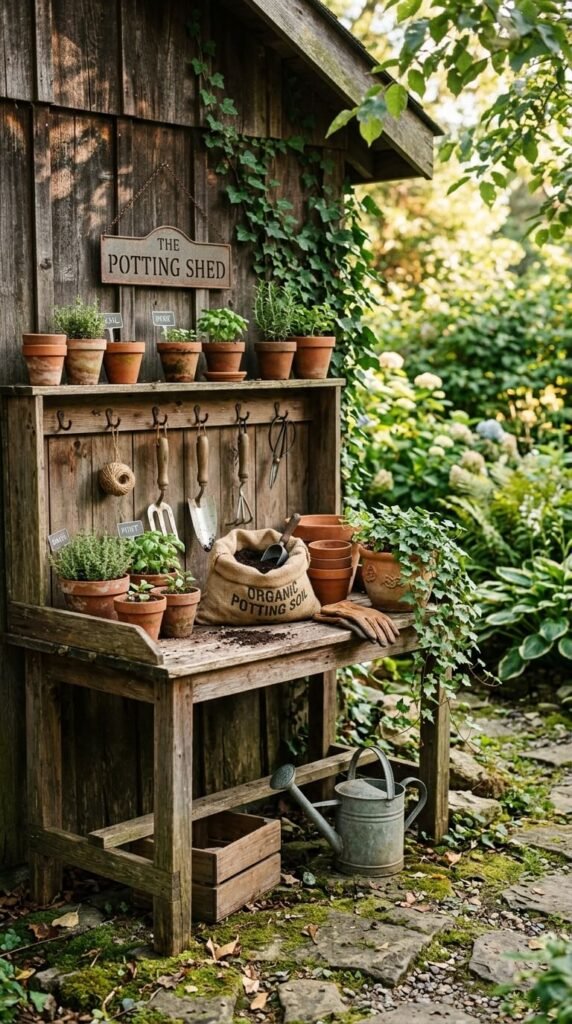
You don’t need a store-bought potting bench to get started. An old workbench from a garage sale works perfectly. Sand it down, seal it with outdoor-grade wood sealant, and you’re done. Add a few cup hooks underneath for hanging small tools. A metal bin for soil on the lower shelf keeps everything tidy. This approach costs under $40 total and takes about two hours. It’s a practical starting point for anyone who gardens regularly but hasn’t committed to a built-in setup yet.
2. Pallet Potting Bench on a Budget
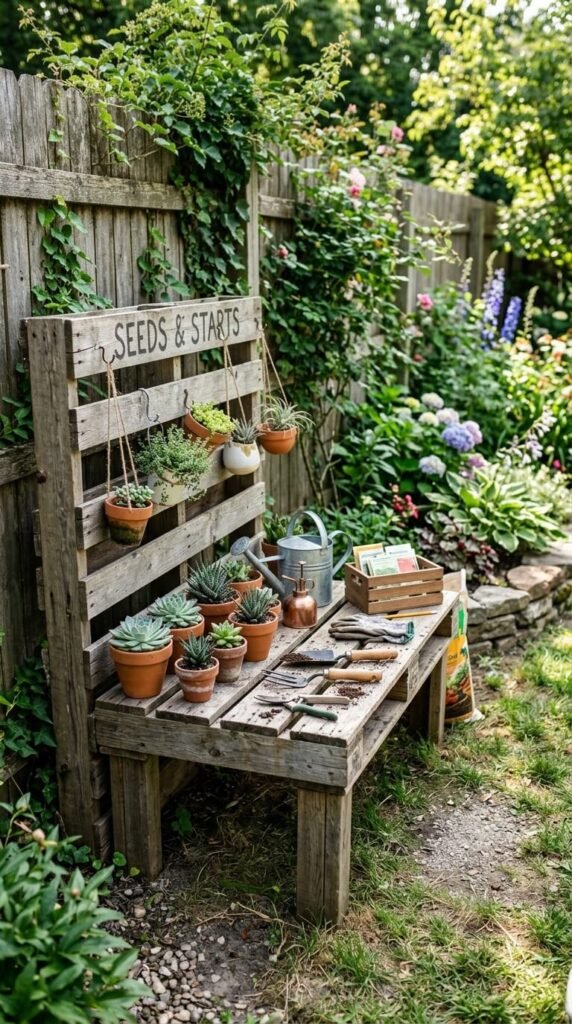
Two pallets and a bag of screws — that’s really all you need. Stand one pallet upright as your backboard and lay one flat as your work surface. Screw them together, add legs from scrap lumber if needed, and you’ve got a free potting station. Sand rough edges to avoid splinters. Pallets with the HT stamp (heat treated) are safe to use in gardens. Paint it with outdoor latex paint to protect against weather. Total cost: near zero if you source pallets from local stores or Facebook Marketplace.
3. Potting Bench With Built-In Sink
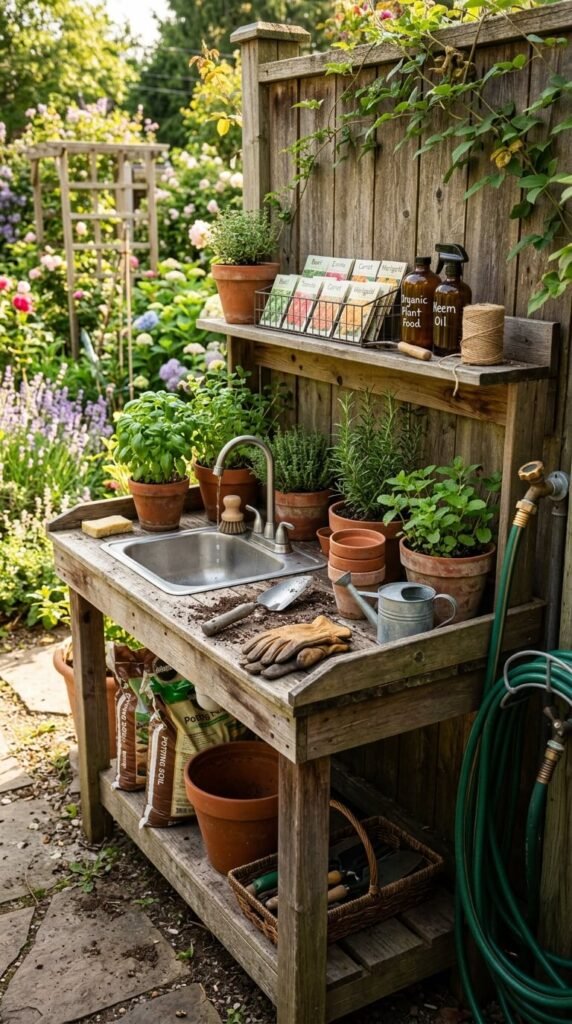
A built-in sink makes cleanup ten times faster. You don’t need plumbing skills — just a utility sink basin dropped into a hole cut in the bench surface. Run a garden hose to it or connect it to an outdoor spigot. The water drains out through a simple hose attachment directed into a garden bed. This setup is ideal if you propagate cuttings, wash harvested vegetables, or deal with muddy root systems regularly. Basic sink basins cost $25–$60 at hardware stores.
4. Repurposed Dresser as a Potting Station
An old dresser from a thrift store or curb can become a charming potting station. Remove the top drawer and fill it with potting mix — it acts as a built-in planting tray. Use the remaining drawers to organize seeds, labels, gloves, and small tools. Seal the wood with outdoor paint or varnish. Handles make it easy to move. Look for dressers at estate sales for $10–$30. It’s one of the most budget-friendly approaches and looks great in cottage-style gardens.
5. Fold-Down Wall-Mounted Bench for Small Spaces
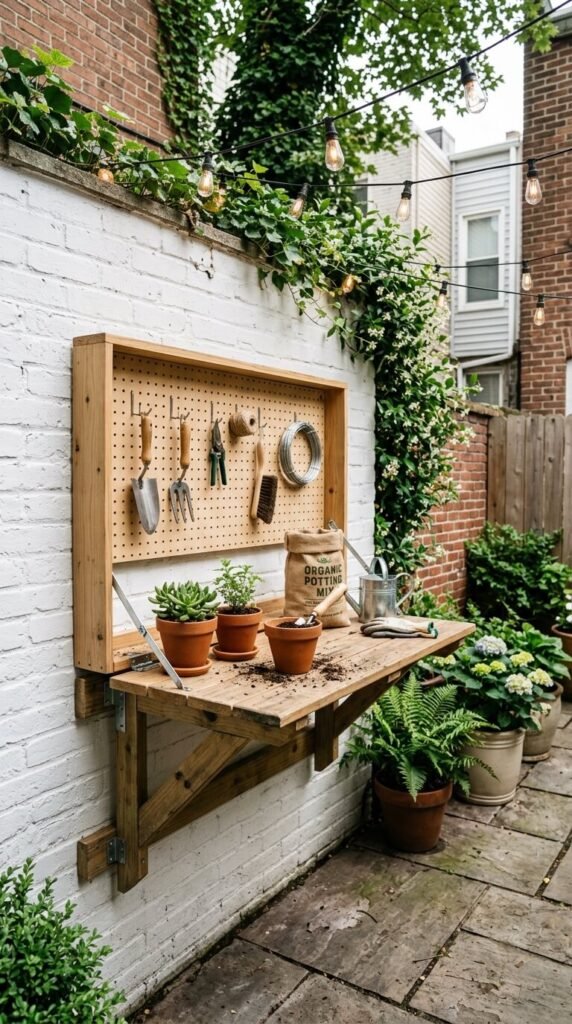
When floor space is tight, go vertical. A fold-down bench mounts flat to a wall and opens when you need it. Use a piano hinge and two support chains to keep it stable when open. When not in use, fold it up to reveal a pegboard for tool storage behind it. This is a brilliant choice for balconies, small patios, or shared garden spaces. The full build costs around $50–$80 in lumber and hardware. It takes a Saturday afternoon and basic tools to complete.
6. Outdoor Kitchen Cart Repurpose
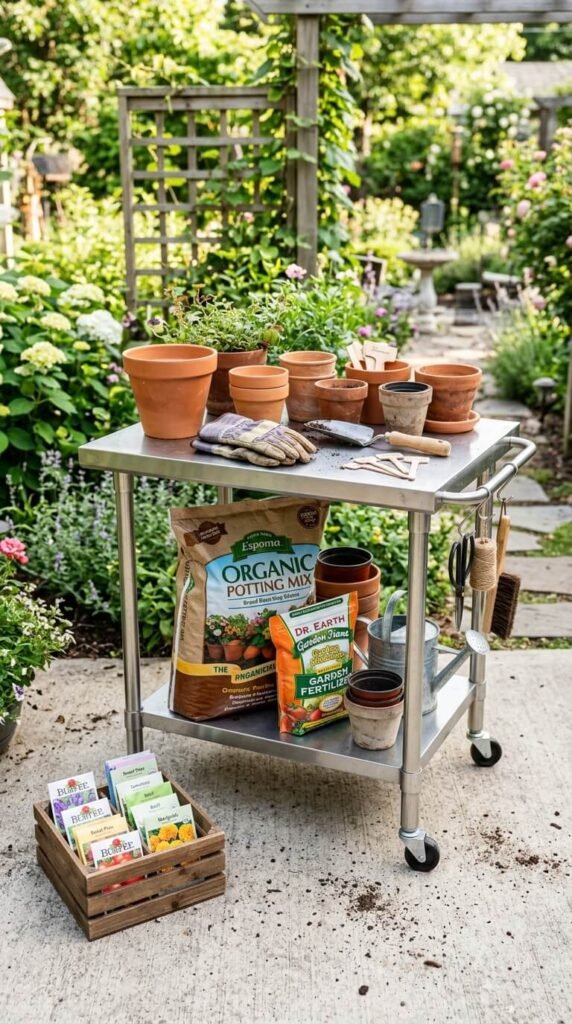
Outdoor kitchen carts with wheels are easy to find at discount stores for $50–$100. The stainless steel surface cleans easily and resists rust — a huge advantage over bare wood. The lower shelf holds soil bags. The towel bar becomes a tool hanger. The wheels mean you can move it into a shaded spot or roll it away in bad weather. It’s a great option if you want a low-maintenance surface that doesn’t need sealing or staining every year.
7. Greenhouse Corner Potting Setup
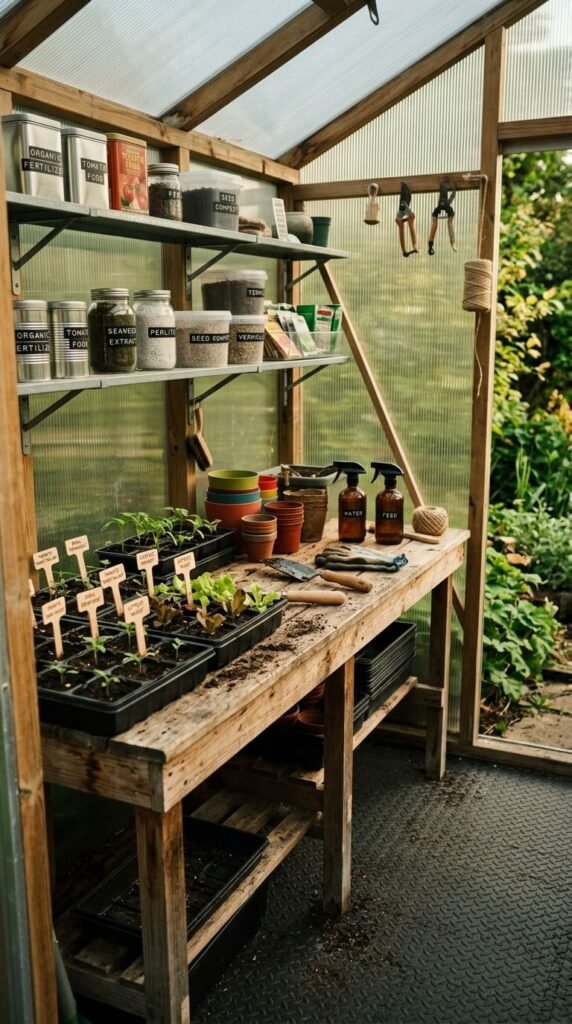
If you have a small greenhouse, one dedicated corner becomes your whole potting zone. Position a simple bench near the door for easy access. Add a shelf above for seed trays and small containers. Hang a wire basket from the ceiling for bulbs and dry materials. The enclosed space protects you from wind while you work, making winter potting sessions actually comfortable. A basic folding table works fine here since it’s sheltered from weather. Budget: $0–$60 depending on what you already own.
8. Galvanized Metal and Wood Combination Bench
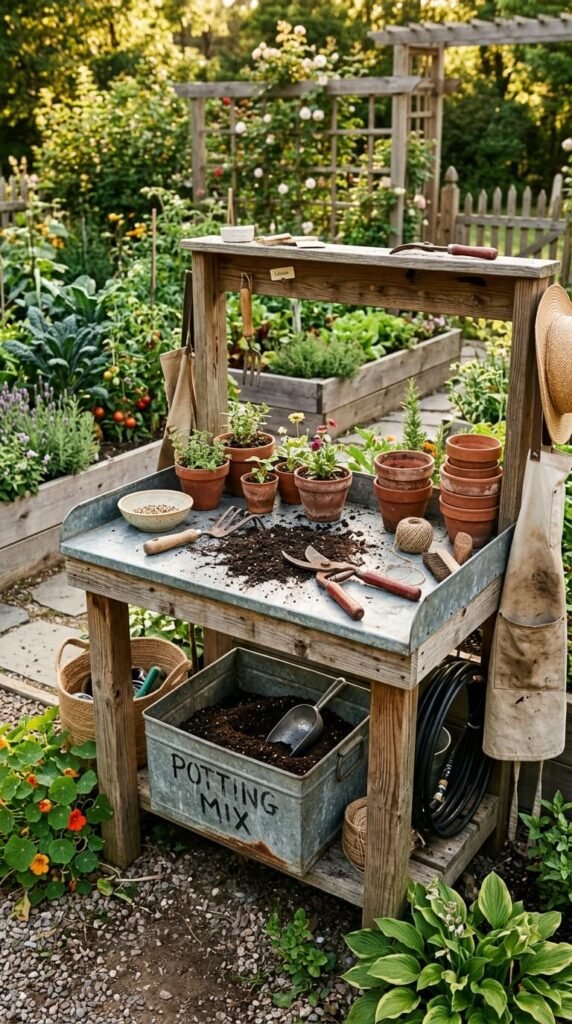
Galvanized metal surfaces are nearly indestructible outdoors. Pair a metal worktop with simple wooden 4×4 legs and you get a bench that handles years of water, soil, and sun without rotting. Metal roofing panels cut to size make an affordable worktop alternative. Screw them onto a wooden frame and add a lip to contain soil spills. The look is clean and farmhouse-inspired. You can find galvanized tubs and bins at feed stores for under $20 to complete the aesthetic.
9. Tiered Shelf Bench for Plant Display and Work
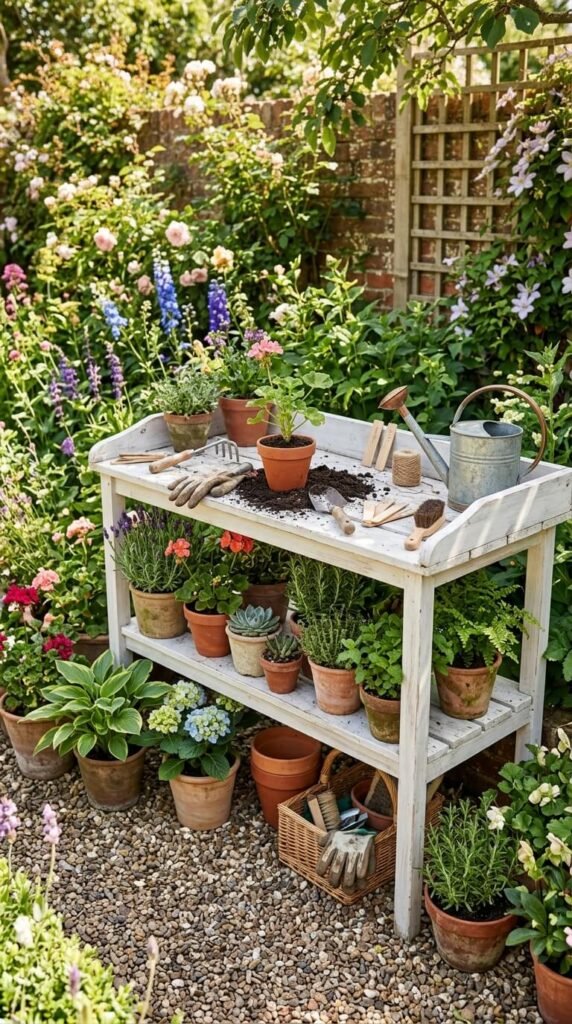
A tiered bench does double duty. The top surface is where you work; the lower tiers display finished plants. This setup is ideal for small gardens where every square foot matters. Build it from cedar boards with simple dadoed joints — no fancy woodworking required. Three tiers of varying depths work well: 18 inches on top, 12 in the middle, 8 at the bottom. Paint it white or leave it natural. A tiered design also helps with drainage — water runoff flows down instead of pooling.
10. Potting Bench With Pegboard Tool Wall
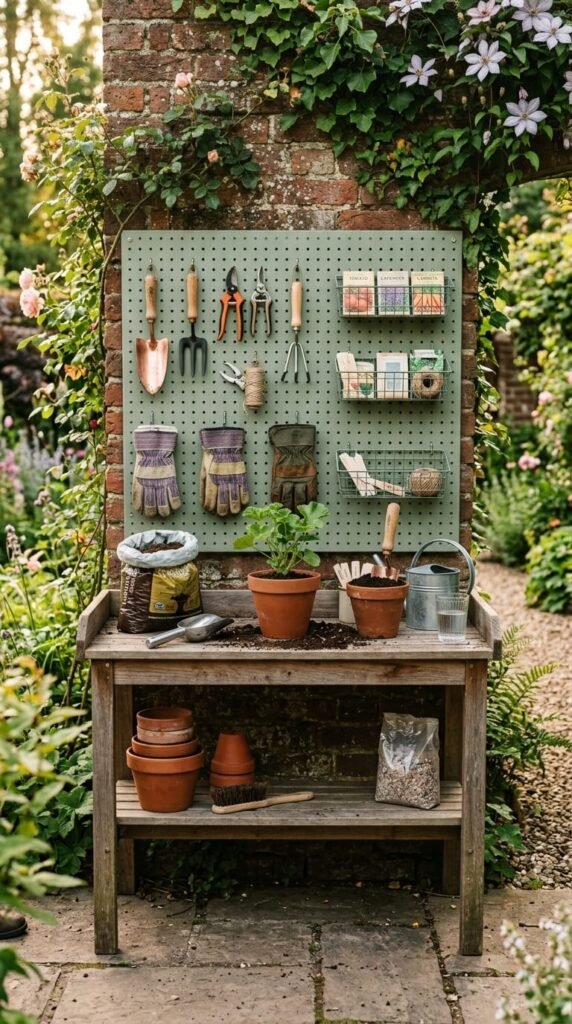
A pegboard above your bench solves the “where did I put my trowel” problem permanently. Mount a 4×4 foot pegboard panel on the wall or fence behind the bench. Paint it a garden-friendly color — sage, terracotta, or white. Use pegboard hooks to hang trowels, pruners, scissors, spray bottles, and gloves. Label each hook with a paint marker so tools always go back in the right spot. The pegboard itself costs $15–$25. Add hooks for another $10. Simple, fast, and genuinely useful.
11. Rolling Potting Cart for Mobile Gardening
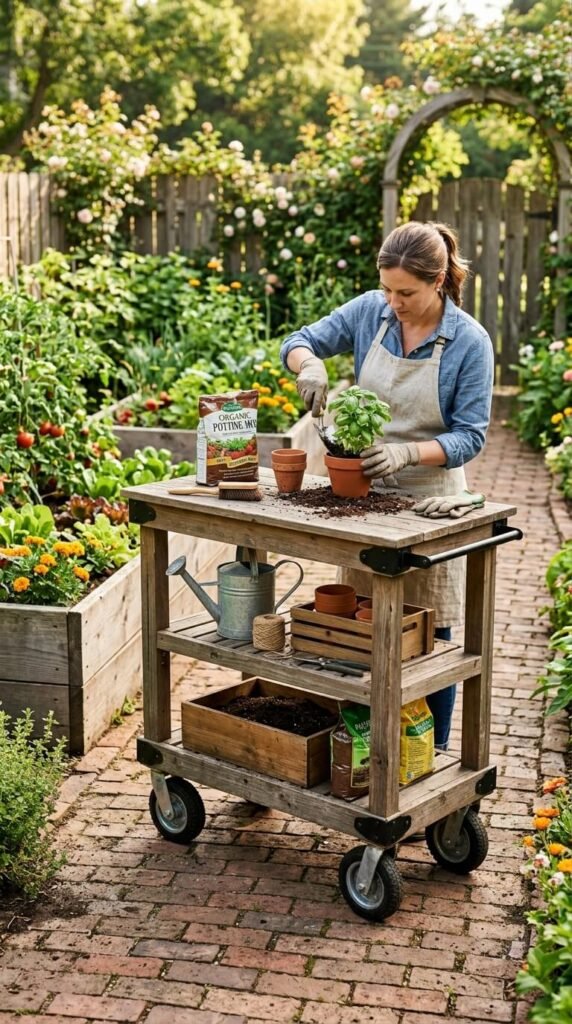
Not everyone wants a fixed bench. A rolling cart lets you bring your tools to the plants instead of carrying plants to a fixed station. Build one from plywood with 3-inch locking casters on the base. Add two shelves below the work surface for soil and pots. Lock the wheels when you’re working in one spot, then roll it to the next bed when you’re done. Plywood and casters cost about $60–$80 total. It’s especially handy in large gardens or shared community plots.
12. Vintage Ironing Board as a Lightweight Potting Surface
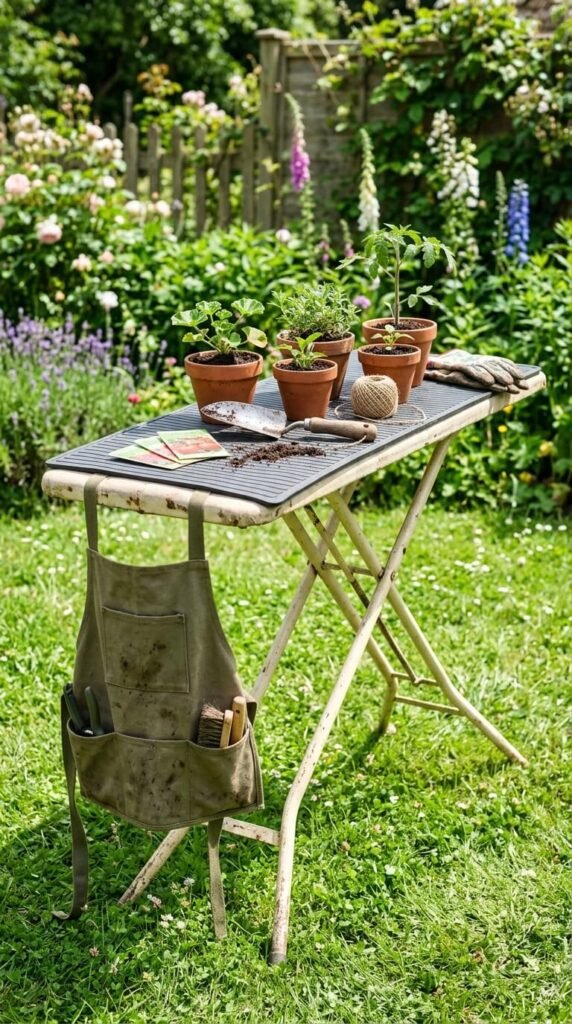
A metal ironing board is height-adjustable, lightweight, and often free from thrift stores. Cover the top with a rubber mat or sheet of plastic and it becomes a portable potting surface. It folds flat for storage. It won’t hold heavy bags of soil, but it’s perfect for light tasks — repotting small houseplants, filling seed trays, or trimming herbs. Ideal for apartment dwellers or balcony gardeners who want a folding solution that takes up almost no space when stored.
13. Fence-Mounted Horizontal Shelf Bench
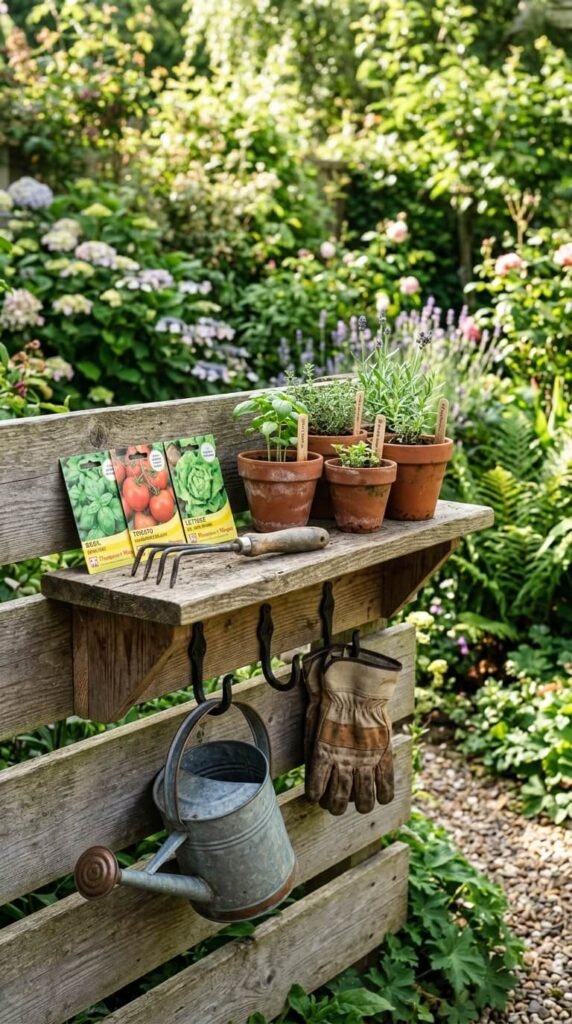
Your fence can become a potting station with a single horizontal shelf. Cut a piece of 2×12 lumber to 4–6 feet long. Mount it at waist height using heavy-duty L-brackets. Add hooks below for hanging tools and a watering can. This takes about an hour and costs $20–$35 in materials. It’s the minimal version of a potting bench — no legs, no overhead shelf, just a clean, sturdy surface where you need it. Works best along a solid wood fence or a garden wall.
14. Potting Bench With Corrugated Roof for Shade
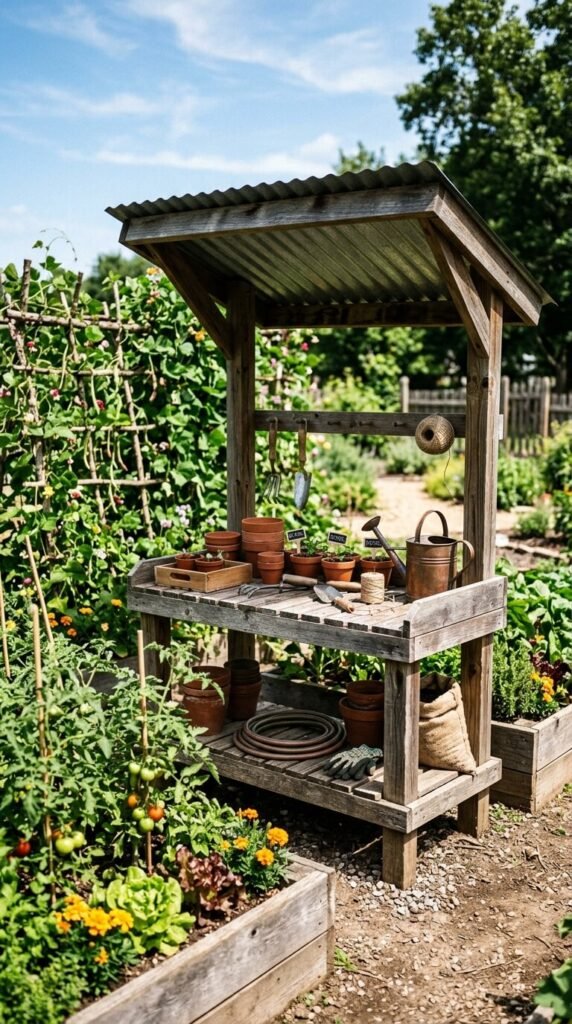
Working in direct sun is exhausting. Add a simple corrugated metal roof over your bench to create shade on hot days. Two upright posts on the back corners support a lean-to style roof that slopes away from you. Use two sheets of corrugated metal roofing (very affordable at hardware stores) across a basic 2×4 frame. The shaded work area stays cooler, and the roof protects your seed trays from heavy rain. Add the roof to an existing bench for around $40–$60 in materials.
15. Sink-and-Hose Station With Gravel Drainage
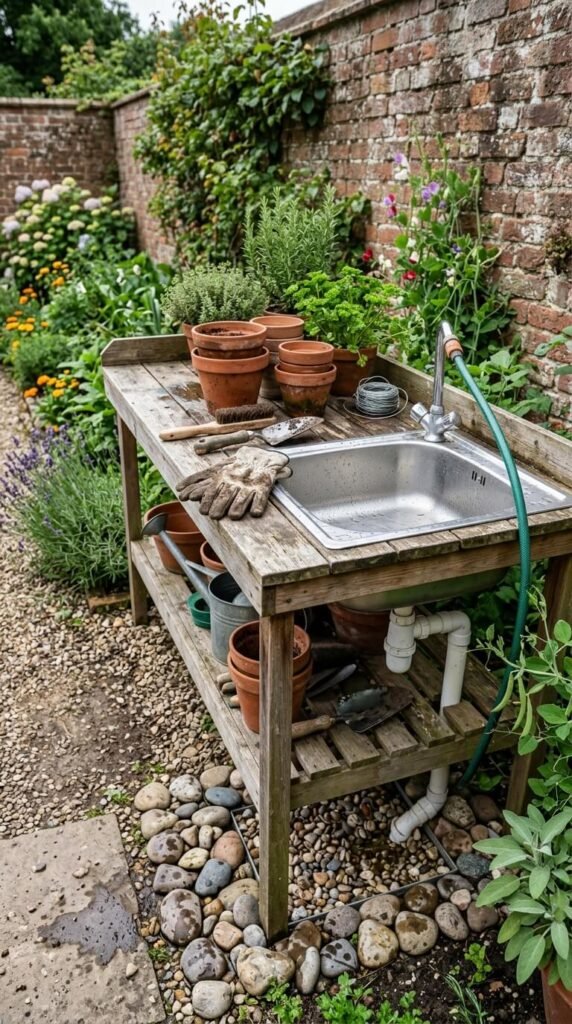
Skip the plumber by creating a gravel drainage pit under your potting bench. Dig a shallow pit about 18 inches wide and 12 inches deep beneath where your sink drains. Fill it with gravel. Water from the sink soaks down through the gravel and drains naturally. This works for simple tasks — rinsing tools, washing vegetables, or draining excess water from repotting. Combined with a basic basin and garden hose connection, it creates a fully functional outdoor wash station with zero plumbing work.
16. Repurposed Workbench With Galvanized Bin Storage
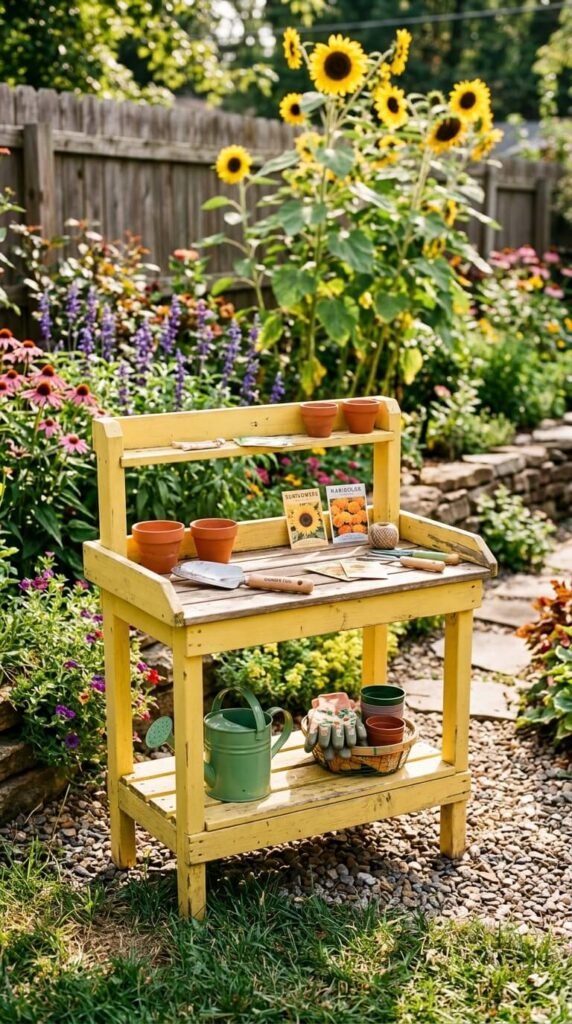
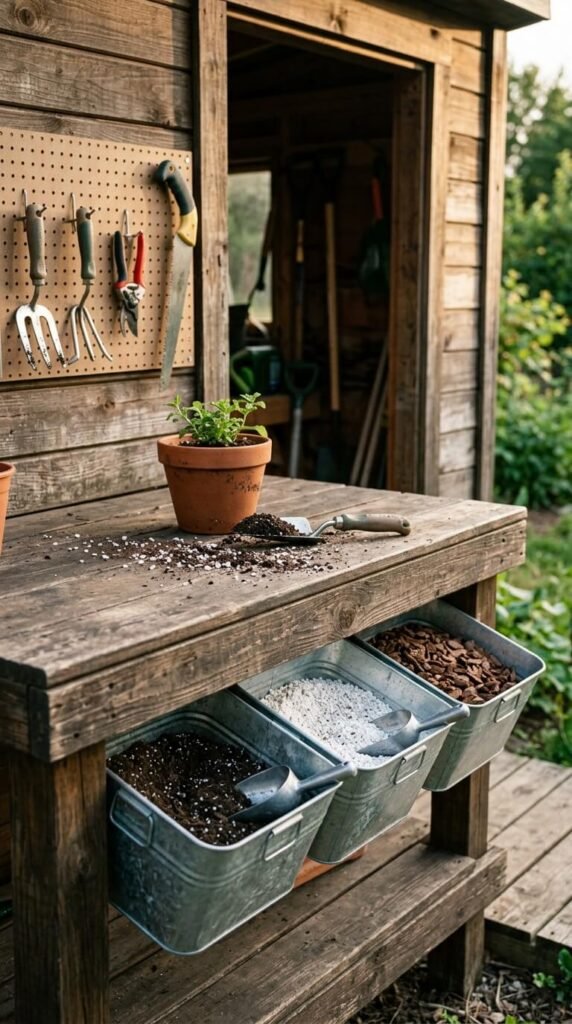
Galvanized bins mounted under the bench keep multiple soil types organized and off the ground. Attach two or three bins using simple metal brackets on the underside shelf. Label each bin: potting mix, perlite, compost, bark chips. This eliminates the need for heavy bags leaning against the shed wall. Galvanized bins from feed supply stores cost $8–$15 each. They last for years outdoors and won’t crack in freezing temperatures the way plastic containers do. A clean, low-cost storage solution that works hard.
17. Kids’ Potting Station for Junior Gardeners
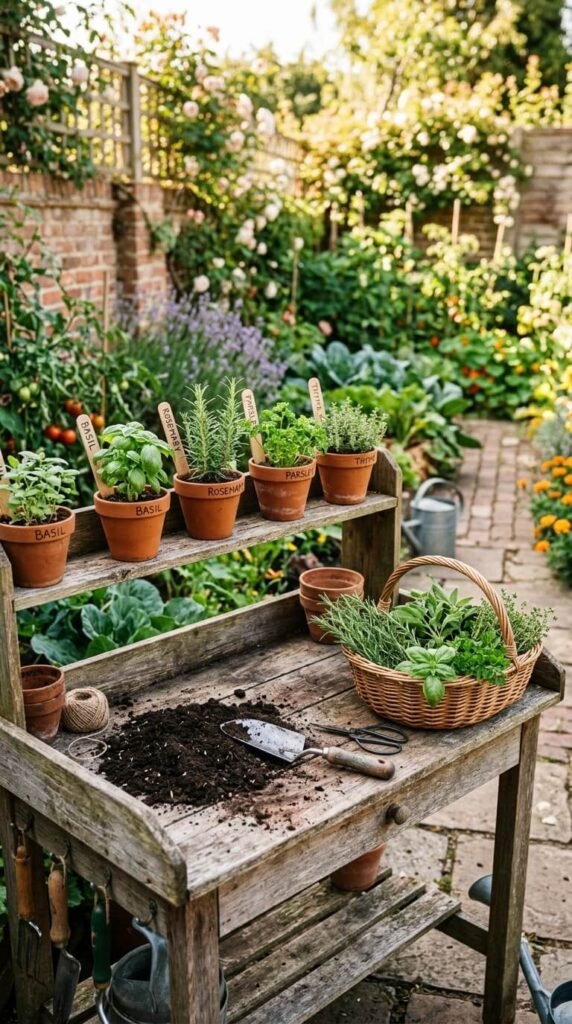
Build a scaled-down version at a child’s height and gardening becomes a shared activity. Standard height for a kids’ bench is around 24–26 inches — versus 34–36 inches for adults. Use the same basic design but shorter legs. Let kids paint it their own color. Give them their own tools: a small trowel, child-size gloves, a watering can. Assign them a simple task like filling seed trays or transplanting seedlings. A child-height bench gets built from scraps for almost nothing and pays off in years of shared outdoor time.
18. Herb Garden Potting Bench Combo
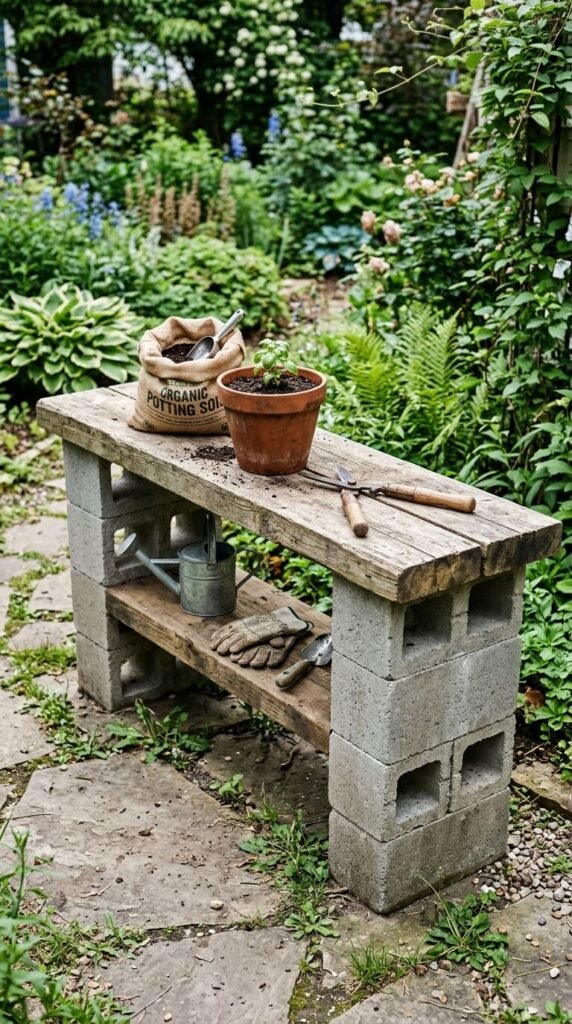
Design your bench with an upper herb shelf built directly into the frame. This keeps culinary herbs at eye level and within arm’s reach while you work. The lower bench is for potting and transplanting; the upper shelf is for herbs you’re actively growing and harvesting. Label each herb pot with a small wooden stake. A setup like this works beautifully near a back door or kitchen garden entrance. You can add the herb shelf to an existing bench for about $15 in additional lumber.
19. Concrete Block and Plank Bench
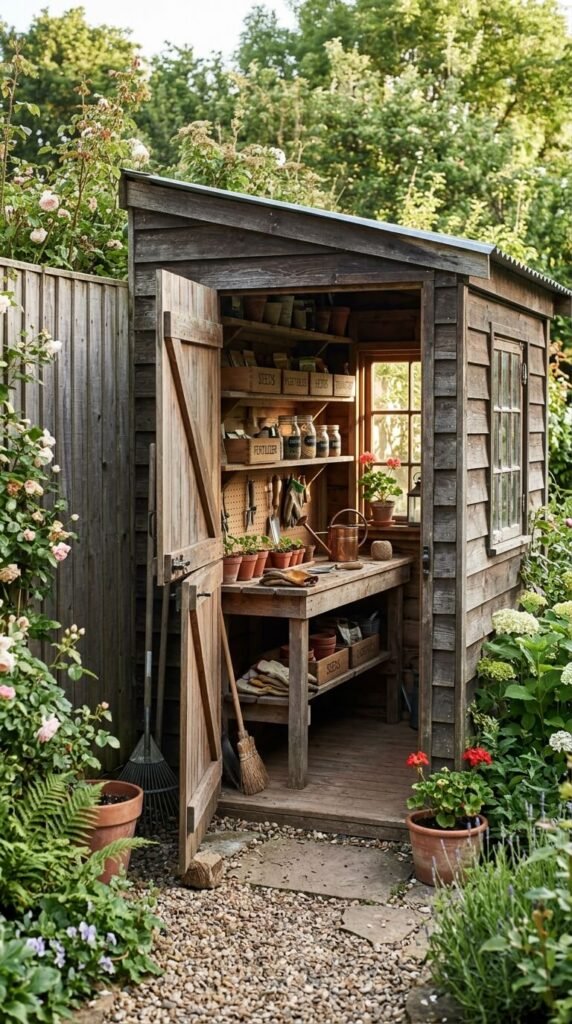
You can build a potting bench in 20 minutes with no tools at all. Stack four concrete blocks two high on each side, lay a thick plank across the top, and add a lower plank between the stacks for a shelf. It’s rock solid, completely waterproof, and costs almost nothing if you have leftover blocks. Use pressure-treated lumber or cedar for the planks. This setup is permanent enough to be useful but simple enough to disassemble and rearrange whenever you want. Perfect for gravel or paved garden areas.
20. Lean-To Potting Shed With Integrated Bench
A lean-to shed with a built-in bench along one wall gives you a fully weatherproofed potting zone. Lean-to sheds attach to an existing fence or wall, reducing materials needed. Build the bench from 2×4 framing with a plywood worktop. Add shelves above for seed storage and a pegboard for tools. A small window on the side provides light. This is a bigger weekend project, but it’s the most functional long-term setup. Lean-to kits start at $200; fully custom builds with lumber cost $150–$400 in materials.
21. Potting Bench With Seed Starting Lights
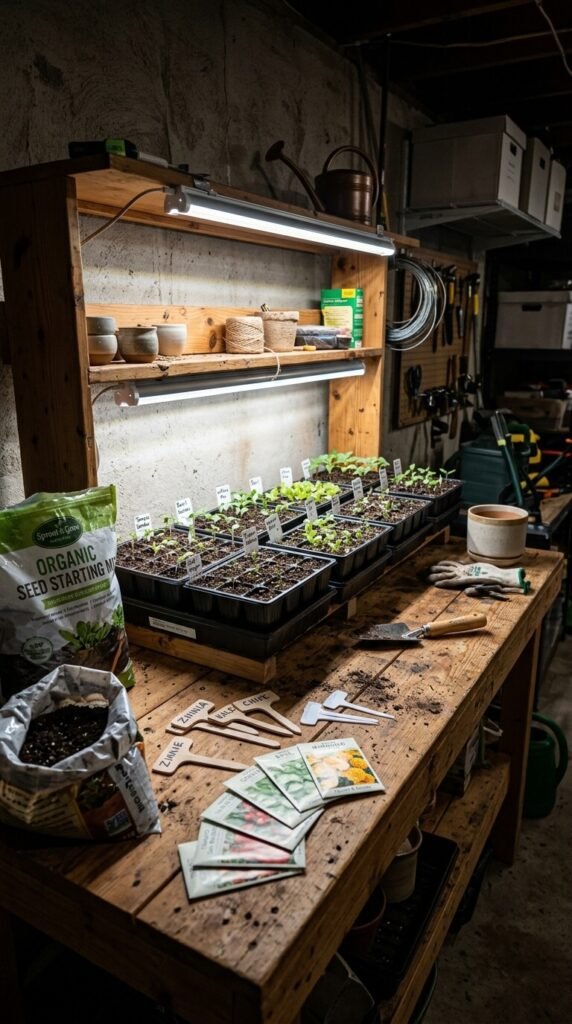
Mount grow lights under the upper shelf and your bench becomes a year-round seed starting station. Simple LED shop lights or dedicated grow light bars attach with basic clips or chains. Position the light 4–6 inches above seed trays. A timer keeps lighting on a consistent 16-hour cycle. This setup works in a garage, basement, or covered porch — anywhere with a power outlet. LED grow light bars cost $20–$60 on Amazon. Combined with a basic bench, you can start seeds weeks before outdoor planting season begins.
22. Stone and Timber Permanent Garden Bench
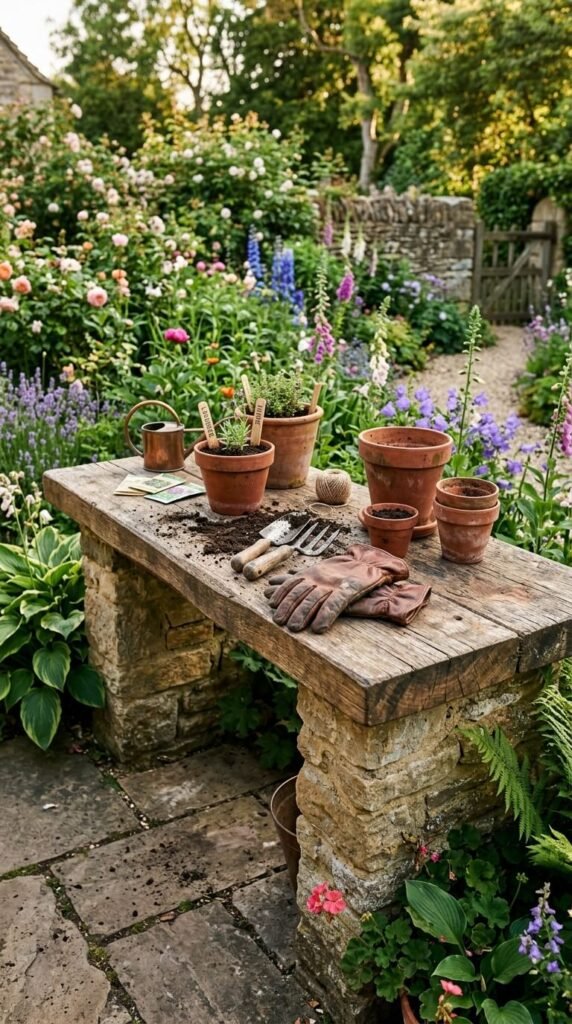
For a permanent feature that lasts decades, build with dry-stack stone legs and a thick reclaimed timber top. Stack flat fieldstones in two pillars at bench height — no mortar needed if stacked carefully. Lay a 3–4 inch thick timber slab across the top. This style fits naturally in cottage or heritage garden settings. The stone won’t rot, rust, or require any maintenance. Source fieldstones from a local stone yard or your own land. The timber slab can come from a sawmill or a salvaged beam. Cost: $50–$150.
23. Floating Shelf Potting Nook in a Tight Corner
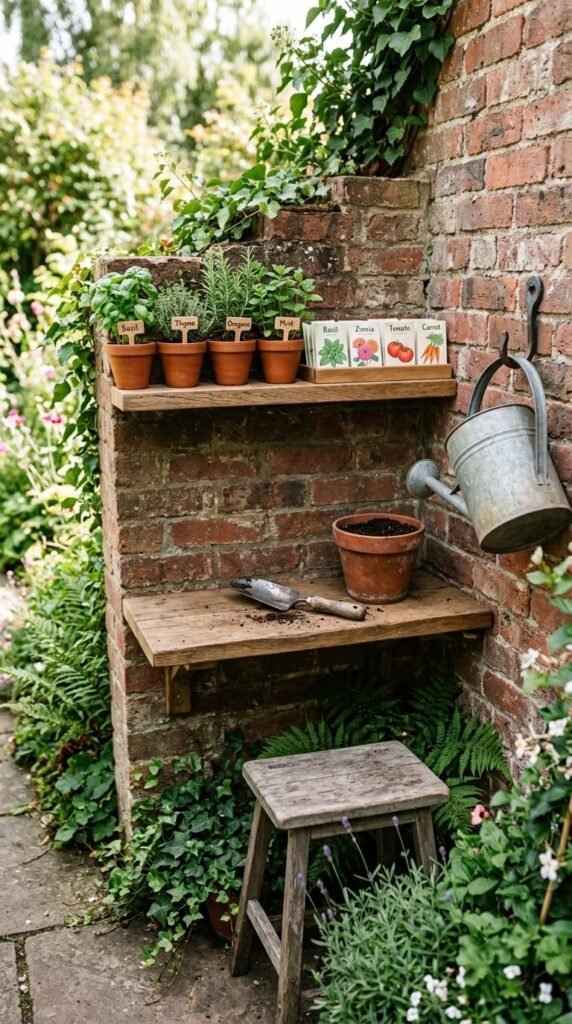
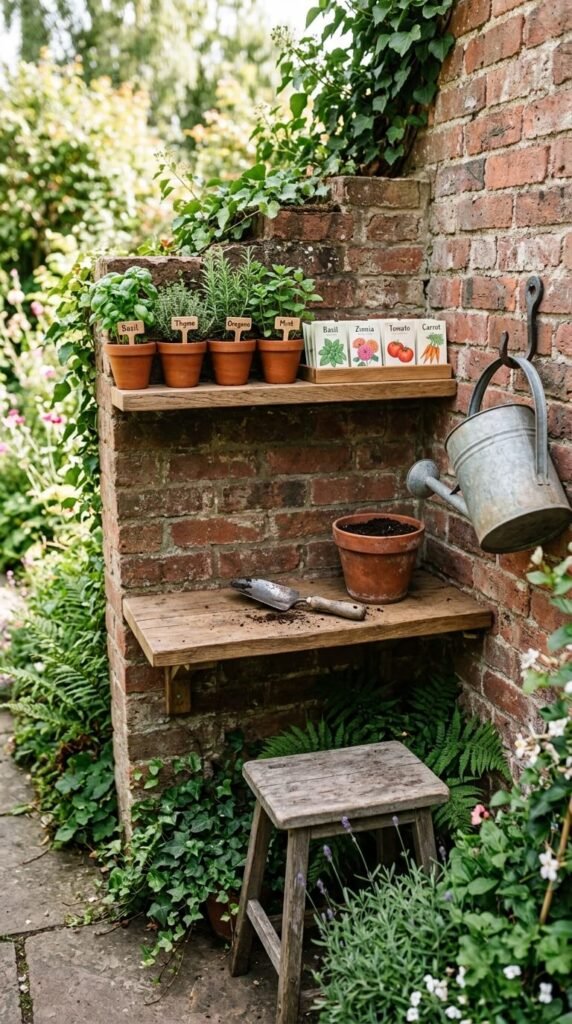
When space is extremely limited, two floating shelves in a corner create a functional micro potting station. The lower shelf sits at waist height for working. The upper shelf holds seed packets, small pots, and spray bottles. A hook on the wall between the shelves holds your most-used tool. Use 10-inch deep shelves on heavy-duty brackets rated for at least 50 lbs. Seal the wood with outdoor varnish. This entire setup fits in a 3-foot corner and costs $30–$50 in materials. Small space, zero excuses.
Conclusion
A good potting bench doesn’t need to be expensive or elaborate. The best one is simply the setup that fits your space, your budget, and the way you actually garden. Whether you repurpose an old dresser for $20, build a pallet bench in an afternoon, or invest a weekend in a proper lean-to shed — any of these options beats kneeling on cold ground or balancing trays on an unstable surface. Pick one idea from this list. Gather what you already have. Start simple and add on as your garden grows. The right workspace makes every gardening session more productive, more organized, and honestly more enjoyable.