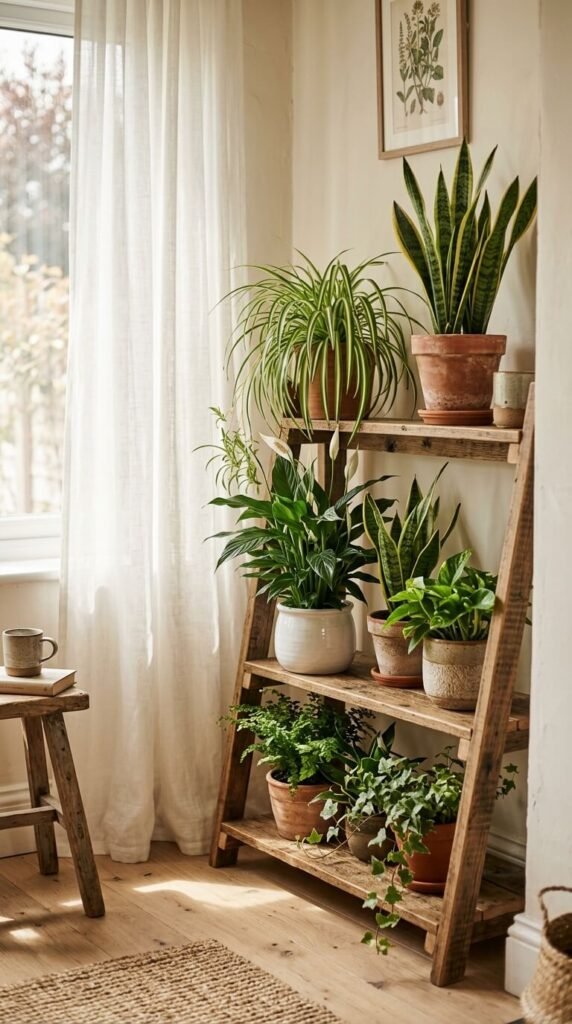
Your home deserves to breathe just as much as you do. Potted plant displays are one of the easiest, most affordable ways to clean the air around you — while making any room look put-together and alive. Whether you have a bright window or a dim corner, there’s a plant arrangement that works for your space. No gardening experience required. These 22 ideas will show you exactly how to style, group, and grow air-purifying plants that actually do something useful while sitting on your shelf.
1. The Classic Snake Plant Corner
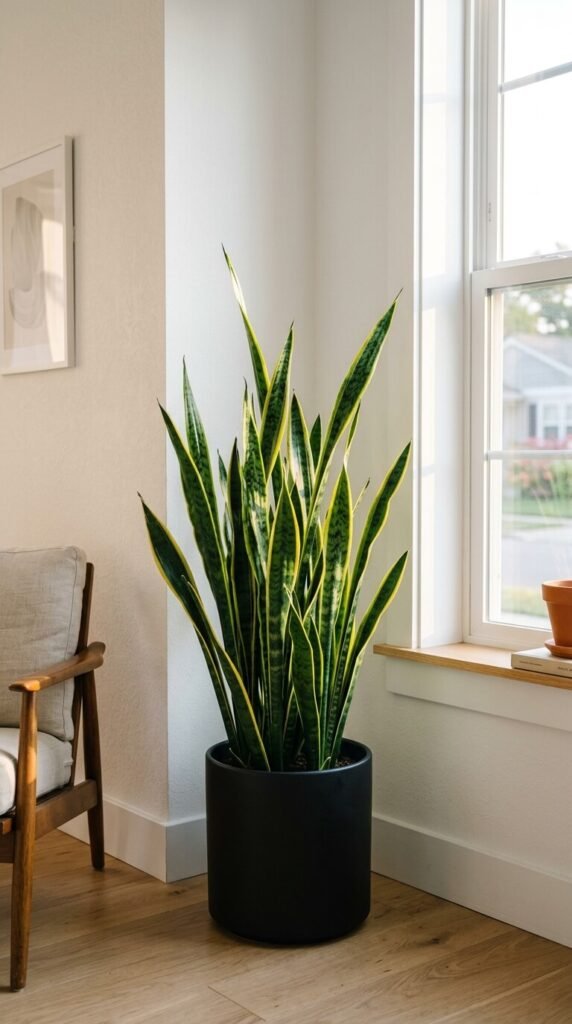
The snake plant is the ultimate starter display. It tolerates low light, irregular watering, and neglect like a champ. Place one tall snake plant in a corner and it immediately anchors the room. It absorbs toxins like formaldehyde and benzene overnight. Pick a simple matte pot — black, white, or terracotta — to keep it looking sharp. You can find snake plants at most garden centers for under $10. One plant, one pot, zero fuss. It’s the kind of display that looks intentional with almost no effort at all.
2. Spider Plant Hanging Basket Trio
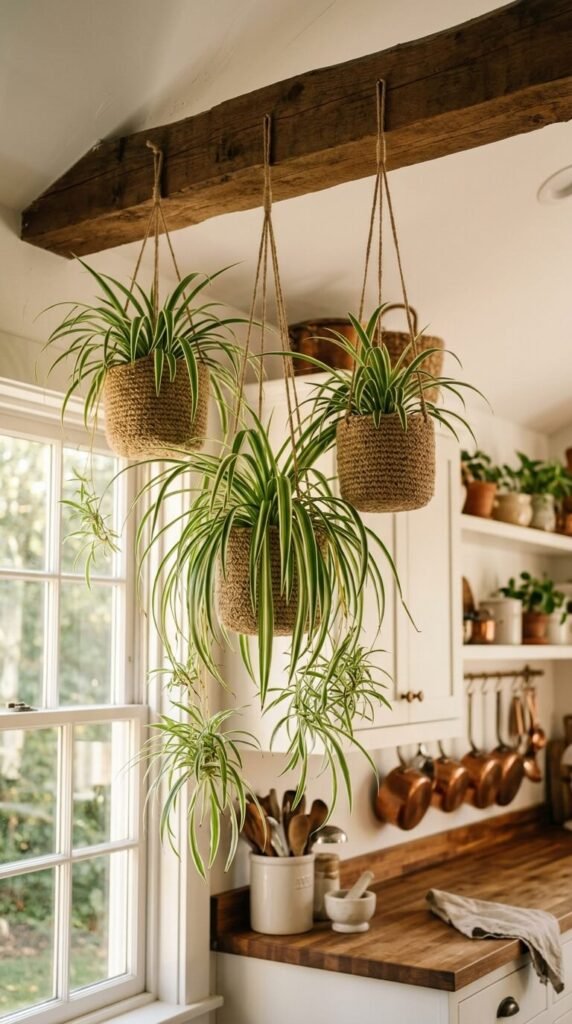
Hang three spider plants at different heights and you’ve got an instant statement wall. Spider plants are some of the best air cleaners around — they filter carbon monoxide and xylene effectively. Buy simple jute or macramé hanging planters online for $5–$8 each. Use a ceiling hook rated for the weight. The trailing babies that grow off the mother plant make the whole display more dramatic over time. You don’t need a big budget — just three small starter plants, three hooks, and a little patience while they fill out.
3. Peace Lily in a White Ceramic Pot
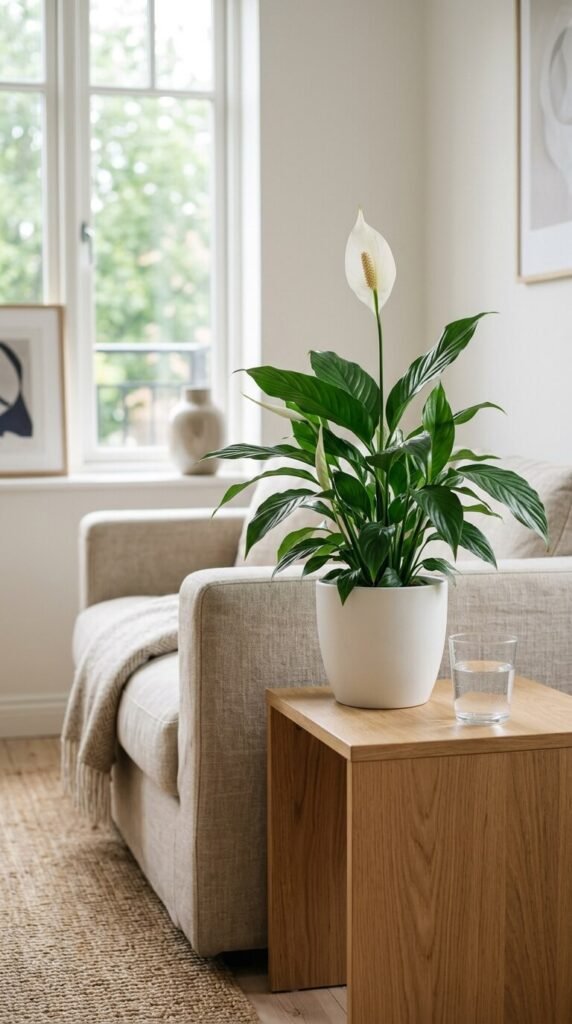
A peace lily in a white ceramic pot looks effortlessly elegant. This plant removes ammonia, benzene, and mold spores from the air — making it great for bedrooms and bathrooms. It thrives in low to medium light and only needs watering once a week. A six-inch pot is enough to start. Look for ceramic pots at thrift stores — you can often find them for $1–$3. The contrast of glossy dark leaves against a clean white pot is striking. When it blooms, the white flower adds a soft, spa-like feel to any room.
4. Pothos Shelf Cascade
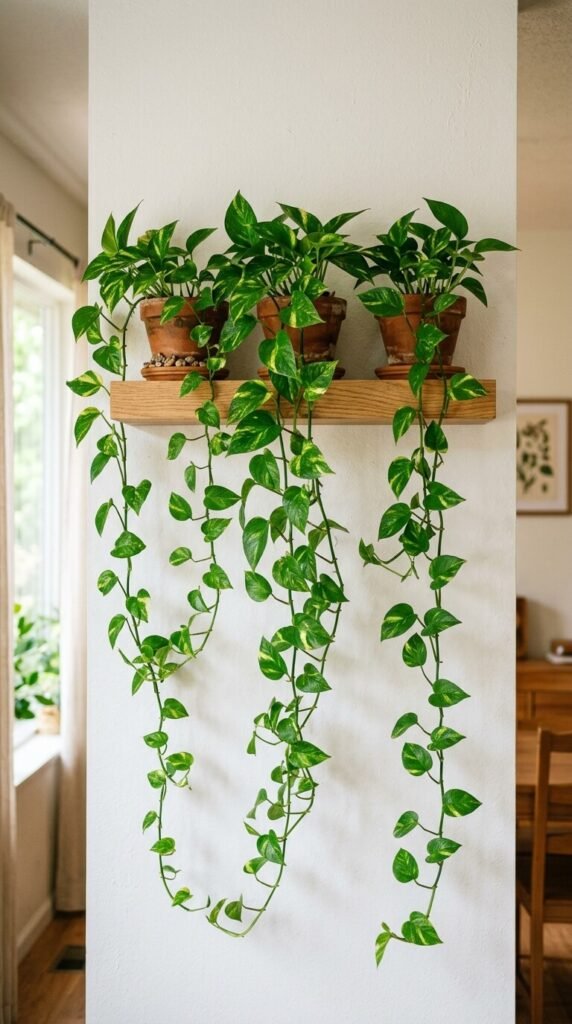
Golden pothos is almost impossible to kill — and it’s one of the most effective air-filtering plants you can own. Mount a shelf at mid-wall height and line it with three pothos in small terracotta pots. Let the vines trail down. Over a few months, you’ll have a living wall effect that costs almost nothing. Pothos cuttings root in a glass of water, so you can multiply your plants for free. This display works in living rooms, offices, and hallways. It grows fast, looks full quickly, and handles low light with ease.
5. Aloe Vera Kitchen Windowsill Line-Up
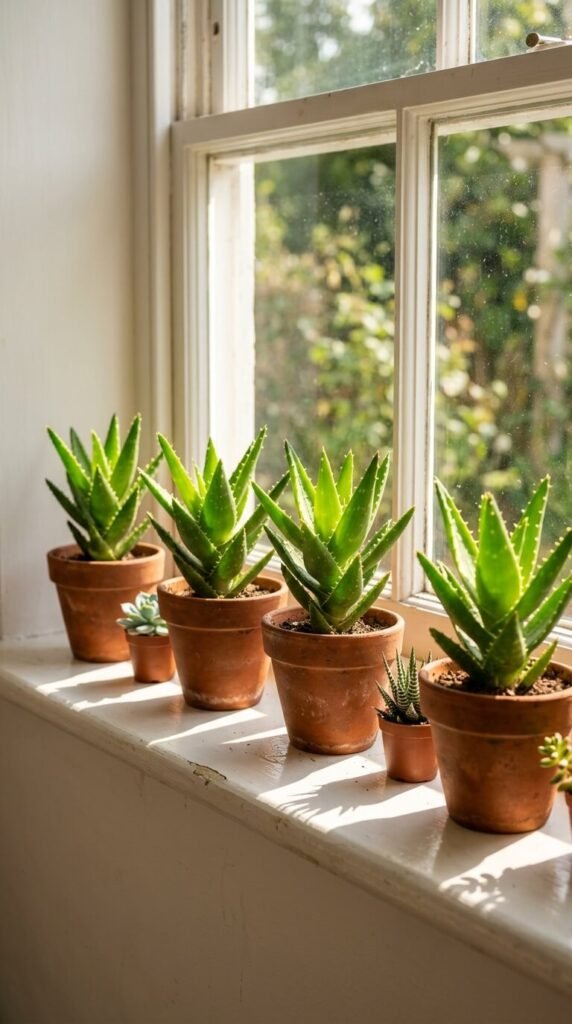
Line up aloe vera plants along a sunny kitchen windowsill for a practical, beautiful display. Aloe filters formaldehyde and benzene — both common in cleaning products. Use matching terracotta pots for a uniform, tidy look. Aloe needs bright light and very little water — once every two to three weeks is enough. Buy a three-pack at a nursery for around $8–$12. They’re also useful to have around for minor burns and skin irritation. A windowsill of aloe plants is both a health display and a first-aid kit growing quietly in your kitchen.
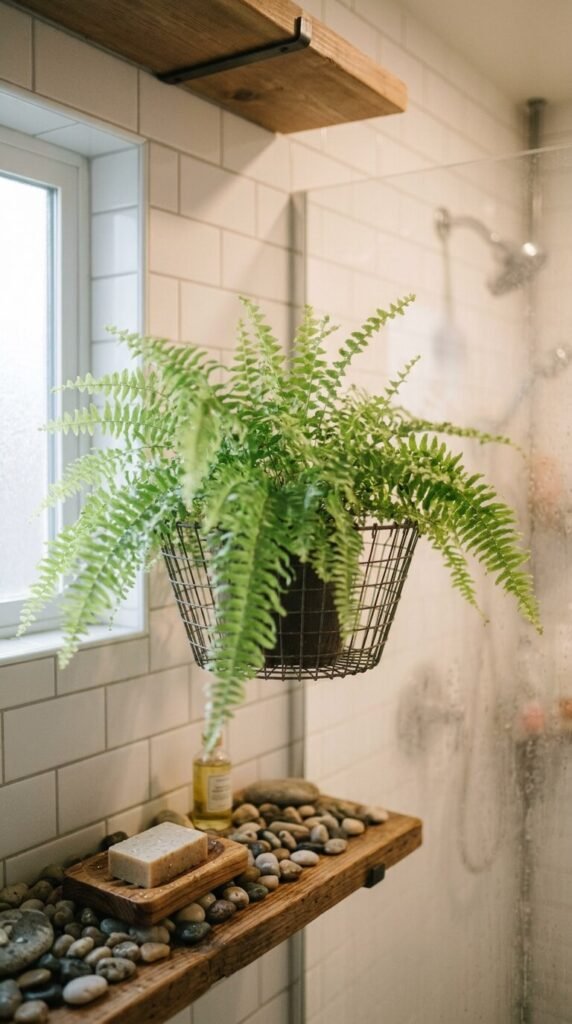
6. Boston Fern Bathroom Shelf
Boston ferns love humidity — which makes your bathroom the perfect spot for them. They remove formaldehyde and act as natural humidifiers. Hang one in a wire basket or set it on a shelf near your shower. The steam keeps the soil moist and the fronds looking full. If your bathroom lacks natural light, run a small grow light on a timer for four to six hours a day. Boston ferns cost around $8–$15 at garden centers. Mist them lightly between showers. They reward you with lush, feathery foliage that makes any bathroom feel like a wellness retreat.
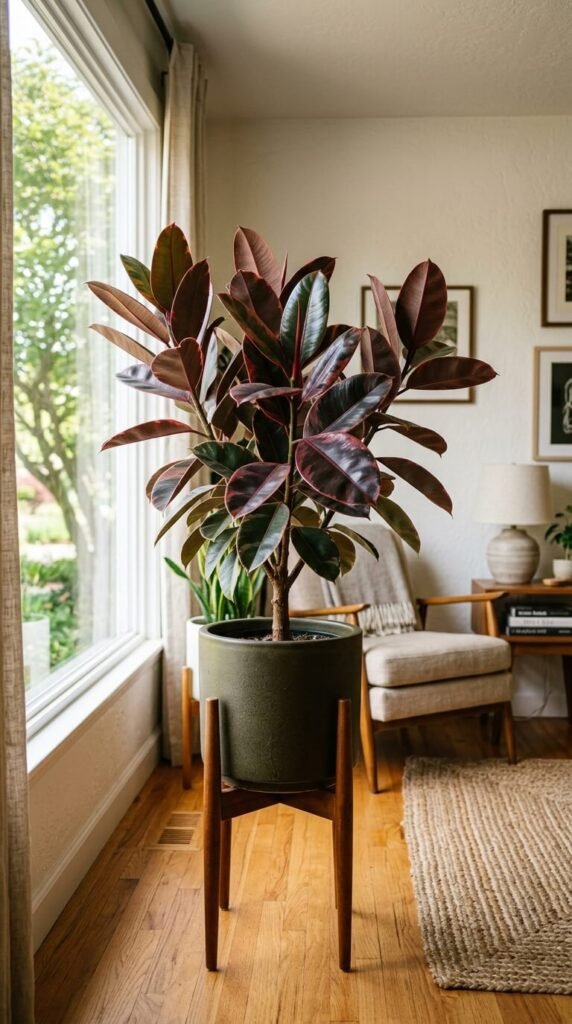
7. Rubber Plant Statement Display
One rubber plant can transform an empty corner into a focal point. The large, glossy leaves filter carbon dioxide and airborne bacteria effectively. Choose a dramatic pot — deep olive, charcoal, or mustard — and set it on a simple plant stand to give it height. Rubber plants prefer bright indirect light and moderate watering. They grow steadily upward, so give them vertical space. A healthy rubber plant at a nursery runs $15–$30 depending on size. Start small and let it grow into the space. It’s the kind of plant that makes people ask where you got it.
8. Grouped Succulent Tray Display
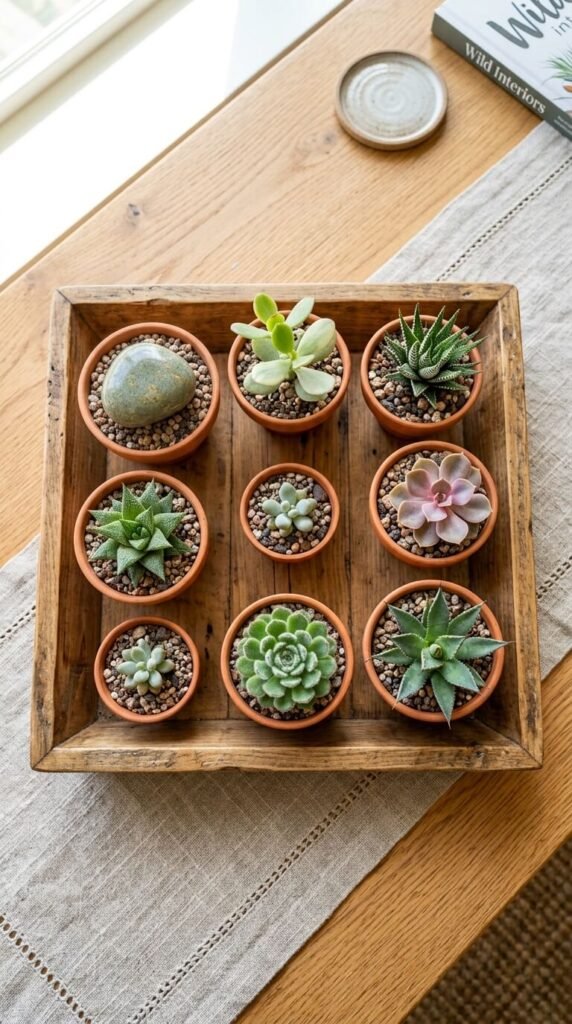
A succulent tray is the easiest grouped display you can make. Pick up a shallow wooden tray and fill it with six to eight small succulents in mismatched terracotta pots. Succulents like aloe and haworthia filter indoor toxins while adding color and texture. Arrange taller plants toward the back, rosette shapes in the front. This works on coffee tables, dining tables, or bathroom countertops. Starter succulents cost $2–$4 each at most big-box garden sections. The whole tray display can be put together for under $25. Swap plants in and out as you find new varieties.
9. Dracaena Floor Plant in Woven Basket
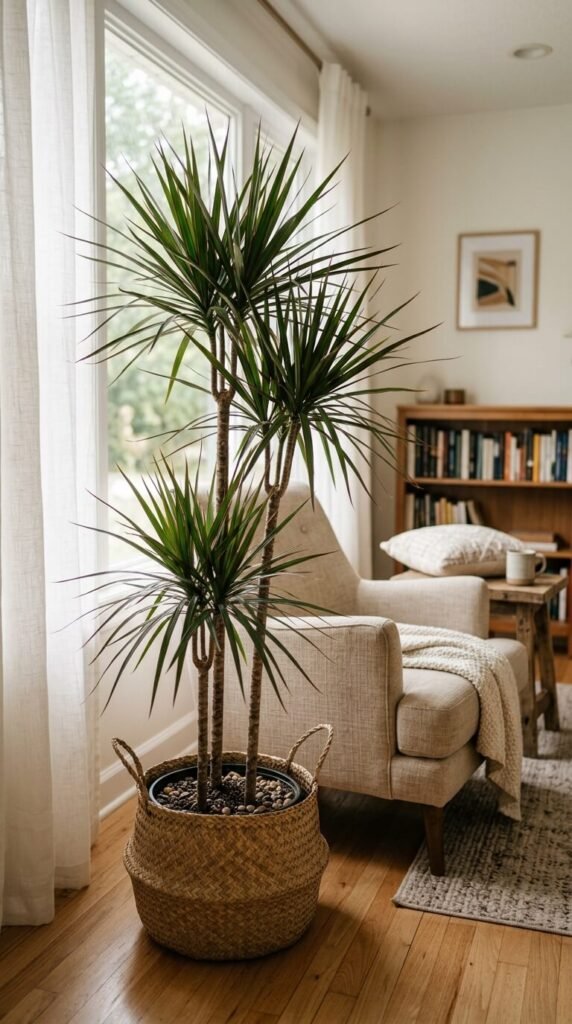
A dracaena in a woven seagrass basket is one of the most stylish air-purifying displays possible. It removes trichloroethylene, benzene, and xylene from the air. The tall, architectural shape makes it perfect as a floor plant beside a sofa or reading chair. Woven baskets are cheap — $8–$15 at home goods stores — and hide plastic nursery pots perfectly. Dracaenas prefer indirect light and can go a week or more without water. They’re slow growers, so what you buy is mostly what you get for a while. But that’s fine — they always look exactly right.
10. Windowsill Herb and Air-Plant Combo
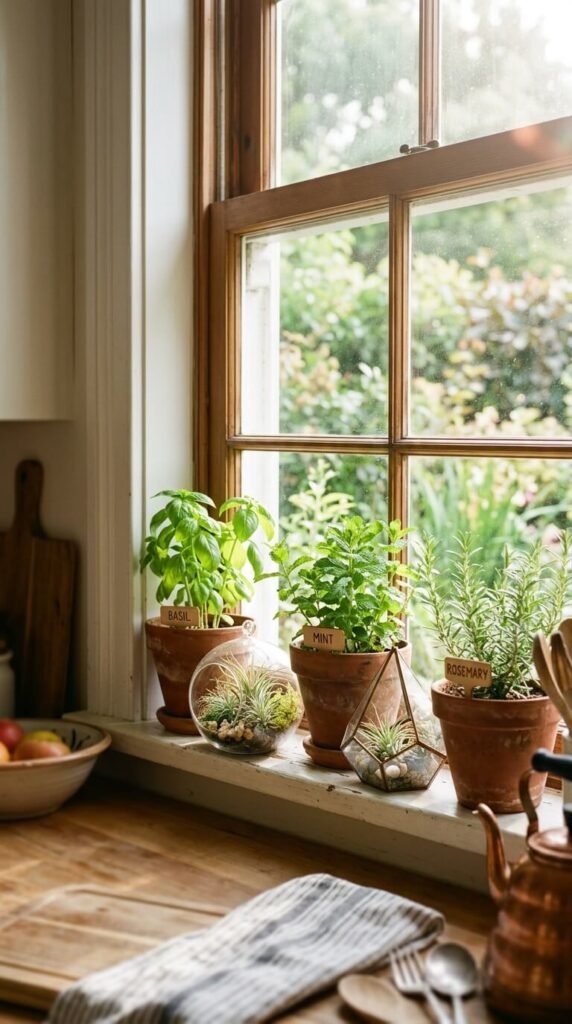
Combine air plants (tillandsia) with small herb pots on your kitchen windowsill for a display that’s beautiful and functional. Air plants need no soil — just a weekly misting. Herbs like basil and mint also filter airborne particles. Mount small glass globes for air plants next to potted herbs. You get fresh ingredients for cooking and cleaner air at the same time. Air plants cost $3–$6 each at craft stores. This combo costs under $20 to set up and fits any windowsill with decent morning light. It’s a small display with a big return.
11. Bamboo Palm in a Bright Reading Nook
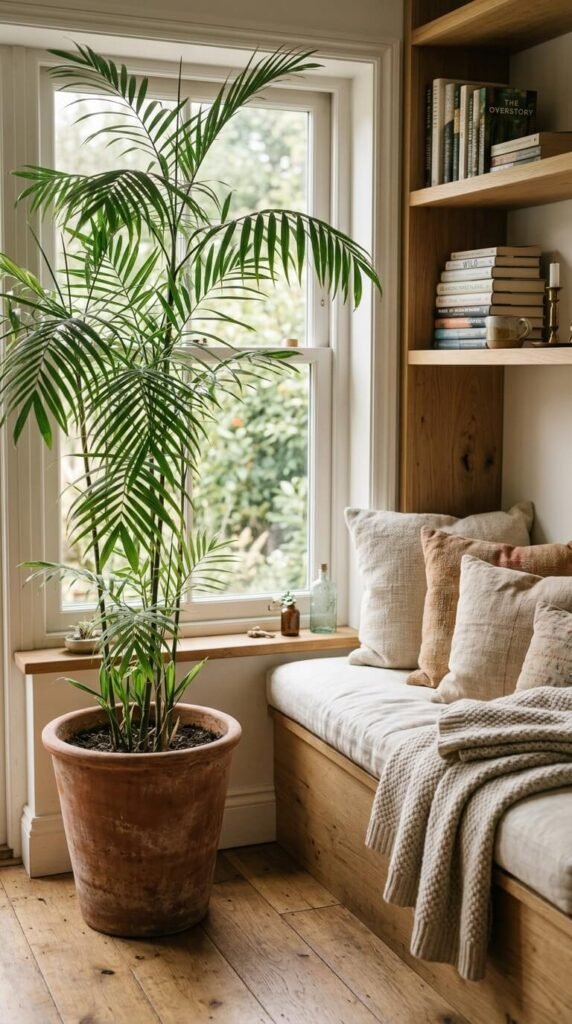
The bamboo palm is a powerhouse air filter — one of NASA’s highest-rated plants for removing formaldehyde and benzene. It also acts as a natural humidifier. Place it near a bright window in your reading nook or living room. The feathery fronds soften any corner and bring a relaxed, tropical feel to the room. It needs medium to bright indirect light and regular watering. A medium-sized bamboo palm costs $20–$40 at nurseries. It’s one of the pricier options here, but it earns its keep by filtering more air than most smaller plants.
12. Monstera Leaf in a Tall Planter
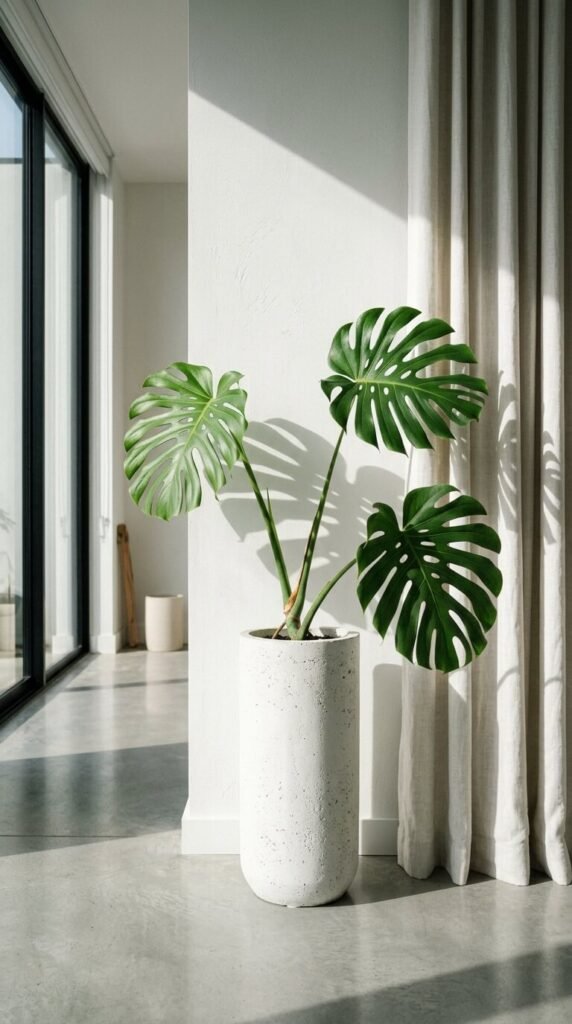
A monstera in a tall concrete or ceramic planter makes a bold, modern statement. The split leaves filter airborne toxins while adding dramatic visual texture to any room. Monsteras prefer bright indirect light and watering every one to two weeks. A young monstera with one or two leaves costs $15–$25. A tall slim planter adds height without taking up floor space. Place it beside a window or against a light wall where the leaf shadows become part of the decor. As it grows, the leaves get bigger and more dramatic — it genuinely improves over time.
13. Lavender Pot on a Bedroom Nightstand
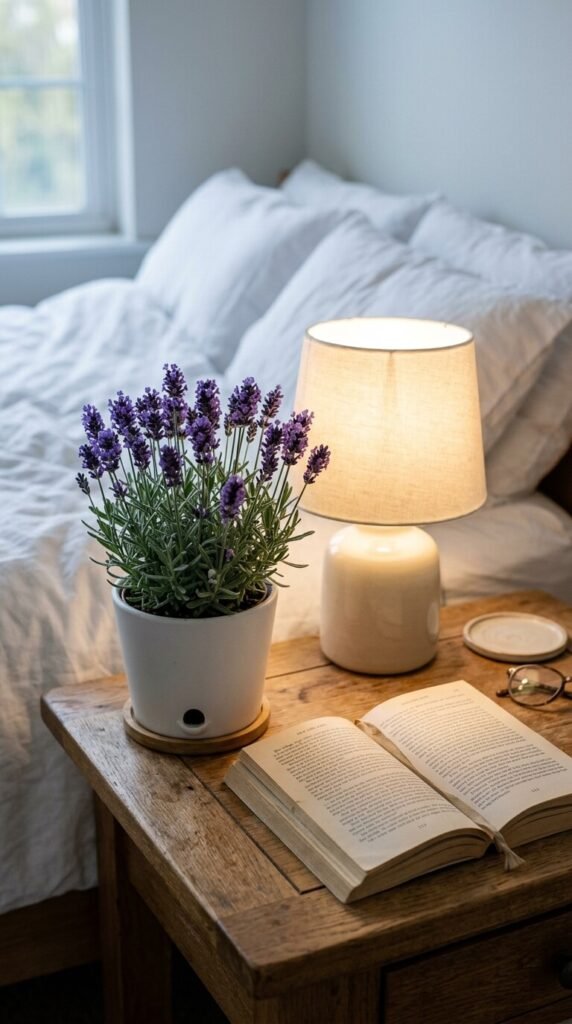
Lavender doesn’t just smell good — it actively cleans the air and has well-documented calming effects. Put a small lavender pot on your bedroom nightstand for a display that helps you sleep better. It needs a south-facing window or a grow light to thrive indoors. Water sparingly — let the soil dry out between waterings. Small lavender plants cost $5–$8 at garden centers. When the scent fades between blooms, gently rub a few leaves to release it again. It’s one of the few plants that does double duty as both an air filter and a natural sleep aid.
14. Fiddle Leaf Fig in a Minimalist White Pot
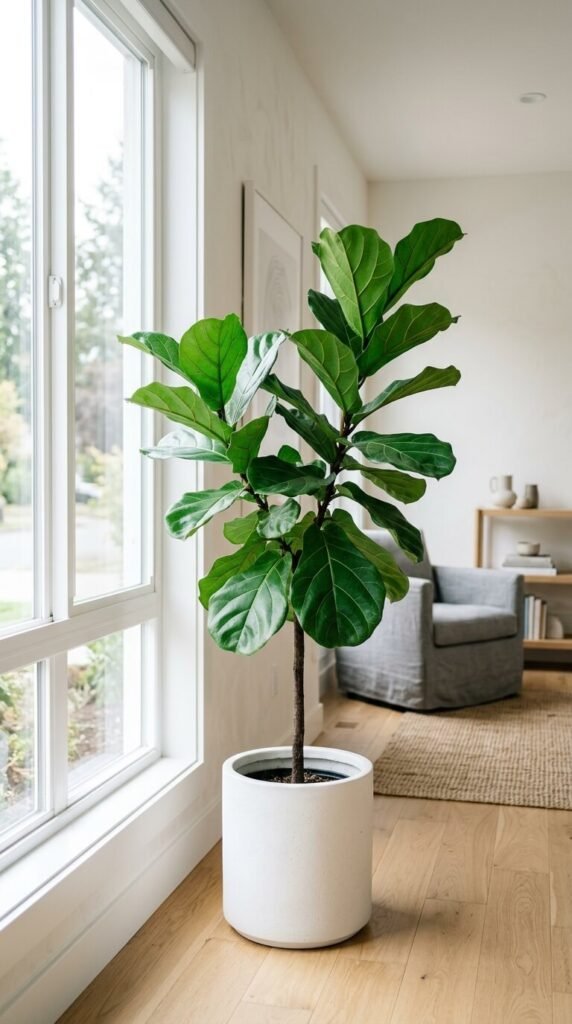
The fiddle leaf fig is one of the most popular indoor plants for a reason — it looks stunning and filters indoor air. Place it near your brightest window in a clean white or natural pot. It needs consistent care — same watering schedule, same spot. Moving it around stresses the plant. Water when the top inch of soil is dry. A small fiddle leaf fig runs $20–$35. Wipe the leaves monthly with a damp cloth to keep them free of dust so they can actually absorb airborne particles. Consistency is everything with this plant — treat it like a routine, not a project.
15. Ivy Cascade on a Bookshelf
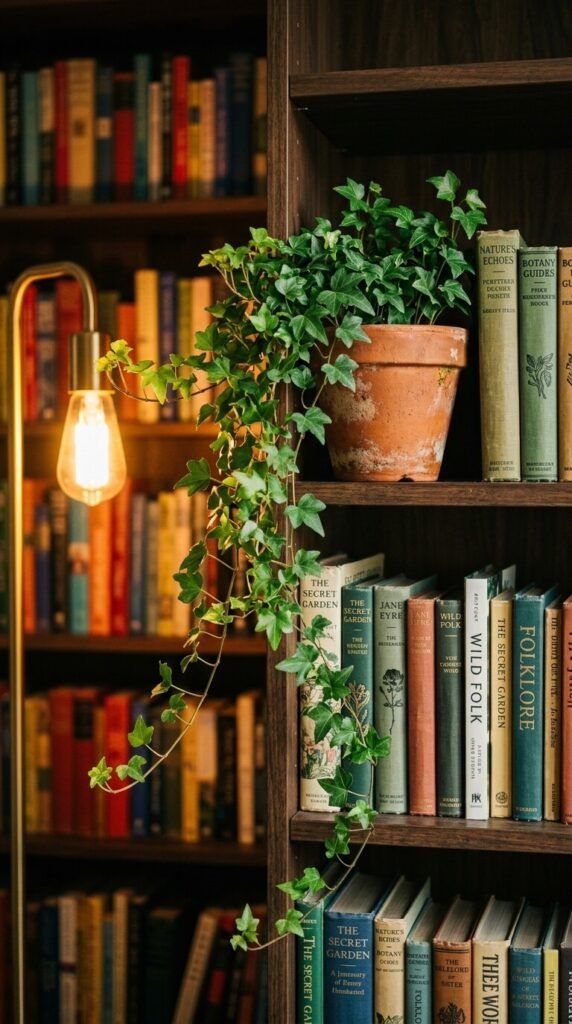
English ivy trailing down a bookshelf is one of the most charming budget displays you can create. Ivy is highly effective at filtering airborne mold and fecal particles — making it especially useful in bathrooms and home offices. Start with one six-inch pot on the top shelf and let the vines grow naturally downward. Trim them once they reach a length you like. Ivy cuttings root easily in water, so you can fill the whole shelf over time for almost nothing. Water when the top of the soil feels dry. The whole look costs under $10 to start.
16. ZZ Plant in a Terracotta Pot Cluster
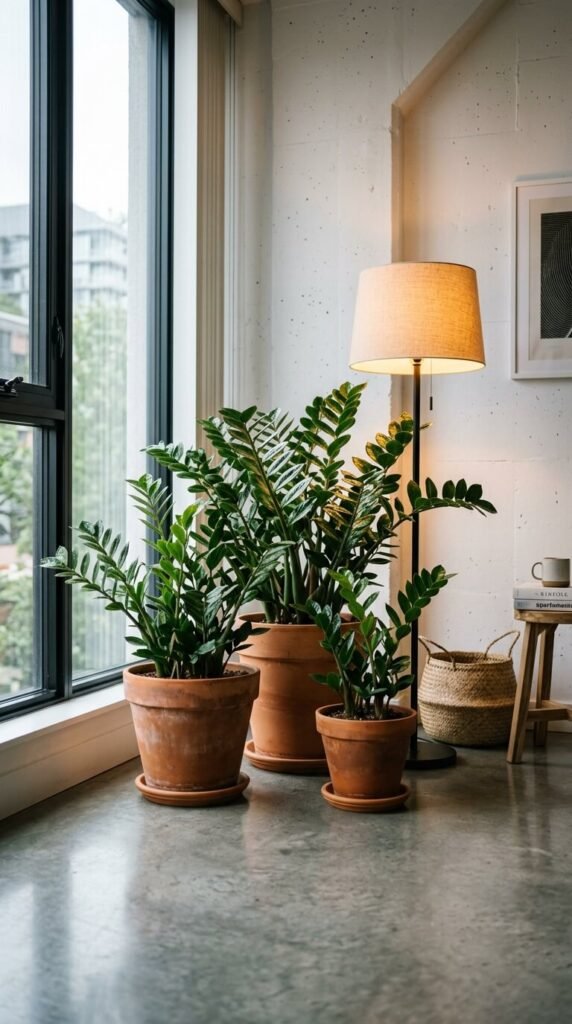
The ZZ plant thrives in the darkest corners of your home and still filters toxins like xylene and toluene. Group three ZZ plants in matching terracotta pots at different sizes to create a cohesive display with visual weight. They need almost no water — once every two to three weeks is enough. They grow from thick underground rhizomes that store water, making them extremely drought-tolerant. A small ZZ plant costs $10–$15. Cluster them on the floor in a dim hallway, entryway, or office corner. The glossy dark leaves look expensive and polished against any wall color.
17. Chinese Evergreen Color Block Display
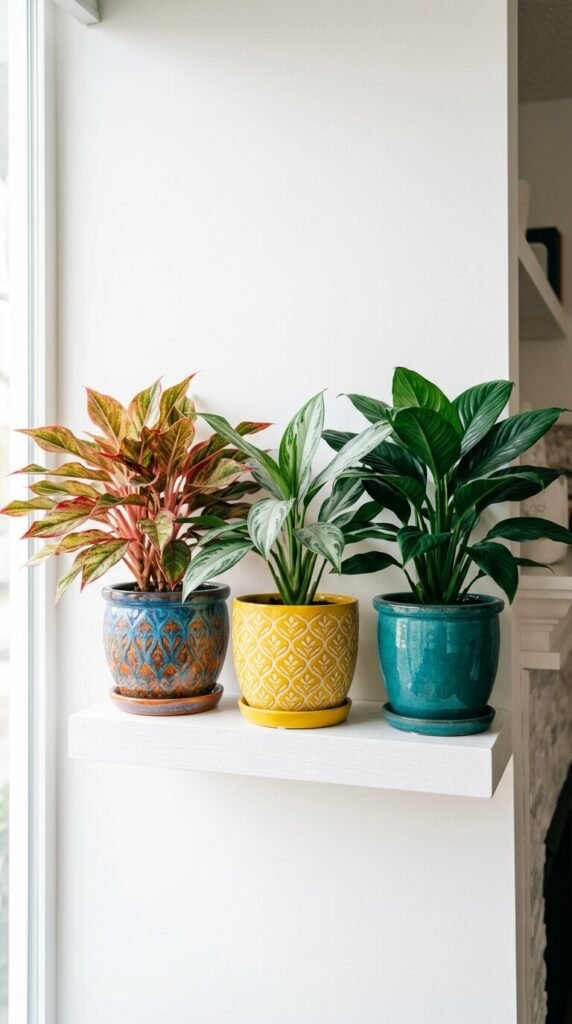
Chinese evergreens come in so many color varieties — from deep green to red-pink to silver — that a trio of them becomes a living color-block display. Each plant filters benzene and formaldehyde from the air. Use three different colorways in matching or coordinating pots and line them up on a floating shelf. They tolerate low to medium light and irregular watering. Starter plants run $8–$15 each. The different leaf patterns and colors make each one distinct while the grouping looks intentional. This is one of the easiest ways to add both color and air-cleaning power to a room.
18. Bedroom Air-Purifying Plant Cluster
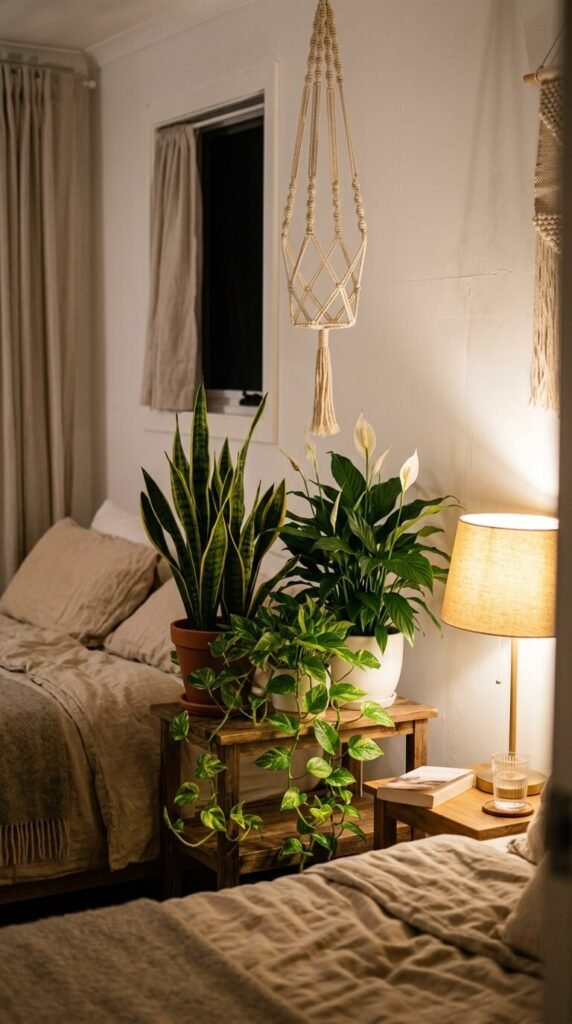
Build a bedroom plant cluster using three top-rated sleep-friendly air purifiers: a snake plant, a peace lily, and a trailing pothos. Snake plants release oxygen at night. Peace lilies reduce airborne mold. Pothos handles carbon monoxide. Group them on a small wooden plant stand in one corner of your bedroom. Use simple pots in the same tone family — all terracotta, all white, or all black — to make the group look curated rather than random. You can assemble this whole cluster for $25–$40. The combined air-filtering effect is meaningfully better than a single plant.
19. Outdoor-to-Indoor Potted Fern Display
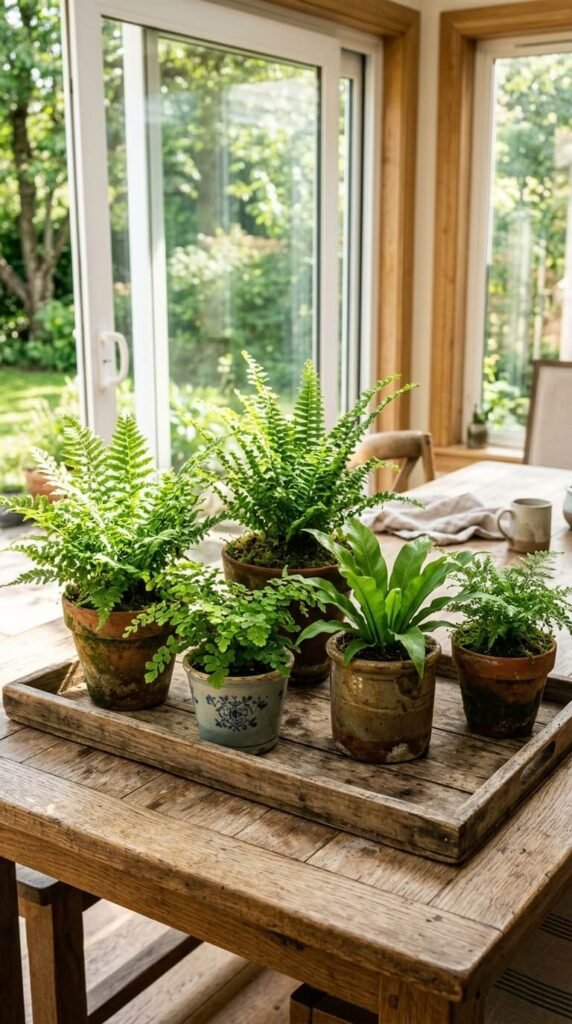
Bring outdoor ferns indoors for the cooler months and set them up as a table centerpiece. Ferns absorb formaldehyde and add serious humidity to dry indoor air. Collect mismatched vintage pots from thrift stores — cracked or imperfect pots add character. Group five or six smaller ferns on a wooden tray on your dining table or entryway console. Keep them near natural light and mist daily. This look is cottage-core and cozy — especially in autumn and winter. The tray makes them easy to move outside when temperatures warm up again.
20. Chrysanthemum Window Box Display
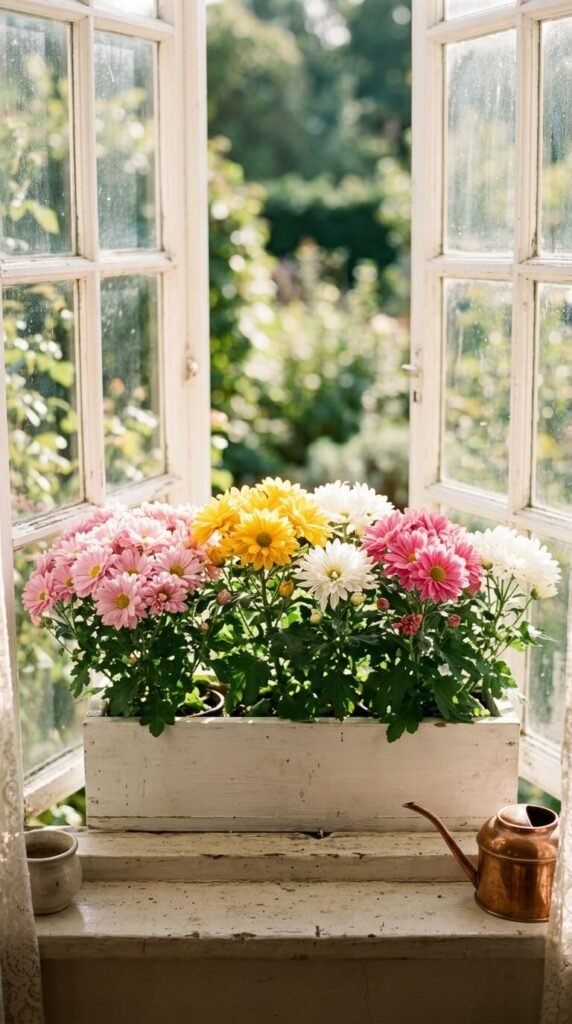
Chrysanthemums are one of the top-ranked air-purifying plants from NASA’s original clean air study. They filter ammonia, benzene, and formaldehyde. A window box of mixed-color chrysanthemums indoors creates a bright, cheerful display that does serious work. They need direct light — put them in your sunniest window. Water when the top inch of soil is dry. Chrysanthemum pots cost $4–$8 at grocery stores and garden centers, especially in autumn. Once the blooms fade, move the plant outside. Replace it with a fresh pot. It’s a display you can refresh seasonally without spending much.
21. Wall-Mounted Air Plant Frame
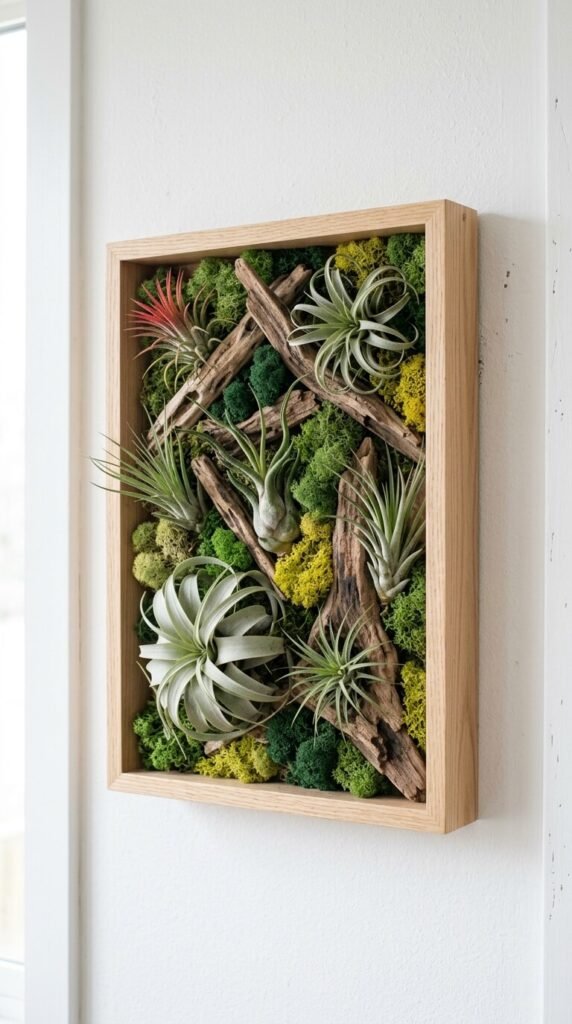
A wall-mounted air plant frame is the ultimate conversation piece. It takes up zero floor or shelf space. Use a wooden shadow box frame and arrange tillandsia air plants inside it alongside bits of cork, driftwood, or preserved moss. Air plants need no soil and only a weekly misting or 20-minute soak. Secure them with a small dab of non-toxic craft glue or floral wire. The whole project can cost under $20 at a craft store. Mount it at eye level in your living room or entryway. It looks like living wall art — and it genuinely improves air quality.
22. Calathea Showcase in a Dark Corner
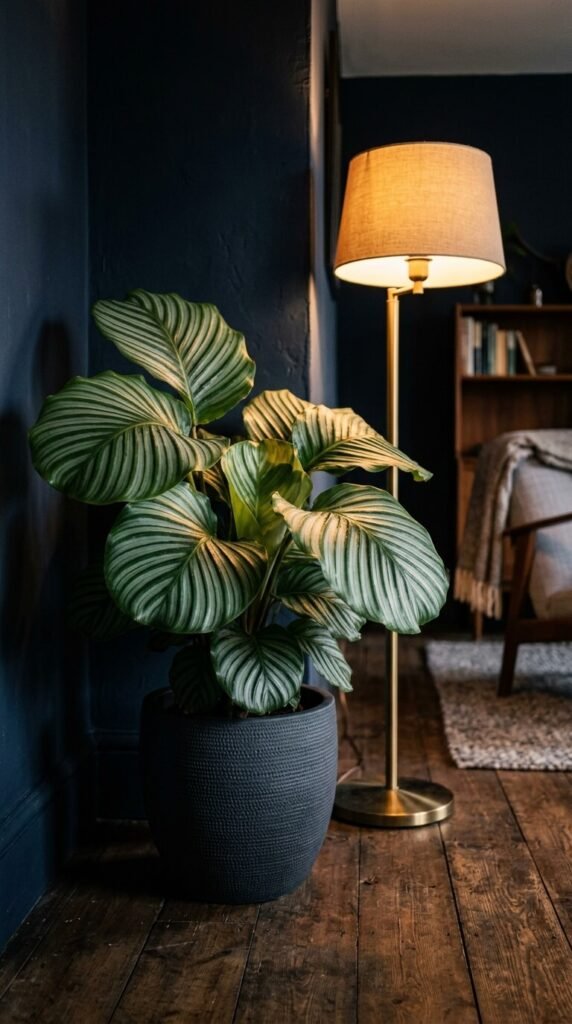
Calatheas are showstoppers in darker corners. Their bold, patterned leaves move throughout the day — folding up at night and opening again in the morning. They filter airborne toxins and act as natural humidifiers. Choose a calathea orbifolia for the most dramatic leaf pattern. Pair it with a deep charcoal or dark green ceramic pot to frame the light-colored leaf markings. Calatheas like indirect light and consistent moisture. They prefer distilled or rainwater over tap water if possible. A healthy plant costs $15–$30. One calathea in the right pot, in the right corner, is a complete display on its own.
Conclusion
You don’t need a greenhouse or a big budget to surround yourself with plants that actually clean the air you breathe. The 22 displays above prove that a few well-chosen plants — in the right pots, in the right spots — can transform a room’s look and air quality at the same time. Start with one or two plants that match your light conditions and your lifestyle. Group them intentionally, use pots that work together visually, and let the plants grow into the space over time. The air gets cleaner, the room gets more alive, and the whole effort costs less than a single scented candle. Pick one display from this list today and get it started.