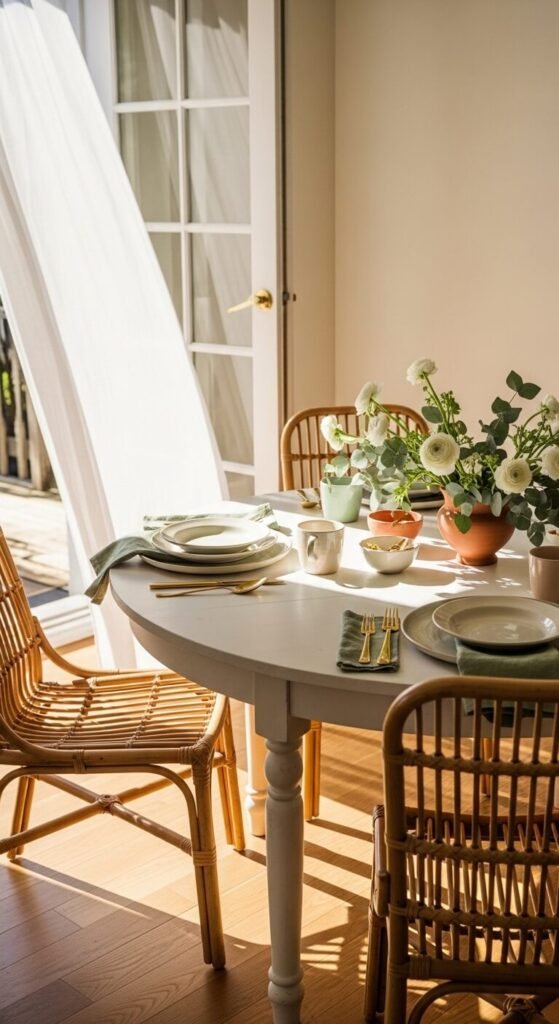
Spring is the season that draws people back to the table. The days get longer, the windows open again, and suddenly there’s every reason to gather your favorite people for a slow meal together. A spring dining room doesn’t require a big budget or a full redesign. Small, thoughtful changes—fresh linens, a handful of flowers, a coat of paint—can make your space feel completely different. Whether you’re hosting a family brunch or a quiet dinner for two, these setups will help you create a dining room that feels open, warm, and full of life.
1. Swap Out Your Table Linens for Soft Pastels
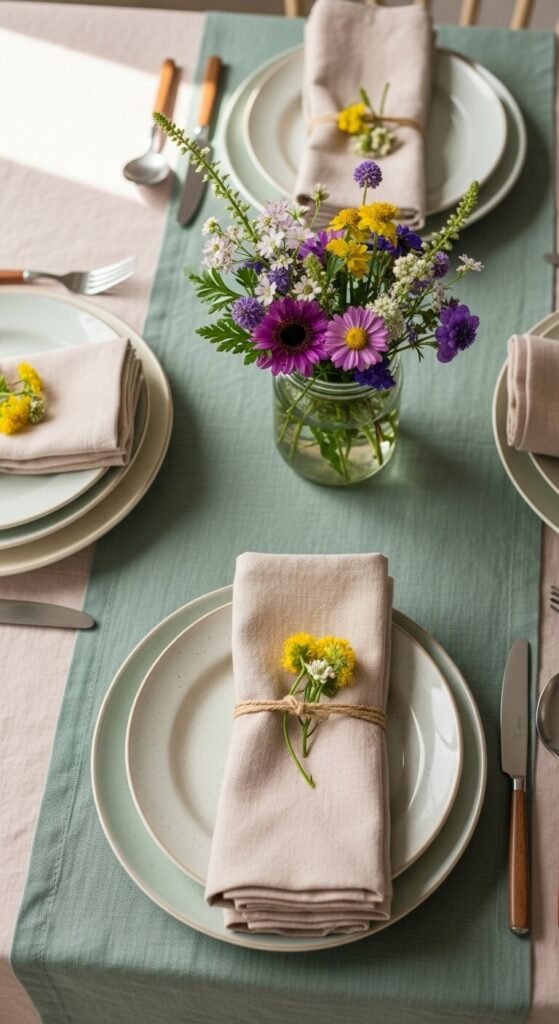
Linens are the fastest way to signal a new season. Swap heavy winter fabrics for lightweight cotton or linen in dusty rose, mint, or pale yellow. You don’t need a matching set. Mixing complementary pastels actually looks more intentional than it sounds. Look for napkins at thrift stores or discount home goods shops. A simple blush tablecloth with a sage runner costs very little but completely changes the mood. Wash them before use so they feel soft and relaxed—not stiff and store-bought.
2. Bring in a Bouquet of Seasonal Flowers
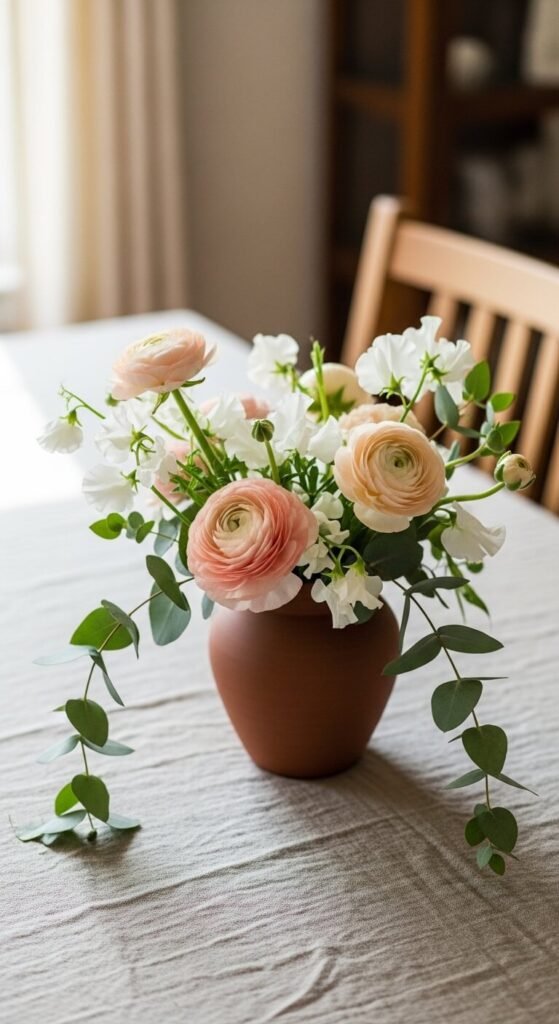
You don’t need a florist arrangement to make flowers work. A simple bunch of tulips, ranunculus, or daffodils from a grocery store costs just a few dollars. Use a mason jar, a short ceramic vase, or even a vintage pitcher as your vessel. Keep the stems trimmed short so the arrangement sits low—guests can see each other across the table without leaning around a tall centerpiece. Change the water every two days to keep them looking good longer.
3. Layer in Woven Textures with Rattan or Jute Accents
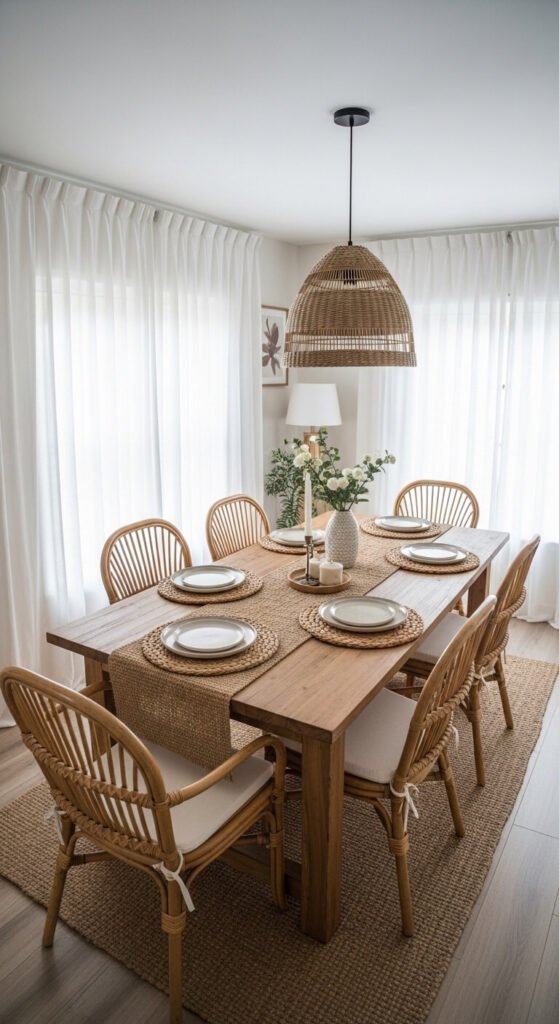
Texture makes a room feel layered without adding clutter. Rattan chairs, a jute runner, or woven placemats introduce a natural, organic quality that feels right in spring. You can find rattan chairs secondhand at estate sales or online marketplaces for a fraction of retail price. Even adding two woven placemats alongside your regular dishes creates that easy, relaxed look. The rougher texture of natural fibers plays nicely against smooth ceramic plates and glassware.
4. Paint One Accent Wall in a Soft Botanical Color
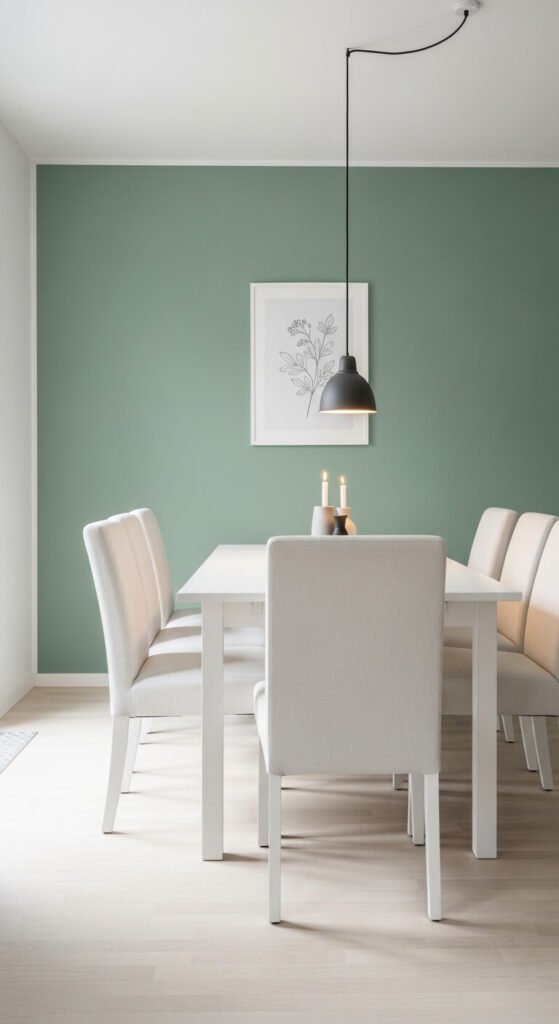
One painted wall can anchor the whole room. Sage green, dusty blue, or warm terracotta all feel appropriately seasonal without being too bold. You only need one gallon of paint for a single accent wall, which keeps the cost low. Stick to matte or eggshell finishes—they hide imperfections and photograph beautifully. If you’re renting, try peel-and-stick wallpaper panels in a botanical print instead. Same dramatic effect, no permanent commitment.
5. Set the Table with Mismatched Vintage Dishware
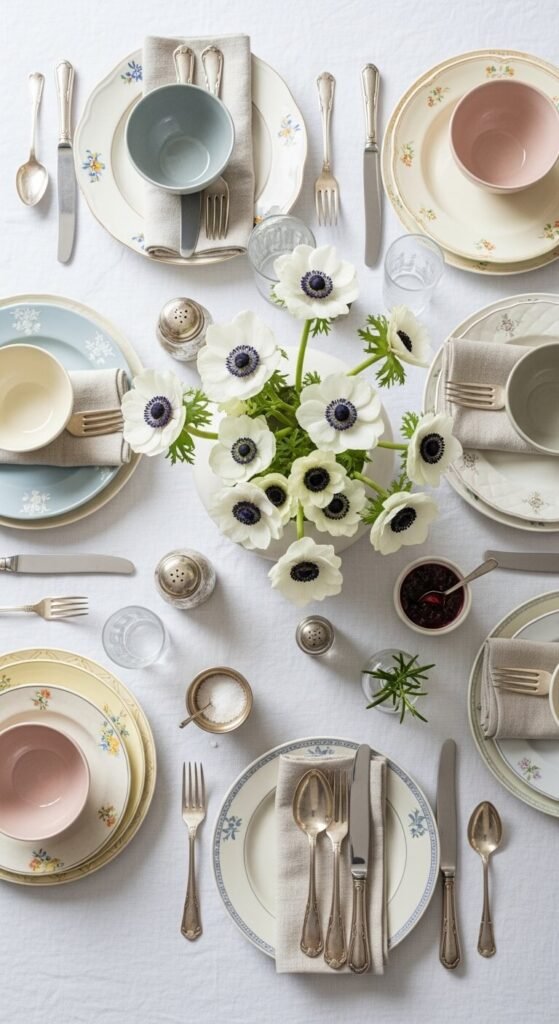
Mismatched dishes have a charm that perfectly matched sets rarely achieve. Collect plates in similar tones—cream, soft blue, sage—from thrift stores or estate sales and mix them freely. The key is keeping the color palette cohesive even when the patterns differ. Pair them with vintage silver cutlery for a warm, collected-over-time feel. This approach is genuinely budget-friendly: a full set of interesting plates can cost less than one box of new dinnerware from a department store.
6. Add a Gallery Wall of Botanical Prints
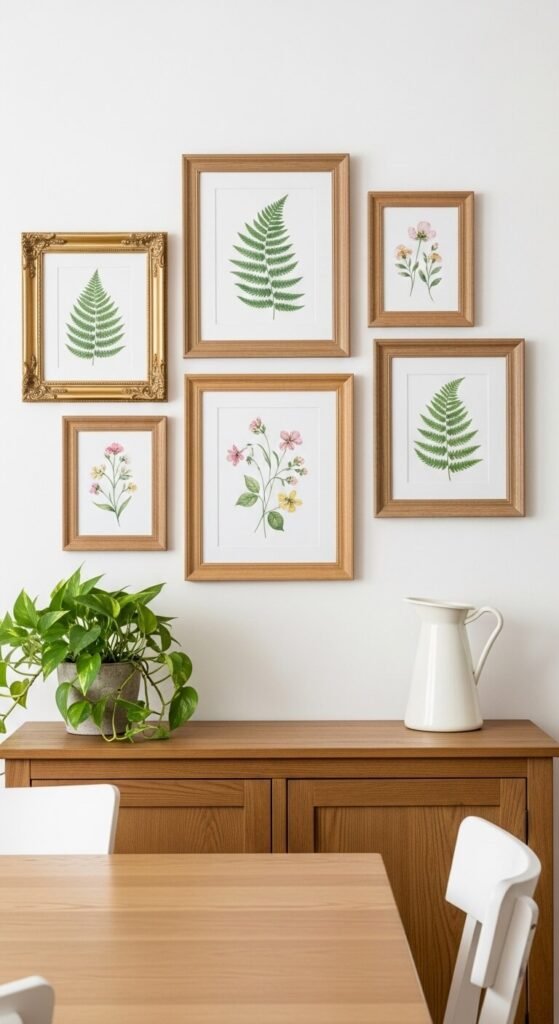
A gallery wall does double duty—it fills empty space and sets a visual mood. Print botanical illustrations at home using free public domain images from sites like the Biodiversity Heritage Library, then frame them in simple black, gold, or natural wood frames. Keep the frames slightly varied for a curated, personal look. Hang them above a sideboard or along the wall beside the dining table. Botanical prints work year-round but feel especially right from March through June.
7. Hang Sheer Curtains to Let in Soft Natural Light
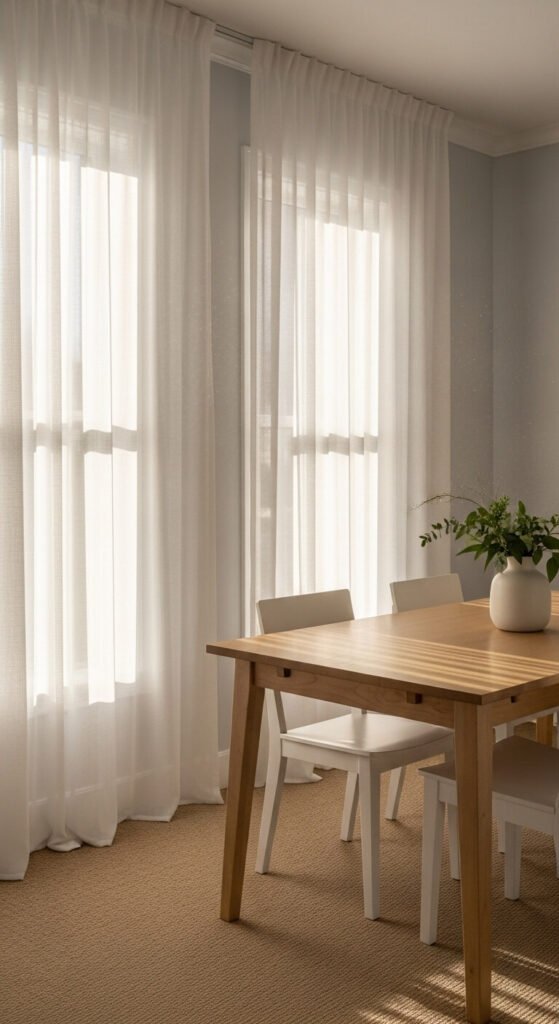
Light changes everything in a room. Sheer curtains in white or ivory soften harsh direct sunlight while still letting the room feel open and airy. Floor-to-ceiling panels make ceilings look taller than they are. You can find affordable sheer panels at major home stores for under $20 per panel. Hang the rod a few inches above the window frame and let the curtains just graze the floor. That small detail makes the whole space feel more intentional and polished.
8. Place a Low Herb Centerpiece on the Table
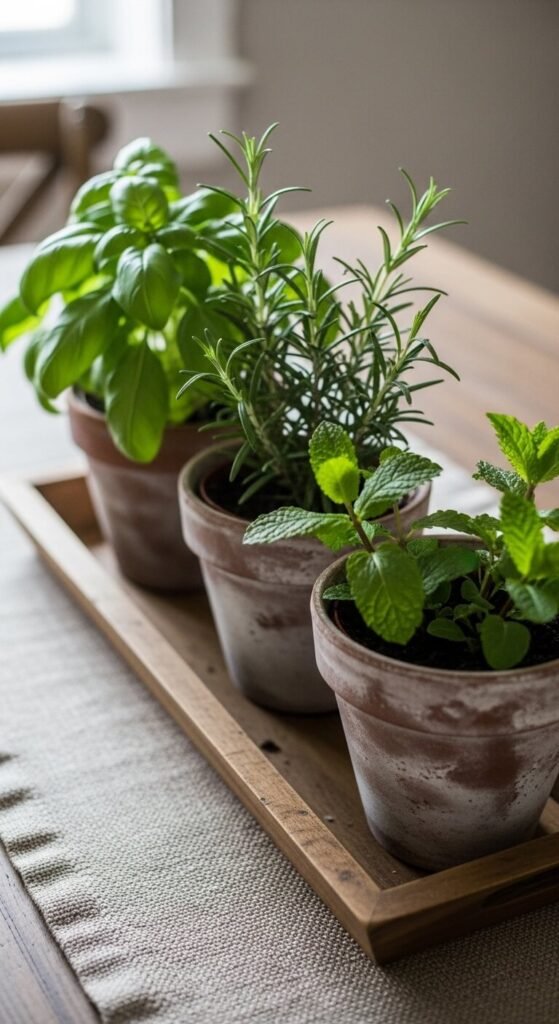
A living centerpiece adds fragrance as well as beauty. Group three small potted herbs—basil, mint, and rosemary—in a wooden tray or on a slate board. It looks purposeful and doubles as a practical touch: guests can snip fresh herbs onto their plates. You can start this for well under $15 using seed packets and small terracotta pots from a garden center. Keep the herbs near a window between meals so they stay healthy and green throughout the season.
9. Introduce Candlelight for Evening Gatherings
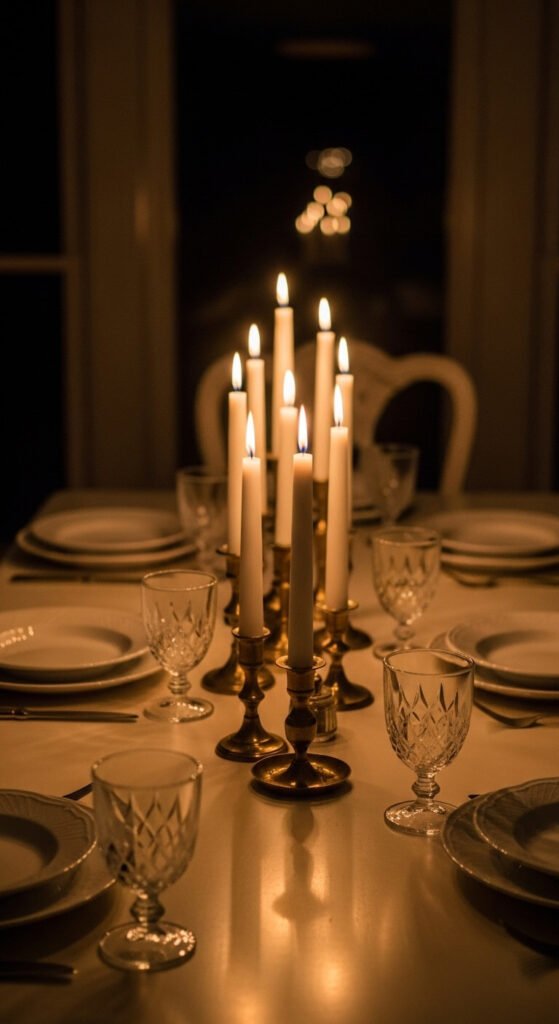
Candles do something no overhead light can. A row of taper candles in mismatched brass or ceramic holders creates a warm, golden glow that makes everyone at the table look good. Use unscented candles for the dining table so the scent doesn’t compete with food aromas. Taper candles and simple holders are widely available at dollar stores and discount shops. For a cohesive look, stick to white or ivory candles and vary only the height of the holders.
10. Pull in Outdoor Elements with Potted Plants
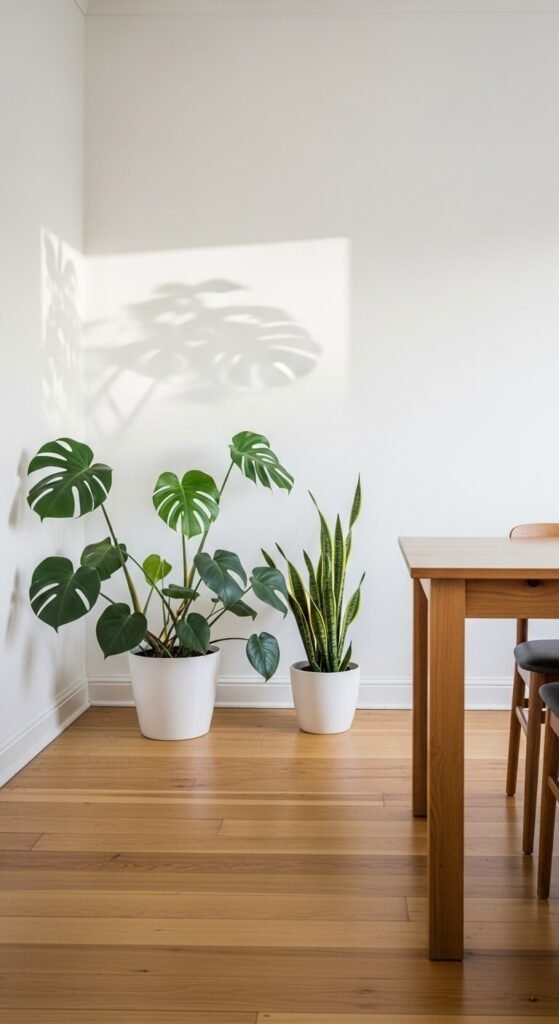
Plants make a dining room feel alive and connected to the outdoors. A single large potted plant—like a monstera, fiddle leaf fig, or olive tree—in a corner can transform the feel of a room instantly. If large plants feel like too much of a commitment, start with a cluster of small succulents or trailing pothos on the windowsill. Most houseplants thrive in the extra natural light of spring. Terracotta pots are inexpensive and look wonderful against both light and dark walls.
11. Layer a Vintage or Patterned Rug Underneath the Table
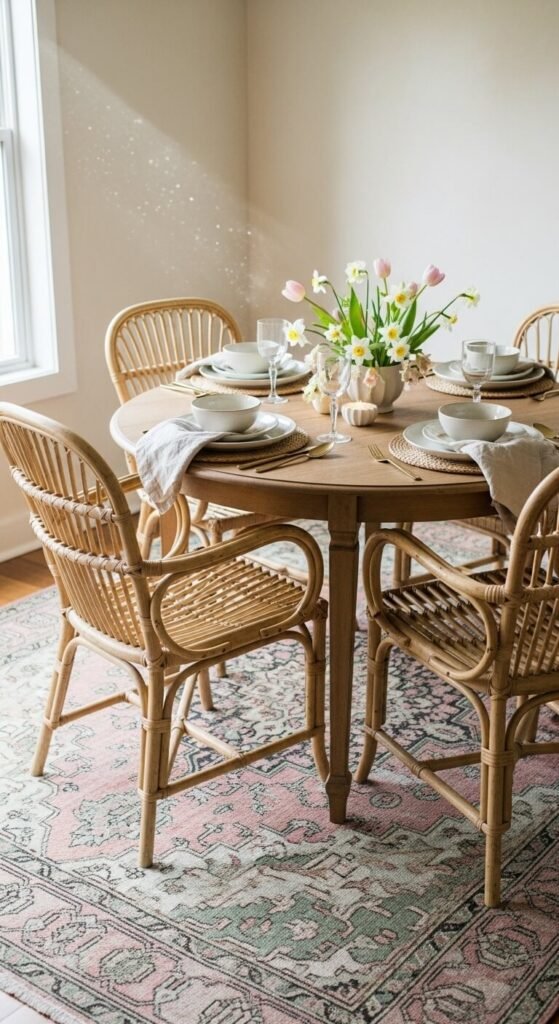
A rug grounds the dining area and adds warmth underfoot. A faded vintage-style rug in soft florals or muted geometric patterns works especially well under a round or rectangular dining table. Make sure the rug is large enough so chair legs remain on the rug when pulled out—this is the most common sizing mistake. Look for affordable options at discount furniture stores, or check local thrift shops and estate sales for genuine vintage pieces at low prices.
12. Use a Wooden Breadboard as a Serving Centerpiece
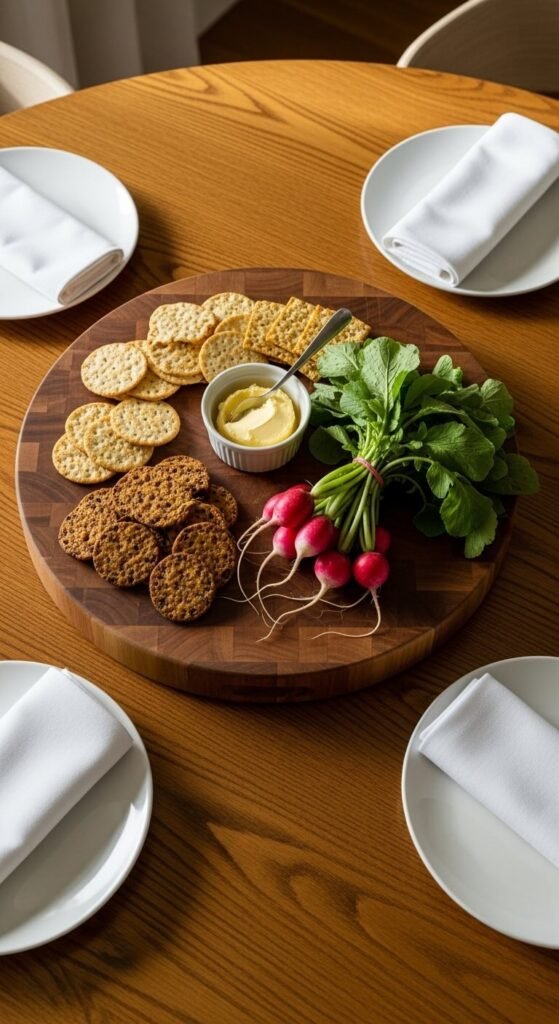
Functional objects make excellent centerpieces. A large wooden breadboard or cutting board placed in the center of the table serves both a decorative and practical purpose. Style it with a small dish of olive oil, a candle, or a handful of spring vegetables before guests arrive. During the meal, it becomes a place to serve bread, cheese, or shared snacks. It requires no special arrangement skills—just place and go. Look for end-grain boards at restaurant supply stores for good value.
13. Try a Color-Blocked Tablescape
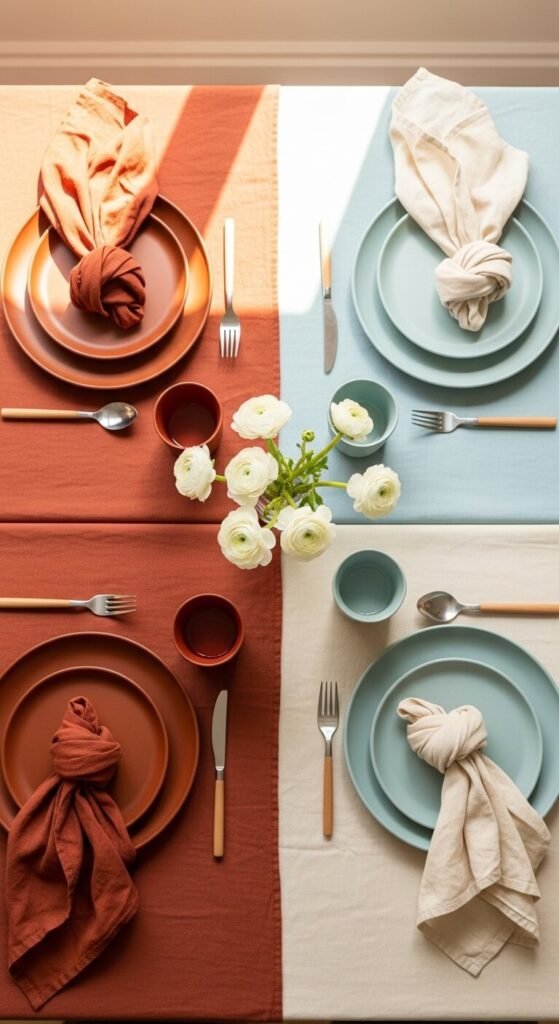
Color-blocking on a table is easier than it sounds. Split the table into two tonal zones—warm on one side, cool on the other—using different colored plates or linens. For example, pair terracotta and rust with pale sage or soft blue across the table. The contrast looks striking without requiring expensive new items. Use what you already own and supplement with one or two inexpensive additions. This setup works particularly well for dinner parties when you want a wow moment as guests sit down.
14. Hang a Statement Pendant Light
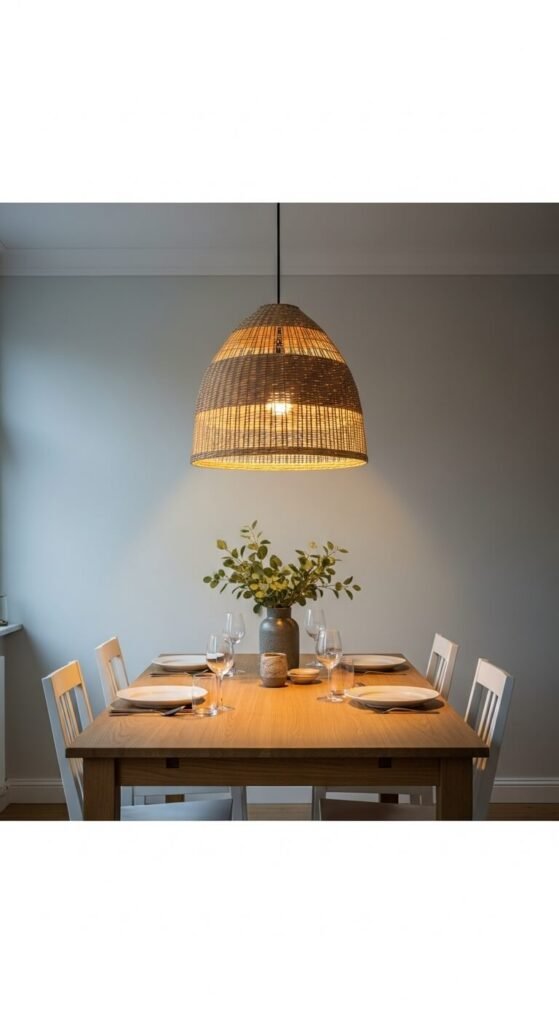
Lighting sets the mood before a single plate hits the table. A woven rattan or paper pendant light hung low over the table creates a cozy, defined dining zone even in an open-plan space. Look for affordable options online—many attractive pendant shades are available for under $40. If you’re not comfortable with electrical work, plug-in pendant lights are a no-tools solution. Hang the shade so the bottom sits about 30 inches above the tabletop for the best light spread and visual proportion.
15. Set Up a Simple Drink Station on a Sideboard
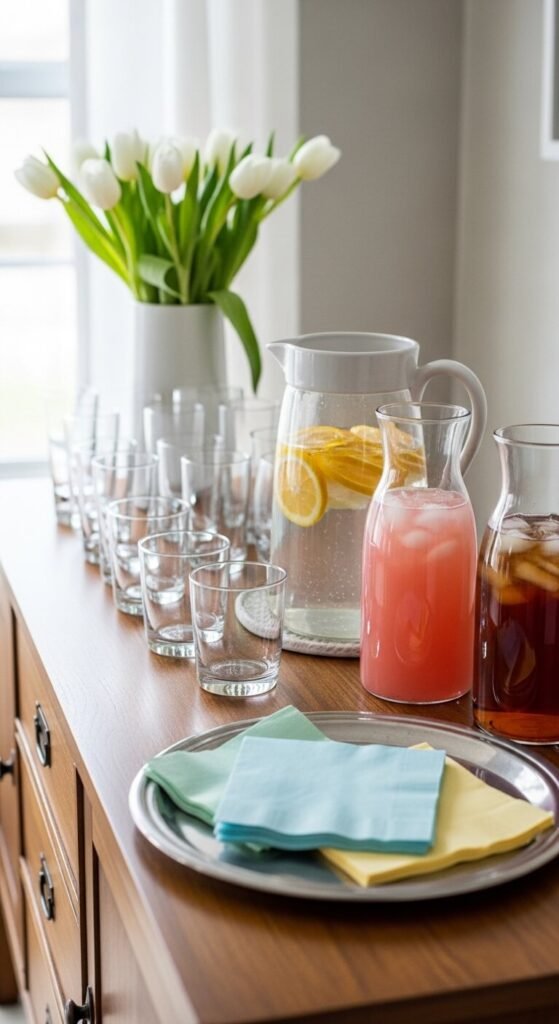
A dedicated drink station removes one thing from the table and adds a welcoming touch. Style a sideboard or console table with a pitcher of infused water, a few carafes, and a small vase of flowers. Guests can help themselves, which takes pressure off the host during a meal. Use a small tray to keep glassware organized and add a folded stack of linen cocktail napkins. This setup looks polished but takes about five minutes to arrange. A ceramic pitcher costs very little and looks beautiful in almost any style of home.
16. Incorporate Pressed Flower Place Cards
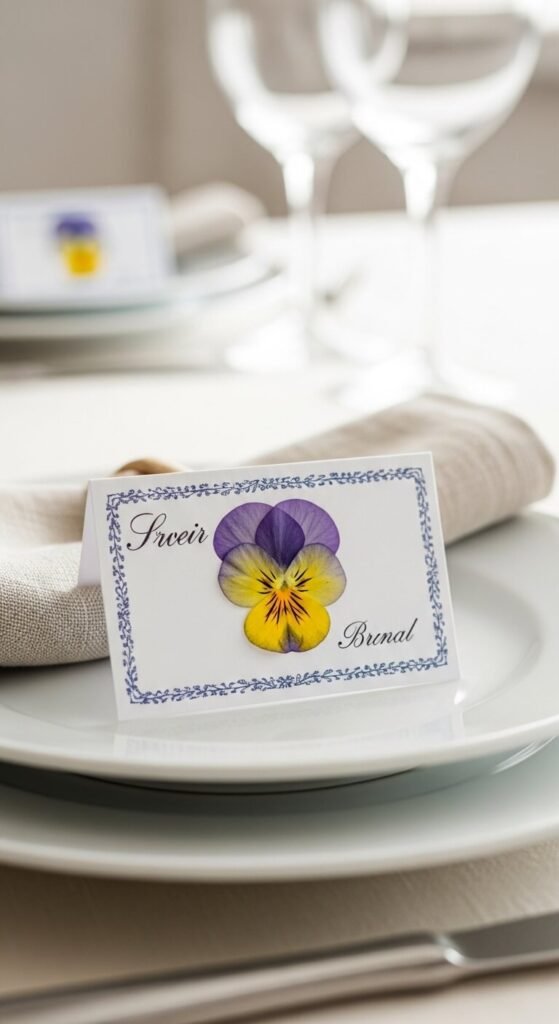
Place cards add a personal touch that guests genuinely notice and appreciate. Press flowers at home between the pages of a heavy book for one to two weeks, then glue them onto small folded card stock pieces using clear-drying craft glue. Write each guest’s name by hand. Pansies, violas, and small daisies press especially well and retain their color. The total cost for a dinner party of eight is almost nothing. Guests often take these home as a small keepsake from the meal.
17. Drape a Soft Throw Over a Chair for Chilly Evenings
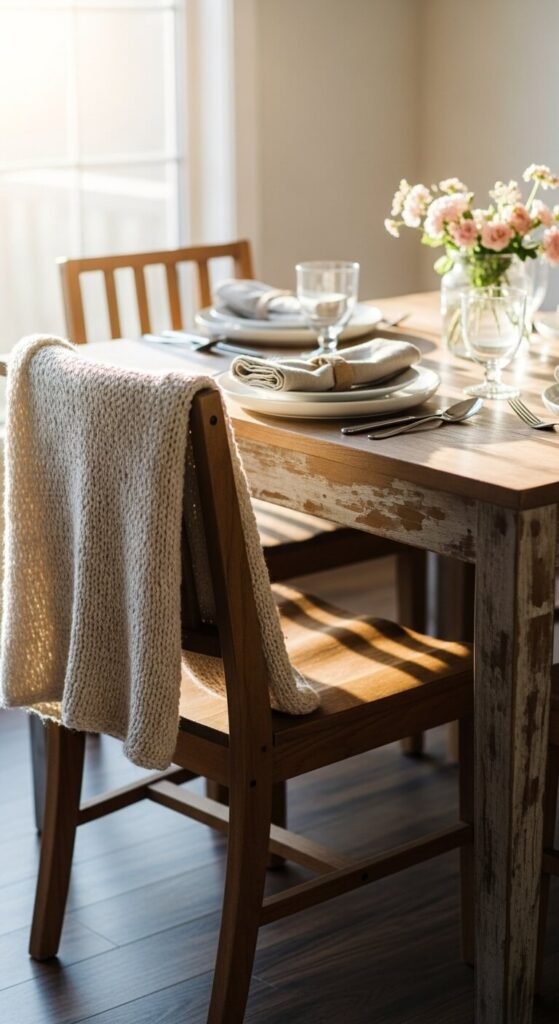
Spring evenings can still feel cool, especially near open windows. Drape a lightweight throw in a natural fiber—cotton, linen, or a loose-knit cotton blend—over one or two chairs. It’s a practical touch that also adds softness and texture to the room. Choose throws in cream, oatmeal, or a muted stripe. They signal that guests should get comfortable and stay a while. When not in use, they look great folded over a chair arm as a permanent styling element.
18. Create a Nature-Inspired Centerpiece with Branches
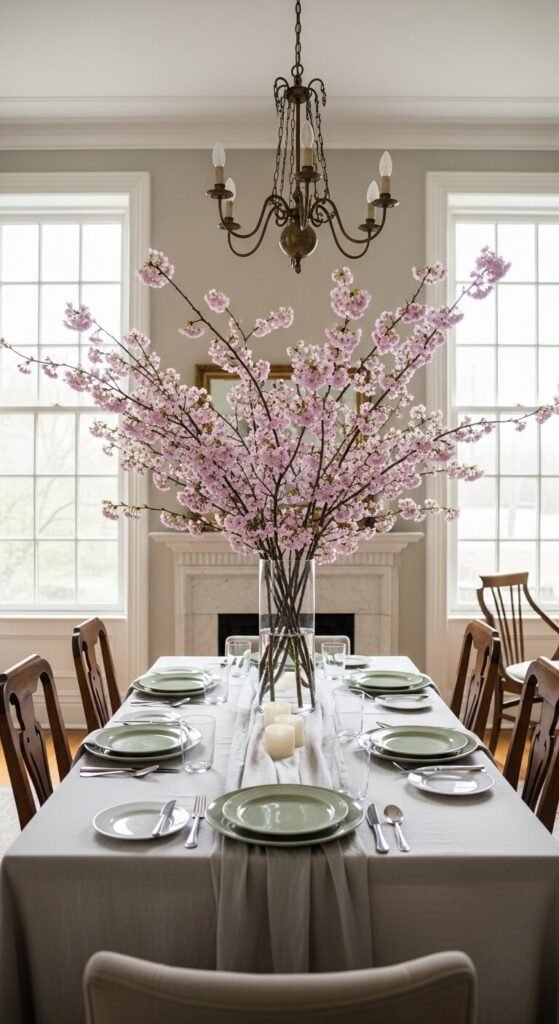
Cut branches are one of the most dramatic—and free—centerpiece options in spring. Branches of cherry blossom, forsythia, or magnolia cut from a yard or picked up at a farmers market can fill a tall glass vase and create a centerpiece that takes up real visual space without blocking sightlines. Cut the stems at a diagonal and crush the base slightly so they drink more water. They last up to a week. No flowers from a florist can compete with the scale and naturalness of a branch arrangement.
19. Mix Wood Tones for a Warm, Lived-In Look
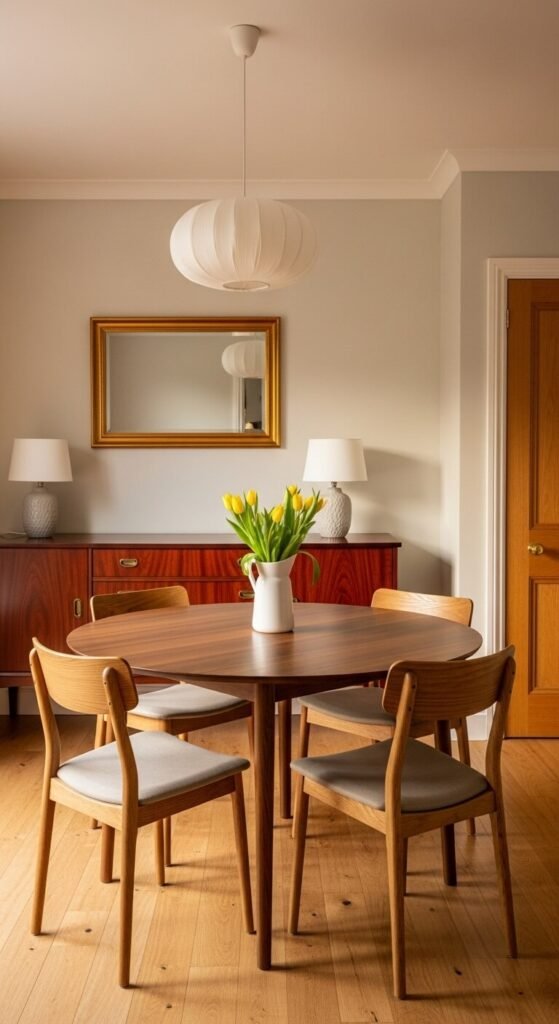
Matching wood furniture perfectly is actually harder than mixing tones. Combining a walnut table with oak chairs, or a dark sideboard with lighter dining pieces, creates a layered, warm quality that looks intentional rather than mismatched. The key is keeping one or two repeating elements—similar leg style, consistent hardware—to tie pieces together. If you’re sourcing secondhand, mixing tones gives you much more flexibility when hunting for deals. Spring is an excellent time for estate sales where wood furniture is plentiful.
20. Use Napkin Rings Made from Natural Materials
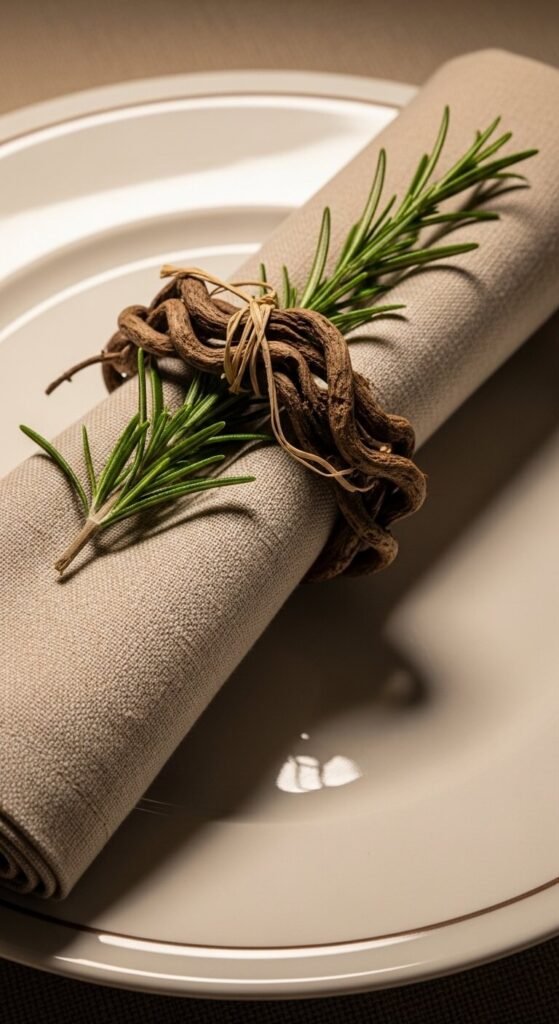
Napkin rings finish a table setting the way jewelry finishes an outfit. Make your own napkin rings from natural materials: a short length of birch twig tied with twine, a small bundle of dried lavender bound with a rubber band and then covered with jute string, or even a loop of woven rattan ribbon. These cost almost nothing and can be made in an afternoon. They photograph beautifully and add a handmade quality to the table that store-bought versions rarely match.
21. Style the Windowsill as Part of Your Dining Decor
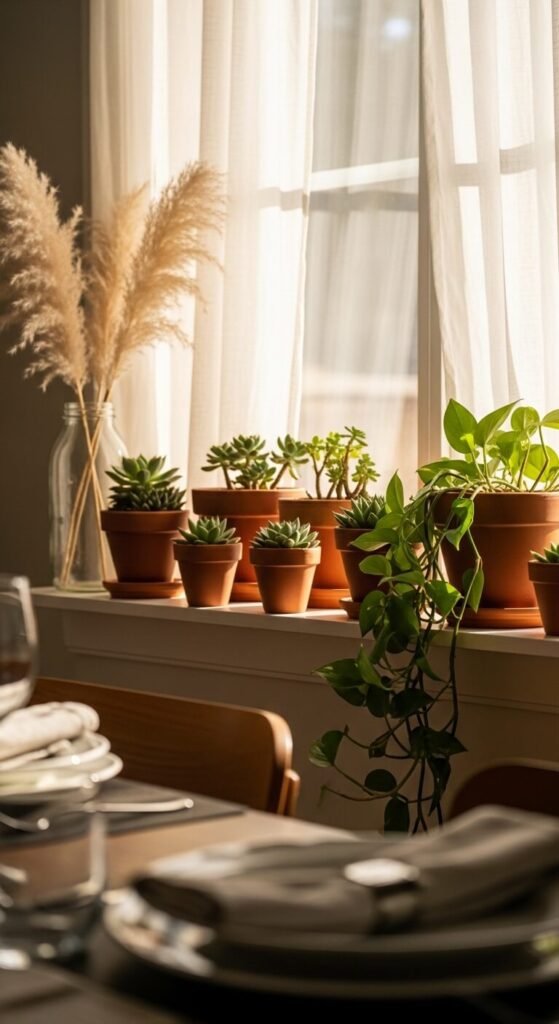
Your windowsill is free real estate. Line it with small potted plants, a single trailing vine, or a row of glass jars filled with dried grasses or wildflowers. Because it sits outside the dining table footprint, it adds green to the room without crowding the table. In spring, a windowsill of small herbs or flowering plants creates a natural frame around the light coming in. This requires no furniture rearrangement and costs very little to style.
22. Add a Chalkboard Menu for Dinner Parties
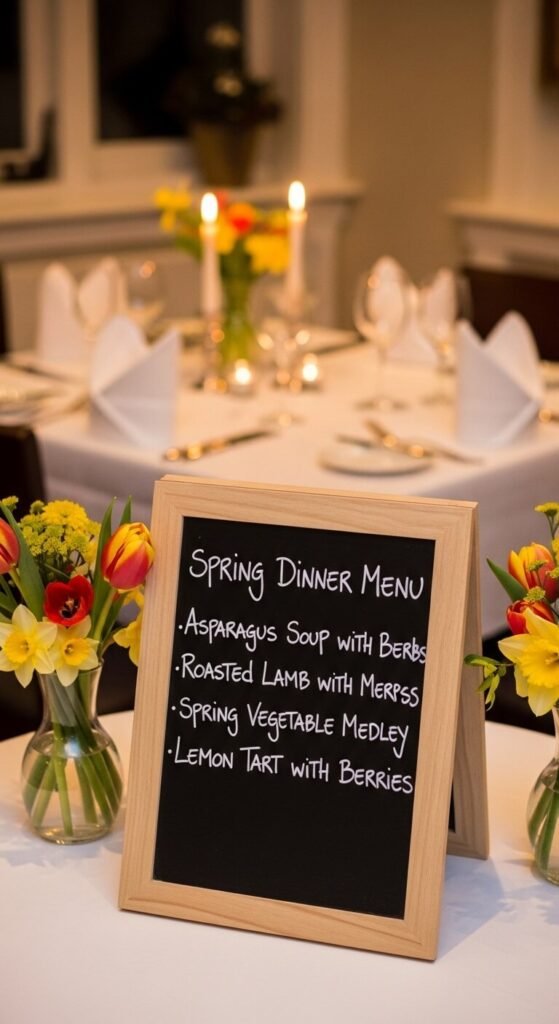
A handwritten chalkboard menu makes even a casual dinner feel like a special occasion. A small A-frame chalkboard or a framed piece of dark card stock works perfectly. Write the evening’s courses in white chalk or chalk marker. It sets expectations for guests and creates a talking point before the meal begins. Place it on a sideboard, lean it against a wall, or prop it on a chair beside the table. Between dinner parties, use it to write a weekly menu for the family—it stays useful year-round.
23. Keep the Table Slightly Underdressed for Everyday Meals
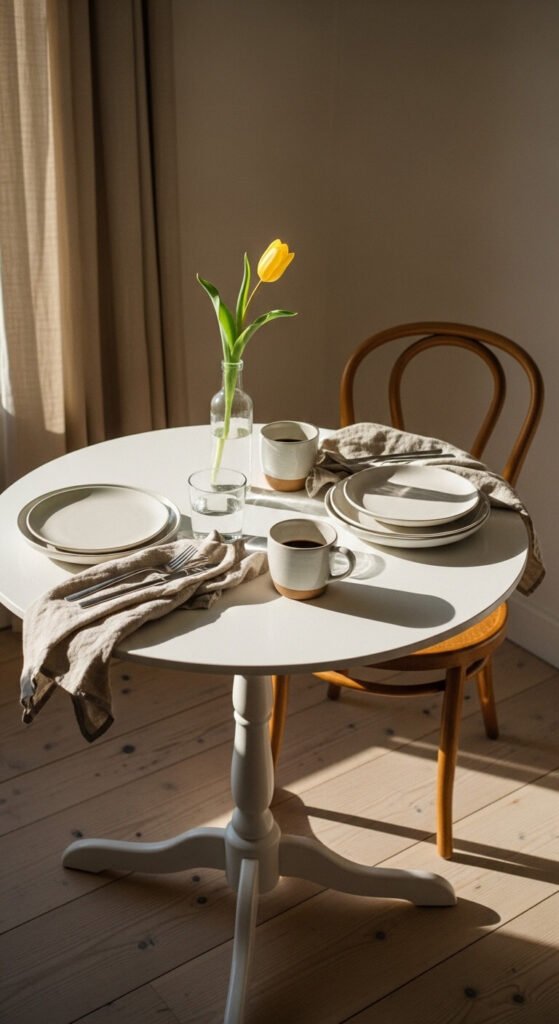
Not every meal needs a full production. Keeping a few simple elements permanently on the table—a small plant, a candle, one bud vase—means your dining room always looks ready for an impromptu gathering. This approach costs nothing extra and removes the pressure of setting up before every meal. The best dining rooms aren’t the most elaborate ones. They’re the ones that make people want to pull up a chair, linger over seconds, and stay a little longer than planned.
Conclusion
A spring dining room is less about matching sets and expensive purchases and more about the feeling you create when people walk in. Natural light, a few fresh flowers, some soft linens, and a handful of personal touches—these are the things that make a space genuinely welcoming. Start with one or two ideas from this list and build from there. You don’t need to redo the whole room at once. Even a single vase of grocery store tulips and a clean tablecloth can turn an ordinary weeknight dinner into something your family or friends will remember. The table is where the best conversations happen—set it like that matters.