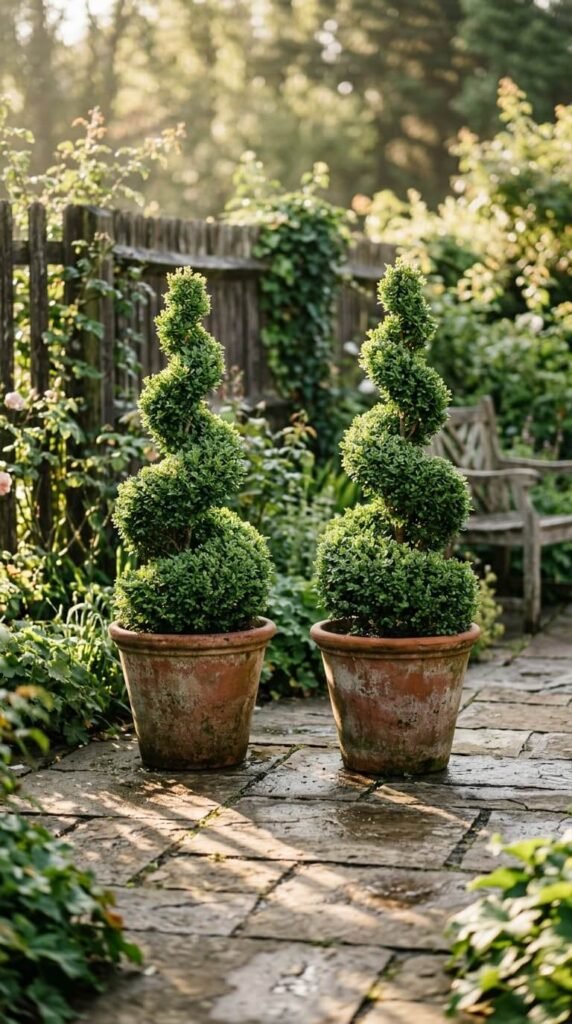
Topiary decor turns ordinary corners into something worth a second look. Clipped shapes, spiral stems, and tidy green forms bring structure to a room or patio without much fuss. Whether you’re working with a tiny apartment balcony or a wide front porch, small green sculptures can change the whole mood of a space. This list walks through 24 ways to use topiary decor, with budget tips and simple DIY ideas you can try this weekend.
1. Spiral Boxwood in Terracotta Pots
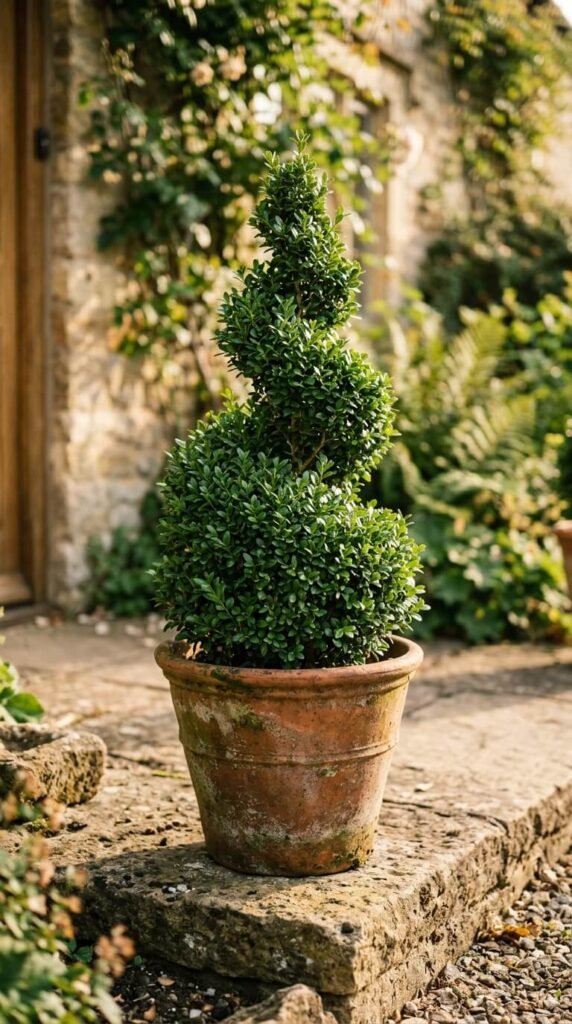
A spiral boxwood is a classic for a reason. The twisting shape draws the eye upward and adds height without taking up floor space. Set one on each side of your front door for instant symmetry. Budget tip: buy a plain boxwood shrub and shape it yourself with hand shears over a few months. Terracotta pots from a hardware store work fine and age beautifully outdoors. Water twice a week in summer, less in cooler months. This is a low-cost way to make an entryway feel finished.
2. Pom-Pom Ball Topiaries on Stems
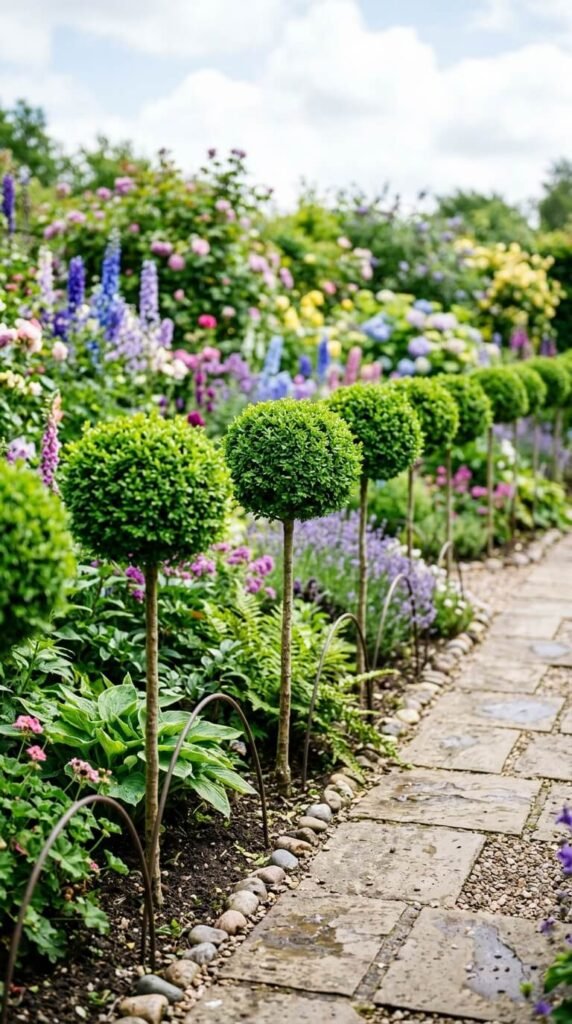
Pom-pom topiaries look like little green lollipops. They’re playful but still tidy, which makes them easy to place almost anywhere. Line them along a walkway or use one as a centerpiece on an outdoor table. DIY tip: trim a small shrub into a ball shape using a round template, like an upside-down bowl, as a guide. Keep the stem bare and clean for that signature look. These work well in matching pairs for a balanced, put-together feel.
3. Faux Topiary for Low-Maintenance Style
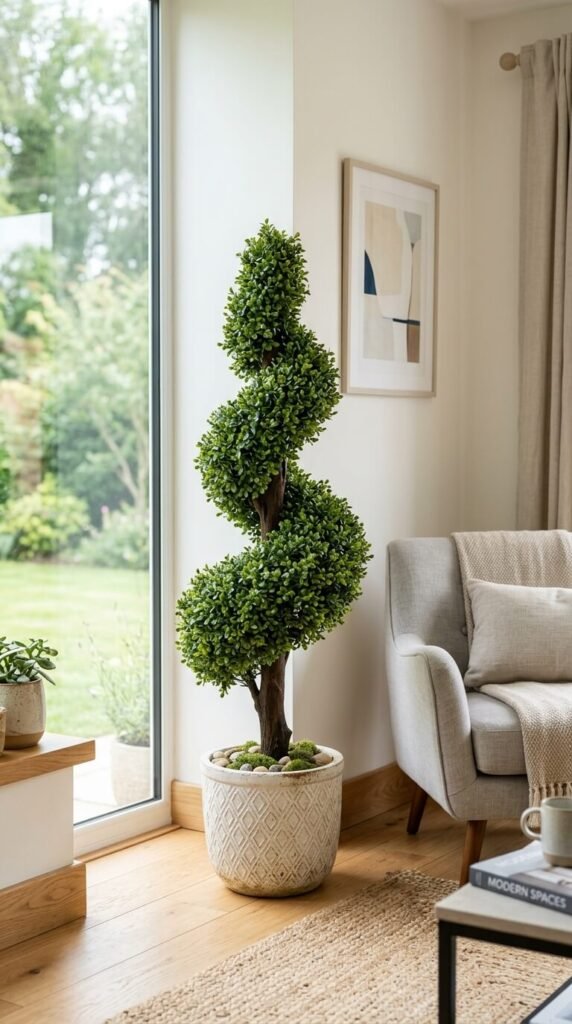
Not everyone has time for pruning, and that’s fine. Faux topiaries give you the look without the upkeep. They work indoors year-round and never drop leaves. Budget tip: shop end-of-season sales at home goods stores for the best prices. Dust the leaves monthly with a soft cloth to keep them looking real. Pair one with a woven basket planter for texture. This is an easy fix for renters or anyone short on time.
4. Cone-Shaped Topiaries for Formal Entryways
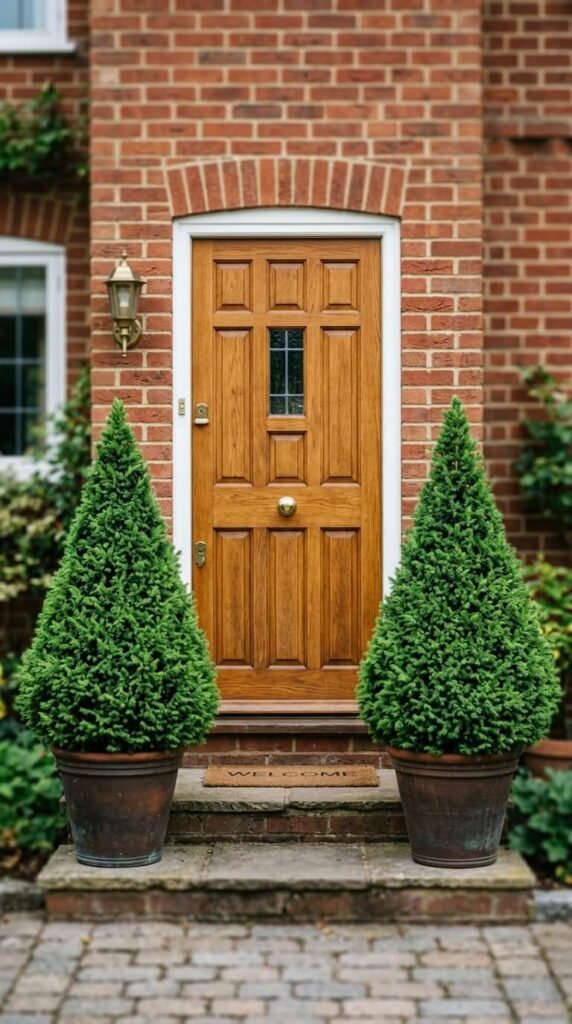
Cone shapes bring a clean, formal look to any entrance. The pointed top feels tailored without being stiff. Place one on each side of a doorway for a balanced welcome. DIY tip: use a tomato cage as a shaping frame while your shrub grows into the form. Trim lightly every few weeks rather than all at once. This method keeps the shape even and prevents bare patches. It’s a slow project, but the result looks polished.
5. Herb Topiaries for the Kitchen Windowsill
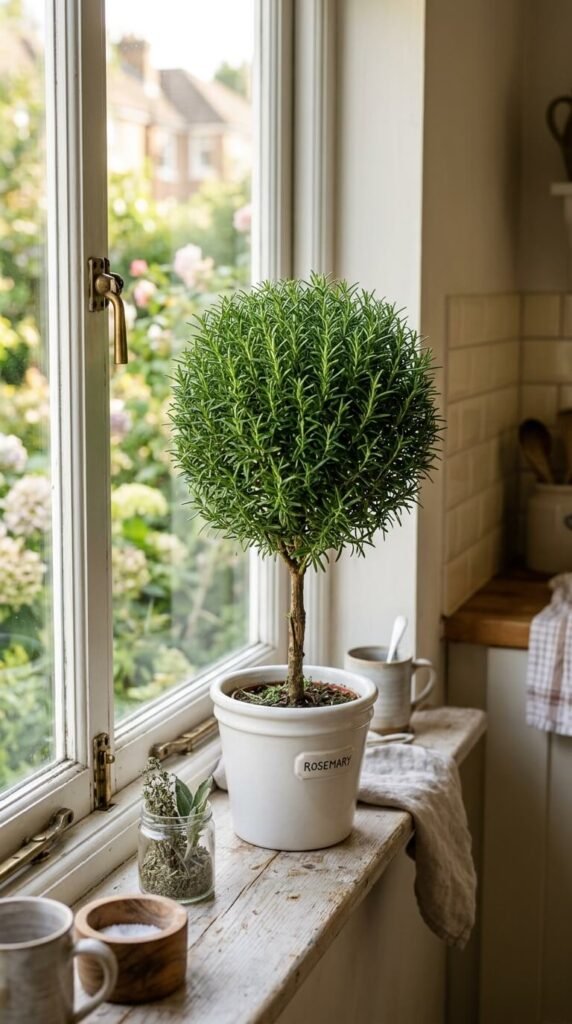
Herb topiaries are decor and dinner in one. Rosemary shapes into a ball easily and smells great in a kitchen. Snip a few leaves for cooking without ruining the shape. Budget tip: buy a young rosemary plant from a nursery and start shaping early, since younger stems bend easier. Keep it near a sunny window and water only when the soil feels dry. This is a practical pick for anyone who wants decor that also earns its keep.
6. Ivy Topiary Wreaths and Rings
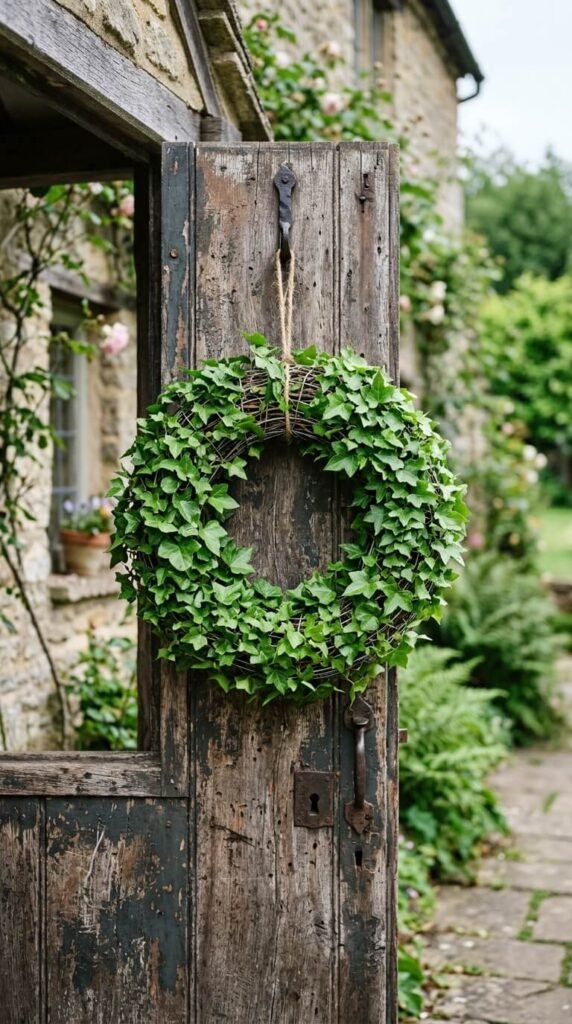
Ivy grows fast and bends easily, which makes it perfect for wreath-shaped topiaries. Train it around a simple wire frame and watch it fill in over a few weeks. Hang it on a door or prop it against a wall. DIY tip: use floral wire to gently guide new growth along the frame every few days. This project costs very little and keeps changing as the ivy fills out. It’s a fun one for beginners.
7. Standard Topiary Trees for Patios
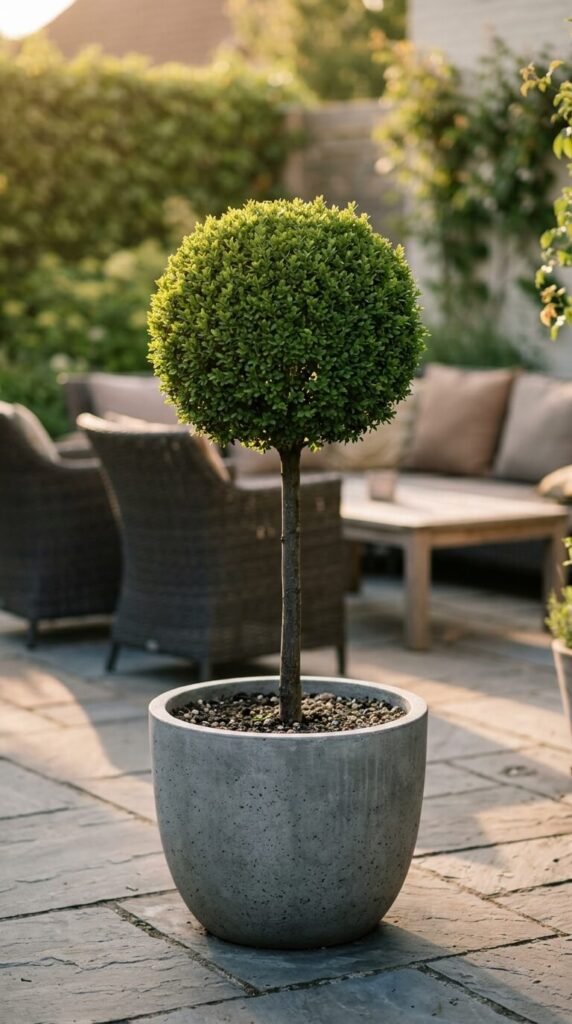
A standard topiary has a bare trunk topped with a rounded canopy, kind of like a tiny tree. It adds height to a patio without blocking the view. Use one as a focal point near seating. Budget tip: choose a fast-growing variety like ficus or myrtle to fill out the canopy quicker. Stake the trunk while it’s young to keep it straight. This shape works well in large planters where it can act as a natural centerpiece.
8. Mini Tabletop Topiaries for Dining Spaces
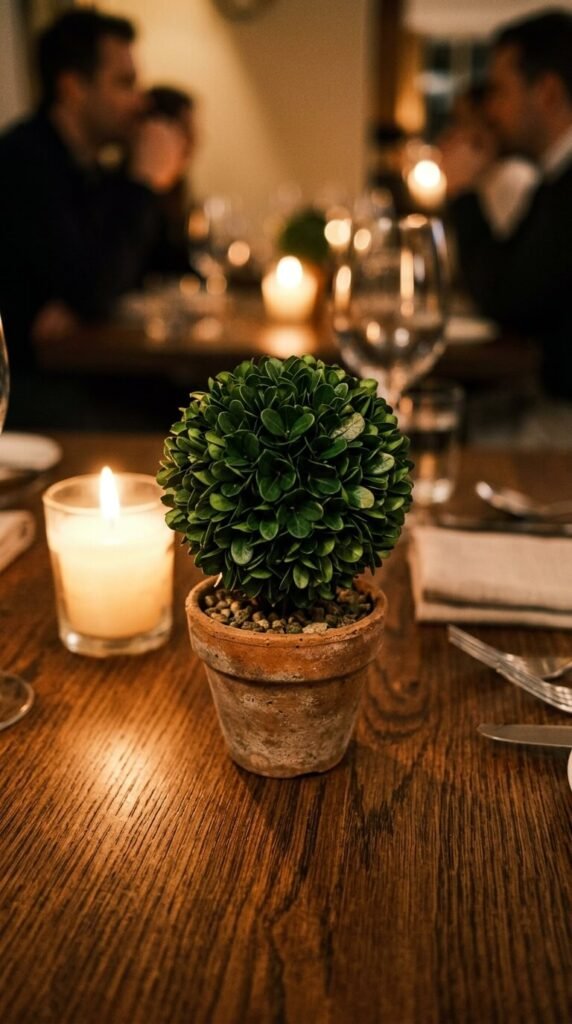
Small topiaries make great table centerpieces, especially for dinner parties. They sit low enough that guests can still see each other across the table. Choose a compact variety like myrtle or boxwood. DIY tip: repot a small nursery plant into a matching set of mini pots for a coordinated table setting. Trim lightly every couple weeks to maintain the round shape. This is an easy way to dress up a table without flowers that wilt.
9. Double-Ball Topiaries for Balance
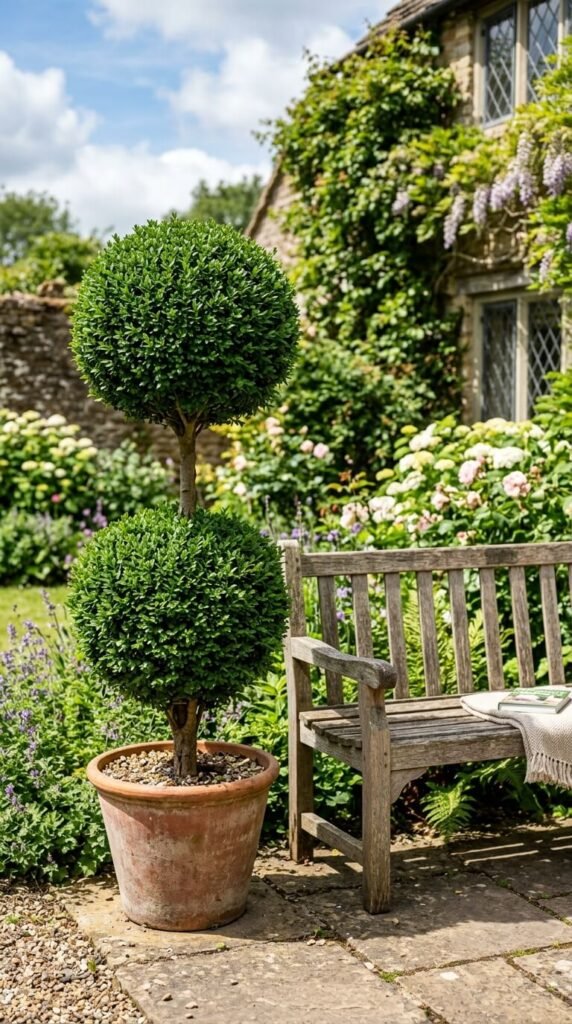
Two stacked balls on one stem give a playful twist on the classic topiary look. It reads as more relaxed than a single sharp cone. Place it near a bench or garden gate. Budget tip: shape a young shrub gradually, letting the bottom ball fill in before starting the top one. Use hand pruners for control rather than electric shears. This shape adds personality to a garden without feeling too formal.
10. Rosemary Cone Topiaries for a Fresh Scent
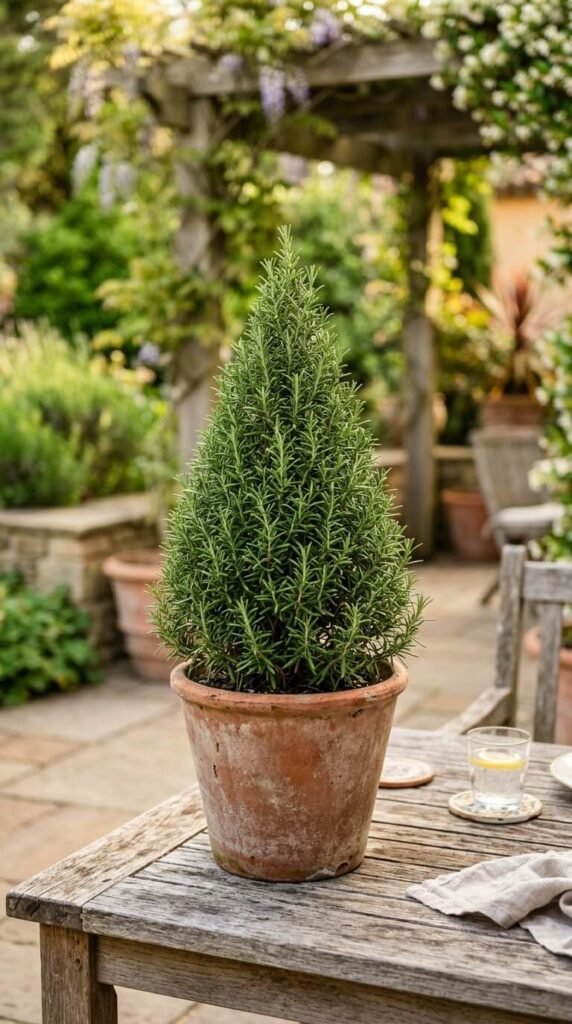
Rosemary holds a cone shape well and releases a pleasant scent whenever you brush past it. Place one near a seating area where people will notice the smell. DIY tip: trim the outer layer lightly every two weeks rather than cutting deep, which helps keep the plant healthy. Rosemary likes dry soil, so avoid overwatering. This topiary pulls double duty as both a scent booster and a design piece for outdoor spaces.
11. Boxwood Cubes for Modern Gardens
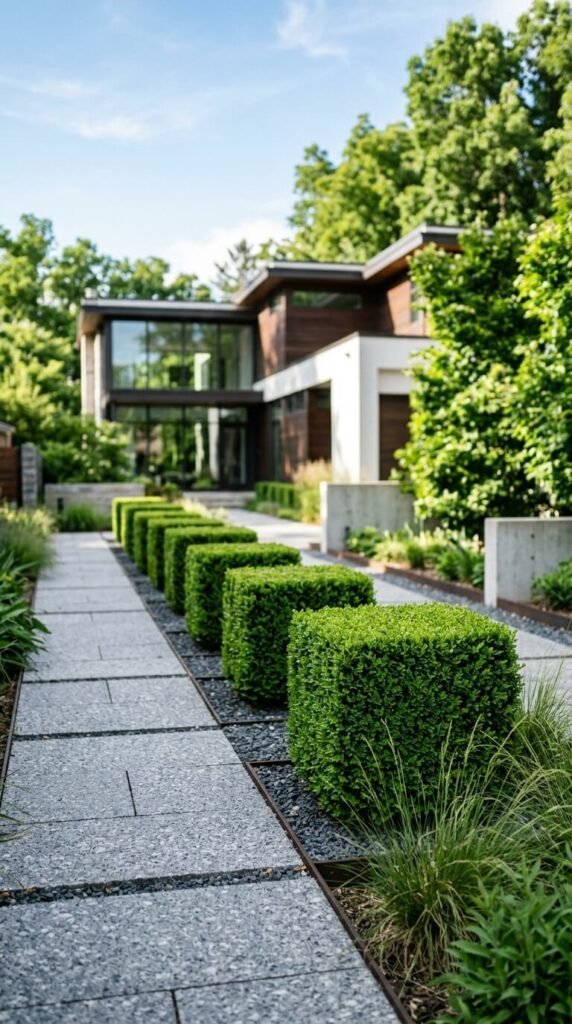
Square shapes give a modern, architectural feel that rounder topiaries don’t have. Cube-cut boxwoods work well along a walkway or under a window. Budget tip: use a simple wooden frame as a cutting guide to keep all sides even. Trim slowly and check the shape from multiple angles as you go. This style suits homes with clean lines and minimal landscaping, and it holds its shape longer than rounded forms.
12. Braided Trunk Topiaries for Texture
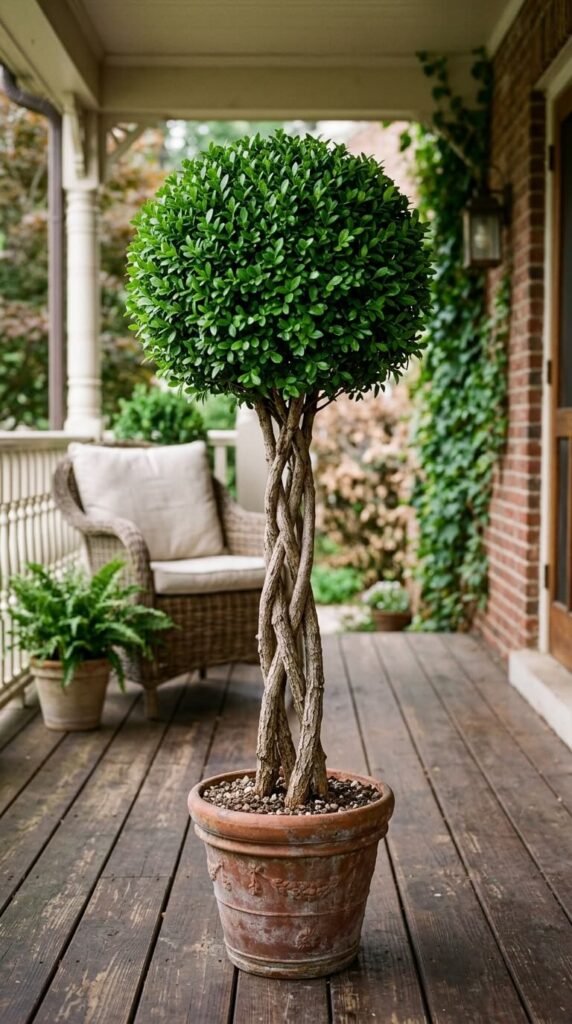
A braided trunk adds visual texture below the leafy top, giving the plant more personality than a plain stem. These work well as a single statement piece near a front door. DIY tip: start with three young flexible stems and loosely braid them together, securing with soft plant ties as they grow. Loosen the ties every few months so they don’t cut into the bark. This is a longer project, but the result is unique.
13. Topiary Standards in Window Boxes
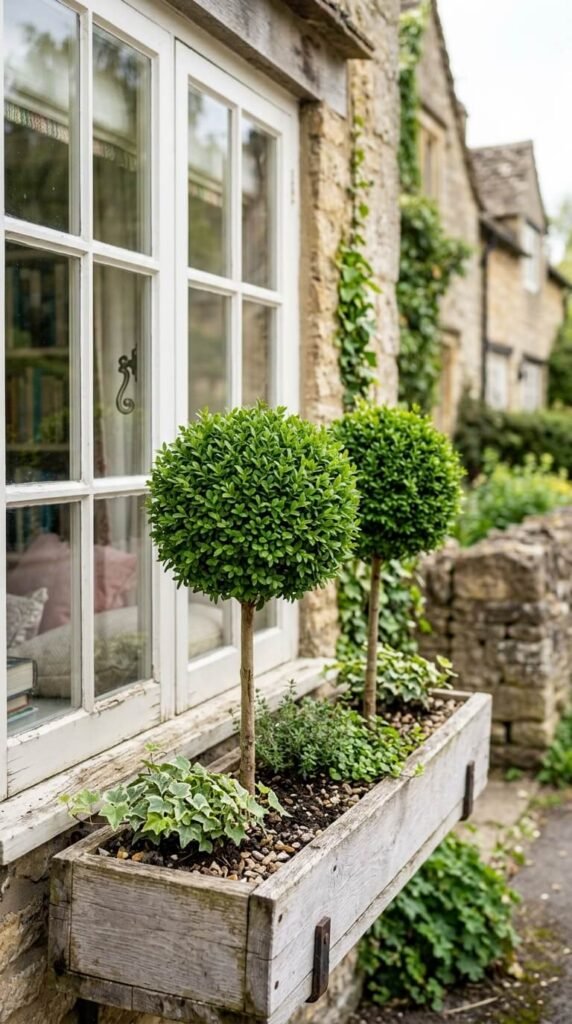
Window boxes usually hold flowers, but a pair of mini topiary standards adds structure instead. They frame the window nicely and stay tidy through the seasons. Budget tip: choose slow-growing dwarf varieties so you won’t need to repot often. Trim the tops lightly once a month to keep the round shape. This works especially well on homes without much yard space, since the box does all the work.
14. Ivy-Covered Topiary Animal Shapes
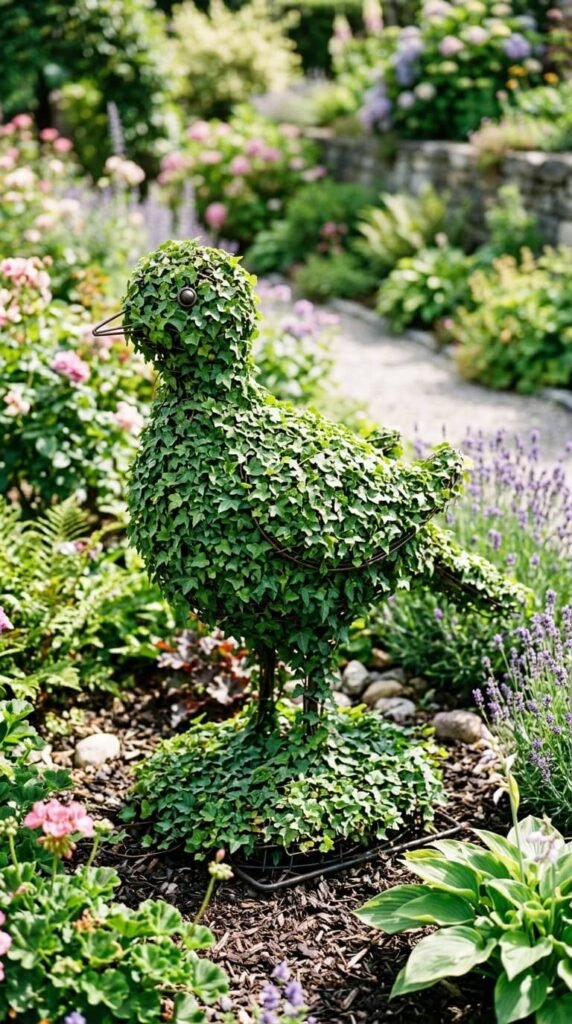
Animal-shaped topiaries add a bit of whimsy without feeling over the top. Simple shapes like birds or rabbits work best for beginners. Use a wire frame stuffed with moss, then train ivy to climb over it. DIY tip: buy a pre-made wire frame online to skip the hardest part of the project. Mist the moss regularly so the ivy roots stay attached. This is a fun weekend project for anyone who wants a conversation piece in the yard.
15. Boxwood Topiary Pillars for Porches
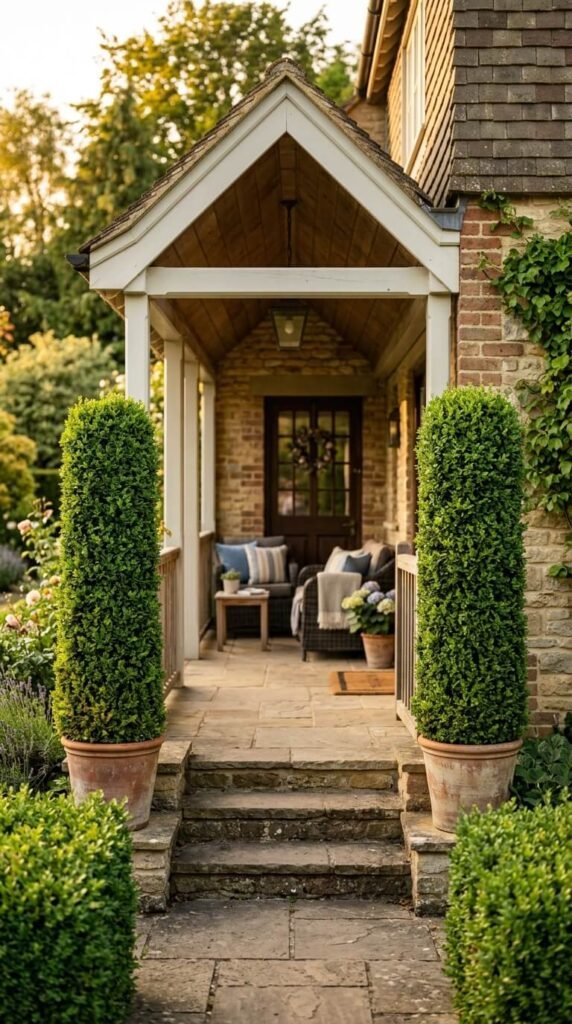
Tall pillar shapes give a porch some height and structure, almost like living columns. Place a pair on either side of the steps for symmetry. Budget tip: grow them in large plastic nursery pots hidden inside decorative outer pots, which cuts the cost of buying big planters. Trim the sides flat and even, checking with a level for a clean line. This shape works especially well on porches with tall railings or columns already.
16. Small Succulent Topiaries for Indoor Shelves
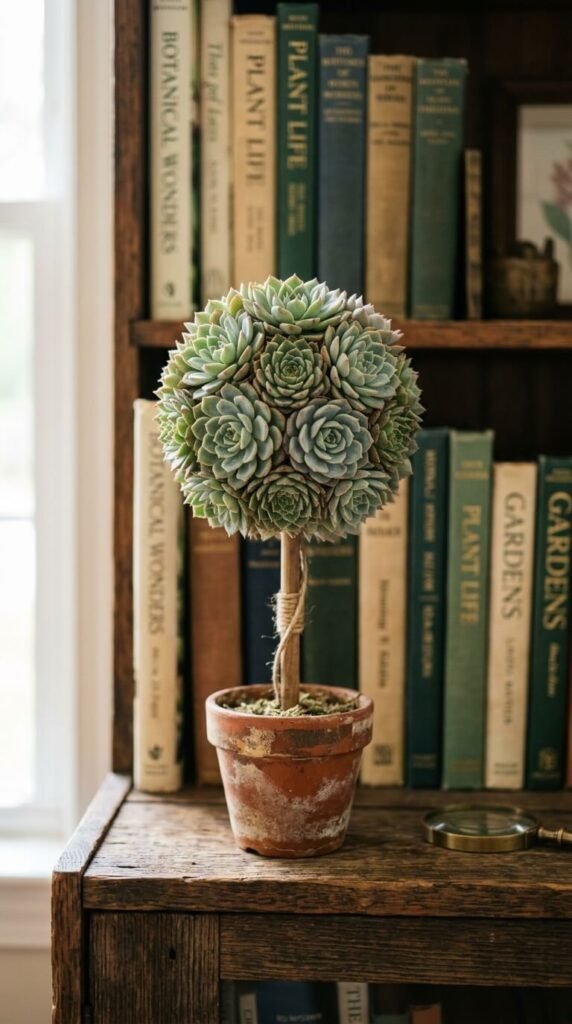
Succulents can be trained into small ball shapes using a moss base, making them perfect for indoor shelves. They need very little water and handle dry indoor air well. DIY tip: press small succulent cuttings into a moss-covered foam ball and let them root over a few weeks. Mist lightly instead of watering directly. This is a good option for anyone who wants greenery without a watering schedule to remember.
17. Lavender Topiaries for Fragrant Corners
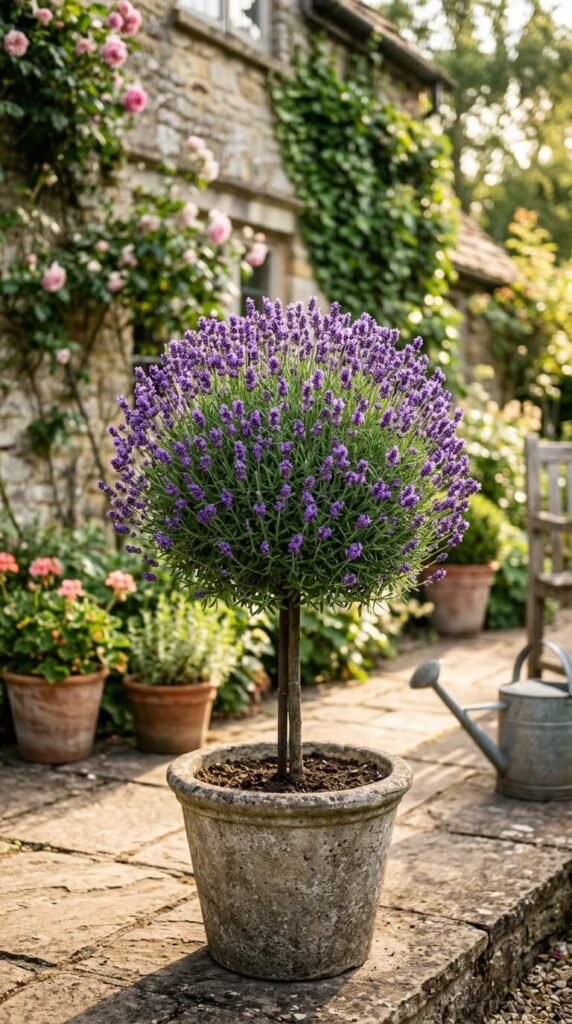
Lavender holds a round shape nicely and adds color along with scent. Place one near a seating area or by a front step where people will brush past it. Budget tip: buy a young lavender plant in spring and shape it right after the first bloom fades. Trim lightly, since cutting too much at once can stress the plant. This topiary brings color, fragrance, and shape all in one low-cost package.
18. Topiary Arches Over Garden Gates
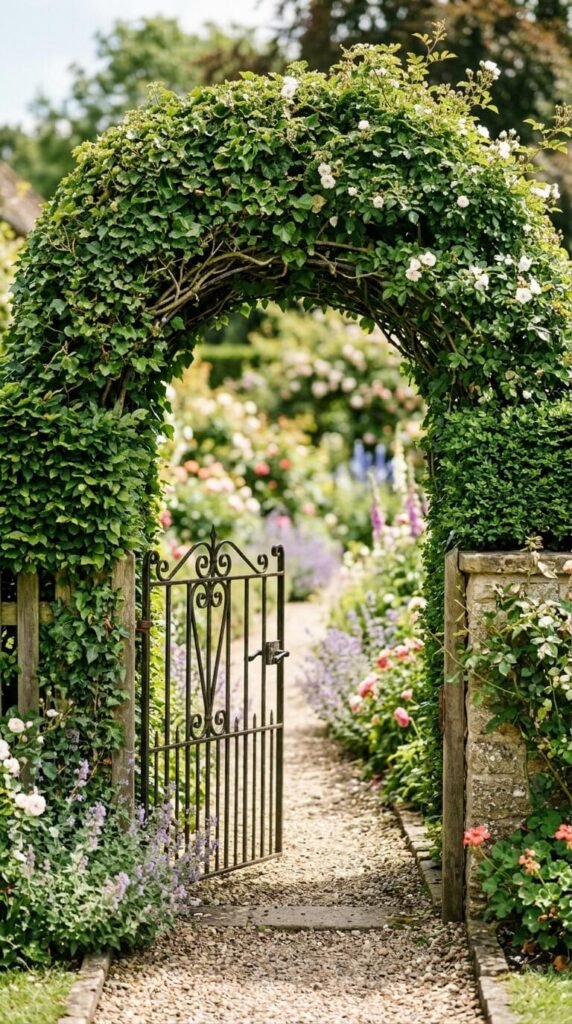
An arch made from trained vines turns a plain gate into something special. It takes patience, but the payoff is worth it. DIY tip: attach a simple metal or wood arch frame first, then plant fast-climbing vines like ivy or jasmine at the base. Guide new growth along the frame weekly. This project takes a season or two to fill in fully, but it costs little beyond the frame and a few plants.
19. Topiary Spirals in Matching Pairs
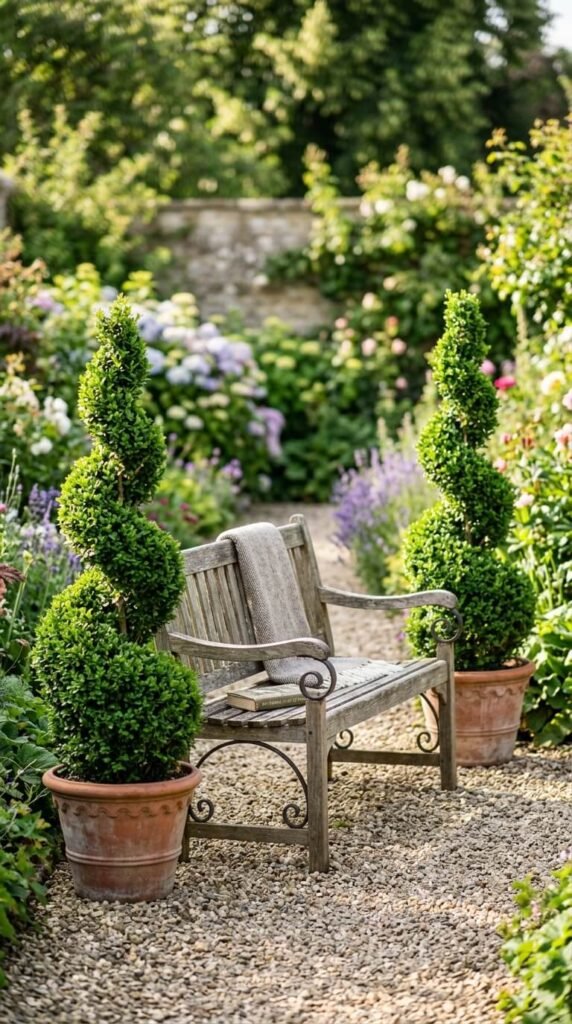
Symmetry is an easy design trick, and a matching pair of spiral topiaries makes any space feel balanced. Place them on either side of a bench, gate, or staircase. Budget tip: buy two plants at the same time from the same nursery so their growth rate matches. Trim both on the same schedule to keep them even. This simple pairing trick works in gardens of any size.
20. Boxwood Knot Topiaries for Formal Gardens
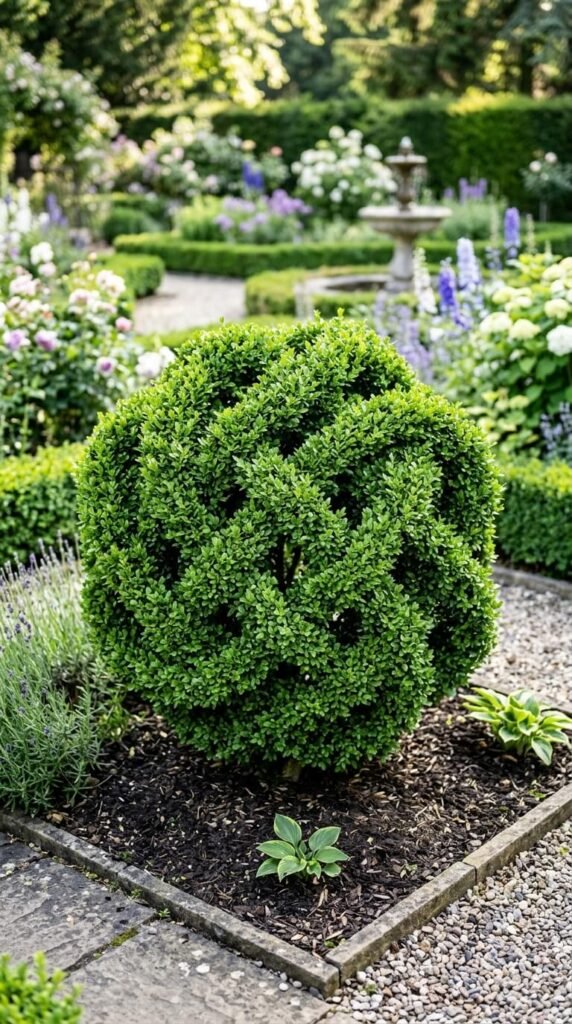
A knot-shaped topiary looks like woven ribbons of green, and it makes a strong focal point in a formal garden bed. This shape takes more time to train but holds its form well once established. DIY tip: start with a simple two-strand pattern before attempting a full knot design. Use stakes to guide the branches while they’re young and flexible. This is a longer-term project best suited for patient gardeners.
21. Topiary Standards for Wedding Decor
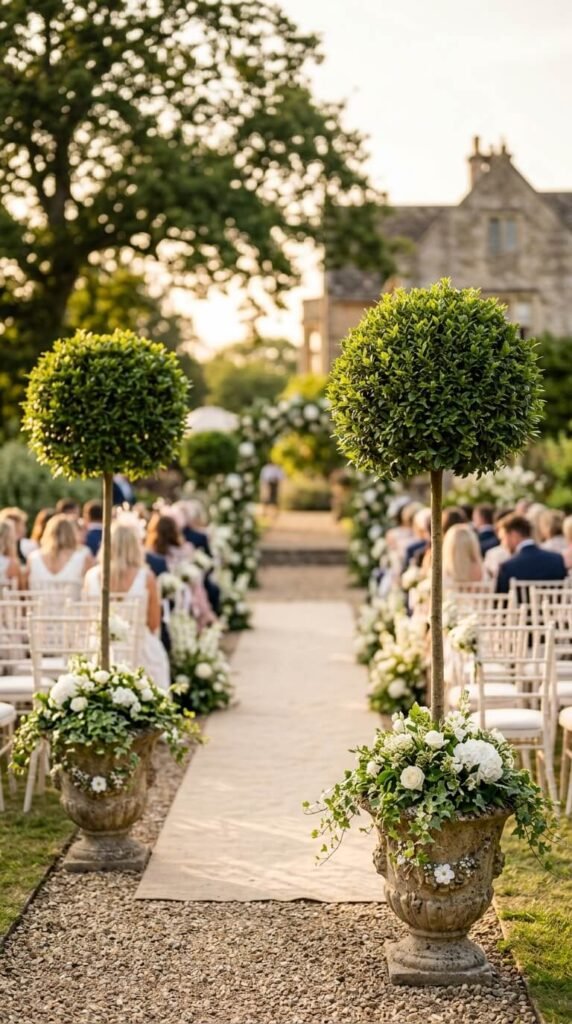
Topiary standards make a great backdrop for outdoor weddings or parties. Their tidy shape photographs well and doesn’t compete with other decor. Budget tip: rent topiaries from a local nursery instead of buying, since most rental companies deliver and pick up after the event. Add ribbon or string lights around the base for extra style. This is a smart choice for anyone planning a one-time event who doesn’t want ongoing plant care.
22. Compact Topiary Balls for Small Balconies
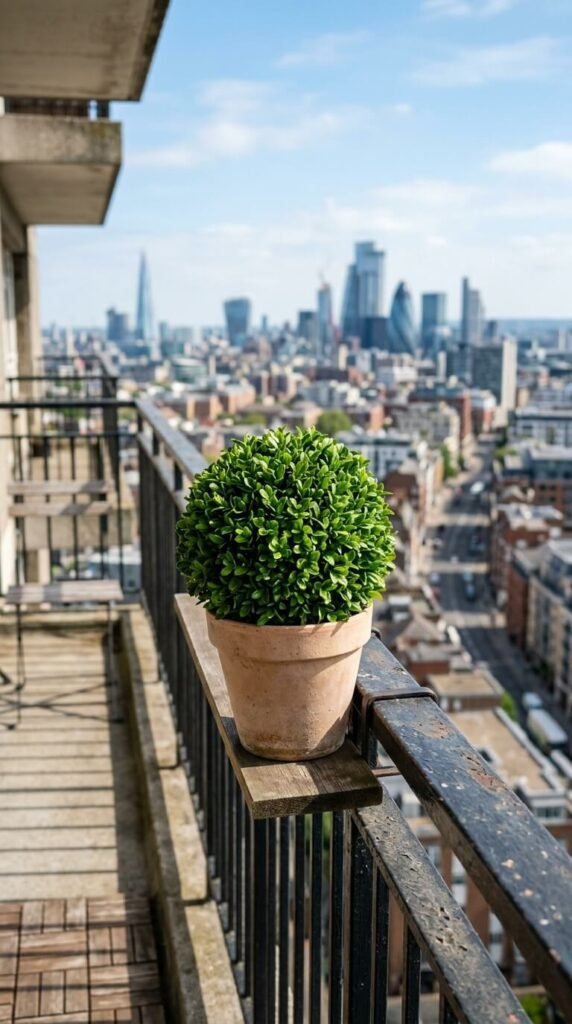
Small balconies can still fit a topiary or two. A compact ball shape in a lightweight pot won’t overwhelm a tight space. DIY tip: choose a plastic or fiberglass pot instead of ceramic to keep the weight down on a railing or ledge. Trim monthly with small hand shears to maintain the round shape. This is one of the easiest ways to add greenery to an apartment without needing a yard.
23. Topiary Standards Paired with String Lights
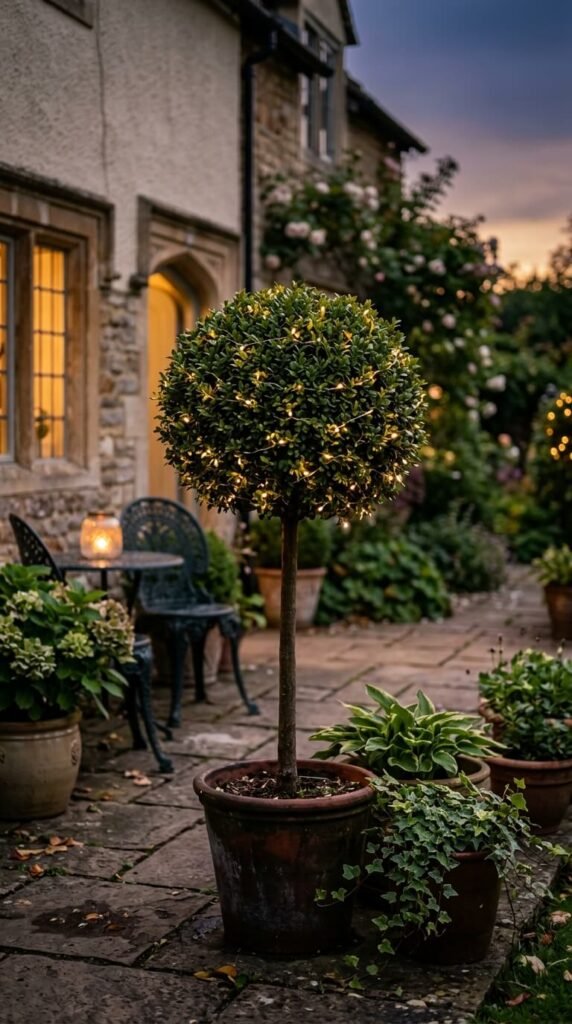
Wrapping a topiary standard with small string lights turns it into evening decor as well as daytime greenery. This works great for patios used at night. Budget tip: use battery-powered lights so you skip running an extension cord outside. Wrap loosely around the canopy, leaving room for the leaves to keep growing. This combo gives your outdoor space a warm glow without any major cost or effort.
24. Seasonal Topiary Displays with Rotating Pots
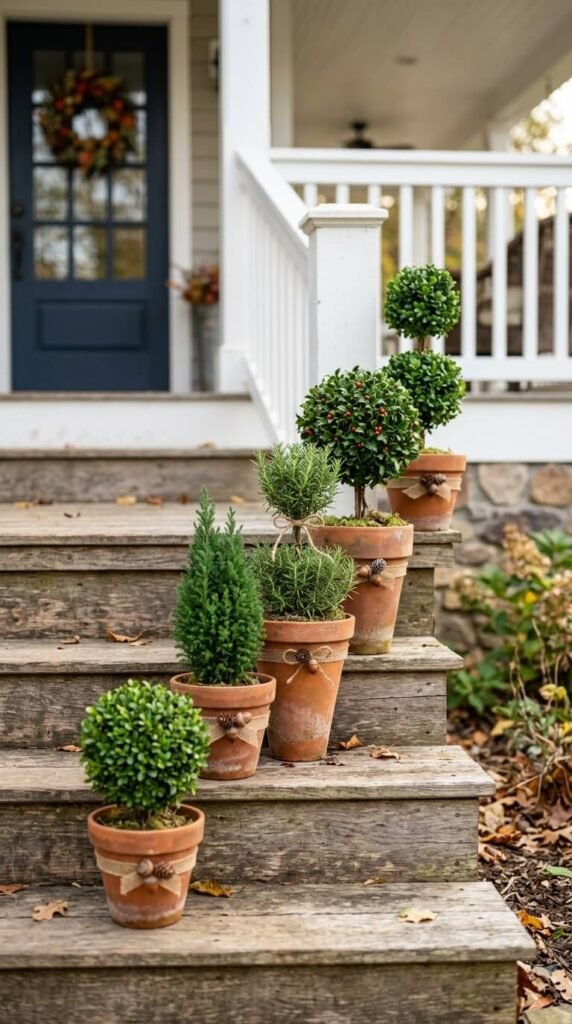
Keeping a few small topiaries in matching pots lets you rotate your display through the seasons. Swap a lavender ball for a rosemary cone as the weather changes. Budget tip: buy one style of pot in bulk so everything already matches no matter what’s inside. Group three pots of different heights together for visual interest. This approach keeps your porch or entryway looking current all year without buying new decor each season.
Conclusion
Topiary decor gives any space a tidy, put-together look without a big budget or a green thumb. From tiny succulent balls on a shelf to tall spiral pairs by the front door, there’s a shape and size for every home. Start small, pick one or two ideas from this list, and build your collection over time. A little shaping and regular trimming go a long way toward a garden or patio that feels finished and cared for.