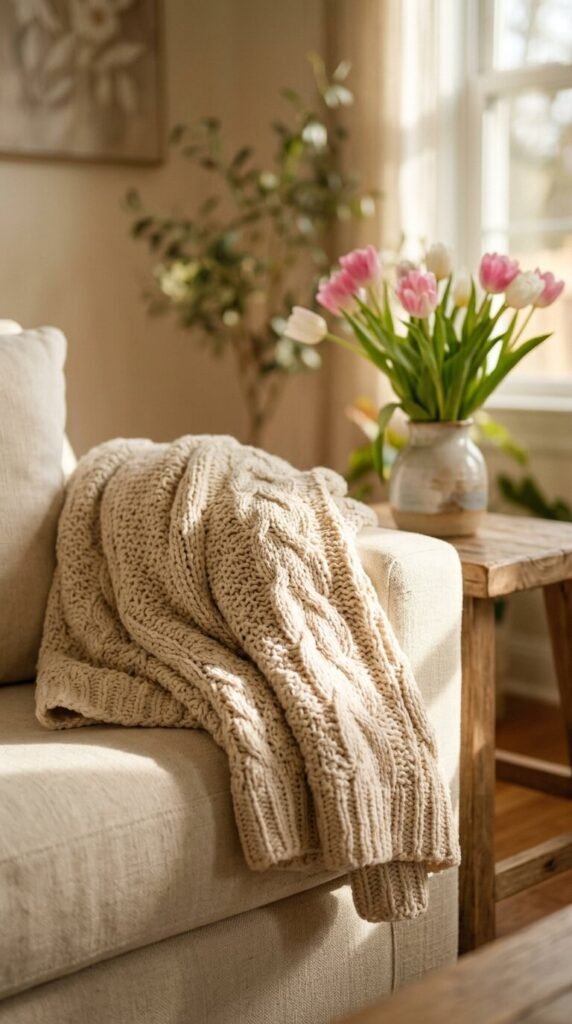
Spring calls for lighter layers, and your living room deserves the same update as your closet. A heavy winter blanket feels wrong once the windows start opening, but a bare couch feels unfinished too. That’s where a lightweight throw with real texture comes in. The right pick adds warmth without weight, style without heat, and a handmade feel without much effort. Whether you want something knit, woven, crocheted, or fringed, texture is what turns a plain throw into a design piece. This list rounds up 24 lightweight throws with texture, sorted by weave, material, and finish, so you can spot the exact look and feel you want for your own space this season.
Chunky Knit Cotton Throws
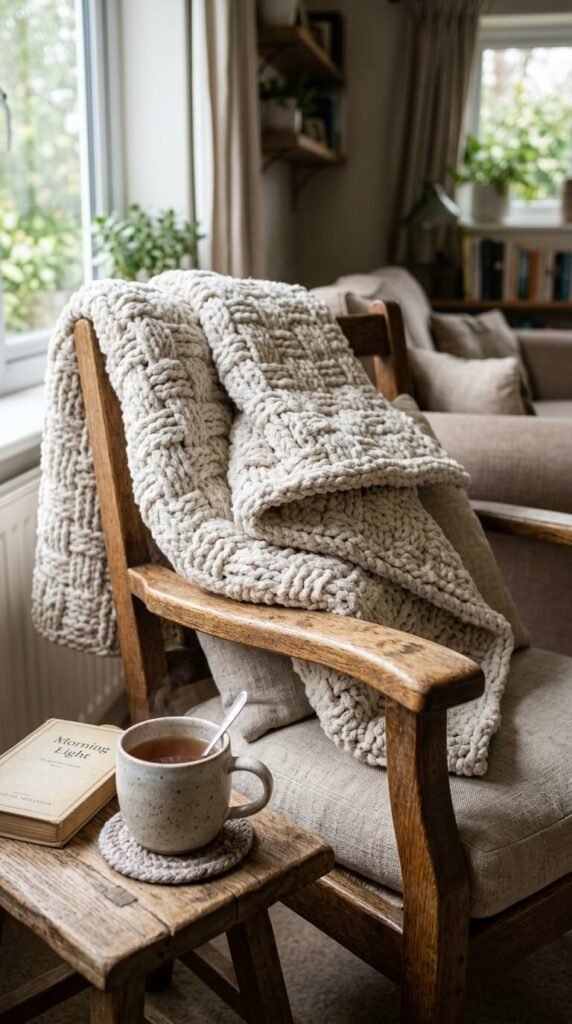
Chunky knit throws bring big, cozy loops without the winter bulk. Cotton keeps them light enough for warmer months. Drape one over the back of a chair or fold it at the foot of the bed. The thick stitches catch light and shadow, giving a room instant depth. Budget tip: check thrift stores for oversized cotton knits you can wash and fluff back to life. If you knit, a simple garter stitch with jumbo needles works up fast. Stick to cream, sage, or oatmeal for a calm spring palette. Chunky texture does the visual work, so you don’t need bold color to stand out.
Waffle-Weave Cotton Blankets
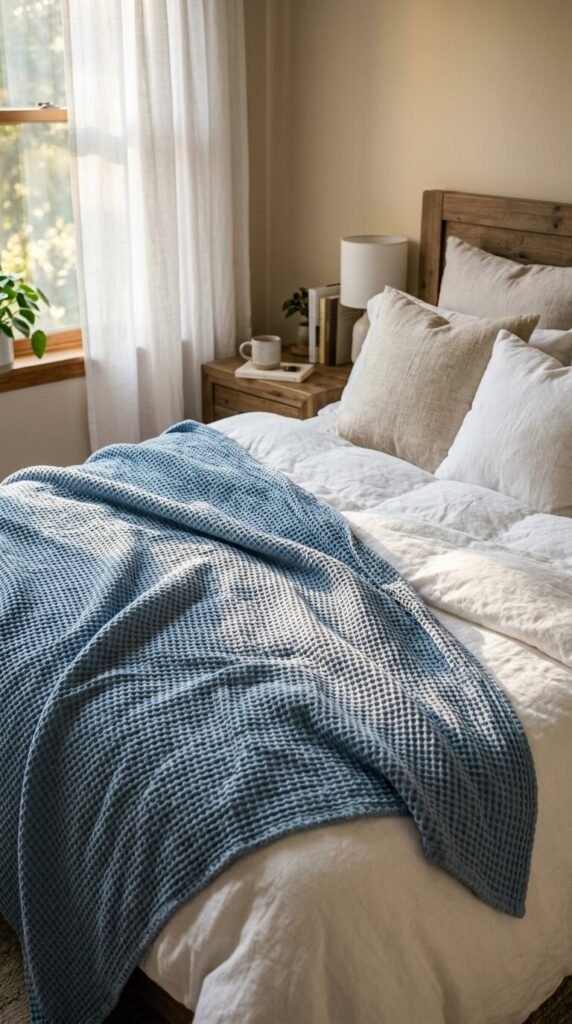
Waffle-weave throws have a small grid pattern that adds texture without adding bulk. They’re thin, breathable, and dry fast, which makes them a good pick for spring naps on the porch. Toss one over a picnic blanket or a bench by the door. Budget tip: waffle-weave cotton is often cheaper than knit throws because it uses less yarn per square foot. Look for pre-washed cotton so it’s already soft. A light gray or dusty blue waffle throw pairs well with almost any color scheme. Grid texture reads as clean and modern, so it works in minimal spaces too.
Airy Linen Throws
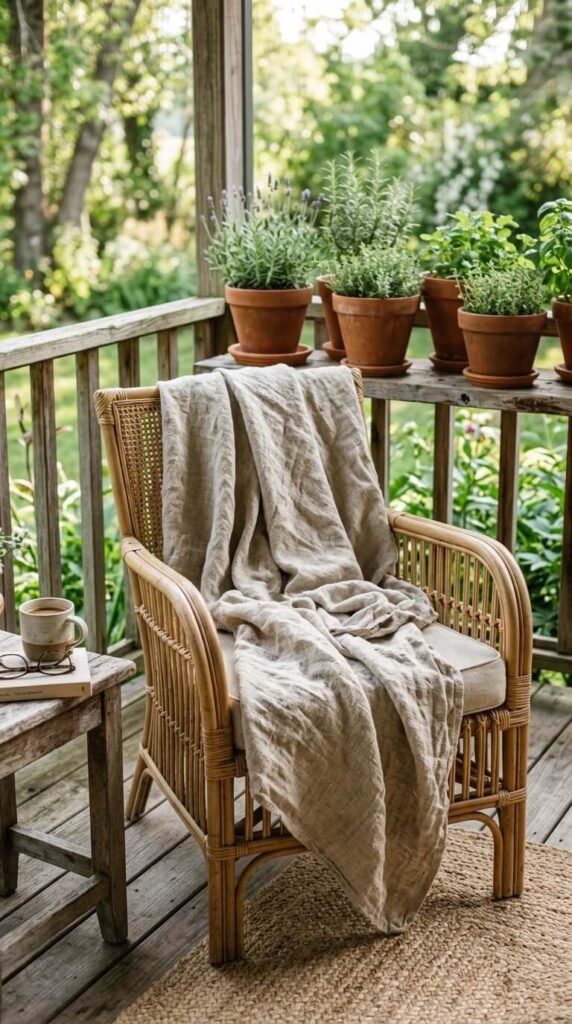
Linen throws feel like a breath you can wrap around your shoulders. They wrinkle on purpose, and that’s the whole point. The nubby weave gives texture without any heaviness. Use one on a porch swing or draped over a picnic basket. Budget tip: linen throws often cost less per yard than cotton knits, so a DIY hem job on raw linen fabric can save real money. Wash it a few times to soften the fibers before use. Stick to natural tones like flax, oat, or soft white. Linen’s texture comes from the weave itself, not added stitching, so it stays simple and calm.
Bouclé Textured Throws
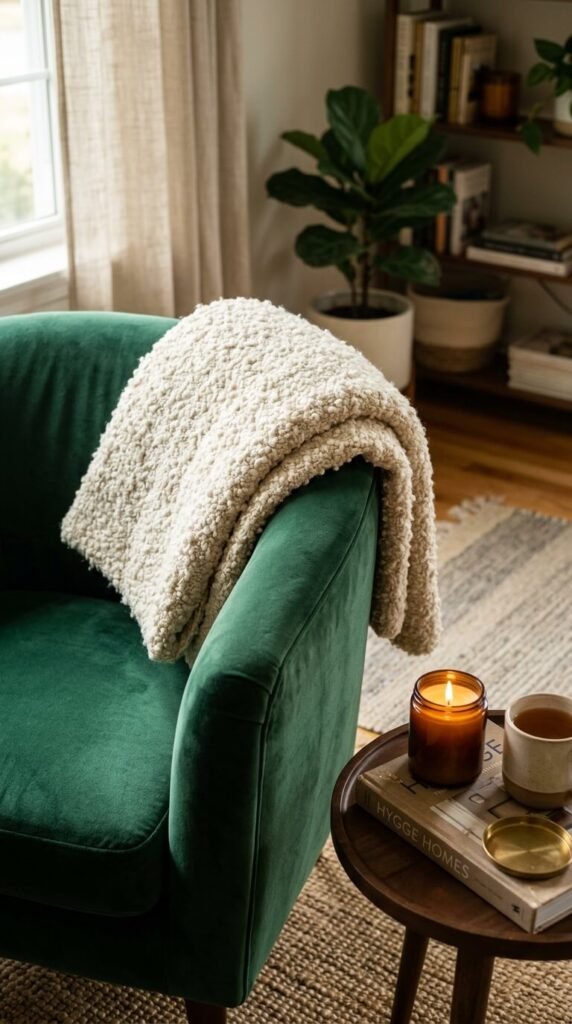
Bouclé throws have that curly, looped surface that looks expensive even when it isn’t. The texture hides small stains and wrinkles, which makes it practical too. Drape one over a reading chair for a spot that looks finished at a glance. Budget tip: check discount home stores for bouclé pillow covers and throws, since the trend has made cheaper versions common. Cream and taupe bouclé work with almost any wall color. If you sew, a simple bouclé fabric remnant can become a small lap throw. Bouclé’s loops catch light differently than flat fabric, giving depth without pattern.
Woven Cotton Gauze Throws
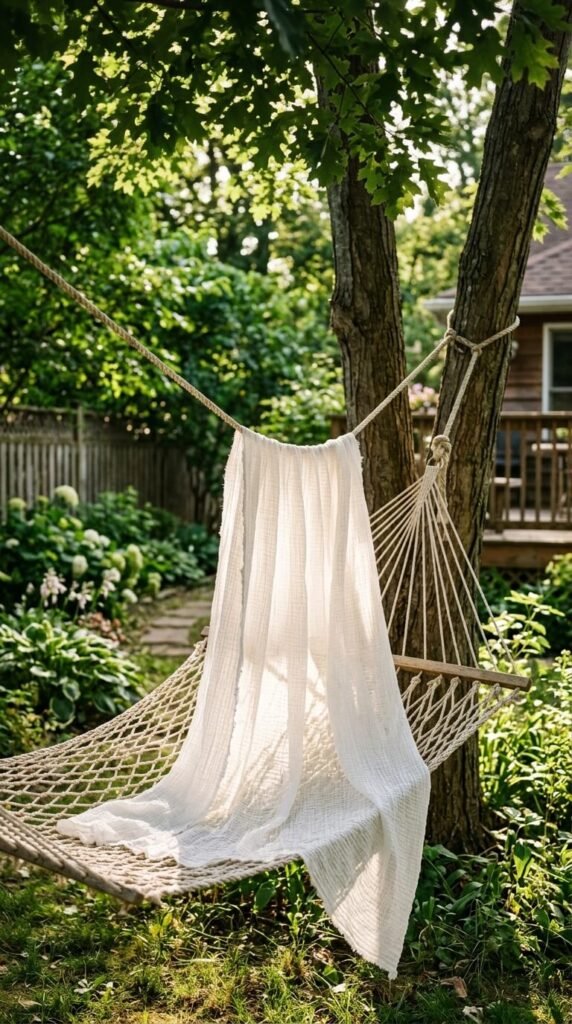
Gauze throws are see-through by design, and that’s what makes them light. The open weave lets air pass through, so they’re good for warm evenings outside. Use one over a hammock or as a picnic layer under food. Budget tip: cotton gauze fabric is cheap by the yard, so hemming your own is an easy weekend project. Wash before use since gauze softens with each cycle. White or pale yellow gauze looks nice against green outdoor spaces. Sheer texture gives a relaxed, unfussy look that fits casual spring gatherings better than a heavier throw would.
Tassel-Trim Throws
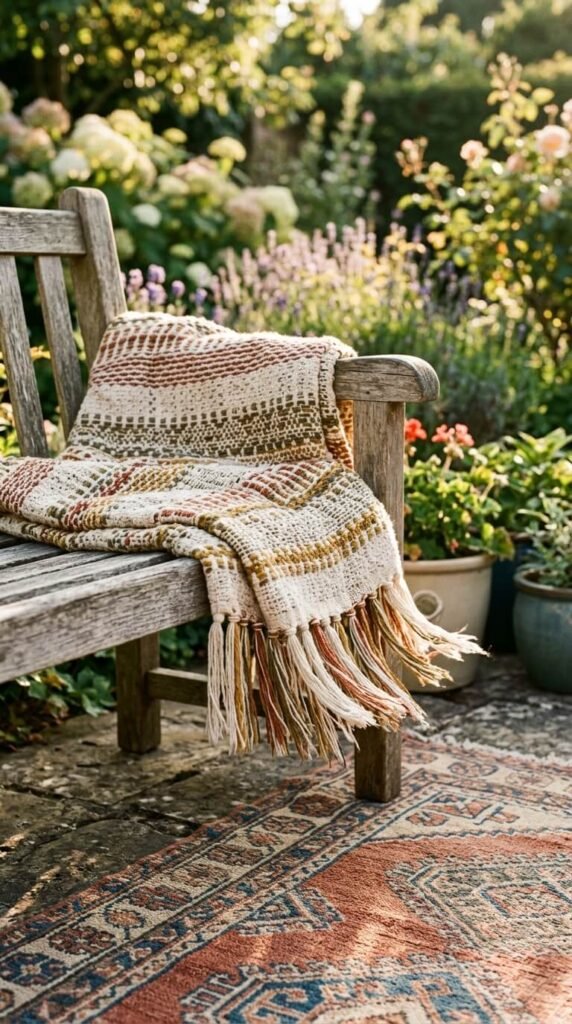
Tassels turn a plain throw into something with movement. The trim swings when you pick it up, which gives it a handmade feel. Add one to a bench, a bed corner, or a basket edge. Budget tip: buy plain cotton throws and glue or hand-sew tassel trim from a craft store for a fraction of the cost of a finished piece. Match tassel color to a wall accent for a small pop. Keep the throw itself simple so the trim gets the attention. Tassel trim is the easiest upgrade for a throw that already looks a little flat.
Herringbone Weave Throws
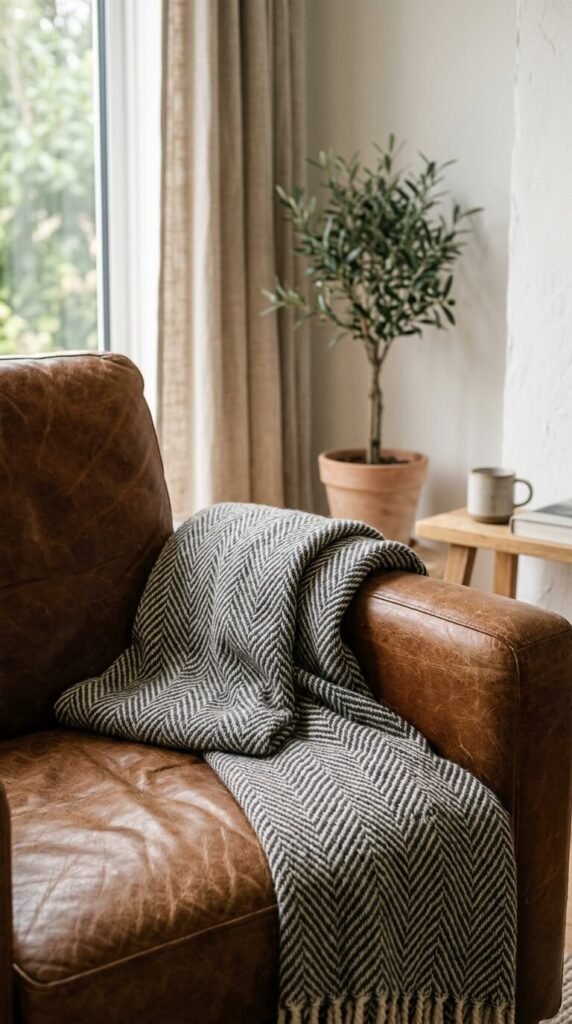
Herringbone is a zigzag weave that reads as pattern and texture at once. It works in neutral colors, so it fits almost any room without clashing. Use it over a leather chair to soften hard lines. Budget tip: herringbone throws show up often at outlet stores since the weave is common in wool-cotton mixes. Check the fiber content for something machine washable if you have kids or pets. Charcoal and cream is the classic combo, but sage and oat works for spring too. Herringbone’s zigzag gives structure to a throw without needing bold color to stand out.
Ribbed Knit Throws
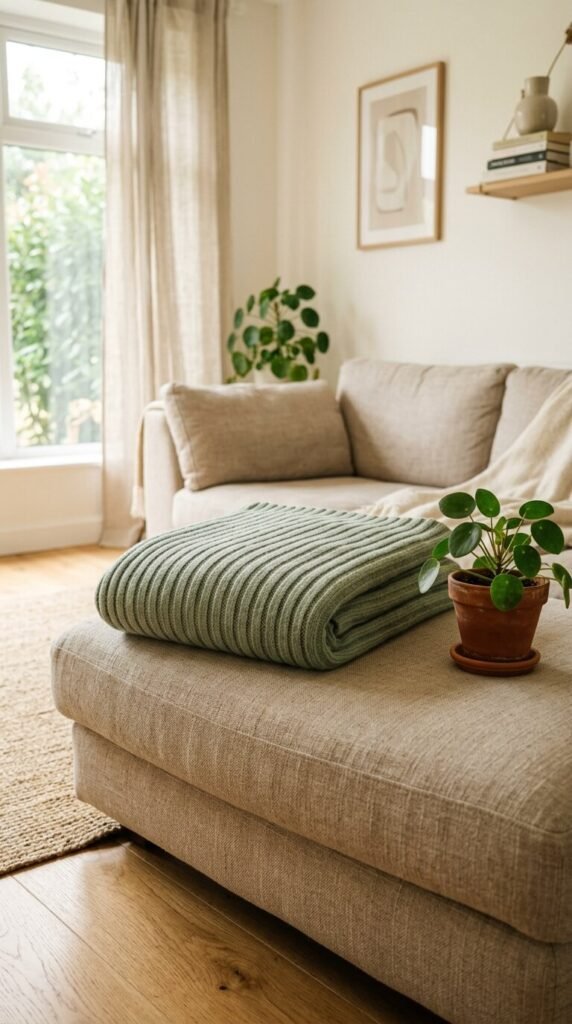
Ribbed knit throws have vertical lines that stretch a little, similar to a sweater. That stretch makes them easy to fold neatly or drape loosely. Use one across the foot of the bed for a tidy, tailored look. Budget tip: ribbed knit fabric by the yard is affordable, and a no-sew fringe edge is all you need to finish it at home. Sage, blush, and butter yellow all work well in rib knit for spring. Ribbed texture photographs well for anyone selling a room online, since the lines add visual interest without extra color.
Jacquard Pattern Throws
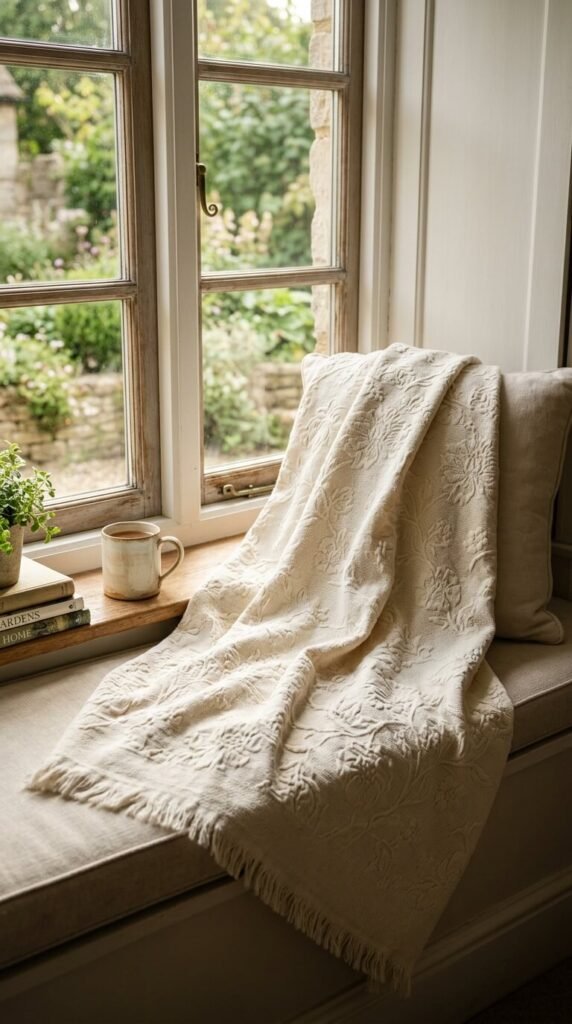
Jacquard weaving raises a pattern right into the fabric, so you get texture and design without printed color. A tonal jacquard throw looks quiet from across the room but detailed up close. Use it somewhere people sit close, like a window seat or reading nook. Budget tip: jacquard throws at big box stores often mimic pricier woven versions for much less. Stick to one tone family, like cream on cream or sage on sage, for a calmer look. Raised pattern gives you detail without needing a bold print, which keeps the room feeling settled.
Macrame-Style Throws
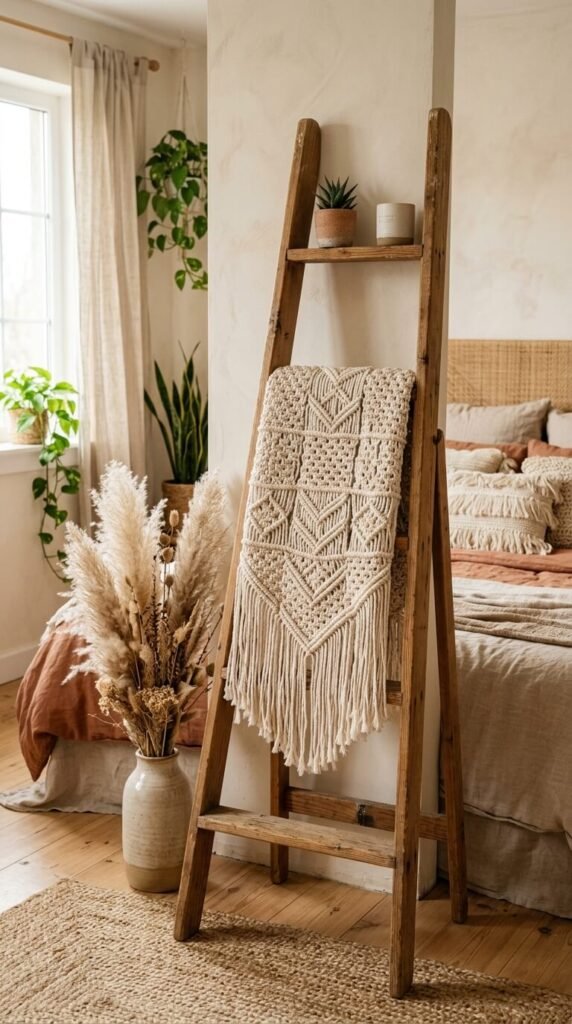
Macrame throws use knotting instead of weaving, which gives them an open, airy look. They work better as a decorative layer than a full-coverage blanket. Drape one over a ladder shelf or the end of a daybed. Budget tip: macrame cord is cheap, and simple square-knot patterns are easy to learn from free online tutorials. Natural cream cord fits a boho spring look without much effort. Pair it with a solid throw pillow so the knot pattern stays the focus. Knotted texture adds a handmade touch that store-bought throws rarely match.
Crochet Granny Square Throws
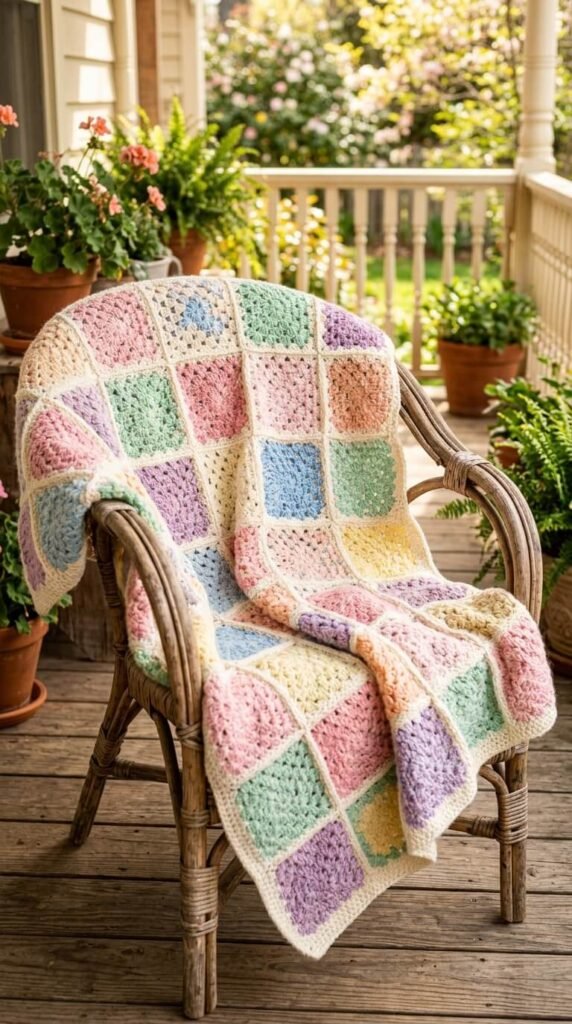
Granny square throws mix small color blocks into one piece, which gives them built-in texture and pattern. They’re a classic beginner crochet project too. Use one on a porch chair or as a picnic accent. Budget tip: leftover yarn scraps work fine for granny squares, so this is a nearly free DIY if you already crochet. Pastel combos feel right for spring, but neutral squares in cream and tan work for a quieter look. Color-blocked texture gives a throw personality without needing a single loud pattern to carry the whole design.
Slub Cotton Throws
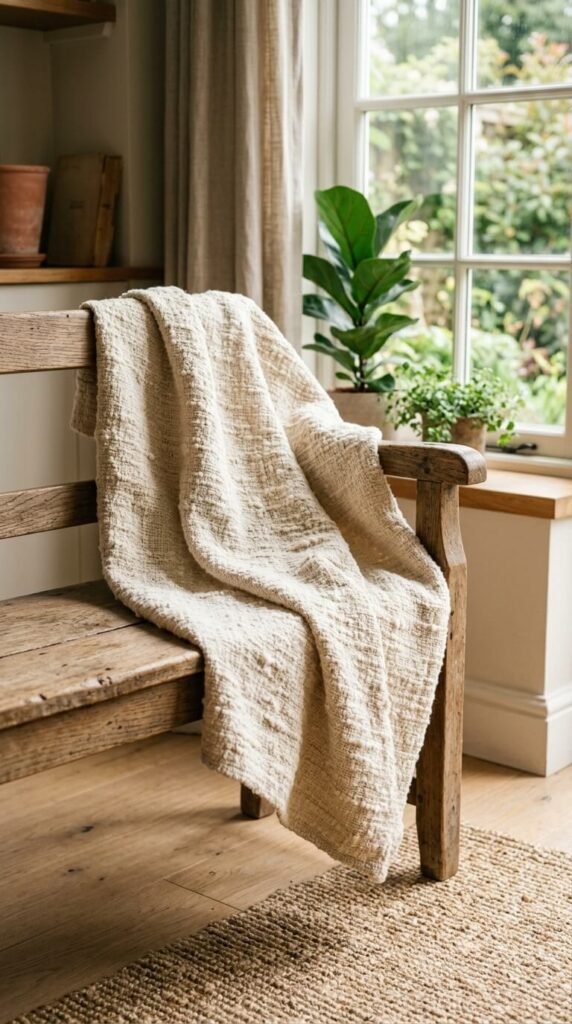
Slub cotton has small bumps woven right into the yarn, so the texture happens naturally instead of being added on. It gives a throw a slightly rustic, imperfect look. Use it somewhere casual, like a reading corner or a bench by the door. Budget tip: slub cotton throws are usually priced like plain cotton, so you get texture without paying more. Ivory and warm white show the slubs best. Wash on a gentle cycle to keep the texture from flattening over time. Slub texture works quietly in the background of a room instead of demanding attention.
Basketweave Throws
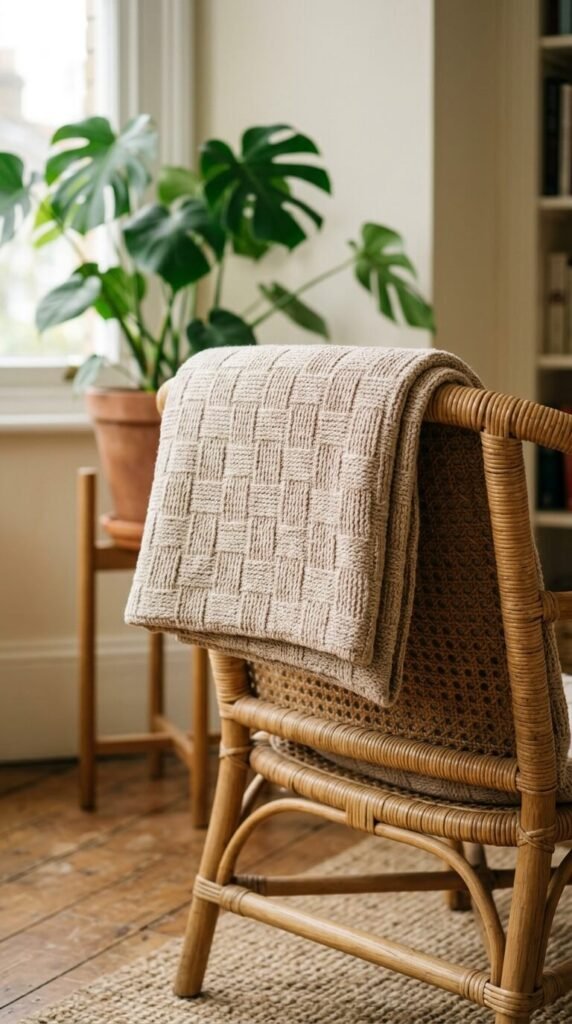
Basketweave throws copy the look of woven baskets in soft fabric instead of stiff reed. The square pattern gives a throw grid-like texture that reads as organized and calm. Use it in a room with a lot of straight lines to soften things up. Budget tip: basketweave throws are common in cotton-acrylic mixes, which keep the price low and the care simple. Beige and oatmeal versions fit into most spring color schemes. Basketweave pattern pairs well with cane furniture or rattan accents for a matched, natural look.
Fringed Edge Throws
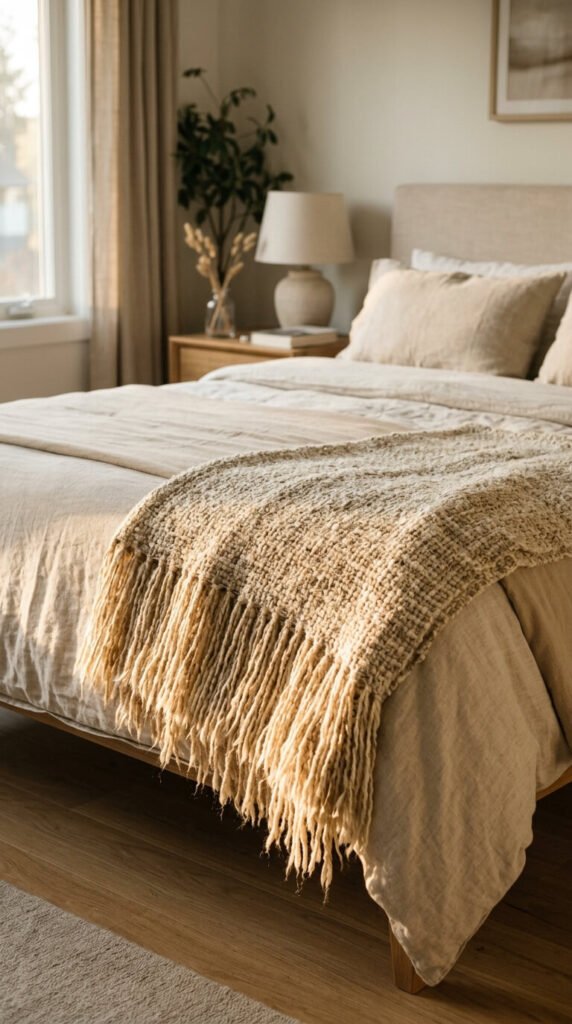
Fringe does a lot of work for very little effort. A plain woven throw with a few inches of fringe looks finished instead of flat. Drape it over the end of a bed or a bench for texture that moves. Budget tip: buy a plain throw and add fringe yourself with a fringe comb and a bit of extra yarn, which costs far less than a pre-made fringed version. Keep fringe length under four inches so it doesn’t tangle with foot traffic. Fringe texture gives a throw a finished edge without changing the fabric itself.
Cable Knit Cotton Throws
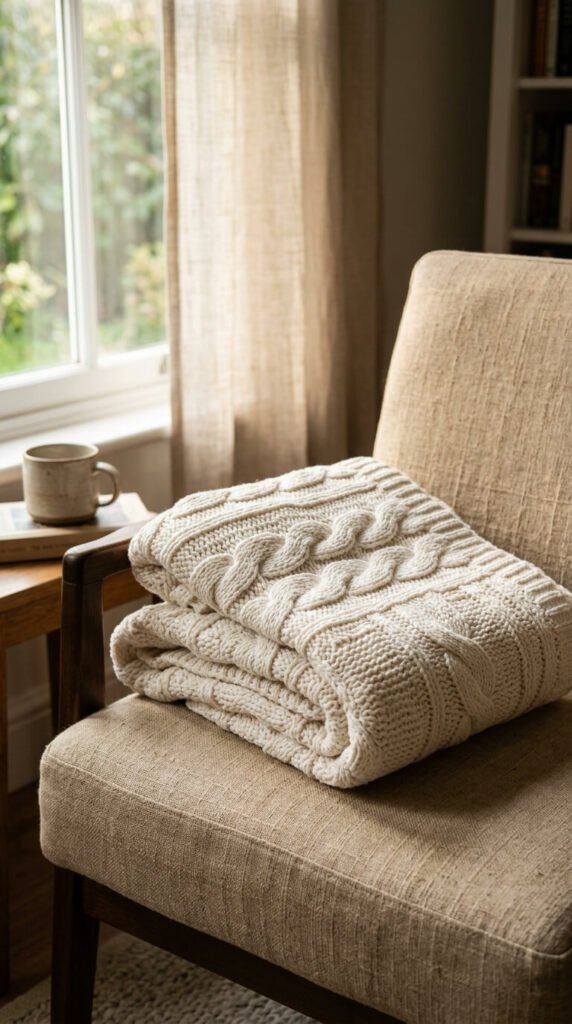
Cable knit brings the twisted rope pattern from sweaters onto a throw. Cotton keeps the weight down, so it works past winter into cooler spring evenings. Use it folded at the foot of the bed for a classic look. Budget tip: cable knit cotton throws show up in clearance sections once stores shift seasonal stock, so timing your purchase around season changes saves money. White and oatmeal versions look crisp against colorful bedding. Cable pattern gives a throw a tailored, put-together look without needing any extra styling around it.
Seersucker Throws
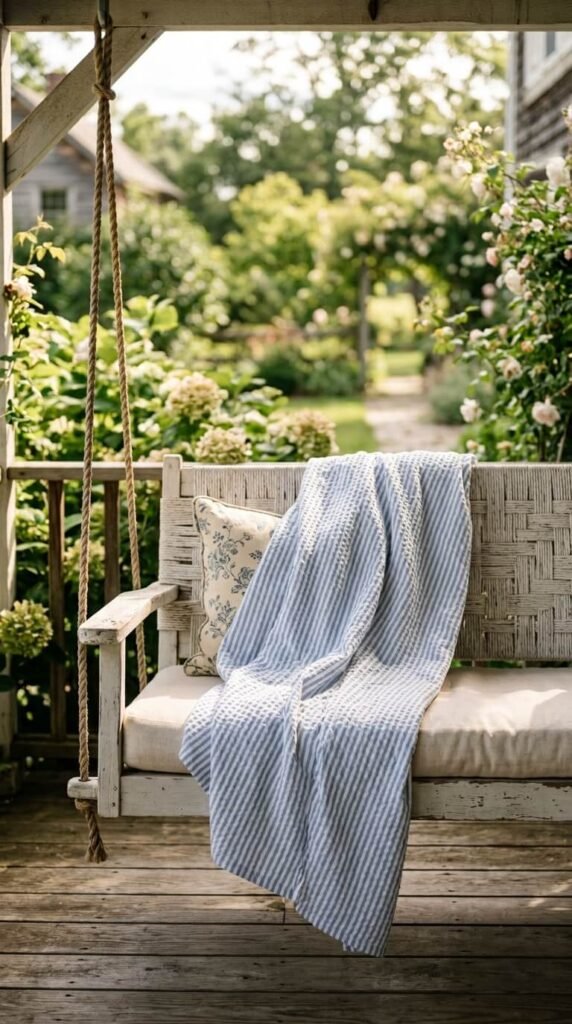
Seersucker has a puckered texture built right into the weave, which is why it barely wrinkles and dries fast. It’s a summer suit fabric that works just as well as a throw. Use it outside on a porch swing or patio chair. Budget tip: seersucker fabric by the yard is inexpensive, and a simple straight-edge hem is all a DIY version needs. Pale blue and white stripes feel classic for spring without trying too hard. Puckered texture stays cool to the touch, which matters once the weather warms up.
Layered Muslin Throws
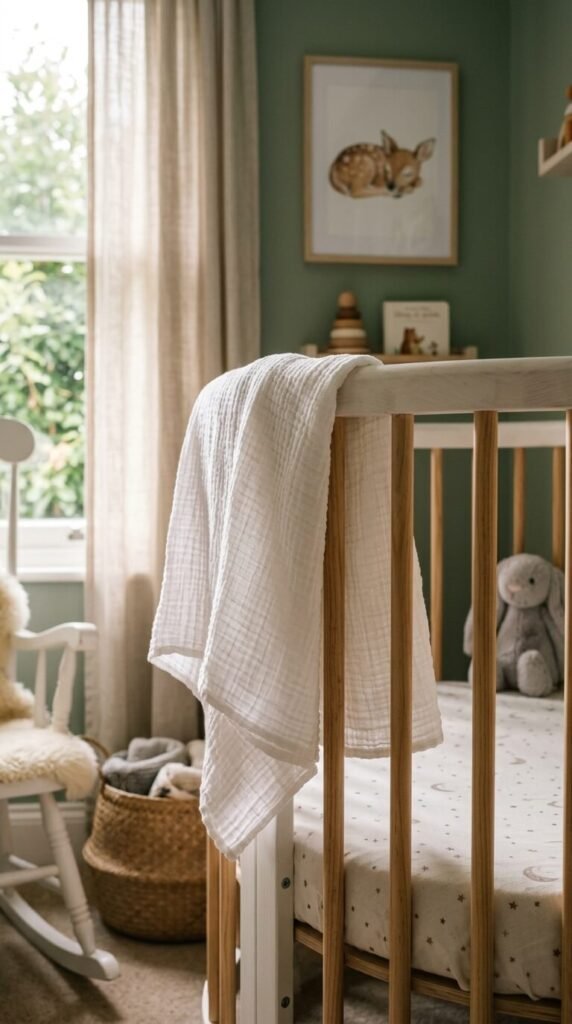
Muslin gets softer with every wash, and layering a few sheets together gives it enough texture to work as a throw. It’s light enough for a warm afternoon nap. Use it draped over a crib rail or a reading chair. Budget tip: muslin fabric is one of the cheapest options by the yard, so stitching two or three layers together at home costs very little. White and soft gray muslin fit almost any room. Layered texture gives a throw some structure while keeping the whole thing light enough for spring.
Chenille Throws
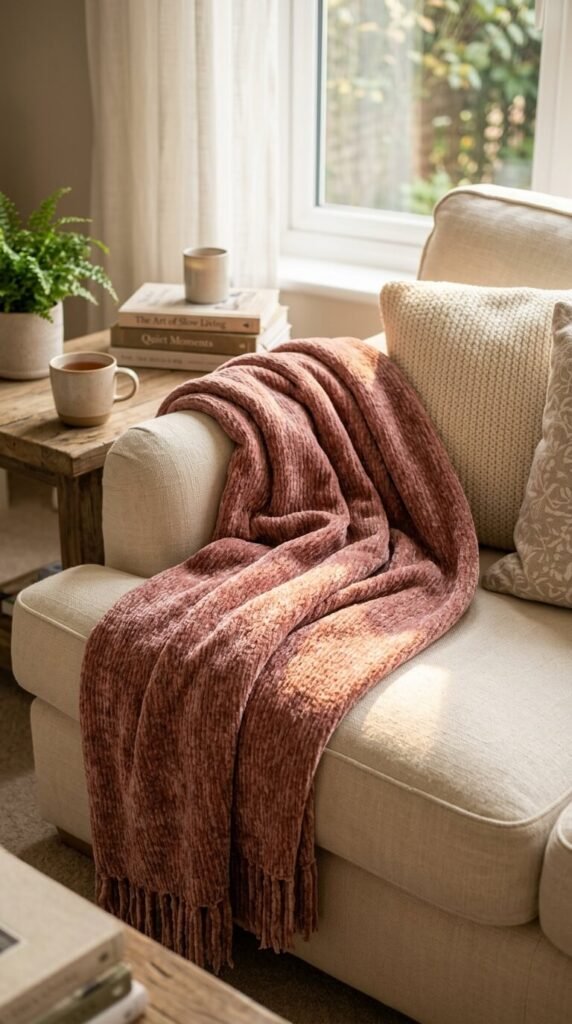
Chenille has a soft, slightly fuzzy surface that feels heavier than it actually is. That makes it a good in-between pick for spring, cozy but not hot. Drape one over a sofa arm for texture that people want to touch. Budget tip: chenille throws are common at discount retailers, since the fabric is cheap to produce at scale. Dusty rose and sage chenille both work for a soft spring palette. Plush texture makes a throw feel expensive even at a low price point, which is why it’s worth checking sale racks first.
Diamond Quilted Throws
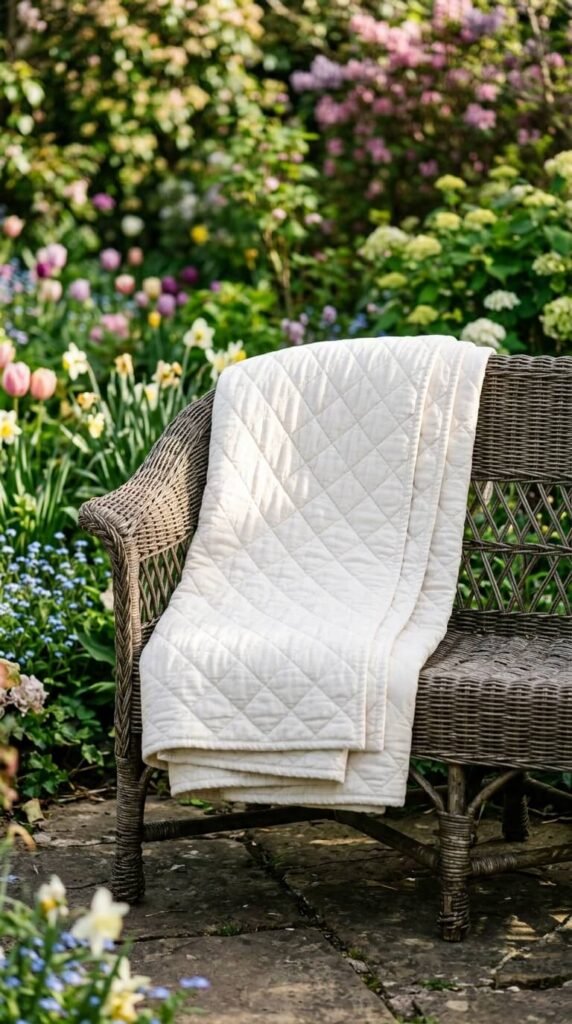
Quilted throws stitch the pattern directly into the fabric, which adds texture and a little padding at the same time. The diamond pattern is simple enough to fit almost any decor. Use it outside on a bench or inside over a daybed. Budget tip: quilted cotton throws are often cheaper than filled quilts since they use less batting, so you get texture without the full price. White and pale blue quilted throws feel light and clean for spring. Stitched pattern gives a throw dimension you can see and feel.
Pom-Pom Trim Throws
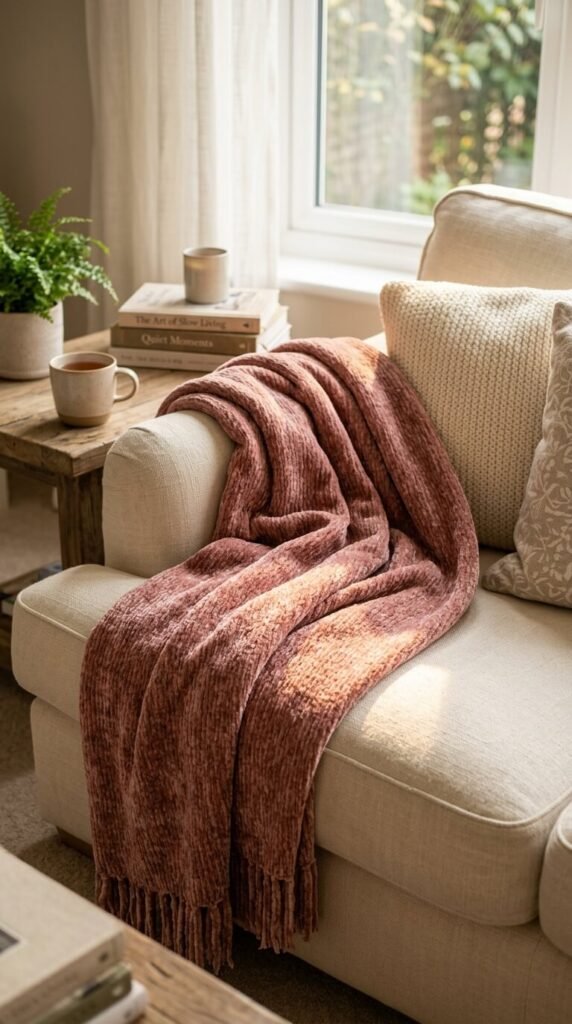
Pom-pom trim adds a playful edge to an otherwise plain throw. It’s a small detail, but it changes how the whole piece reads. Use it in a kid’s room or anywhere that could use a little more personality. Budget tip: pom-pom trim by the yard is cheap at craft stores, and hand-sewing it onto a plain throw takes less than an hour. Multicolor trim works for playrooms, while a single-tone trim looks more grown-up. Pom-pom trim is one of the fastest DIY upgrades for a throw that could use a little more character.
Open-Weave Mesh Throws
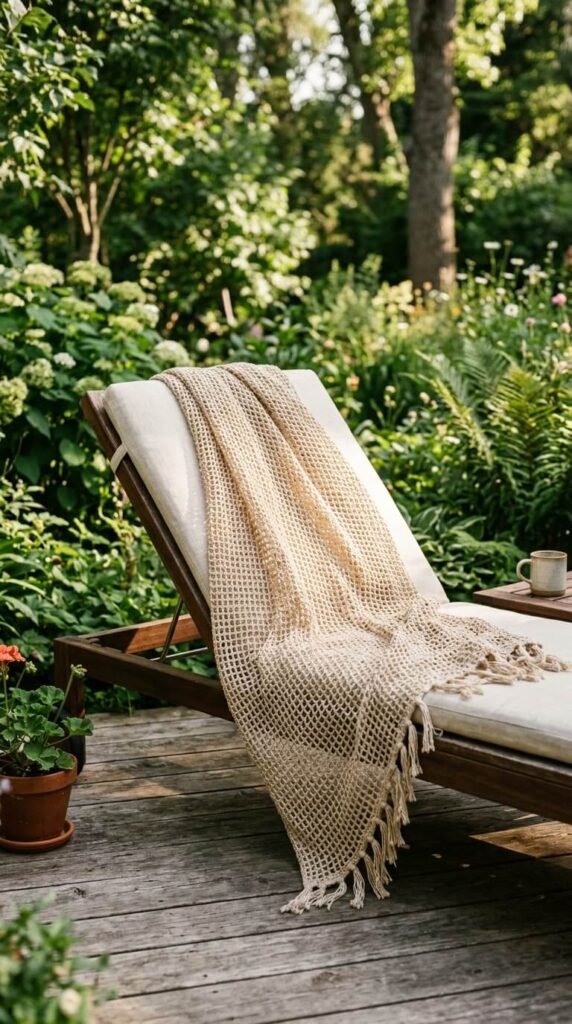
Open-weave throws let light and air pass right through the fabric, which is exactly what you want once temperatures climb. The loose weave gives texture without any real weight. Use it over an outdoor lounge chair or as a light cover on a warm evening. Budget tip: open-weave cotton throws are usually priced lower than dense knits since they use less material overall. Natural, undyed cotton keeps the look simple and calm. Open weave is the lightest texture option on this list, which makes it the right pick for the warmest spring days.
Color-Block Woven Throws
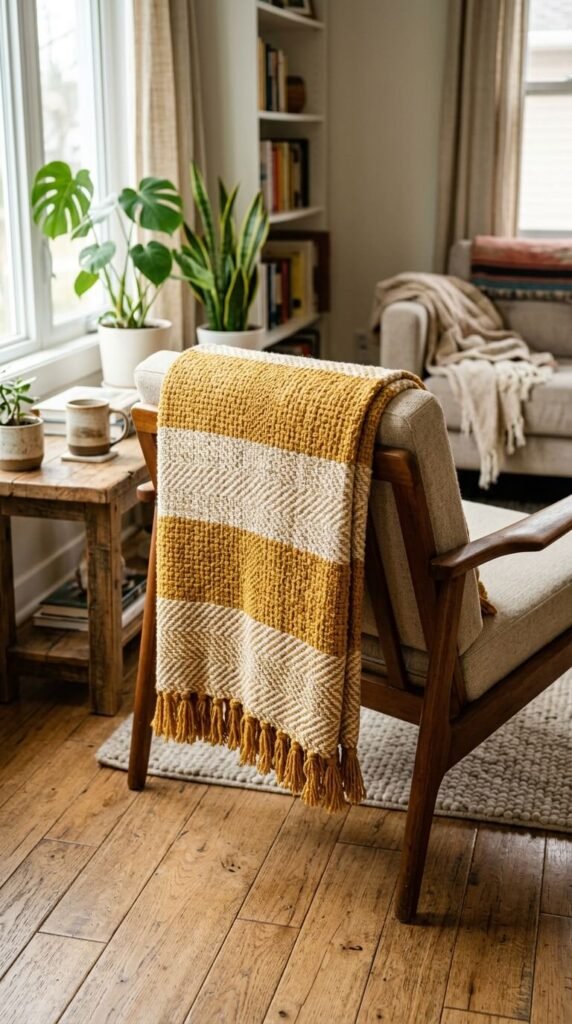
Color-block throws split the fabric into clean sections instead of a single pattern repeat. The woven texture keeps it from looking flat despite the bold color change. Use one over a plain chair to add a focal point to the room. Budget tip: color-block throws are easy to make at home by sewing two remnant fabrics together along one seam. Mustard and cream, or terracotta and white, both feel right for spring. Color-blocking gives a throw graphic interest without needing an actual printed pattern.
Recycled Cotton Throws
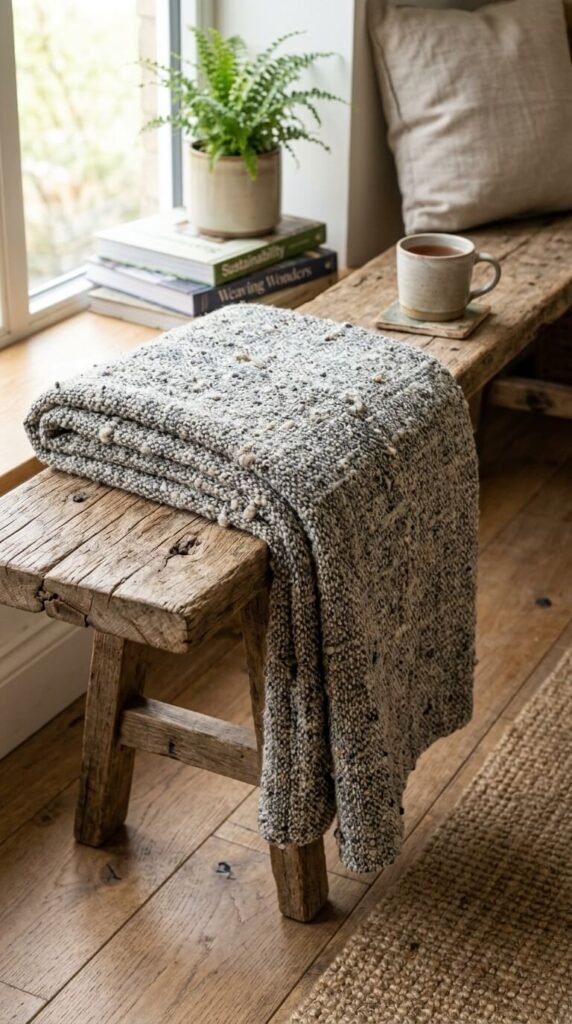
Recycled cotton throws are woven from reclaimed fibers, which gives them a flecked, slightly uneven texture you won’t find in new cotton. That texture is a side effect of the process, not something added on purpose. Use one anywhere you want a low-cost, low-impact throw. Budget tip: recycled cotton throws are often priced the same as regular cotton, so there’s no real cost trade-off. Gray and cream flecked versions fit almost any room without clashing. Flecked texture gives a throw personality that a solid, new-cotton piece would not have.
Ombre Dip-Dye Throws
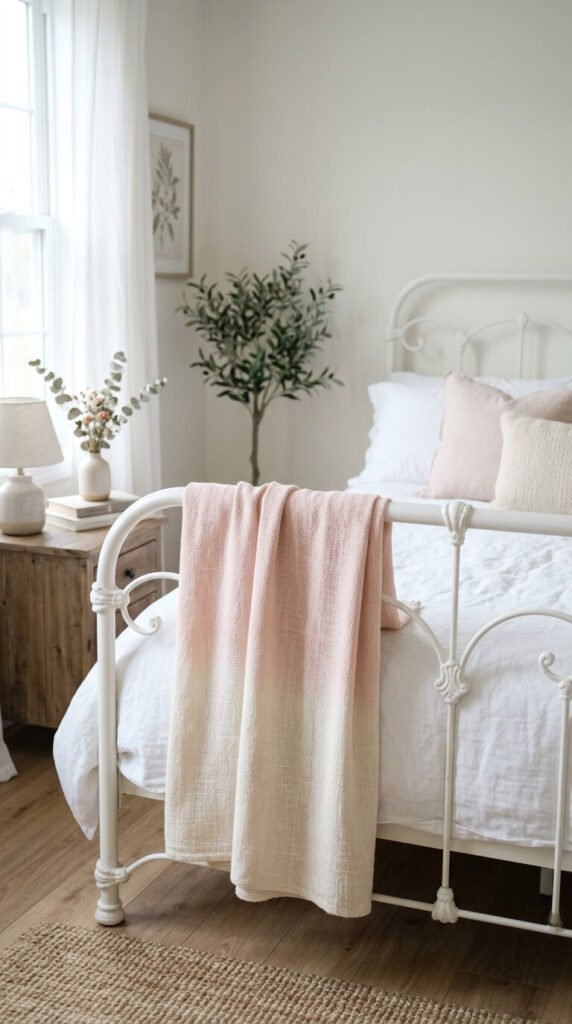
Ombre throws fade from one color into another, which gives a plain weave some visual movement even without added texture. The color shift does most of the work here. Use it as a bed topper or folded over a chair for a soft accent. Budget tip: dip-dye is a doable weekend DIY on a plain white cotton throw using fabric dye and a bucket. Blush to white or sage to cream both feel right for spring. Color fade gives a throw depth that a single flat color can’t match on its own.
Conclusion
Texture is what turns a throw from filler into a design choice. Whether you pick chunky knit, sheer gauze, or a dip-dyed fade, the goal stays the same: warmth without weight, and style without much cost. Start with one or two throws that fit your existing colors, then add more as you find pieces on sale or finish a DIY project. Small changes like fringe, tassels, or pom-poms cost little but change how a whole room feels. Pick the textures that match how you actually use your space, and let the rest of the room stay simple around them.