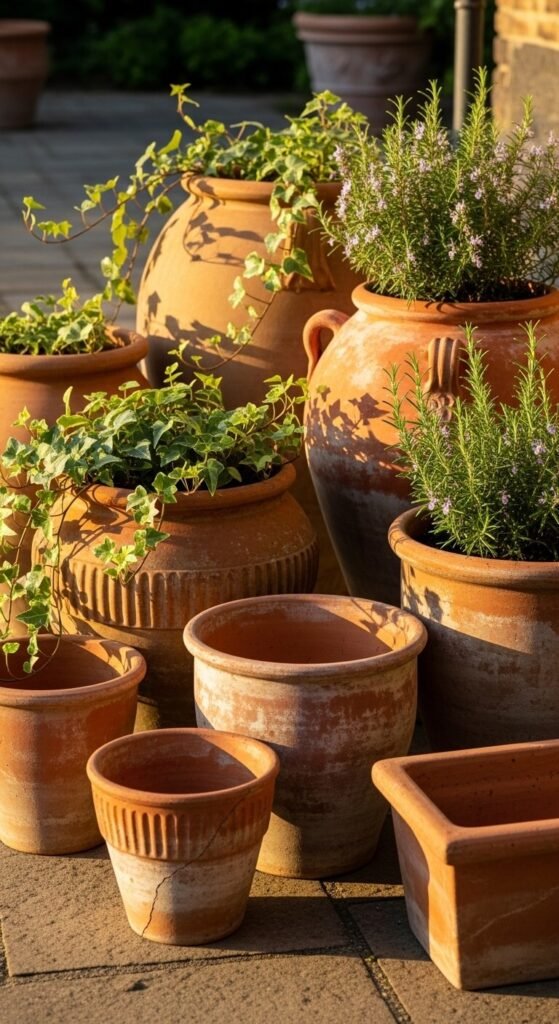
Terracotta pots have been grounding homes and gardens for thousands of years — and they still do it better than almost anything else. That warm, rust-orange clay has a way of making any space feel rooted, calm, and real. Whether you have a tiny apartment balcony or a sprawling backyard, these ideas will help you use terracotta in ways that feel personal, affordable, and genuinely beautiful. No expensive supplies required. Just honest clay, a little creativity, and a few minutes of your time.
1. Stacked Terracotta Tower Planter
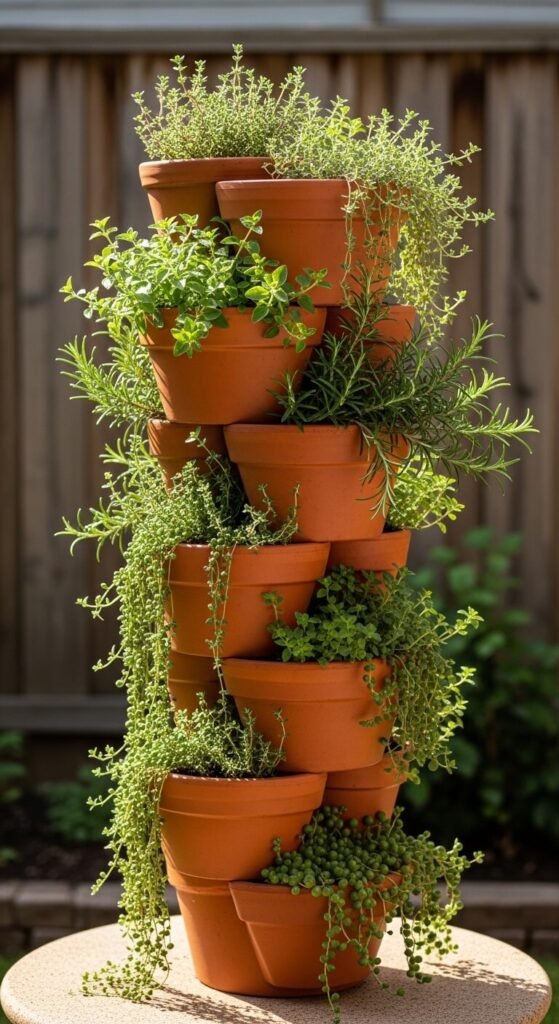
Stack pots of decreasing sizes directly on top of each other to build a vertical tower garden. Fill each tier with herbs, strawberries, or succulents. The bottom pot is largest; the smallest sits on top. Use a wooden dowel through the drainage holes to keep everything stable. This works beautifully in small spaces. You can find mismatched terracotta pots at thrift stores for under $2 each. Total cost: under $10. It grows upward instead of outward — perfect for tight patios or balconies.
2. Aged Patina Look with Yogurt or Buttermilk
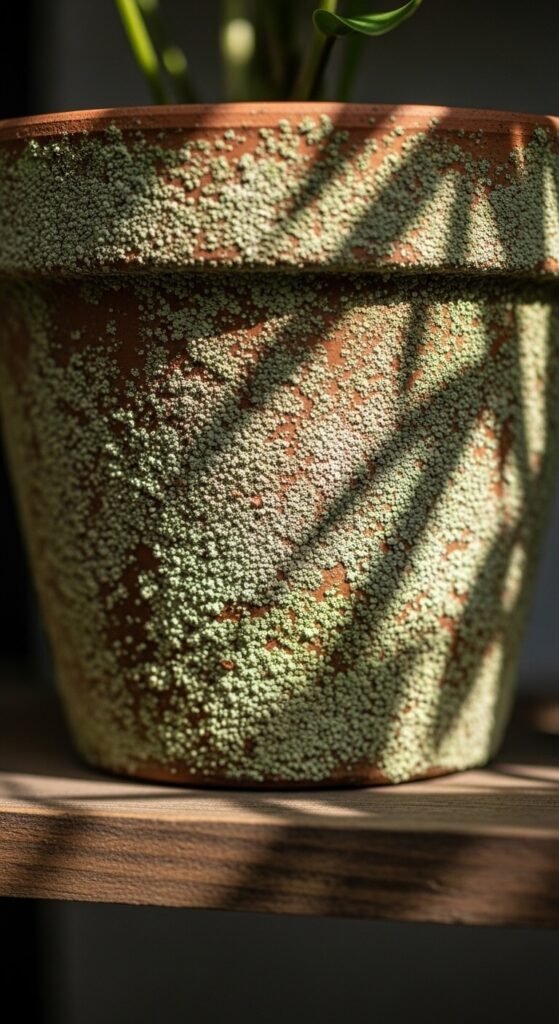
You can make a brand-new terracotta pot look like it has been sitting in a garden for decades. Simply brush plain yogurt or buttermilk onto the outside of the pot. Leave it in a shady, damp spot outdoors. Within a few weeks, moss and lichen will start to grow on the surface naturally. The result is a beautifully weathered, organic look that costs almost nothing. This works best in humid climates. If you’re in a dry area, mist the pot daily to speed things up. It’s slow, patient, and worth every day.
3. Terracotta Pot Herb Wall in the Kitchen
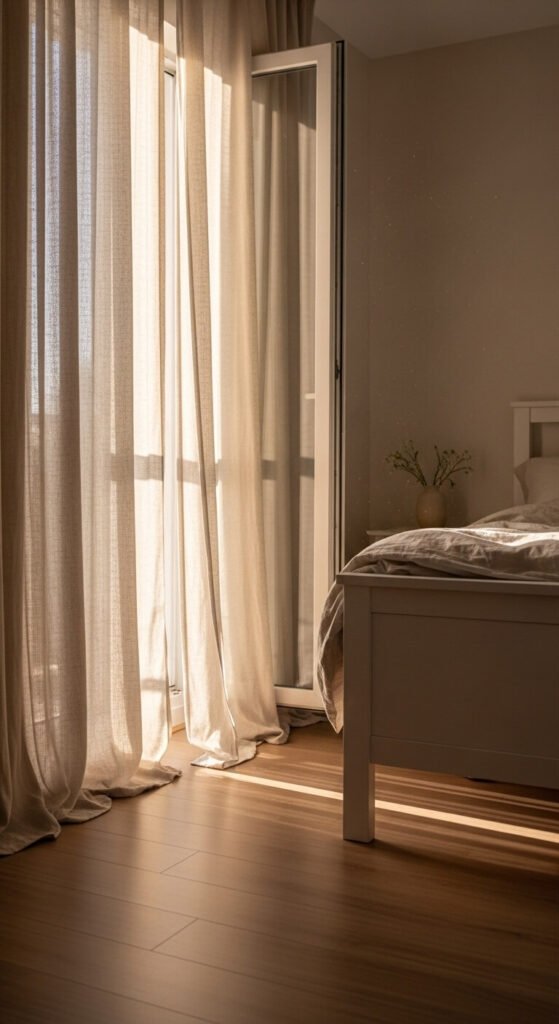
Mount small terracotta pots directly onto a kitchen wall using simple metal brackets or leather strap hangers. Plant your most-used herbs — basil, rosemary, thyme, mint. You have fresh ingredients within arm’s reach every time you cook. Use 3-inch or 4-inch pots so they don’t overwhelm the wall space. Hardware store brackets cost about $1 each. You can also use adhesive hooks rated for heavier weights. This turns a blank wall into something functional and grounding at the same time.
4. Cracked Pot Fairy Garden
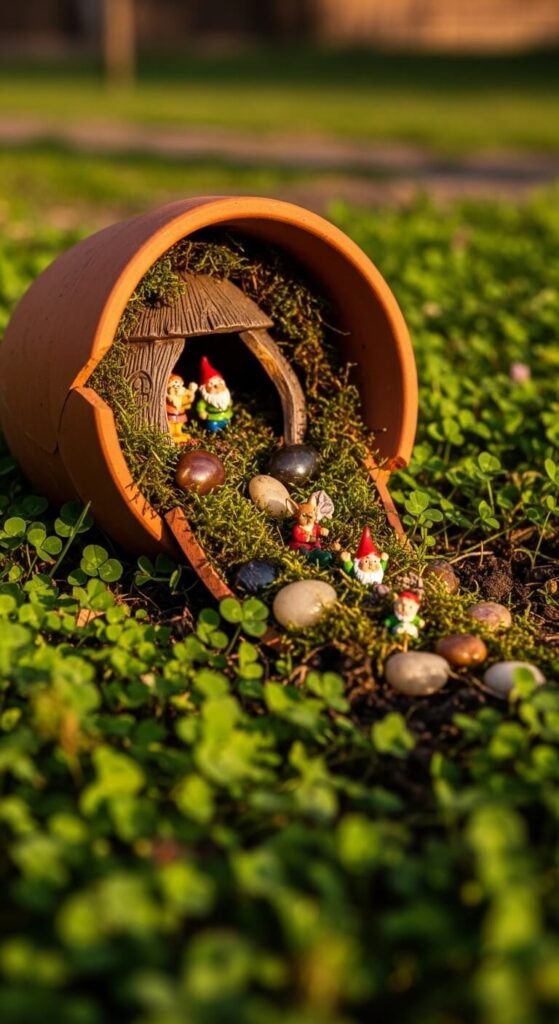
Don’t throw away a cracked or broken terracotta pot. Lay it on its side and use the break as a dramatic opening. Fill the inside with potting soil, then plant miniature succulents, moss, and small trailing plants. Add tiny stones, pebbles, or figurines to build a little scene. This is a zero-cost project if you already have a broken pot. Children love helping with this one. It looks completely intentional and adds a storytelling quality to any garden corner or porch step.
5. Terracotta Pot Wind Chimes
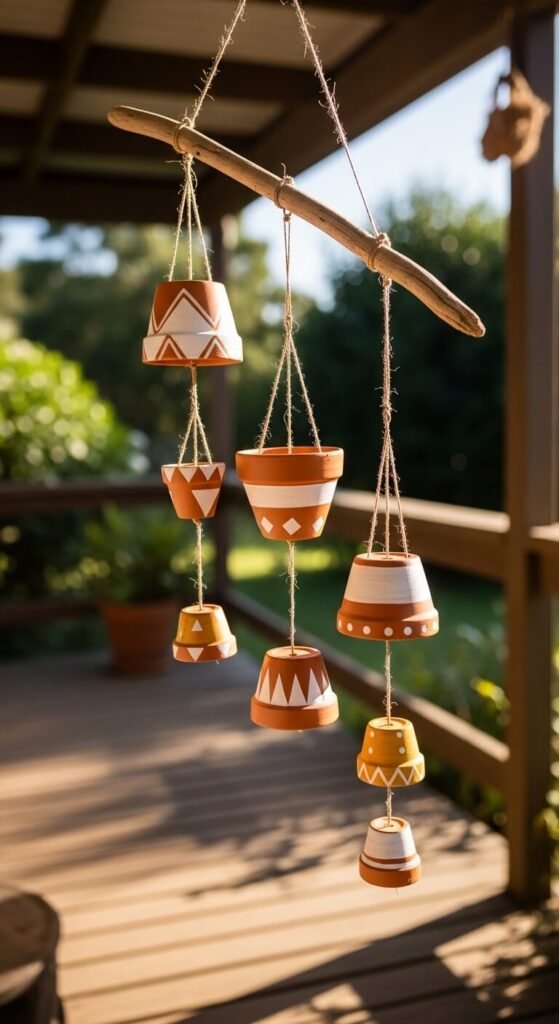
Drill a small hole in the bottom of several small terracotta pots. Thread them onto a long piece of twine or jute rope at different lengths. Hang the whole arrangement from a branch, a porch beam, or a curtain rod. When the breeze hits, the pots knock together with a soft, hollow, earthy sound. You can leave the pots plain or paint simple patterns on them first. Use pots ranging from 2 to 4 inches for the best sound variation. This is a weekend project that costs next to nothing.
6. Terracotta Pot Candle Holders
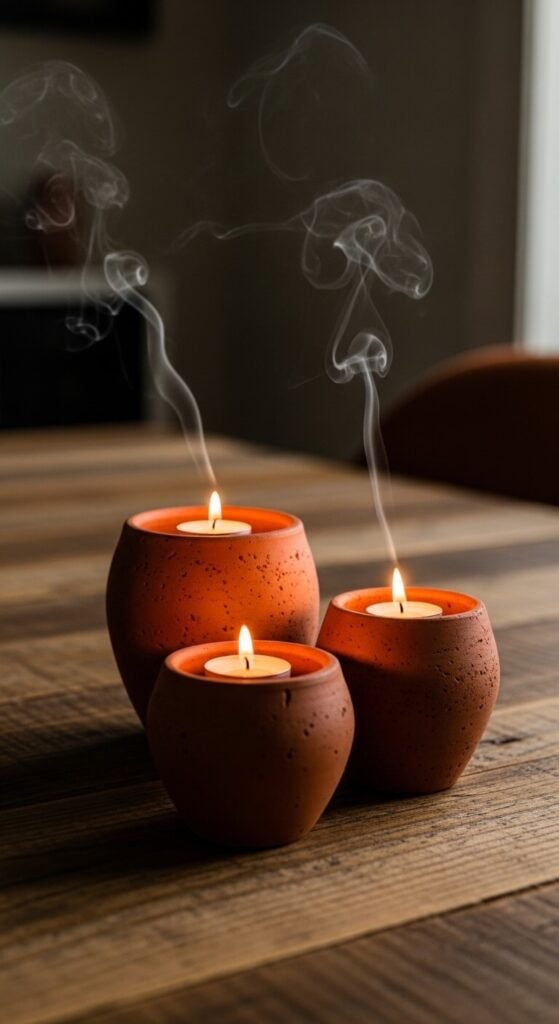
Small terracotta pots make surprisingly beautiful candle holders. Drop a tea light or votive candle directly inside a clean 3-inch pot. The clay acts as a natural heat buffer and gives off a warm, amber glow. Group three or five pots of different heights together for a simple centerpiece. You can press a little sand into the base of each pot first for extra stability. This costs almost nothing if you already have pots on hand. It works on dining tables, mantels, outdoor patios, and window ledges.
7. Painted Geometric Terracotta Pots

Grab a small flat brush and some acrylic craft paint — the $1 bottles work perfectly. Paint simple triangles, stripes, diamonds, or dots directly onto the terracotta surface. You don’t need to be an artist. Tape off straight lines with painter’s tape for a clean result. Let dry fully, then seal with a matte outdoor spray sealant to protect the design from watering. The rough clay texture actually makes even wobbly lines look charming. Three pots in a matching pattern look like a curated set from a boutique shop.
8. Hanging Macramé Terracotta Display
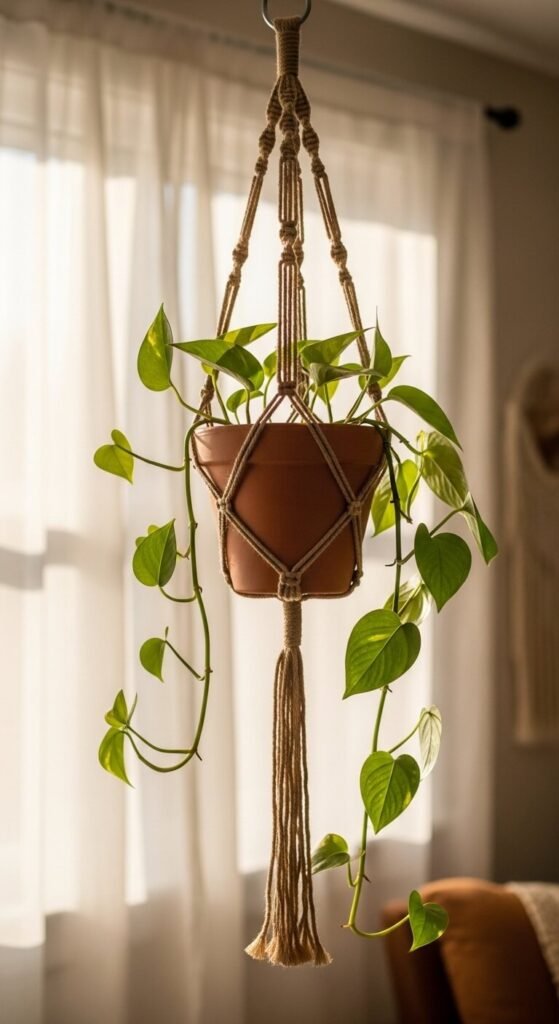
Knot a simple macramé cradle from jute twine or cotton rope and hang a terracotta pot inside it. You only need to learn two basic knots — a square knot and a gathering knot. There are free tutorials on YouTube that take about 20 minutes to follow. Hang the finished planter near a window and plant a trailing pothos or ivy inside. The combination of the rough orange clay against natural fiber rope creates a warm, layered look. A single skein of jute twine costs about $3 and makes two or three hangers.
9. Terracotta Pot Succulent Arrangement
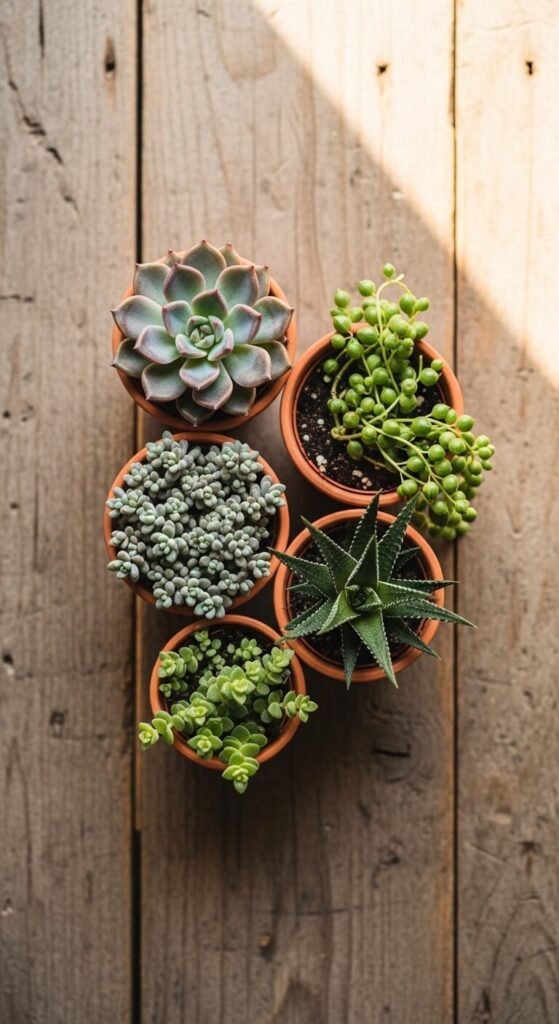
Succulents and terracotta are one of the most natural pairings in gardening. The porous clay draws away excess moisture, which is exactly what succulents want. Use a mix of 2-inch, 3-inch, and 4-inch pots. Plant one succulent variety per pot. Then cluster all the pots together on a tray or wooden board. The result looks like a carefully arranged collection even though each pot took under two minutes to plant. Fill in gaps with a little decorative gravel or sand. Succulents at hardware stores often cost as little as $2 to $4 each.
10. Terracotta Pot Layered Fountain
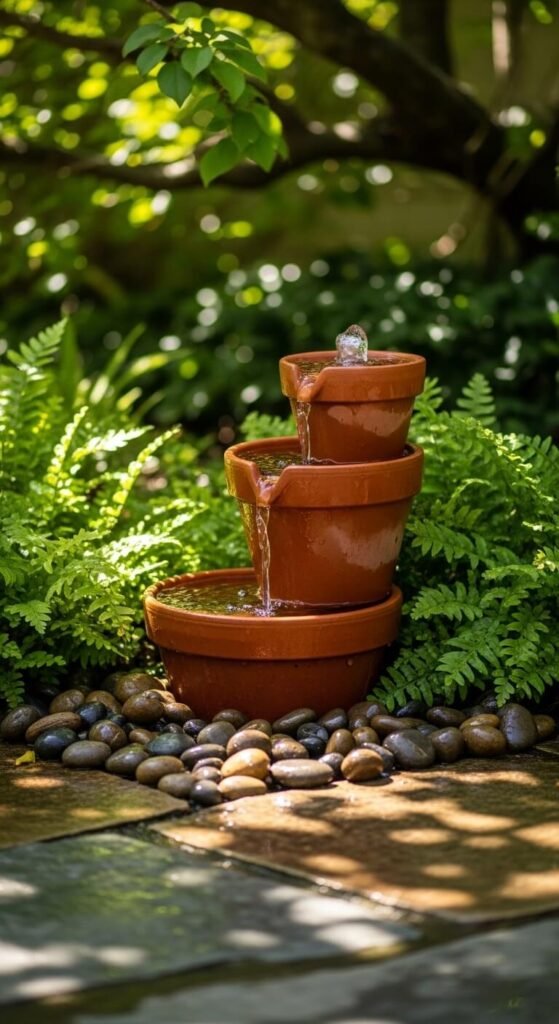
Stack three terracotta pots of graduating sizes on a central PVC pipe or wooden dowel. Run a small submersible pump through the center. Water travels up through the pipe, spills from the top pot, and cascades down through each tier. Fill the base with river stones. Plug the pump into an outdoor outlet. Submersible pumps cost about $15 to $20 at hardware stores. The soft sound of running water over clay is calming and masks street noise well. This is achievable in one afternoon with basic tools.
11. Terracotta Pot Bird Bath
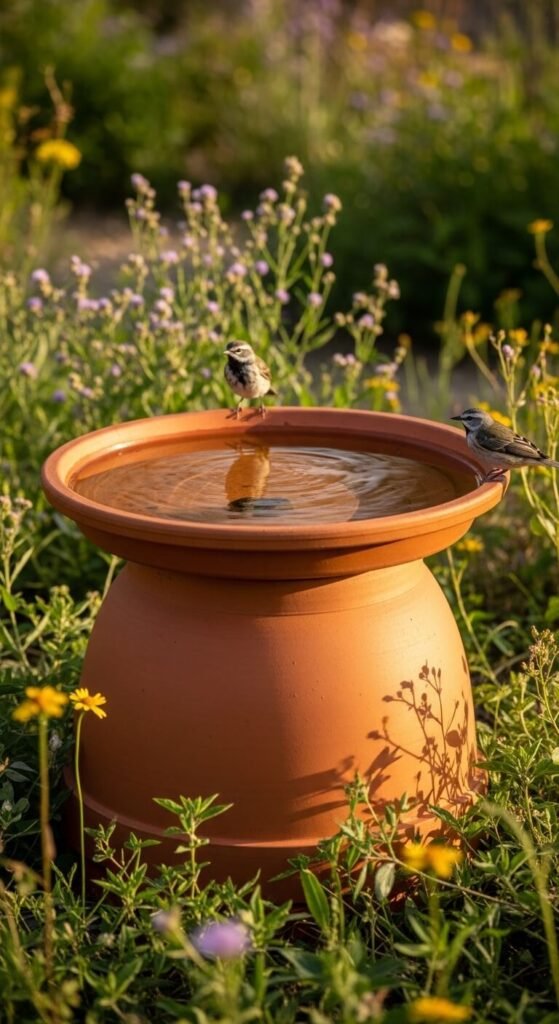
Flip a large terracotta pot upside down. Place a wide, shallow terracotta saucer on top. Fill the saucer with clean, shallow water. That’s it — you have a bird bath. Birds prefer shallow water of about 1 to 2 inches deep. Add a few flat stones inside the saucer for small birds to stand on. Seal the inside of the saucer with waterproof clay sealant to help it hold water longer. Use a pot that’s at least 10 inches tall so cats can’t easily reach it. Change the water every few days to keep it clean.
12. Mini Terracotta Pots as Spice Storage
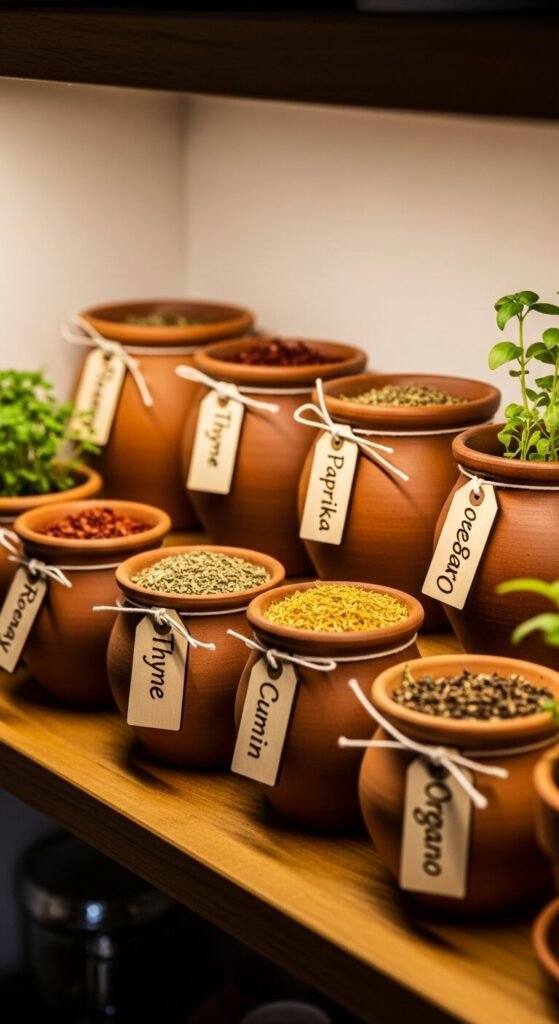
Use 2-inch or 3-inch terracotta pots to store dried spices and herbs right on your kitchen shelf. Add a small chalkboard label on each pot using chalkboard paint and a tiny brush. The clay keeps contents slightly cool and away from direct light. This looks far more personal than rows of plastic containers. Line them up on a wooden spice shelf or a small tray. You can find bags of mini terracotta pots — often 10 to 12 pots per bag — for about $5 to $8. It is one of the most affordable styling tricks in the kitchen.
13. Terracotta Pot Mosaic
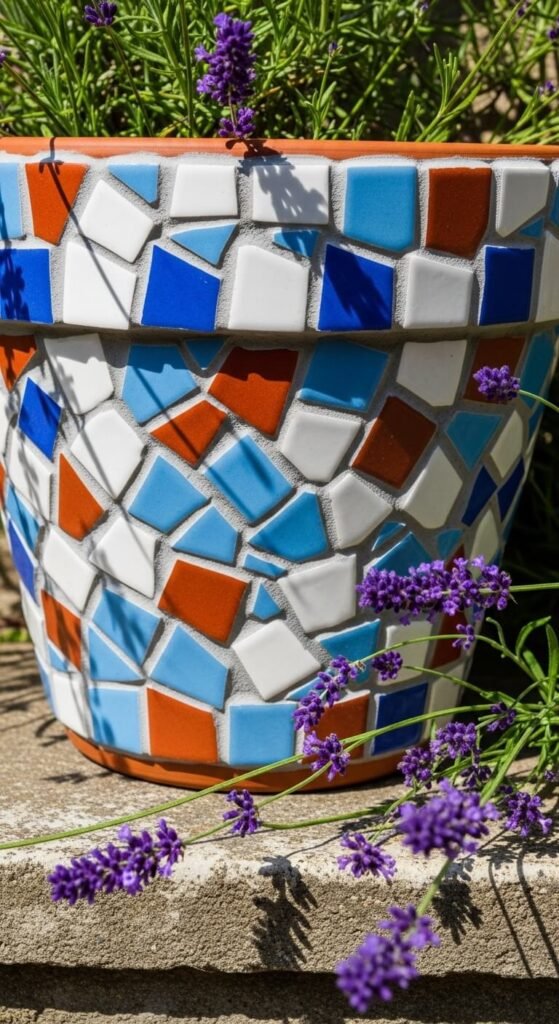
Break up old mismatched ceramic tiles or even broken dishes using a cloth and a hammer. Apply tile adhesive to the outside of a terracotta pot. Press the broken pieces into the adhesive in a pattern or randomly for an organic look. Let it cure, then fill in the gaps with pre-mixed tile grout. Wipe clean. The finished pot looks genuinely artistic and completely one-of-a-kind. Use tiles from a dollar store or leftover renovation scraps to keep costs near zero. The grout colors you choose — white, charcoal, or terracotta-toned — dramatically change the final mood.
14. Terracotta Pot Trellis Planter
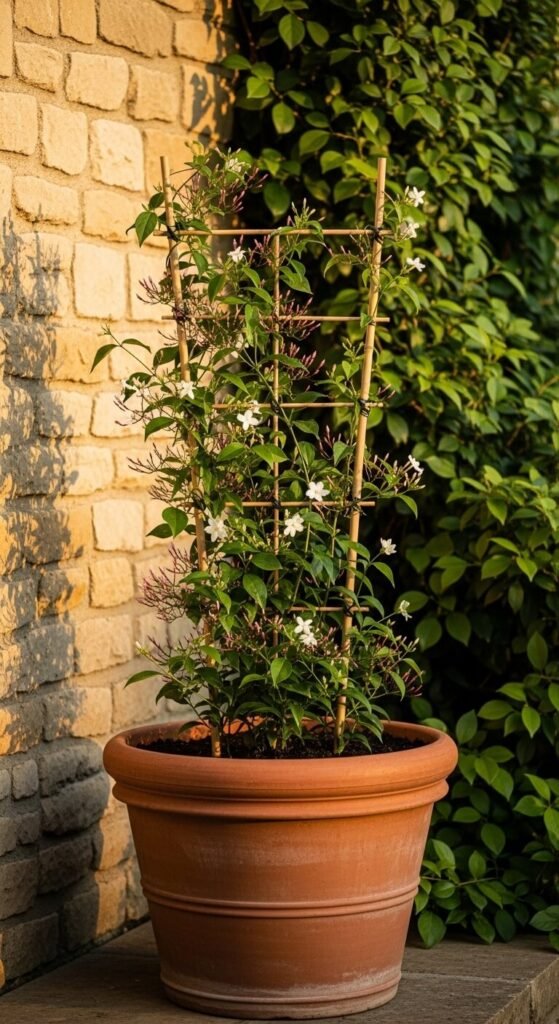
Push three or four bamboo canes into a large terracotta pot, angled slightly inward, and tie their tops together with twine to form a simple teepee trellis. Plant a climbing plant at the base — jasmine, sweet peas, or small climbing roses work beautifully. As the plant grows, guide it up and around the structure. The terracotta pot provides good weight so the whole arrangement stays stable even on a windy balcony. Bamboo canes cost about $2 to $3 for a bundle. This gives vertical structure to flat garden spaces.
15. Bohemian Painted Terracotta Cluster
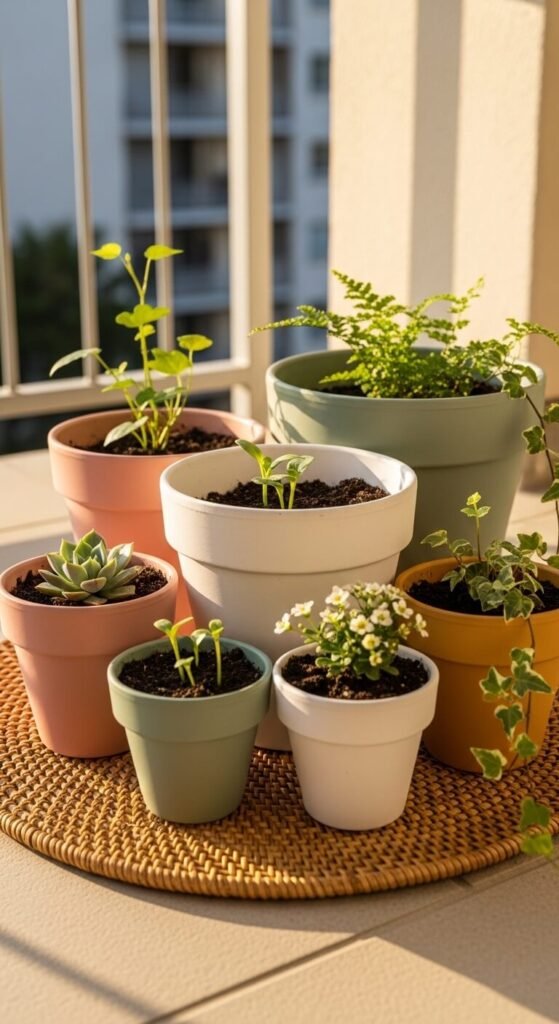
Paint a group of terracotta pots in a muted, earthy palette — dusty sage, terracotta red, warm cream, and sandy ochre. Use flat acrylic craft paint and leave some of the original clay visible for a natural, worn effect. Cluster all the pots together on a rattan tray or woven mat. Mix sizes from 3 inches to 10 inches. Plant different textures inside — some spiky, some trailing, some full and bushy. The variety of plant shapes and the cohesive painted palette together create a look that feels curated but completely relaxed.
16. Terracotta Pot Wall Art Display
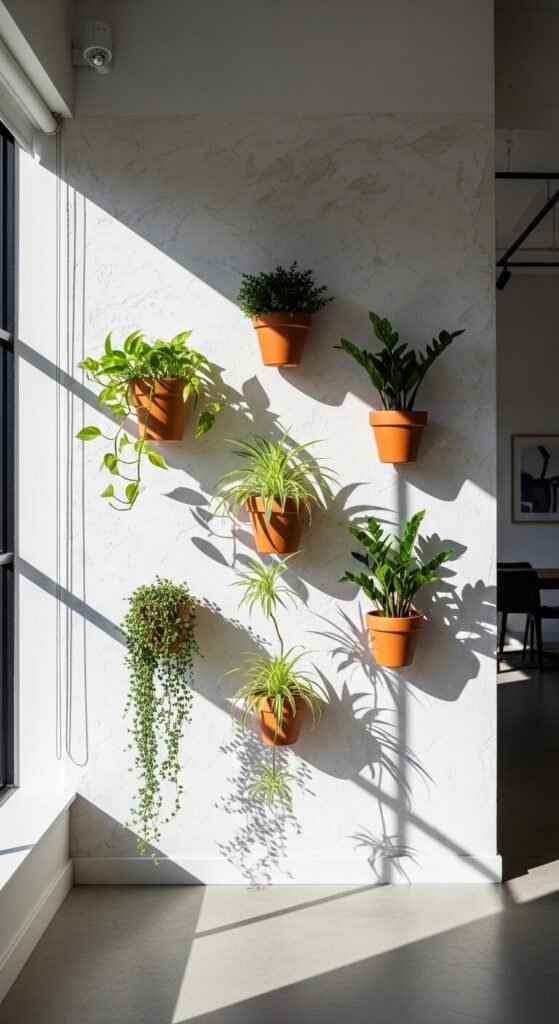
Mount terracotta pots directly to a wall using mounted clay pot hangers or simple pipe brackets available at hardware stores. Arrange them in a loose grid or staggered pattern. Plant trailing houseplants like string of pearls, pothos, or ivy so the plants drape downward and add movement to the wall. The combination of the clay pots against a painted plaster or white wall creates a gallery-like effect. This approach turns a dead wall into a living display. Measure your spacing before drilling so the arrangement feels balanced and intentional.
17. Nested Terracotta Pot Size Display
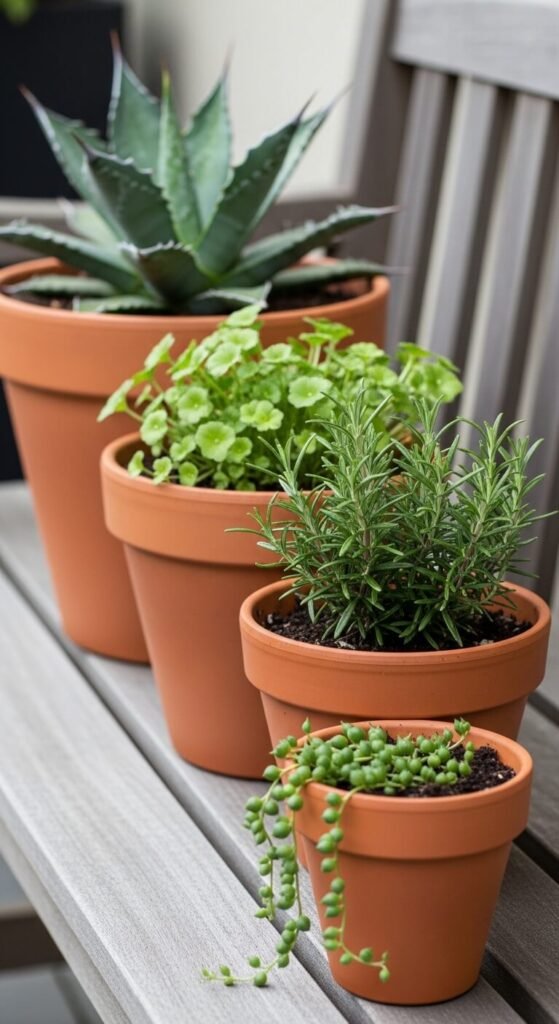
Buy four or five pots in graduating sizes — from 2 inches up to 10 inches — and arrange them in a row from largest to smallest. Plant each one with the same type of plant, or alternate between two complementary plants for a rhythmic pattern. Lined up on a shelf, bench, or window ledge, this creates a satisfying visual rhythm that feels collected over time rather than bought all at once. Terracotta pots in a graduated set are often cheaper when bought as a bundle. The repetition of the same clay color ties everything together without effort.
18. Terracotta Pot Strawberry Planter
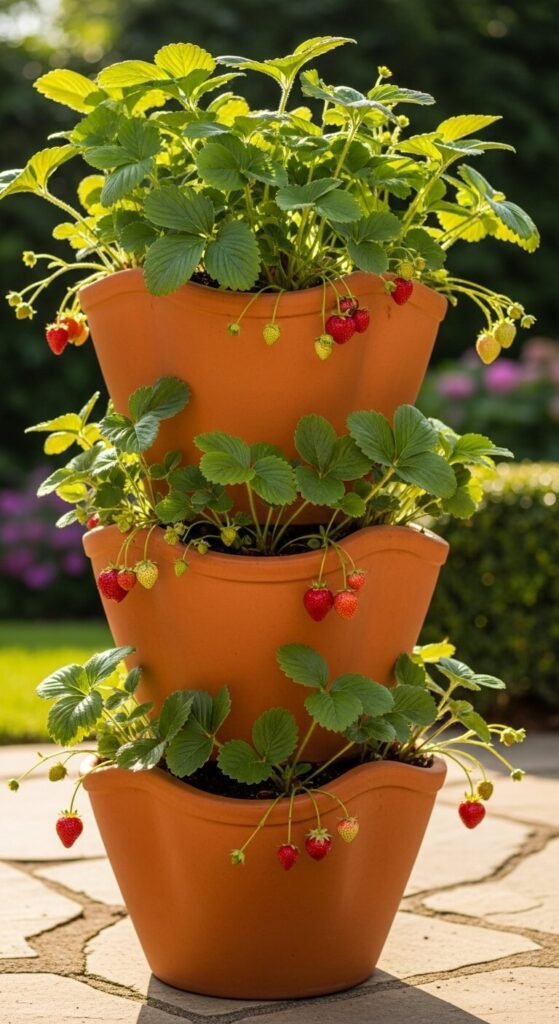
A purpose-made terracotta strawberry pot has small side openings all around its body. Plant a strawberry runner in each opening and one in the top. As the plants grow, they spill outward from every hole, producing fruit all around the pot. You can find these at nurseries and garden centers for about $10 to $20. They also work beautifully with small trailing herbs like thyme and oregano. The terracotta keeps the roots cooler than plastic pots on hot summer days, which strawberries genuinely appreciate. Water from the top and let it filter through each layer.
19. Terracotta Pot Lanterns
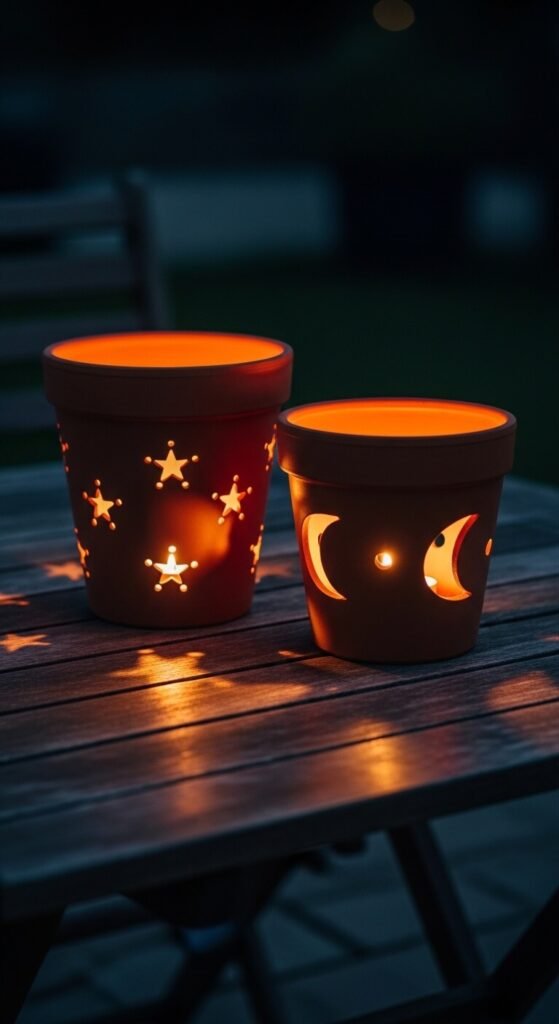
Use a drill with a masonry or ceramic drill bit to create patterns of holes in a terracotta pot — stars, circles, or simple geometric shapes. Work slowly with water nearby to keep the drill bit cool. Drop a tea light candle inside. At night, the light shines through the holes and casts patterned shadows across any surrounding surface. The effect is stunning for outdoor dinners, porch evenings, or windowsills. Drill bits for masonry cost about $3 to $5 and one bit can do many pots. Start with a simple dot pattern if you’re new to drilling clay.
20. Terracotta Pot Painted Faces
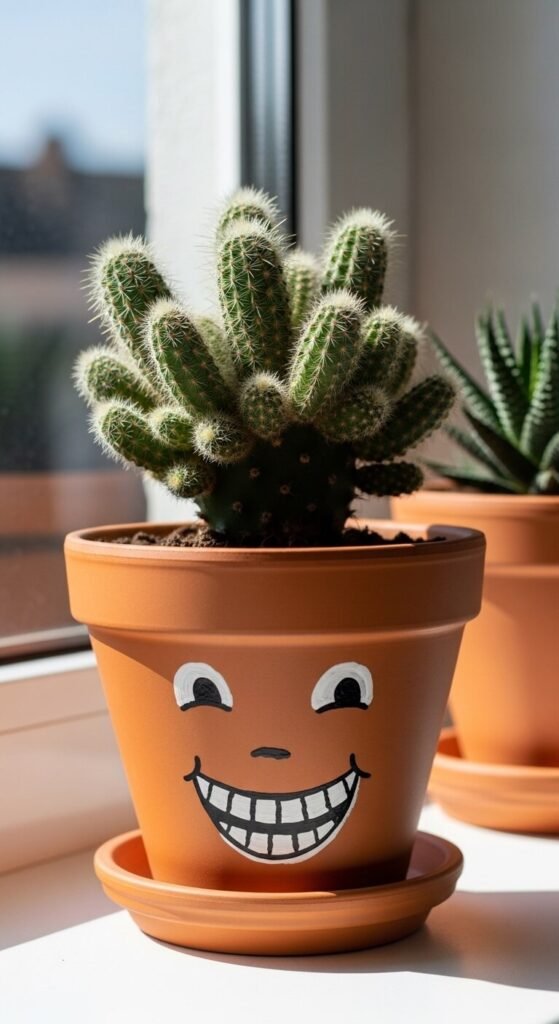
Use black acrylic paint and a thin brush to paint a simple face on the front of a terracotta pot. Add eyes, a nose, and a mouth. Then plant something dramatic out of the top — a wild cactus, a spiky grass, or a fluffy fern that becomes the character’s hair. These take about 15 minutes to make and cost almost nothing. They make genuinely good gifts and look charming on windowsills or desks. You don’t need to be able to draw well. Simple, even clumsy, faces often have more personality than perfectly painted ones.
21. Terracotta Pot Stepping Stones
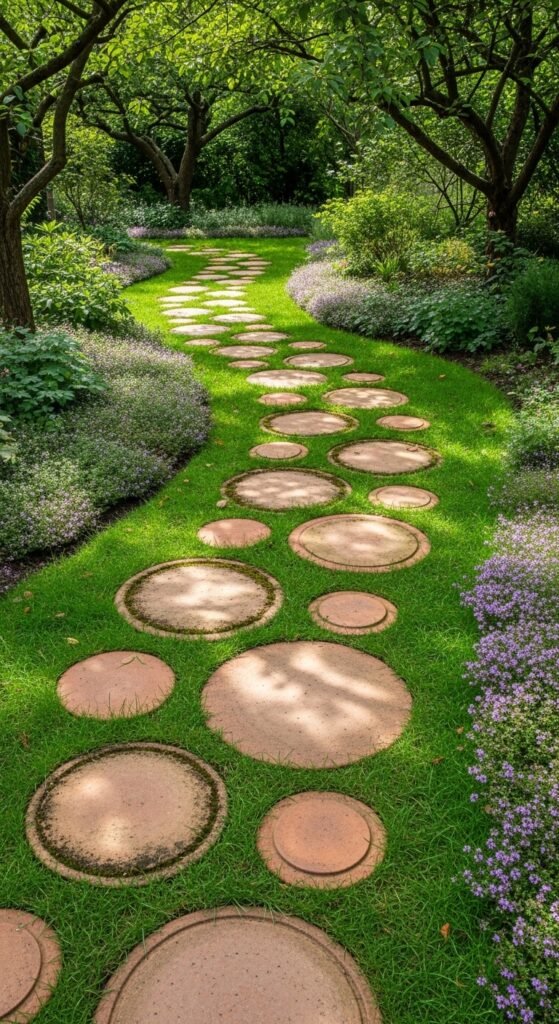
Large terracotta saucers — the wide, flat ones that go under pots — can be pressed directly into the soil to create informal garden stepping stones. Space them evenly across a garden bed or lawn path. Over time, moss and ground cover will grow around the edges, making them look as if they’ve always been there. Saucers in 10-inch to 14-inch sizes work best for stepping. They’re inexpensive and far more interesting than plain concrete stepping stones. Add a little sand underneath each one for stability and to prevent rocking underfoot.
22. Terracotta Pot Henna-Inspired Patterns
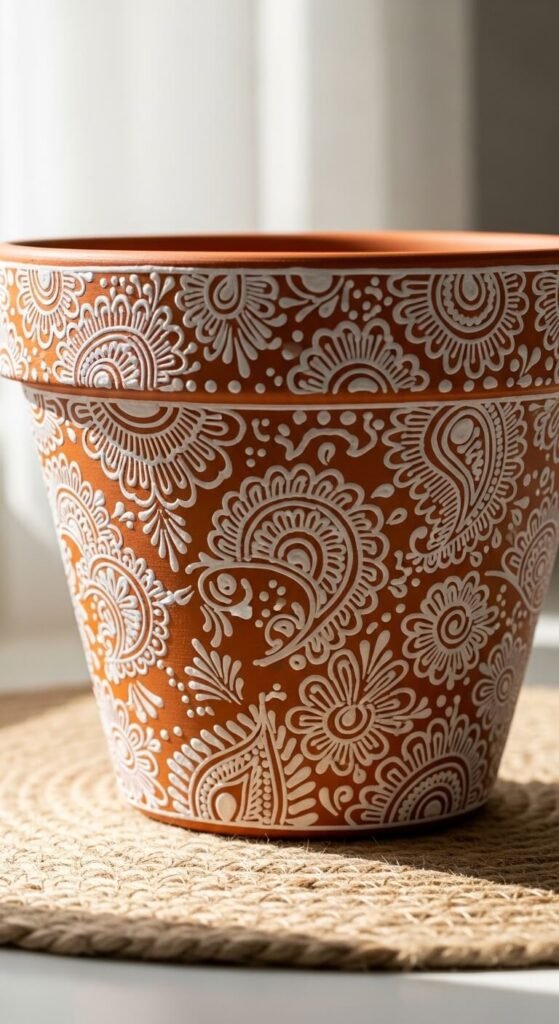
Use a white paint pen or a thin brush with white acrylic paint to draw henna-inspired patterns across the outside of a terracotta pot. Think flowing vines, small flowers, teardrop shapes, and repeating dot borders. You don’t need to plan it perfectly — these patterns naturally look organic when drawn freehand. Work in sections so you don’t smudge wet paint. A white paint pen costs about $2 to $3 and gives you much better line control than a brush. The result is a detailed, artisan-looking pot that could easily sell at a craft market.
23. Terracotta Pot Fairy Light Display
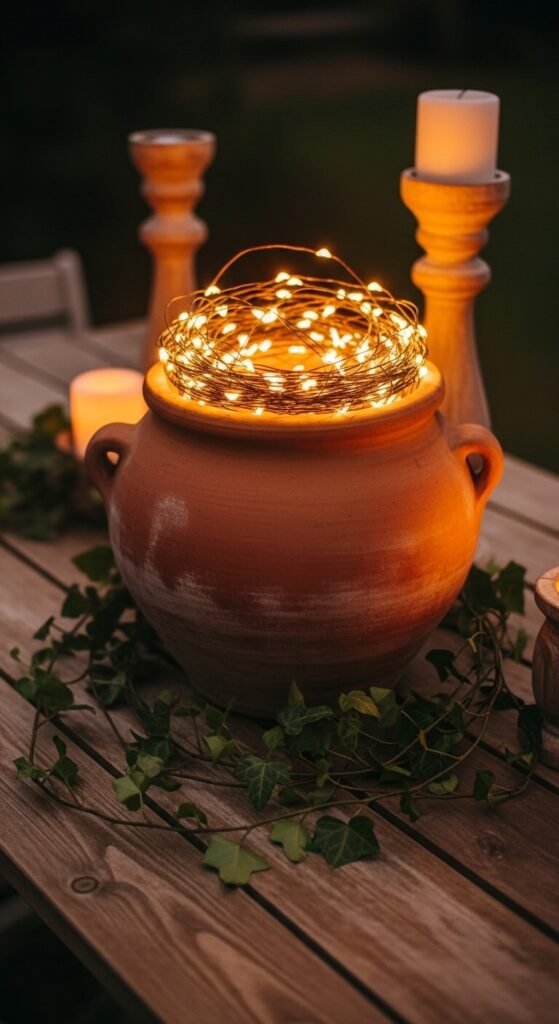
Fill a large terracotta pot with a loose, coiled string of warm white or amber fairy lights. Leave the pot unplugged and run the cord out of the drainage hole. Plug it in at night. The pot glows from within with a soft, amber warmth that the clay texture amplifies beautifully. Add dried flowers, pine cones, or trailing fake ivy around the top opening for extra texture. This works on patios, inside on shelves, or as a table centerpiece. A basic set of fairy lights costs about $5 to $8. The effect far outweighs the cost.
24. Terracotta Pot Cactus and Gravel Garden
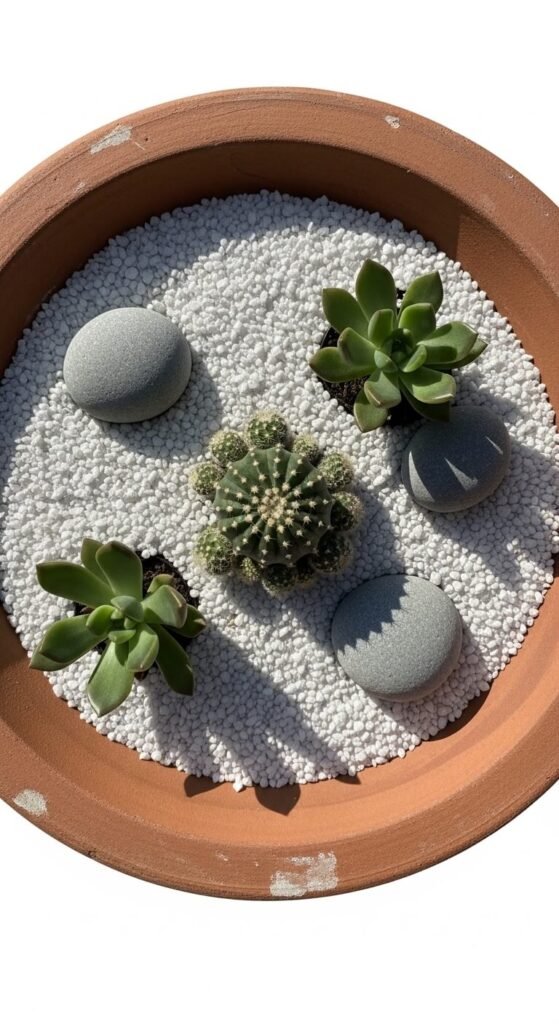
Fill a wide, shallow terracotta bowl with a thin layer of cactus mix soil, then top with fine white or buff-coloured gravel. Plant three to five small cactus or succulent varieties, spacing them asymmetrically for a natural feel. Press a few smooth river stones into the gravel to add contrast. The result is a miniature desert landscape that needs watering only once every two to three weeks. Wide, shallow terracotta bowls are often found cheaply at pottery or garden clearance sales. This looks striking on a desk, outdoor table, or a sunny bathroom windowsill.
25. Tiered Terracotta Pot Plant Stand
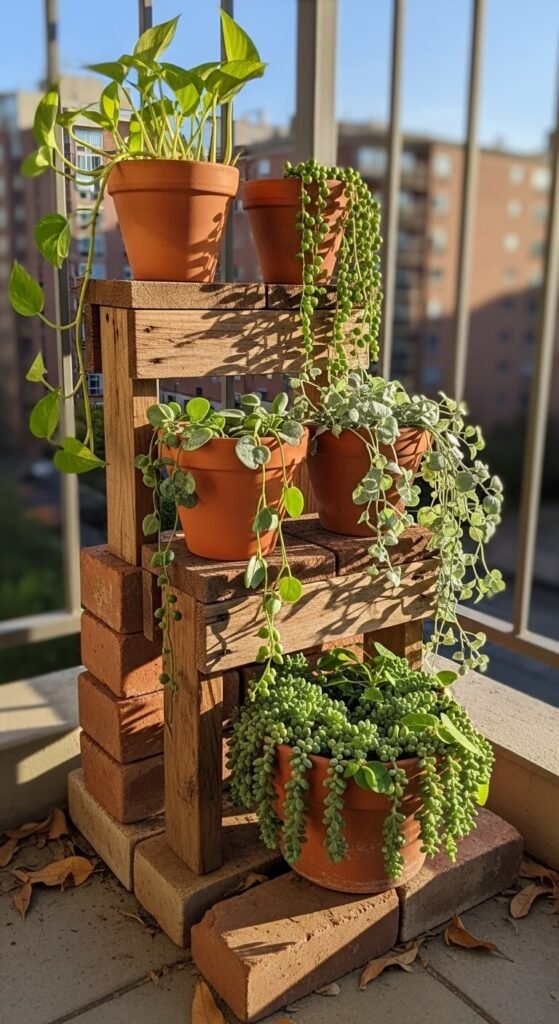
Build a simple tiered display using stacked bricks and wooden planks to create two or three shelves. Place terracotta pots of varying sizes across each level. The tallest plants go on the bottom tier; trailing plants go on the top so they can cascade downward. The whole structure can be assembled without tools in under 30 minutes. Reclaimed bricks cost nothing if you salvage them. Old scaffold boards from a builder’s yard work perfectly as shelves. This approach turns even a narrow balcony into a layered, lush planting wall that looks like it was designed by a professional.
Conclusion
Terracotta pots are one of the most honest and grounding materials you can bring into your home or garden. They don’t pretend to be anything other than what they are — simple, humble, sun-dried clay. And that’s exactly what makes them so powerful. The 25 ideas above range from a 10-minute kitchen project to a weekend-long garden build, and every single one of them is affordable enough to try without hesitation. Start with one idea. Use a pot you already own. Paint it, stack it, break it, or hang it. The best terracotta displays always look like they happened naturally, over time, by someone who was paying attention. That person can be you.