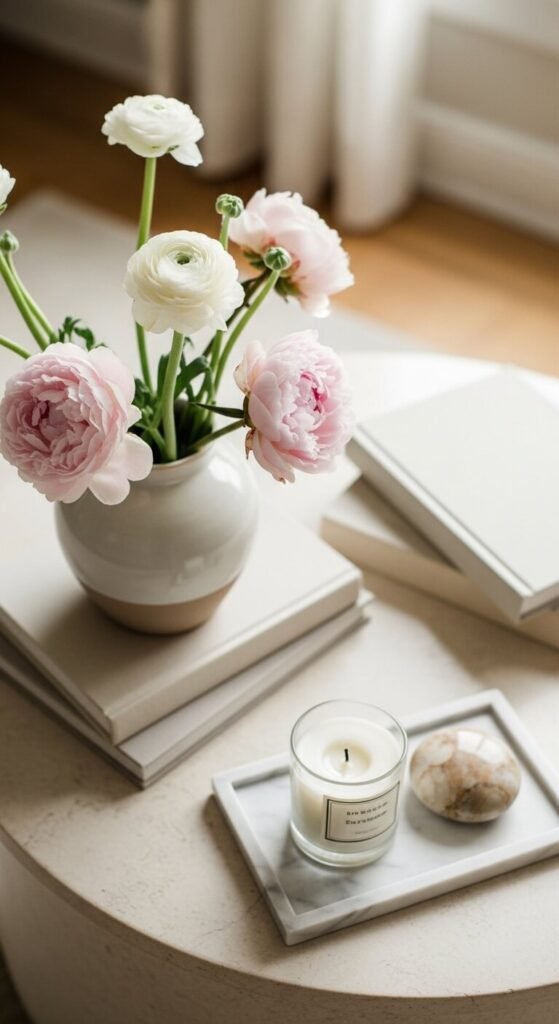
Spring is the perfect excuse to rethink your coffee table. After months of heavy throws and dark candles, your living room is ready for something lighter, airier, and more alive. The good news? You don’t need a big budget or a design degree to pull it off. A few thoughtful swaps — some flowers here, a tray there — can completely change how your space feels. This guide walks you through 26 simple, stylish tricks to style your coffee table for spring, with real ideas you can act on today.
1. Start With a Tray as Your Foundation
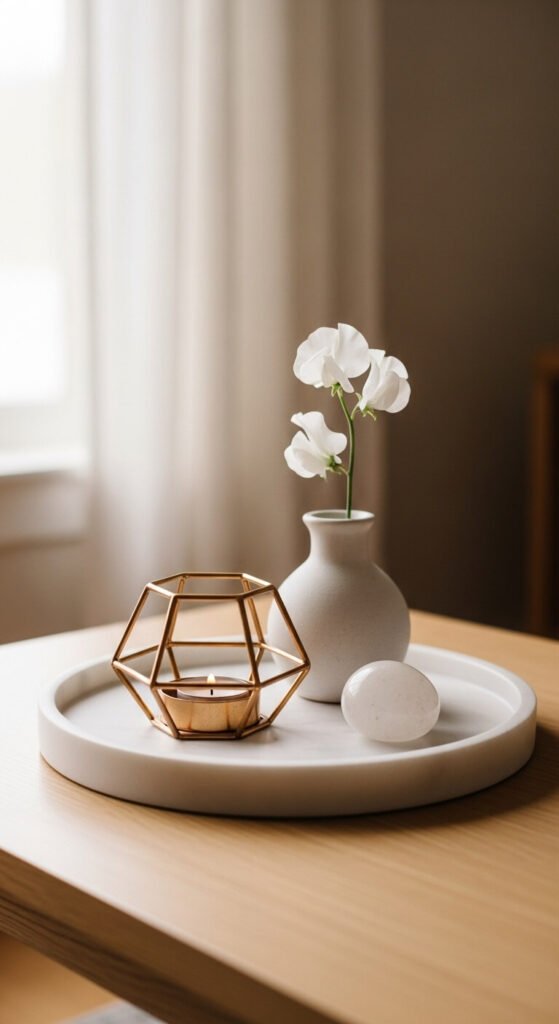
A tray is the easiest way to make your table look intentional. It defines a zone and keeps things from looking scattered. Go for marble, rattan, or painted wood depending on your existing décor. You can find great options at thrift stores for under $10. Once you have your tray, everything placed inside it instantly looks curated. Think of it as a stage for your smaller pieces. Start here before adding anything else.
2. Bring in One Statement Bloom
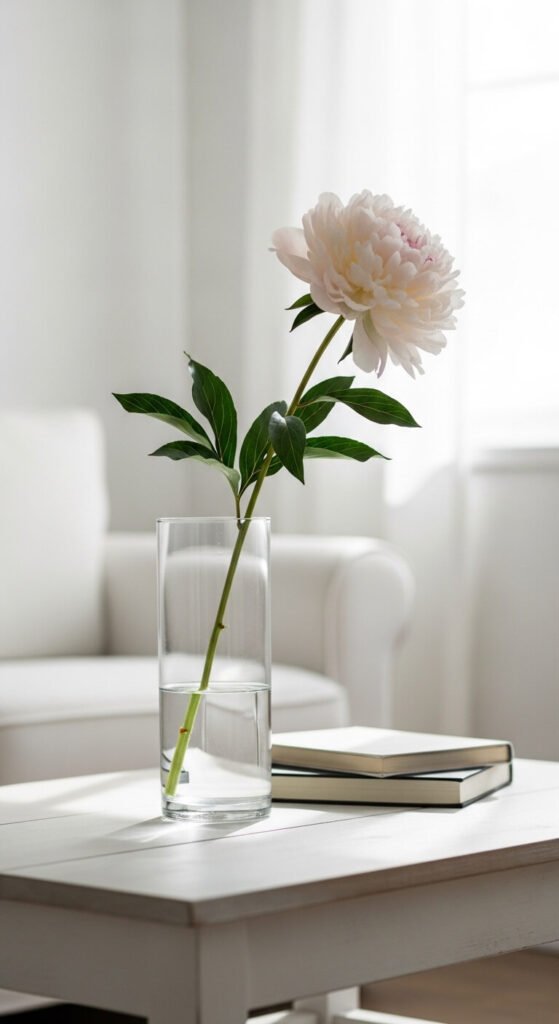
You don’t need a full bouquet to make an impact. One big, beautiful bloom in a simple vase does the job. A peony, a ranunculus, or even a grocery store tulip can look stunning on its own. Choose a vase that’s proportional — not too tall, not too wide. Clear glass keeps it modern. A colored ceramic adds warmth. Swap the stem weekly to keep things feeling alive. This is the most affordable spring update you can make.
3. Layer Books for Height and Texture
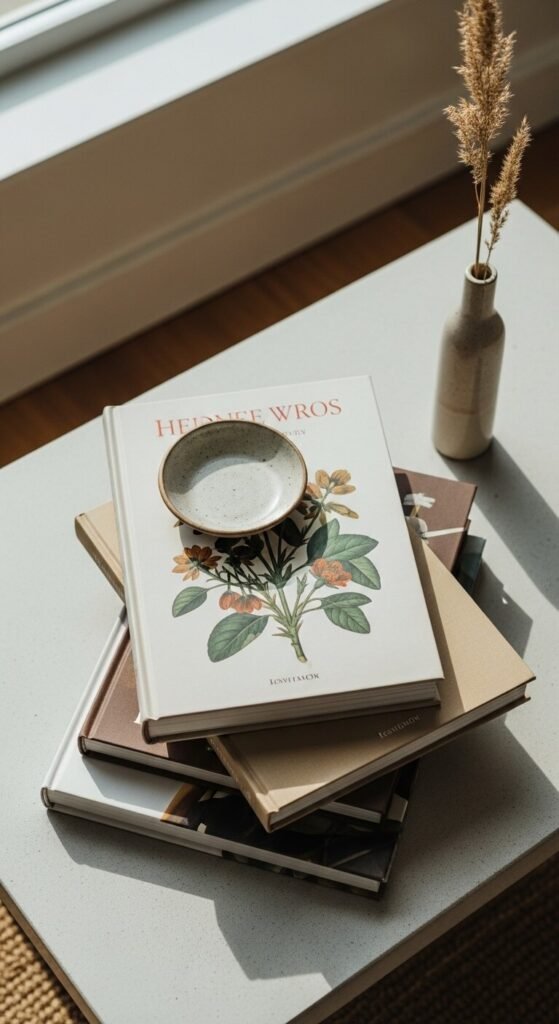
Books aren’t just for reading — they’re a styling tool. Stack two or three with contrasting spines facing outward to add visual interest. Look for covers in soft spring tones: sage, blush, cream, or terracotta. Place a small object on top — a candle, a crystal, or a tiny dish — to build height. Thrift stores and library sales are full of beautiful books for a dollar or two. The stack doesn’t need to match your genre interests; it just needs to look good.
4. Add a Small Potted Plant
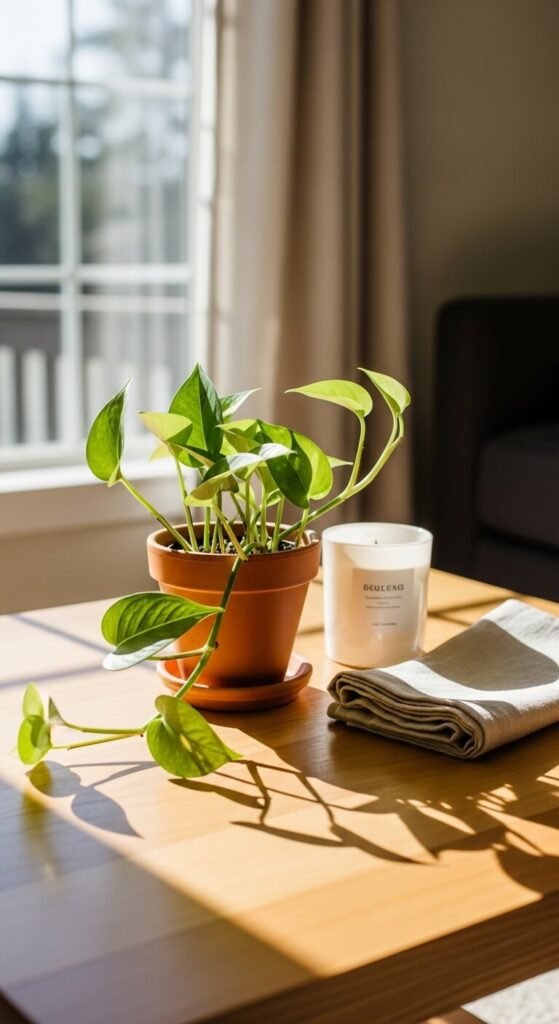
A live plant signals spring more than almost anything else. Small potted plants like succulents, moss balls, or trailing pothos are low-cost and low-maintenance. A $4 plant from a hardware store works just as well as something from a boutique nursery. Place it slightly off-center so it doesn’t block sightlines across the table. Terracotta pots give a natural, grounded look. If you’re worried about water rings, set the pot on a small ceramic saucer or cork coaster.
5. Use a Linen or Cotton Runner
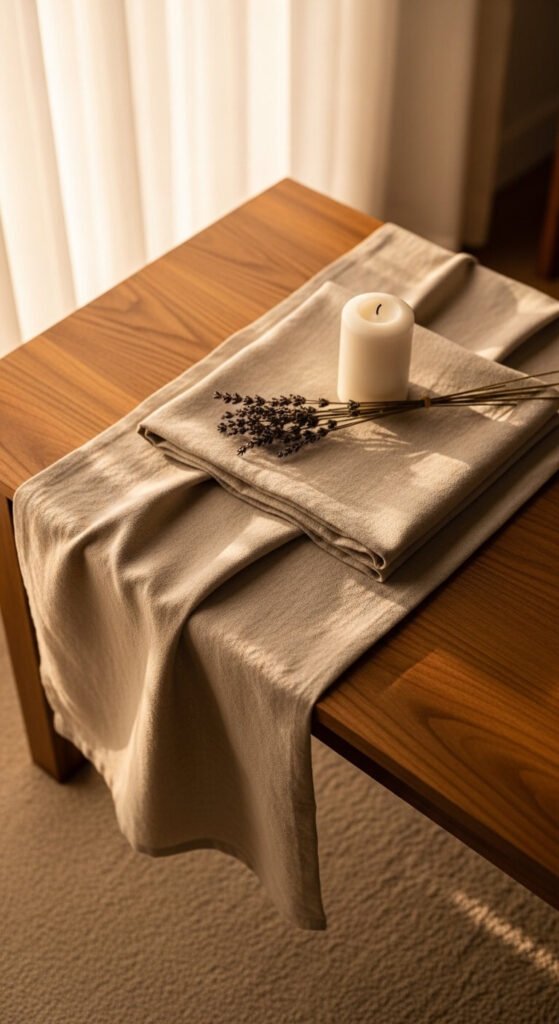
A fabric runner adds softness and color without much effort. Look for linen or cotton in spring-friendly shades — dusty sage, warm white, or light terracotta. Fold it loosely rather than laying it flat for a more relaxed, lived-in look. This works especially well on dark wood tables where you want to lighten things up. A $5 dish towel or tea towel from the kitchen can double perfectly as a runner. No sewing or crafting required.
6. Swap Heavy Candles for Slim Tapers
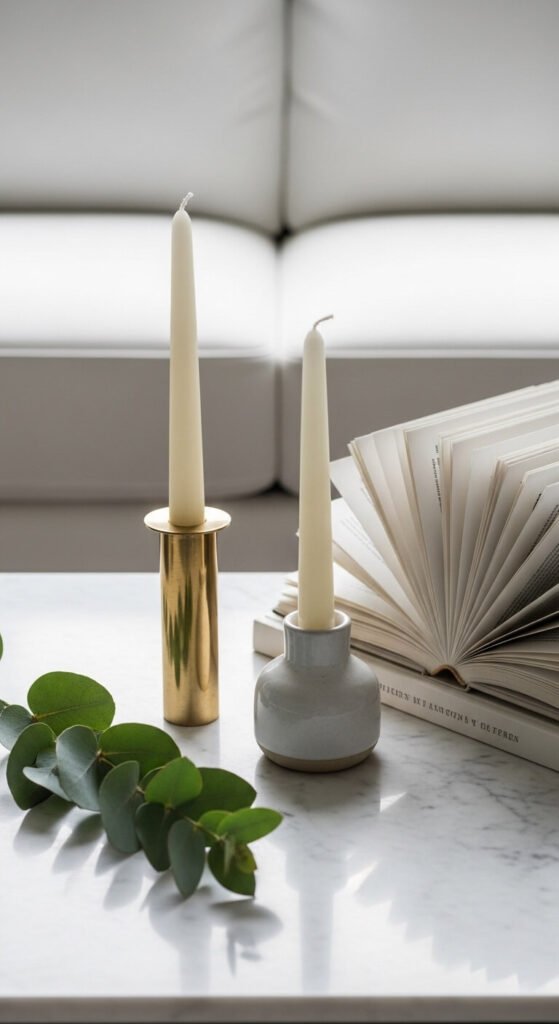
Big chunky candles feel like winter. Slim taper candles in soft spring colors — blush, sage, or warm white — instantly feel lighter and more seasonal. You don’t need a fancy candle holder; a simple ceramic one from a dollar store works. Pair two different heights for a dynamic look. Keep them unlit during the day — they look beautiful as decor even without a flame. This swap costs almost nothing and makes a noticeable difference.
7. Introduce a Natural Element Like a Stone or Shell
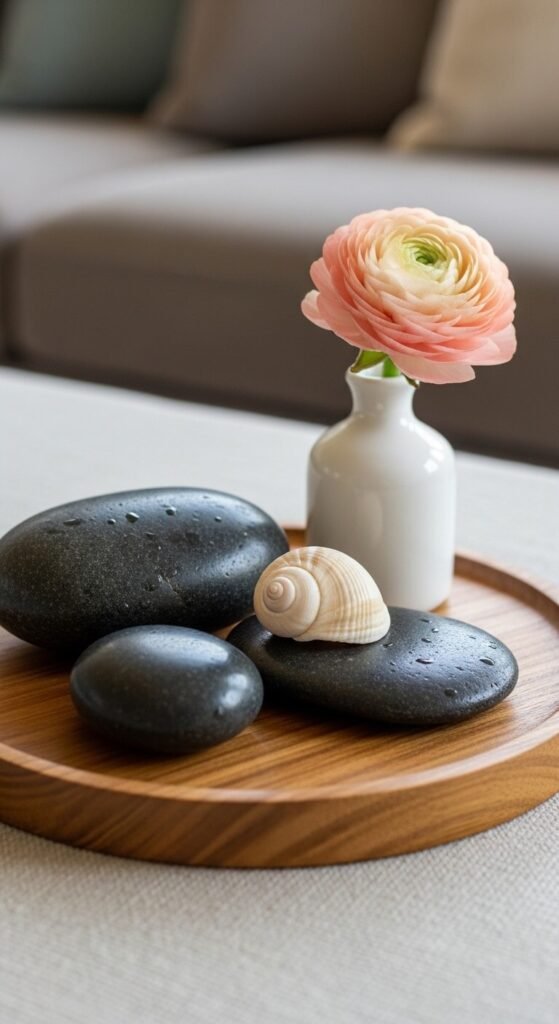
Nature-inspired objects ground a styled table and keep it from feeling too precious. Smooth stones, shells, or a piece of driftwood add organic texture without costing anything. Collect them on a walk or pull them from a jar on your windowsill. Arrange a small cluster inside your tray rather than scattering them. The contrast between something rough and natural next to a polished vase or candle creates an interesting visual balance. This works in any style of home.
8. Go Tonal With Your Color Story
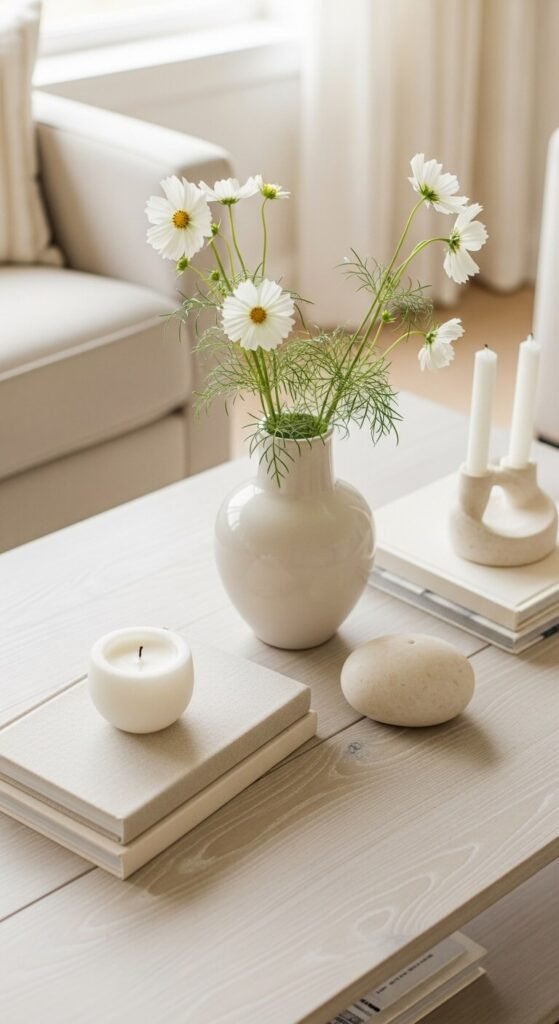
One of the easiest ways to make your table look intentional is to pick two or three colors and stick to them. For spring, try pale blush and white, sage and cream, or terracotta and dusty pink. When everything shares a tonal story, it feels curated rather than cluttered. You don’t need to buy new things — just pull pieces from around your home that share a similar palette. Swap out anything that pulls the eye in the wrong direction.
9. Use a Small Ceramic Dish for Everyday Items
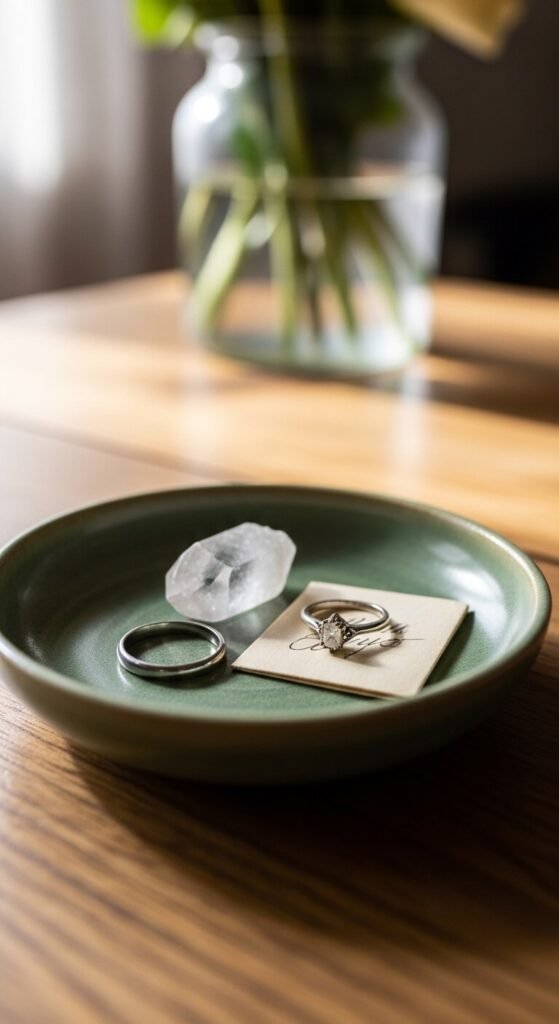
A small ceramic dish serves two purposes — it looks good and keeps your table functional. Use it to corral small everyday items like a TV remote, keys, a lip balm, or crystals. This keeps the surface tidy without making the table feel sterile. Look for handmade or artisan-style dishes at thrift shops or markets. Irregular shapes and matte glazes look especially good. A $3 dish from a secondhand store can look like something you paid $30 for.
10. Add a Sprig of Dried or Fresh Eucalyptus
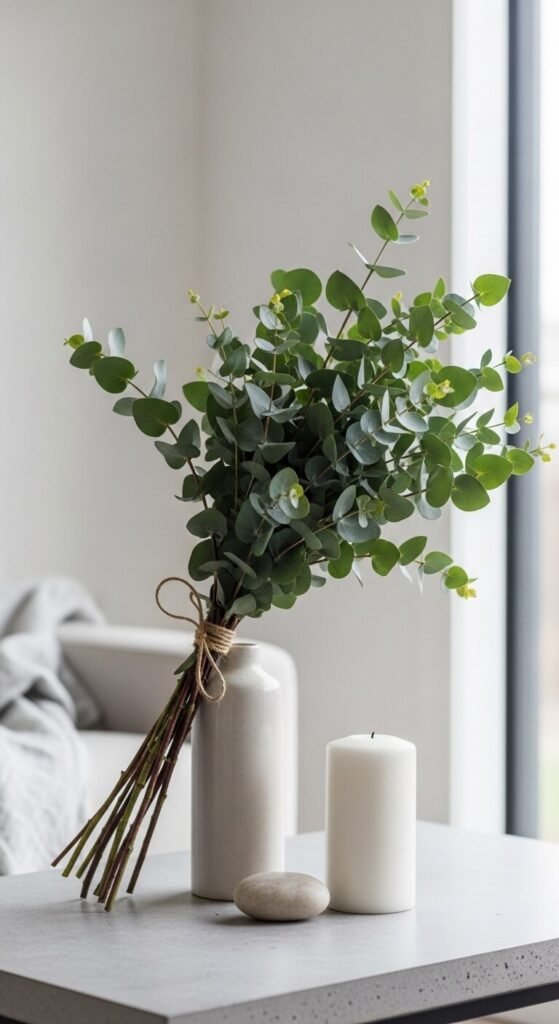
Eucalyptus is one of the most popular spring styling props for a reason — it smells incredible, it looks elegant, and it lasts for weeks. A small bunch laid loosely on a tray or tucked into a narrow vase adds color and scent without overpowering the space. Fresh bundles cost around $3–5 at most grocery stores. As it dries, it holds its shape and keeps a soft silver-green color. You can also spray paint dried stems in gold or white for a different seasonal look.
11. Try a Low, Wide Bowl as a Centerpiece
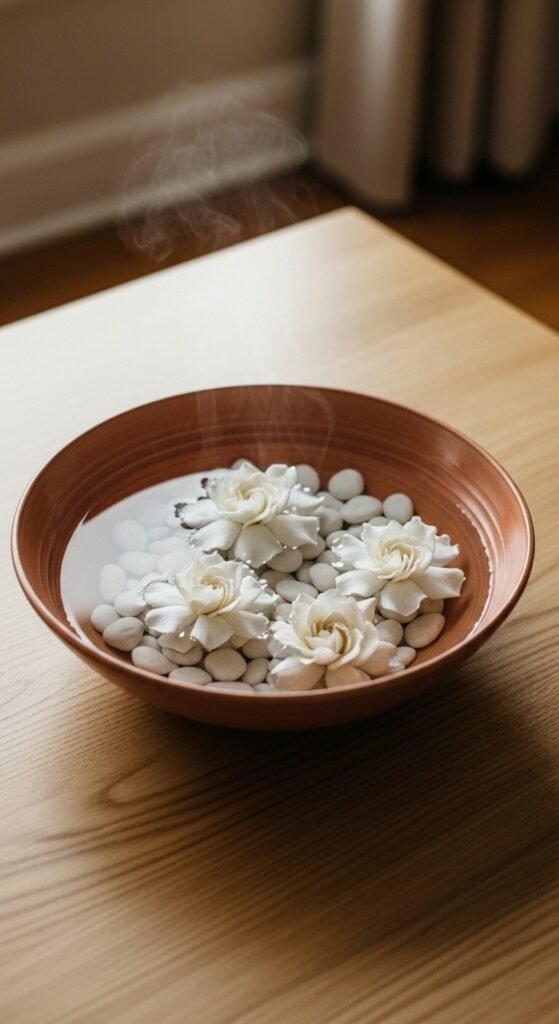
A wide, low bowl feels very spring — it has an open, almost garden-like quality. Fill it with smooth pebbles and floating flowers, potpourri, decorative moss, or even a few pillar candles. Look for shallow ceramic or wooden bowls at thrift stores. The low profile keeps sightlines open across the table, which matters if you also have a TV or sofa nearby. This works as a standalone centerpiece or as the anchor inside a tray.
12. Play With Scale — Big and Small Together
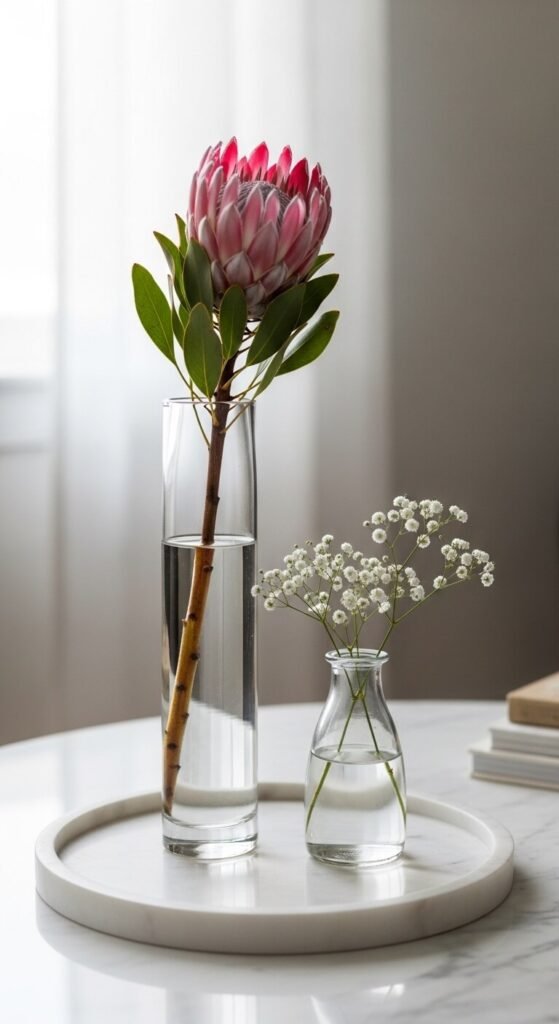
Good styling always has variety in scale. Pair one tall object with one or two small ones to create visual rhythm. A tall vase next to a short candle and a tiny dish feels balanced. Everything at the same height looks flat and uninteresting. You don’t need to buy anything new — experiment with what you already own. Move things around until the grouping feels right. The contrast in height is what makes a table look professionally styled.
13. Use a Small Framed Print or Postcard
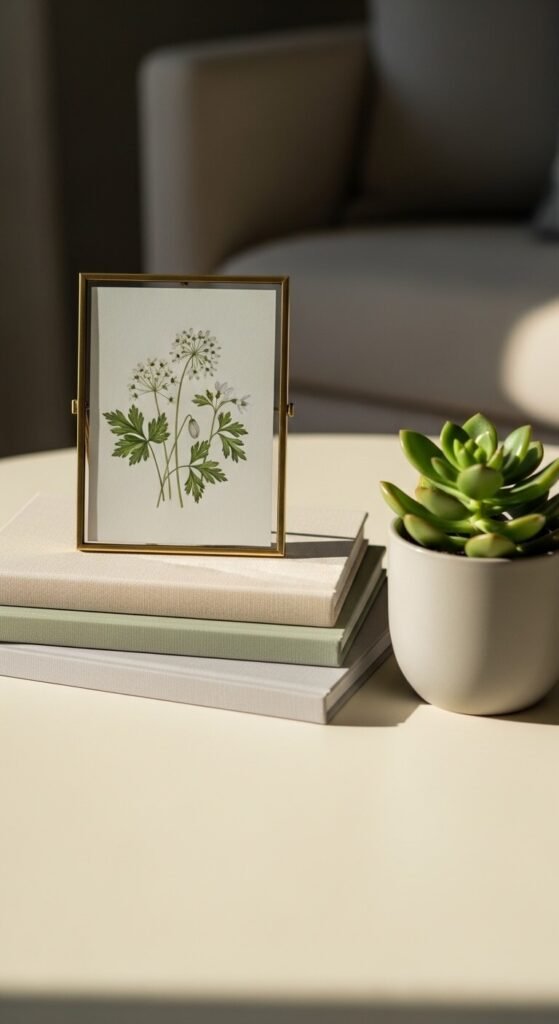
A framed print adds a personal, artistic touch without taking up much room. Lean a small frame against your book stack rather than standing it upright — it looks more relaxed and intentional. Look for botanical prints, a postcard, or a pressed flower page from an old magazine. Free printable art is available online — just print and frame. A $1 thrift store frame painted white or gold works beautifully. Swap the print seasonally to keep things feeling current.
14. Style With an Odd Number of Objects
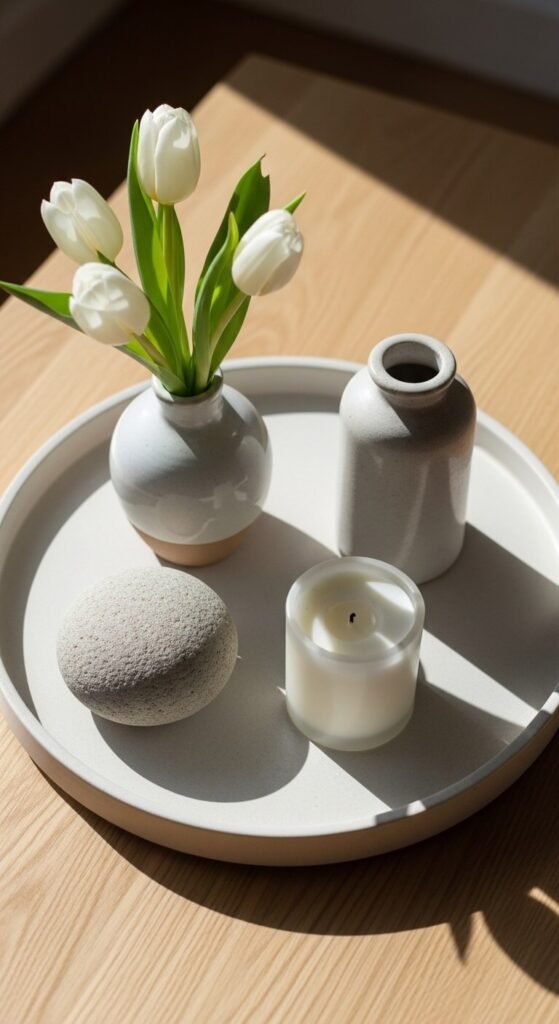
This is one of the most reliable design rules: odd numbers look better than even. Three objects look more natural than four. Five feels more dynamic than six. The eye moves more fluidly across an asymmetrical grouping. Try a vase, a candle, and a stone. Or a book stack, a small plant, and a dish. Keep some empty space around the grouping so the objects can breathe. Overcrowding kills the look — editing is just as important as adding.
15. Incorporate a Pastel or Spring-Toned Candle
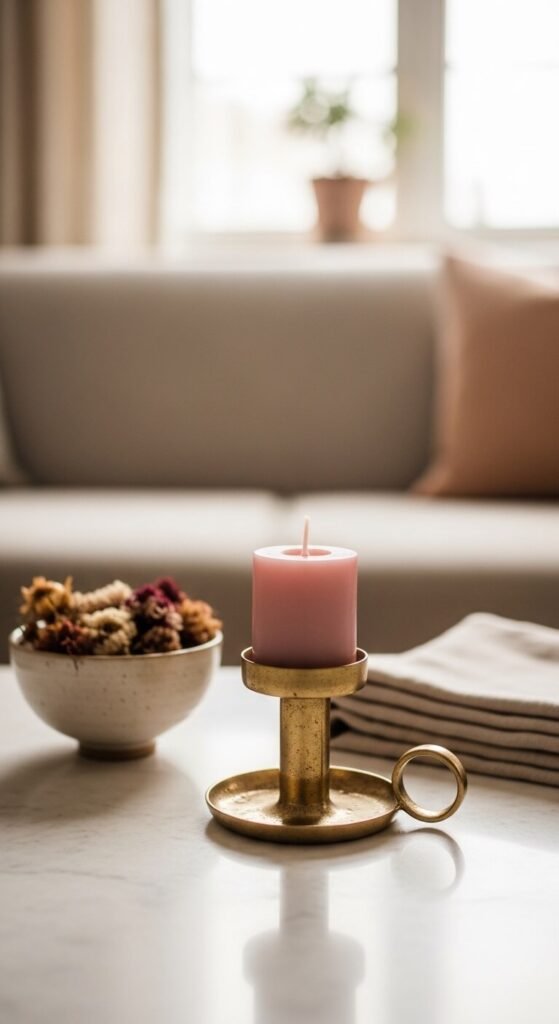
Candles are a go-to styling element because they add warmth and height at a low cost. Spring-toned candles — blush, dusty lilac, soft butter yellow, or sage green — instantly shift the palette of your table. Look for them at HomeGoods, Target, or dollar stores. Don’t just choose based on color; check the height too. A short, wide candle feels grounding. A tall, slim one adds drama. Mix one of each for a balanced look. Unlit candles still look great as daytime decor.
16. Add a Mini Succulent Arrangement
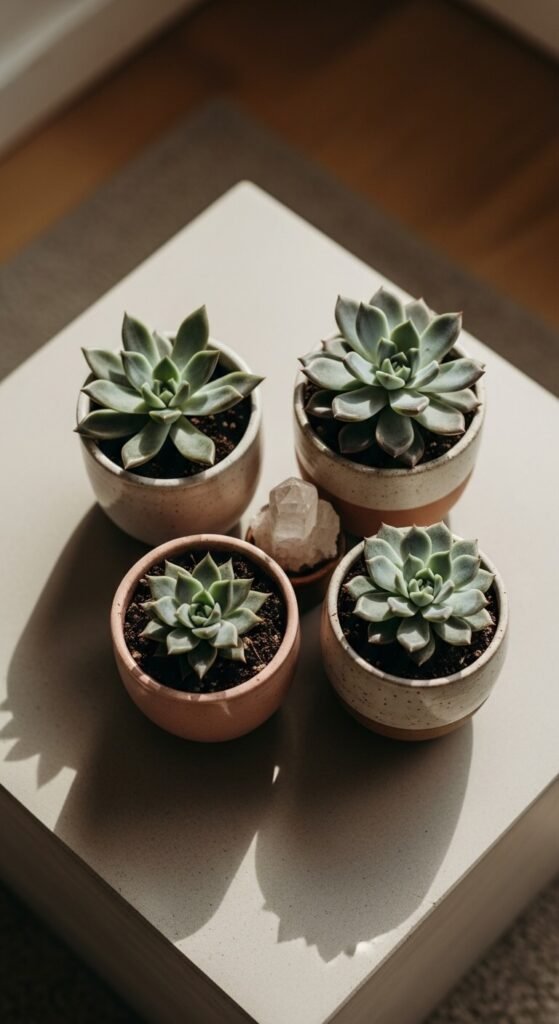
Succulents are the easiest plants to style with because they’re affordable, low-maintenance, and come in beautiful shapes. A cluster of three to four tiny pots grouped together looks far more impactful than a single plant. Mix different species for texture — a spiky one, a rosette, and a trailing one work well together. You can find mini succulents at hardware stores and garden centers for $2–4 each. Keep them in their original nursery pots and drop them into small ceramic containers for a quick upgrade.
17. Bring in Something Handmade or Artisan
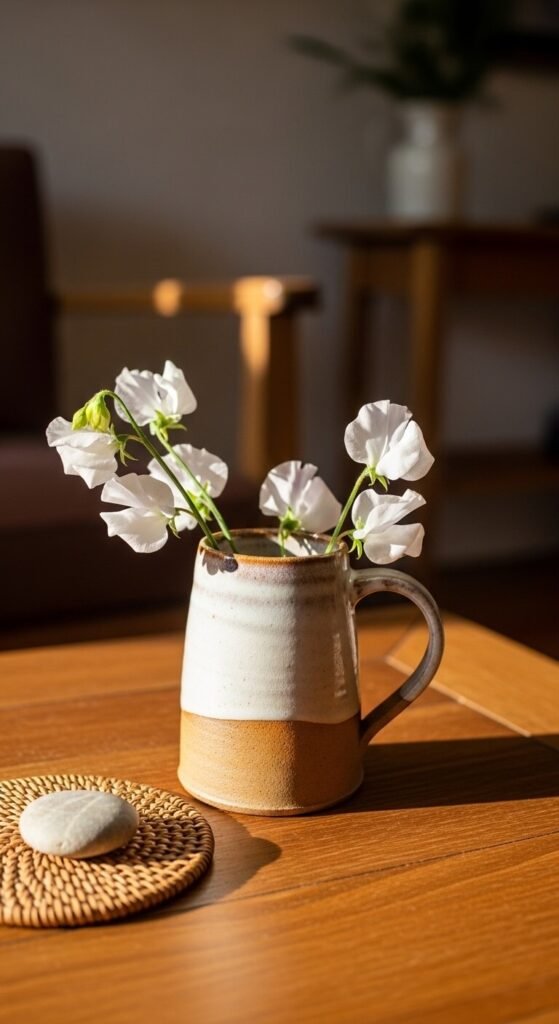
Mass-produced items can make a table feel generic. Adding one handmade piece — a thrown ceramic, a woven basket, a hand-dipped candle — gives the whole setup a soul. Check Etsy, local markets, or even your own cupboards for things with texture and imperfection. A hand-thrown mug makes a perfect bud vase. A woven coaster acts as a tiny tray. You don’t need to spend a lot — the artisan quality reads from across the room and makes the whole table feel more personal.
18. Use Pressed Flowers as a Styling Accent
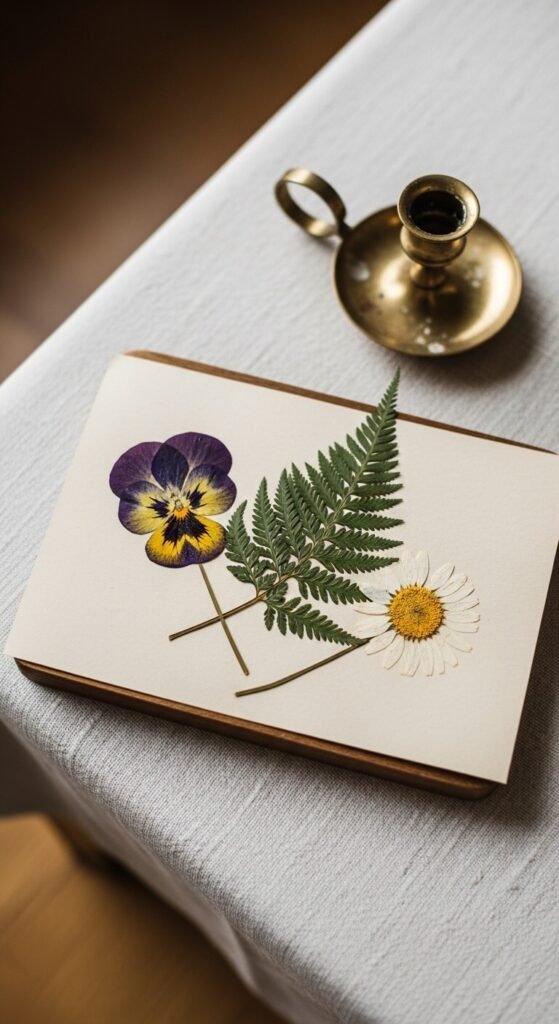
Pressed flowers are a free or nearly free way to bring spring into your home. Collect blooms from your garden or a walk, press them between heavy books for two weeks, then arrange them on a small tray, a board, or inside a frame. Pansies, daisies, ferns, and clover all press beautifully. Lay a few out directly on your tray as a decorative flat lay. This is a great project to do with kids, and it gives your table something genuinely unique and personal.
19. Lean Into Natural Materials
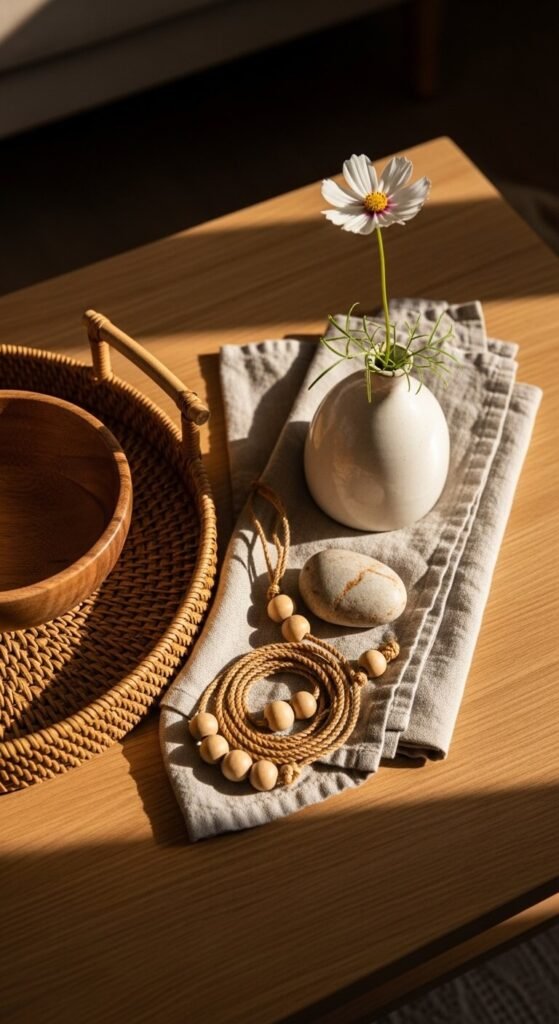
Spring styling doesn’t always mean pastels and florals. A natural material palette — rattan, jute, raw wood, linen, stone — works beautifully and feels deeply organic. Mix textures: something woven, something smooth, something rough. A rattan tray, a wooden bowl, and a linen runner together create a calm, earthy look. These materials also tend to be affordable and widely available at thrift stores. The beauty of natural materials is that they age well and never really go out of style.
20. Create a Scent Story With Candles and Botanicals
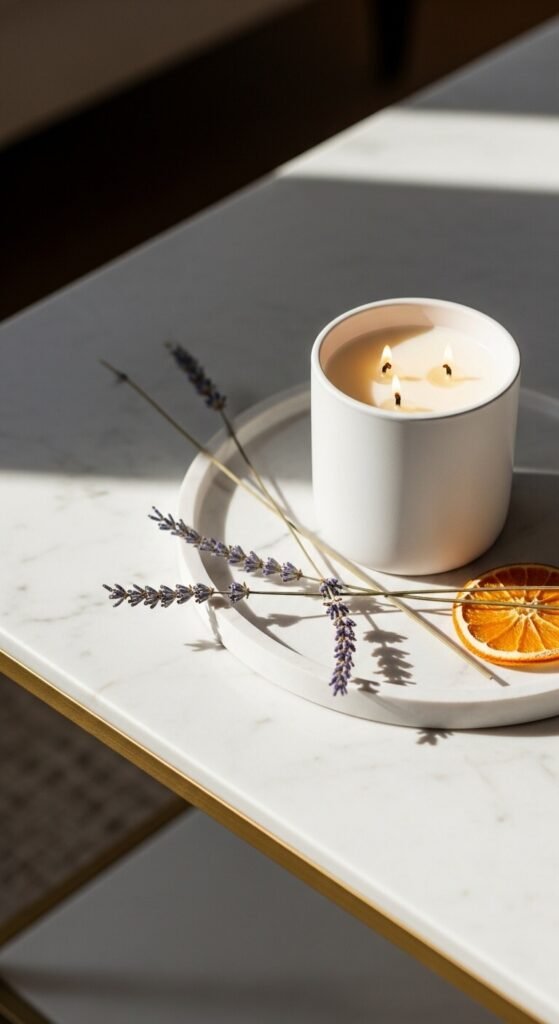
Spring is as much about how a space smells as how it looks. Pair a lightly scented candle with a botanical element — a bundle of lavender, a dried citrus slice, or a sprig of rosemary — to build a layered scent experience. Look for candles with spring-appropriate notes: linen, white tea, green fig, or light florals. Dried lavender bundles cost almost nothing at craft stores or farmers markets. Lay one alongside a candle on a tray for a simple, sensory-rich vignette.
21. Try a Single Color in Multiple Shades
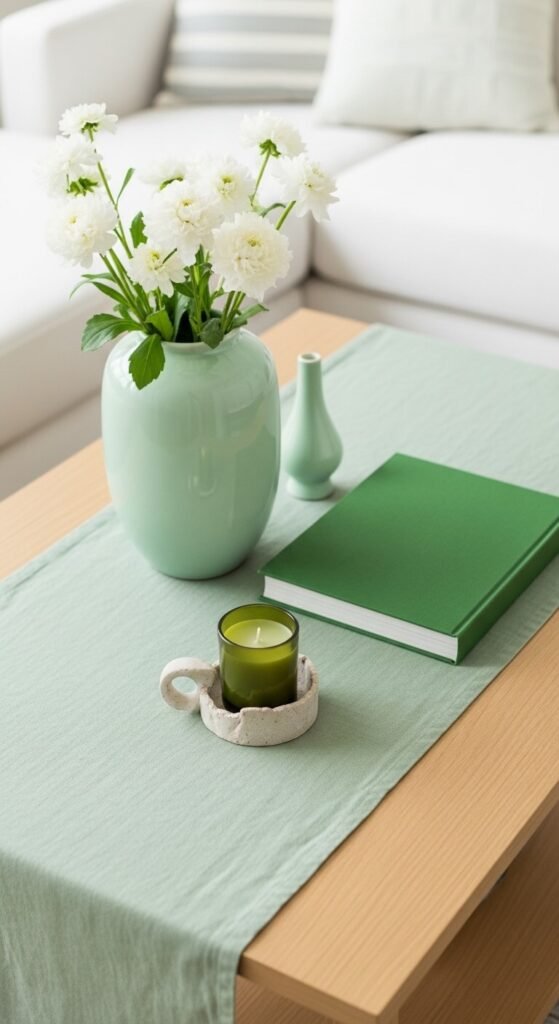
A monochromatic approach is one of the most effective styling tricks. Pick one color — sage green, dusty pink, soft terracotta — and layer it in different shades and materials. A sage candle, a mint vase, and a forest green book spine together look cohesive and intentional without being matchy. This strategy works even when your pieces don’t perfectly match because the shared hue ties everything together. It’s also an easy way to introduce seasonal color without committing to a major home update.
22. Add a Small Woven or Rattan Basket
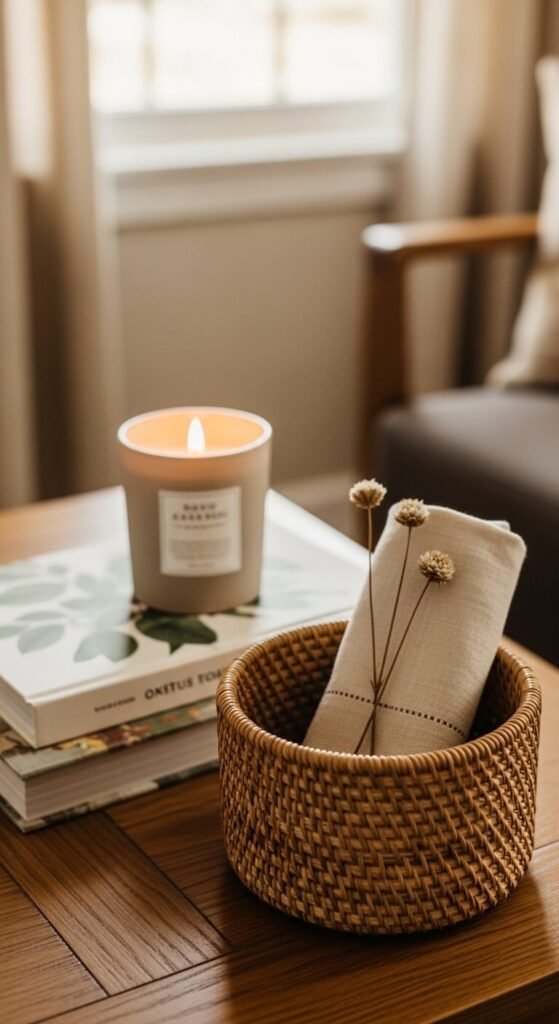
A small woven basket adds texture and function in one piece. Use it to hold remotes, a phone charger, or extra coasters — or leave it empty as a pure styling prop. Rattan and seagrass baskets photograph beautifully and work in almost any interior style. You can find them at thrift stores, IKEA, or craft fairs for a few dollars. The woven texture contrasts nicely against smooth ceramic or glass pieces. It also helps reduce visual clutter by giving loose items a home.
23. Use White Space Deliberately
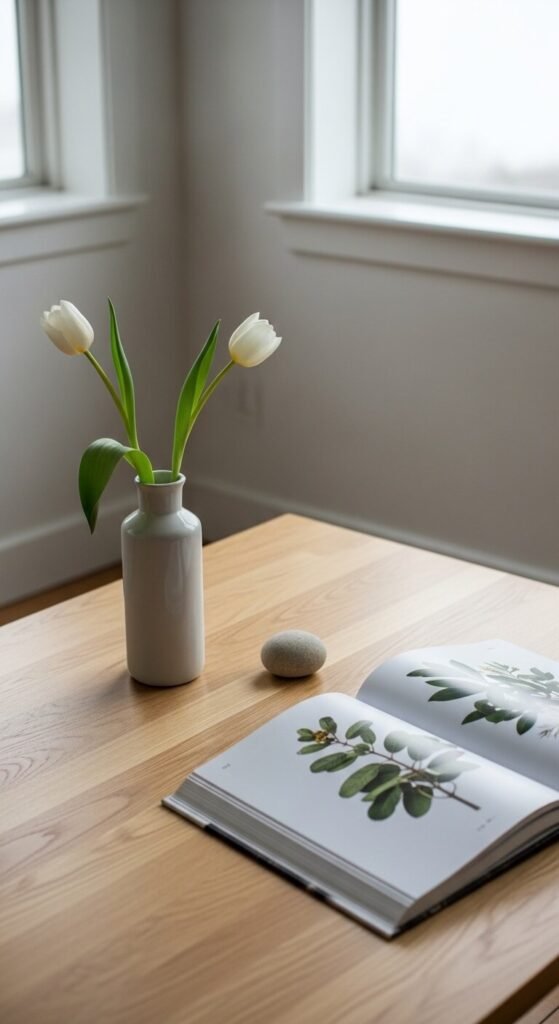
Less is more — especially in spring. Leaving empty space on your table is a design choice, not a failure to fill it. The objects you do place will have more visual weight and impact when they’re not competing for attention. Aim to cover no more than 60–70% of the surface. If it looks too sparse to you at first, give it 10 minutes — your eye will adjust. Editing your table down to only the most beautiful pieces is the single most effective trick in this entire list.
24. Mix Matte and Glossy Finishes
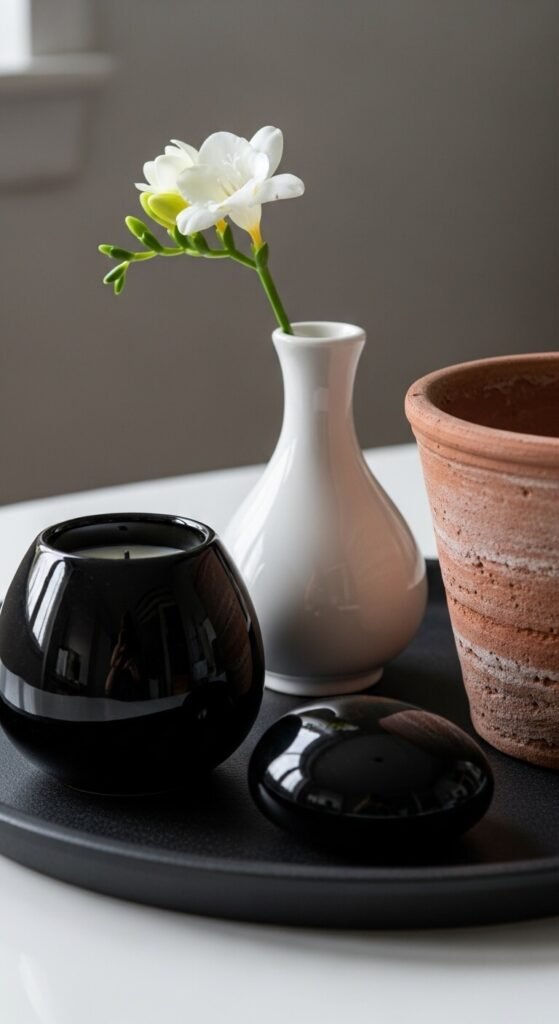
Surface finish creates subtle but real visual depth. Pairing matte and glossy pieces adds dimension that a single-finish grouping lacks. A matte ceramic candle beside a glossy bud vase. A rough stone next to a polished tray. The contrast keeps the eye moving and makes the overall arrangement feel more layered. You don’t need to buy anything new — look at what you already own and consider which pieces could be paired to play up this contrast. Sometimes the best styling is just rearranging.
25. Bring in a Seasonal Color You Wouldn’t Normally Use
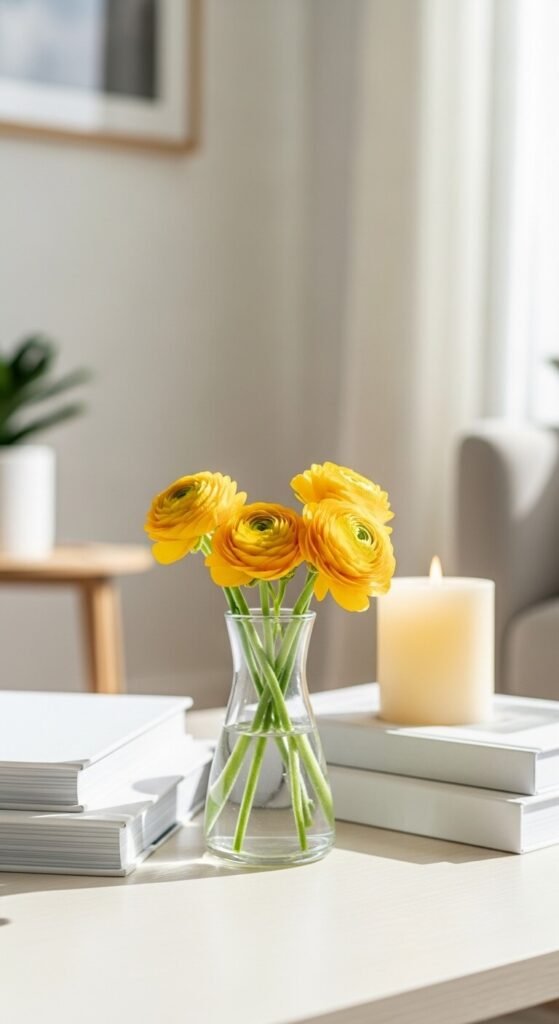
Spring is the right time to try a color you’ve been avoiding. If your home usually leans neutral, try a pop of warm yellow through a bouquet or a single candle. If you always default to white, test a soft terracotta. One bold color in a small dose — like a single stem or a single dish — adds energy without overwhelming the space. It doesn’t need to match anything else on the table. Sometimes one unexpected color is exactly what a room needs to feel new.
26. Edit Weekly to Keep It Feeling Alive
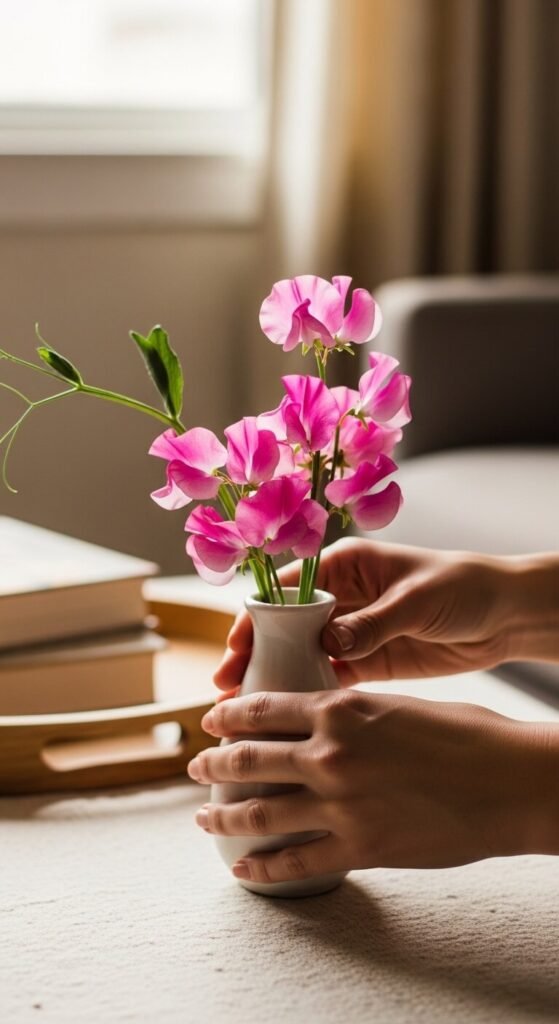
The most important habit in coffee table styling is editing regularly. Swap out a dead stem. Replace a candle that’s burned down. Rotate a different book to the top of the stack. Spending five minutes once a week refreshing your table keeps it from becoming invisible background noise. You don’t need to change everything — just one or two pieces. This habit is free, takes almost no time, and makes sure your table always feels intentional. A styled table is never truly finished; it’s always a work in progress.
Conclusion
Your coffee table is one of the first things people notice when they walk into your living room — and it’s one of the easiest places to make a real impression without spending much money. Spring styling is all about lightening up, bringing in natural elements, and choosing pieces that feel alive and intentional. Whether you start with a simple tray, a $3 stem of eucalyptus, or a candle in a softer color, every small change adds up. Pick two or three tricks from this list and try them this week. You’ll be surprised how much a freshly styled table changes the feel of the whole room.