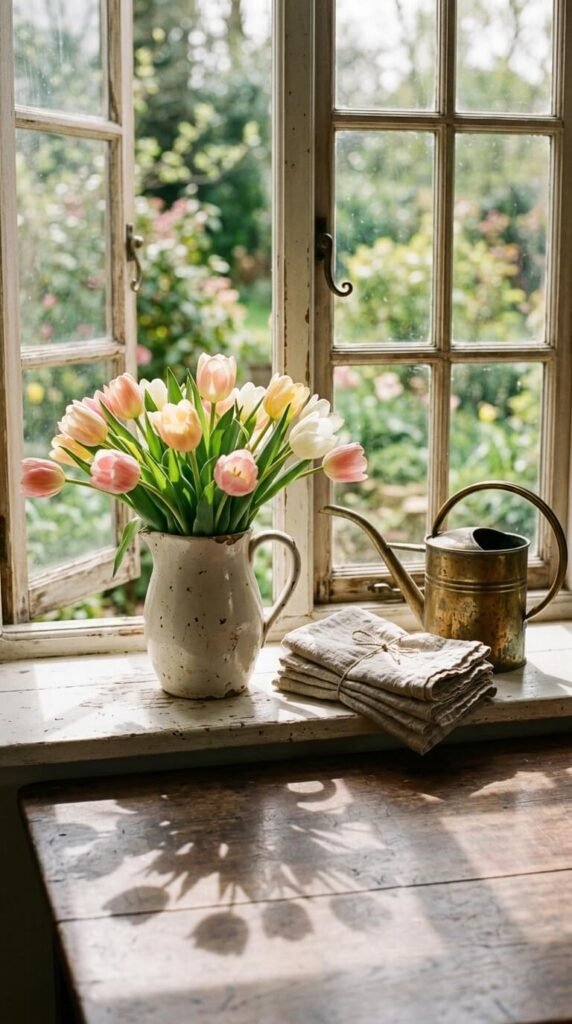
Spring cleaning always turns up something unexpected. A drawer sticks, and there’s grandma’s hand-painted teacup. A box in the attic holds a lace tablecloth nobody remembers buying. These small vintage treasures carry stories money can’t buy. This list rounds up 25 nostalgic spring finds worth hunting for, displaying, or repurposing around your home. Each one comes with a simple way to use it, so you’re not just admiring old things — you’re actually living with them. Whether you’re a thrift store regular or just cleaning out a relative’s garage, there’s something here for you.
1. Hand-Painted Ceramic Teacups
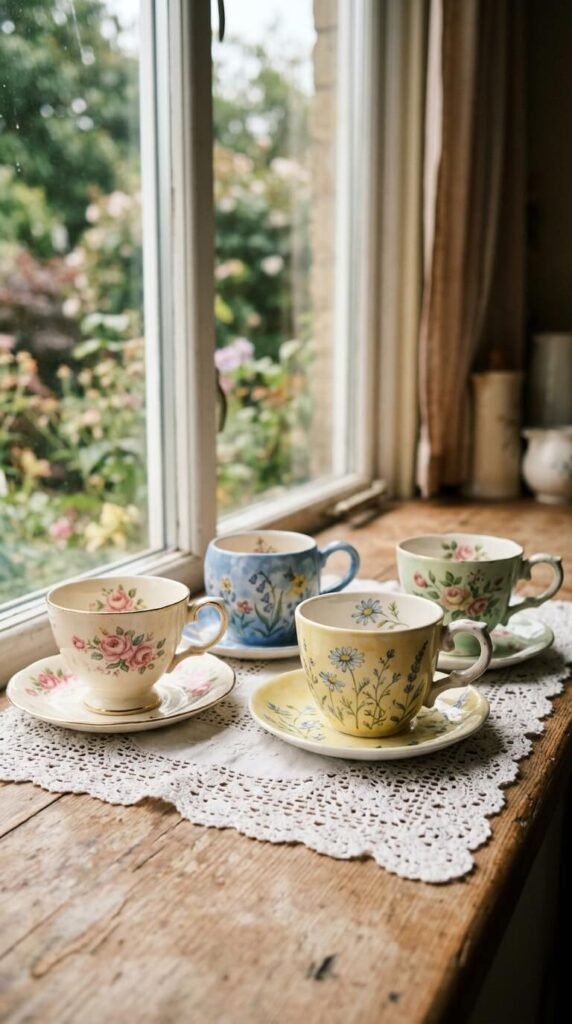
These little cups show up everywhere — estate sales, flea markets, even your own cupboard. Each one has a slightly different pattern, which is part of the charm. Mix and match them instead of hunting for a full set. Use them for morning coffee or as tiny planters for succulents. A cracked one still works as a spoon rest. Check thrift stores first; you’ll often find them for under two dollars each. Group five or six on an open shelf for an instant collected look. No two need to match — that’s the whole point.
2. Embroidered Linen Napkins
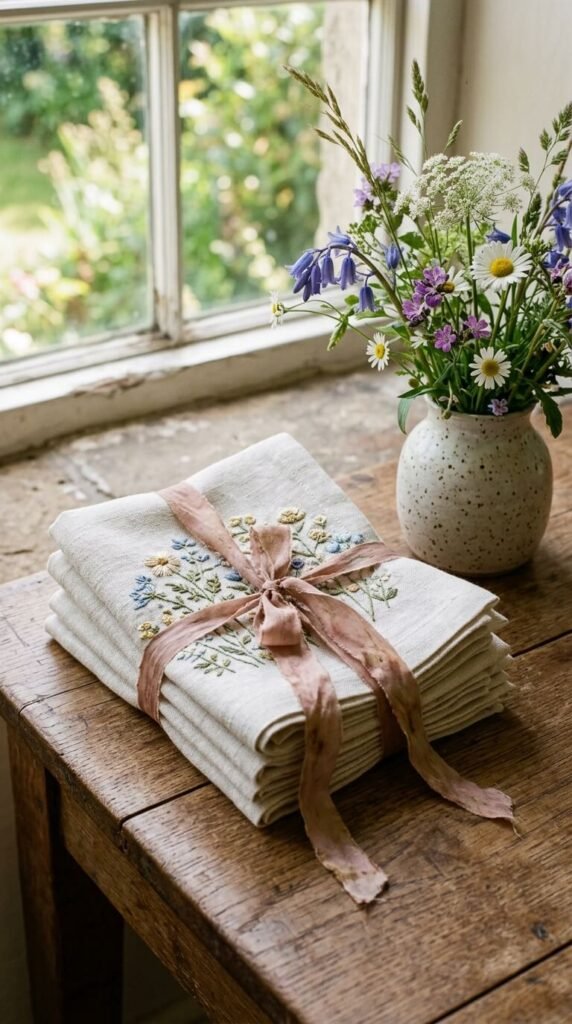
Old linens carry decades of small stitches nobody has time for anymore. Look for hand-embroidered edges at estate sales or in a relative’s linen closet. Even stained ones can be cut into smaller squares for coasters. Wash gently in cold water first. Iron flat and stack by color for a simple centerpiece display. They’re cheap too — often a dollar or two per napkin at a garage sale. Use them under a fruit bowl or fold beside spring place settings. Small details like this make a table feel lived-in rather than staged.
3. Weathered Wicker Baskets
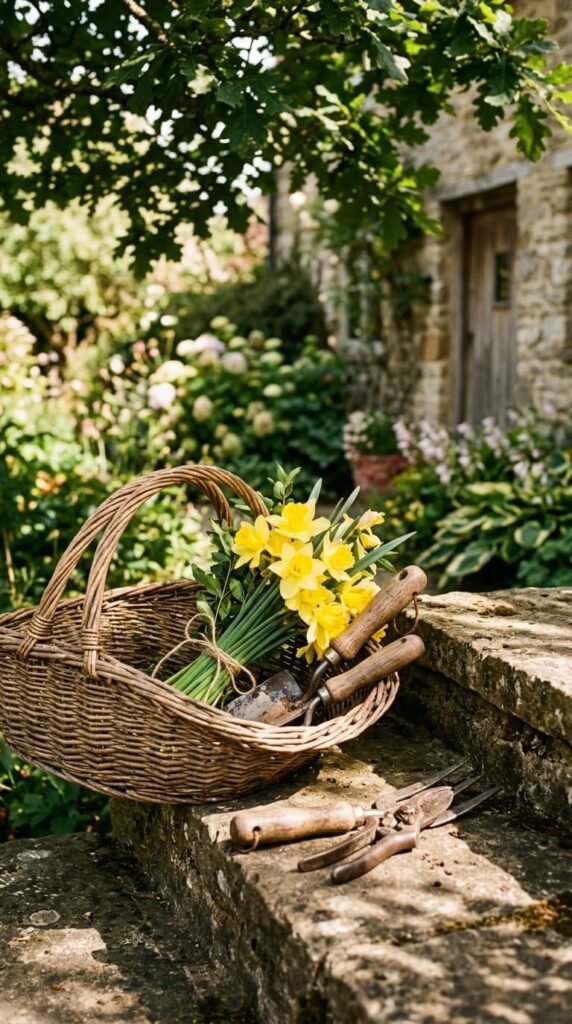
A worn wicker basket does more work than it gets credit for. Use one by the door for muddy garden gloves. Another can hold spring blankets on a porch bench. The frayed edges actually add character instead of ruining the look. If the handle is loose, a bit of twine fixes it fast. Thrift shops sell these for a few dollars, often overlooked next to newer plastic bins. Line the inside with a cloth napkin if it’s holding produce. Baskets like this age well — they only look better with more use.
4. Vintage Seed Packets
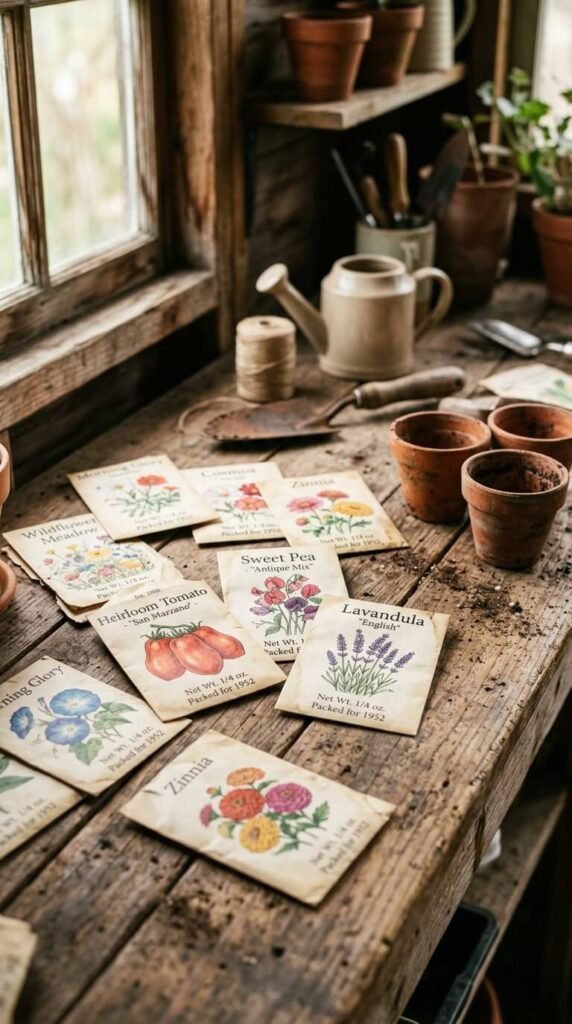
Old seed packets are tiny pieces of art nobody prints anymore. Frame a few in simple dollar-store frames for a kitchen gallery wall. Look for them tucked inside old cookbooks or garden sheds. Even empty ones work — it’s the illustration that matters. Group three or four together for a small grid display. If you find full packets, some seeds might still sprout; it’s worth a try in a spare pot. This is a budget project — most packets cost under a dollar at antique malls. Rotate them seasonally for something new each spring.
5. Chipped Enamelware Pitchers
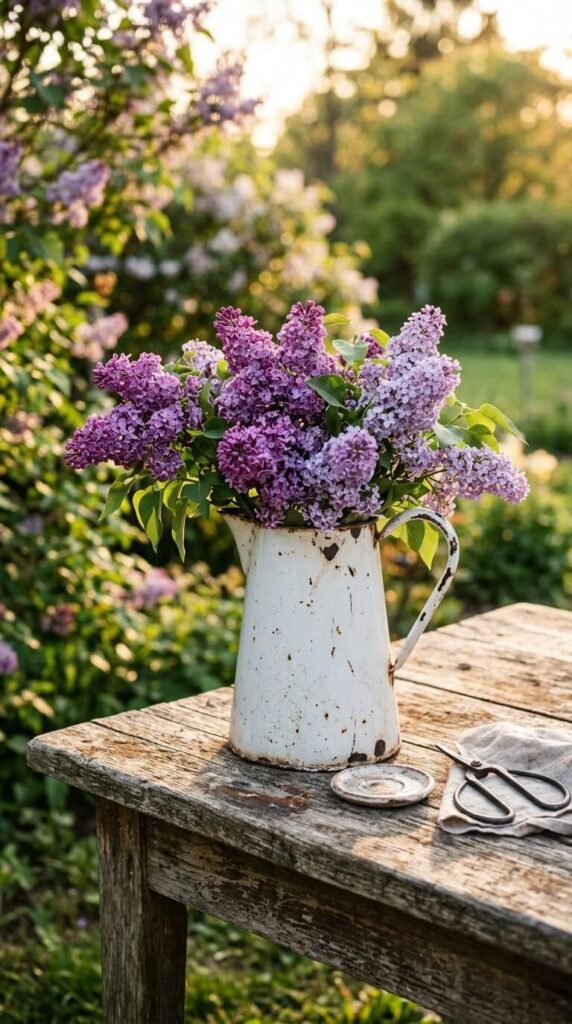
Enamelware pitchers are sturdy, cheap, and full of character. The chips and rust spots aren’t flaws — they’re proof of years of use. Fill one with fresh-cut branches or wildflowers for an easy centerpiece. Skip water if it’s rusted inside; use it dry for dried flowers instead. Flea markets usually price these low since buyers want “perfect” pieces. Grab the imperfect ones — they’re often half the cost. Set one on a porch rail or kitchen windowsill. A single pitcher does more for a room than a dozen new decor pieces.
6. Antique Bird Cages
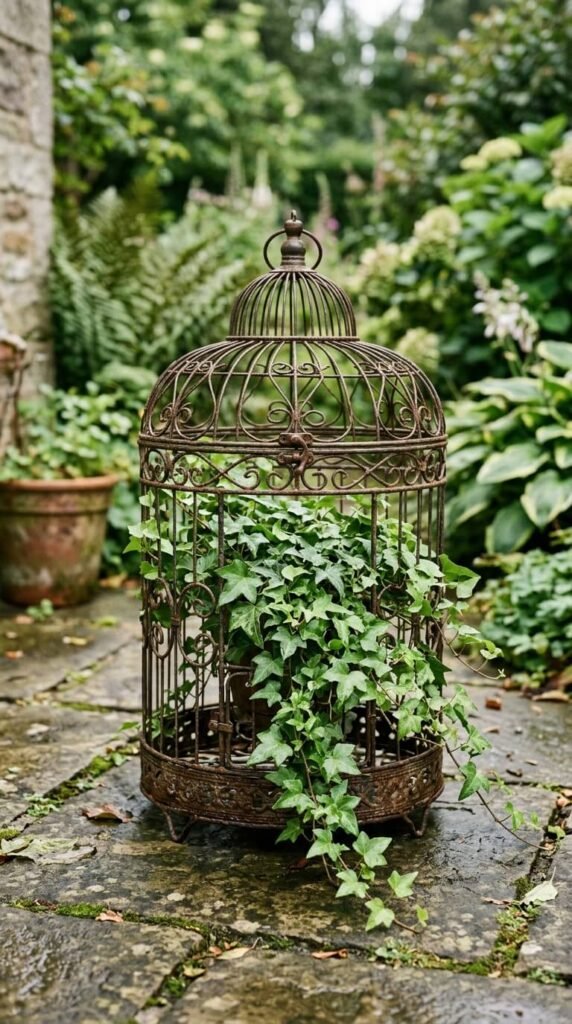
Old bird cages make surprisingly good plant stands. Set a potted fern or trailing ivy inside and let it spill out the bars. Rust adds texture, so don’t bother repainting unless you want a fresh look. Hang a smaller cage from a porch hook for a simple spring display. These show up often at estate sales, sometimes for less than ten dollars. Check that the base isn’t rusted through before setting anything heavy inside. A cage like this works indoors too, tucked in a sunny corner with a small plant.
7. Floral Feed Sack Fabric
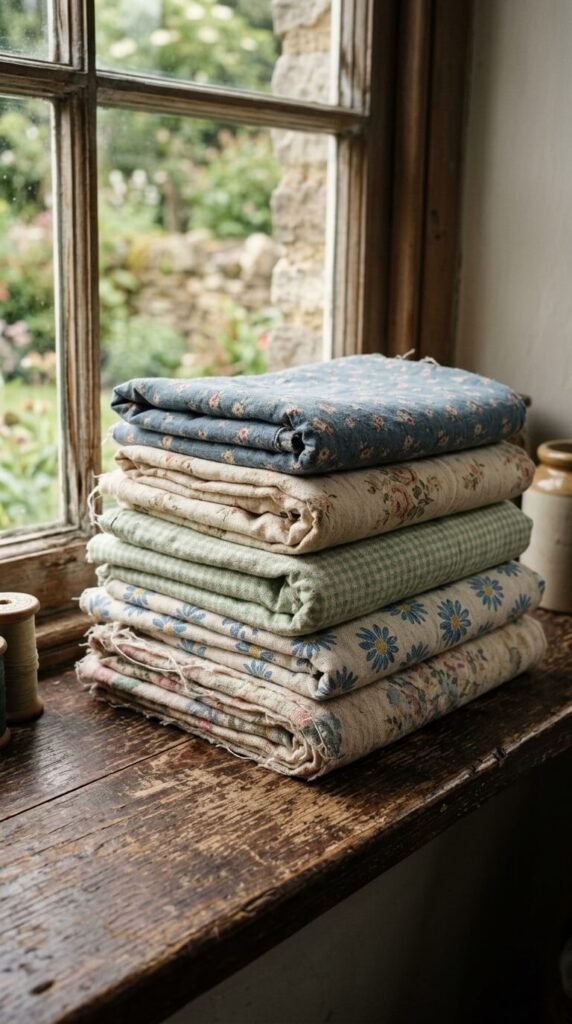
Feed sack fabric was practical decades ago, and now it’s a collector favorite. The faded florals work well as throw pillow covers or simple curtain panels. Look for yardage at quilt shows or estate sales. Even torn pieces can become patchwork. Wash by hand to protect the old dye. A yard or two goes a long way for small projects. Drape a piece over a shelf edge for texture without spending much. This fabric holds decades of pattern history that new prints simply can’t copy.
8. Milk Glass Vases
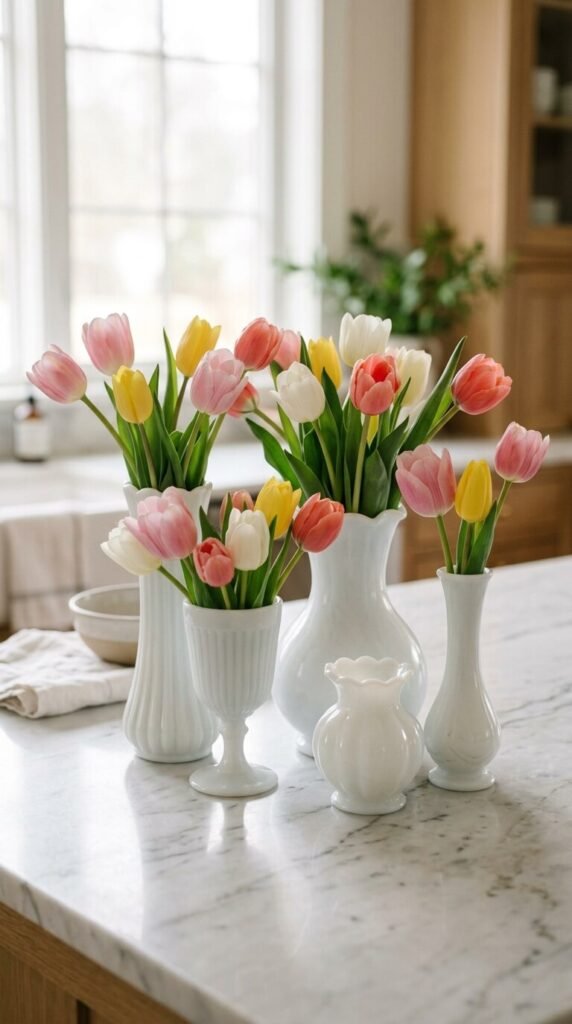
Milk glass has that soft, opaque white that photographs beautifully. Collect a few different shapes instead of one matching set. Small chips on the base won’t show once flowers are in. These are common at thrift stores, often just a dollar or two each. Group three together at different heights for a simple table display. No flowers on hand? Fill one with lemons instead. Milk glass also hides cloudy tap water, so it’s low-maintenance too. This is one of the easiest vintage finds to start collecting on any budget.
9. Old Garden Trowels
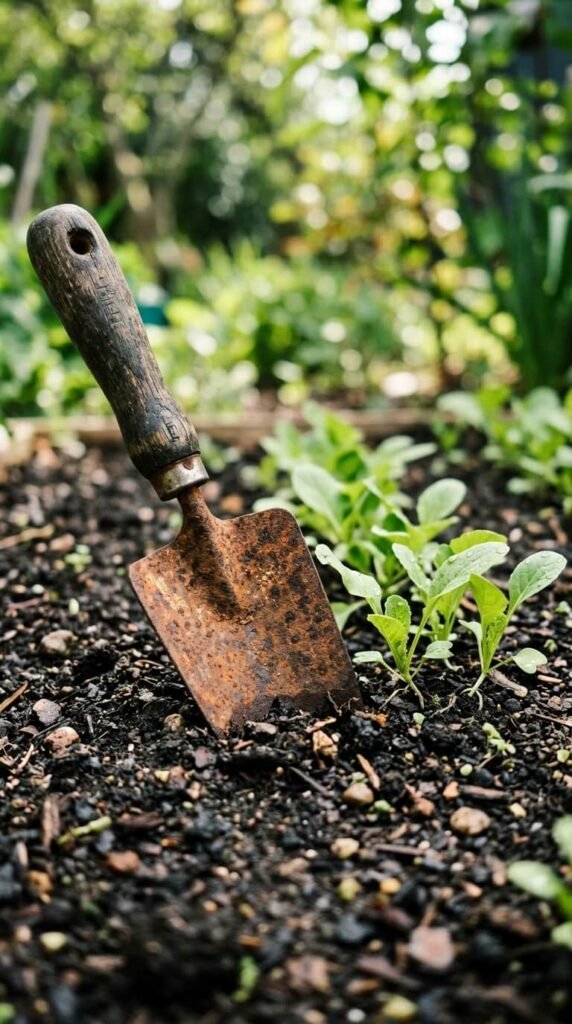
A rusty old trowel works just as well as a new one, sometimes better. The wooden handles are often sturdier than modern plastic. Look for these at barn sales or tucked in old toolboxes. A light sanding removes loose rust without ruining the patina. Use one for actual planting, or hang a few on a pegboard as garden-shed decor. They’re usually cheap since most buyers want shiny new tools. Keep an eye out at auctions too. Old tools like this remind you that good design doesn’t need to be new.
10. Vintage Botanical Prints
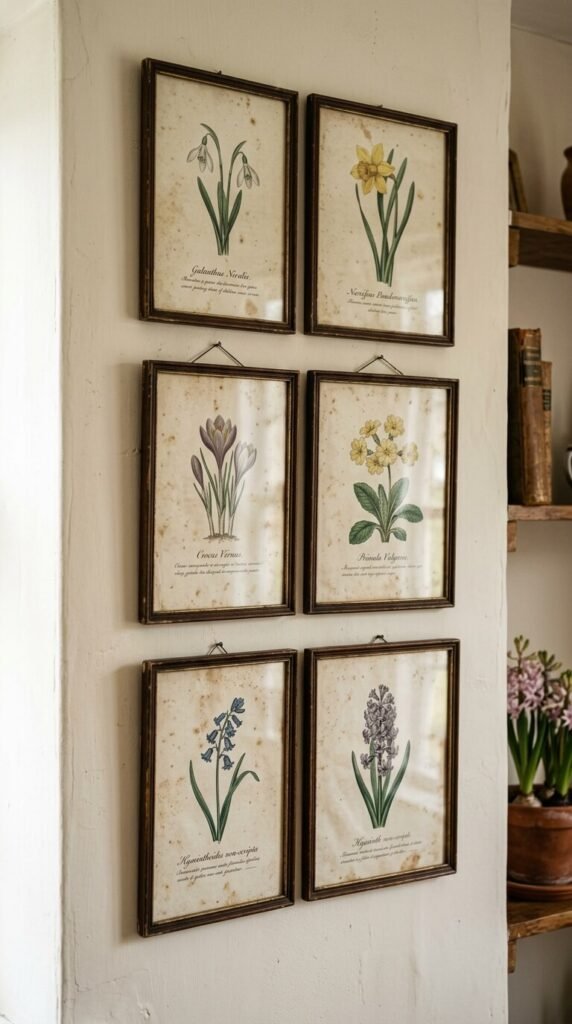
Old botanical illustrations bring instant character to blank walls. Look for pages pulled from damaged antique books at estate sales — they’re often sold individually for a few dollars. Frame them simply in black or white to let the illustration stand out. Group three or four in a row for a small gallery wall. Foxing spots and yellowing paper only add to the age. Avoid restoring them too much; the imperfections are part of the appeal. This is one of the more affordable ways to fill wall space with real vintage character.
11. Cracked Terracotta Pots
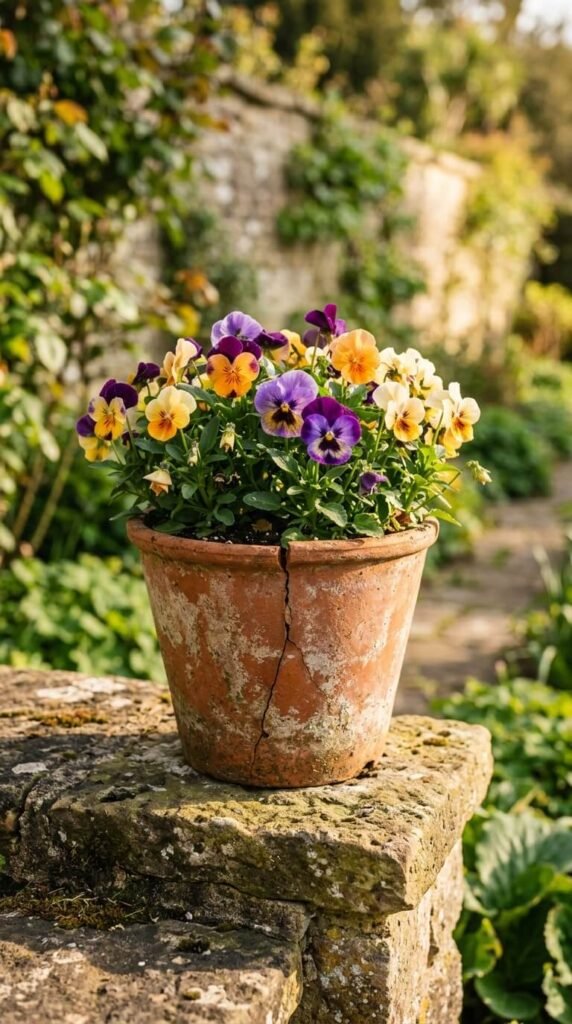
A cracked terracotta pot still holds soil just fine, especially for smaller plants. Don’t toss it — the crack adds a lived-in look. Line the inside with a plastic liner if the crack goes all the way through. Group a few different sizes together on a porch step. These are common at garage sales, often free or nearly so. Try filling one with pansies or herbs for a spring display. Painted pots can be sanded down to reveal the natural clay underneath. Simple, cheap, and always in style.
12. Vintage Sewing Baskets
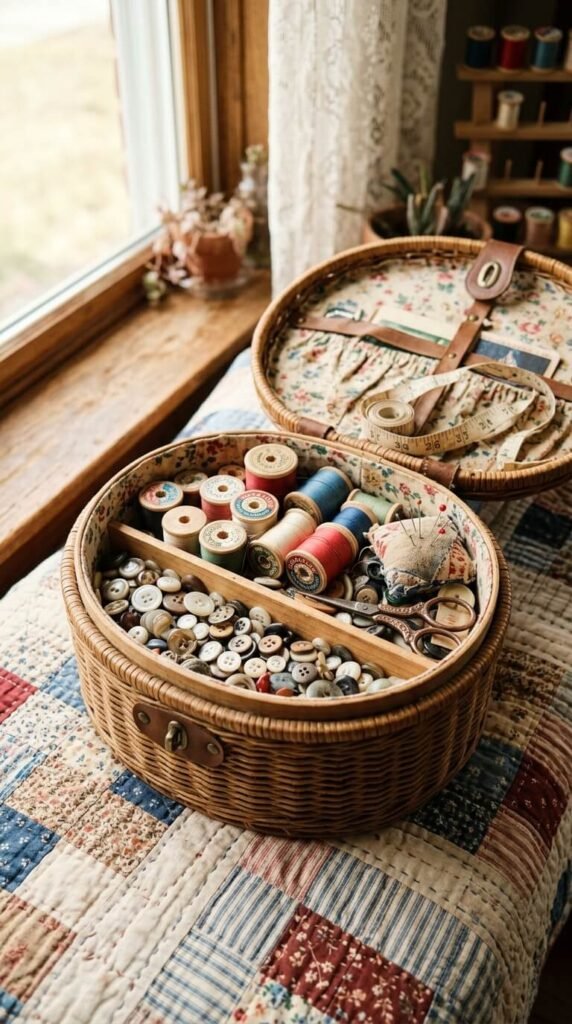
Old sewing baskets are full of small treasures — thread spools, buttons, thimbles. Even if you don’t sew, the basket itself makes a great catch-all for keys or mail. Buttons can be repurposed into jewelry or sewn onto plain throw pillows. These show up often at estate sales, usually priced low since sewing supplies aren’t in high demand. Sort through the contents before buying to check for rust or damage. Keep the basket on an entry table for a practical and charming storage spot. It’s function and nostalgia in one small package.
13. Faded Quilts
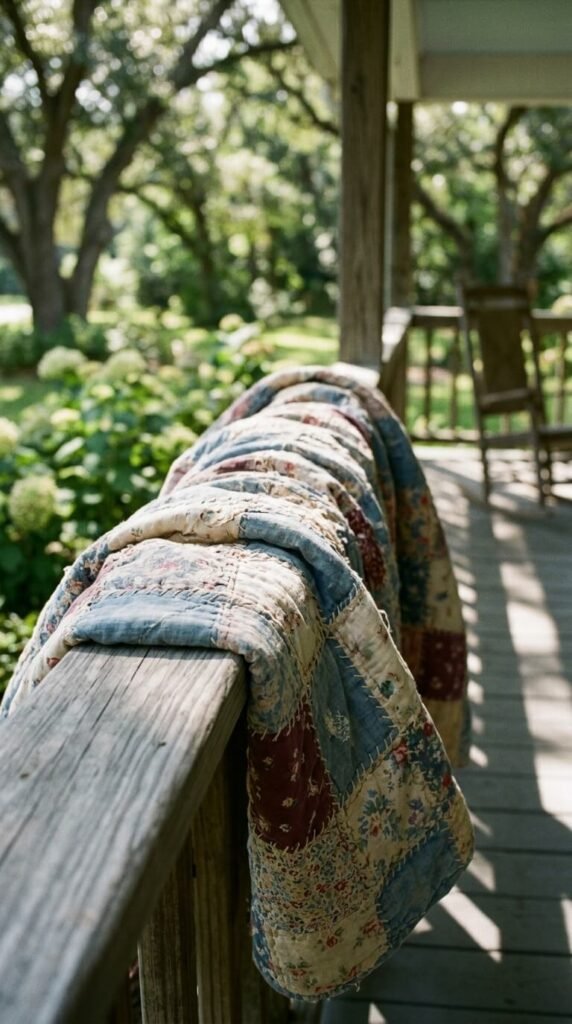
A worn quilt has more warmth in it than anything from a store shelf. Drape one over a porch rail or the back of a chair. Small tears can be patched with scraps of similar fabric. Estate sales often sell these cheap since buyers assume they’re too damaged to use. Wash gently by hand to avoid further wear. Use a thinner one as a picnic blanket this spring. Even a quilt too fragile for daily use can be framed as wall art. Every stitch was made by hand, and that’s worth holding onto.
14. Vintage Watering Cans
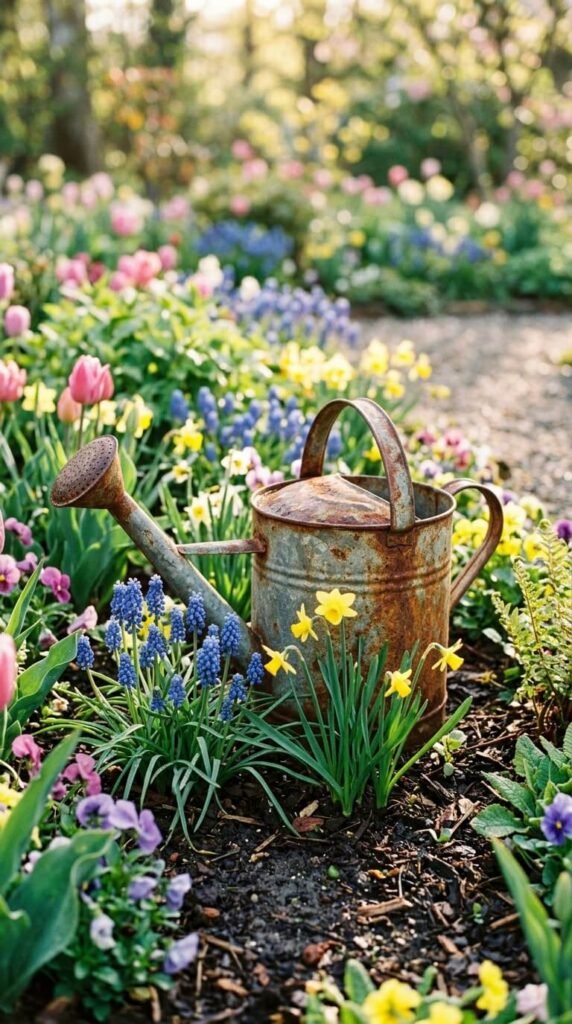
Galvanized watering cans age beautifully, developing a soft patina over time. Even ones with small leaks work fine as planters — just drill a few extra drainage holes. Set one by the front door filled with daffodils for a simple spring welcome. These turn up often at farm auctions and flea markets for a few dollars. Skip anything with major rust holes if you plan to actually water plants. A dented can still tells a story better than a plastic one from the hardware store. Function and character in a single piece.
15. Old Wooden Ladders
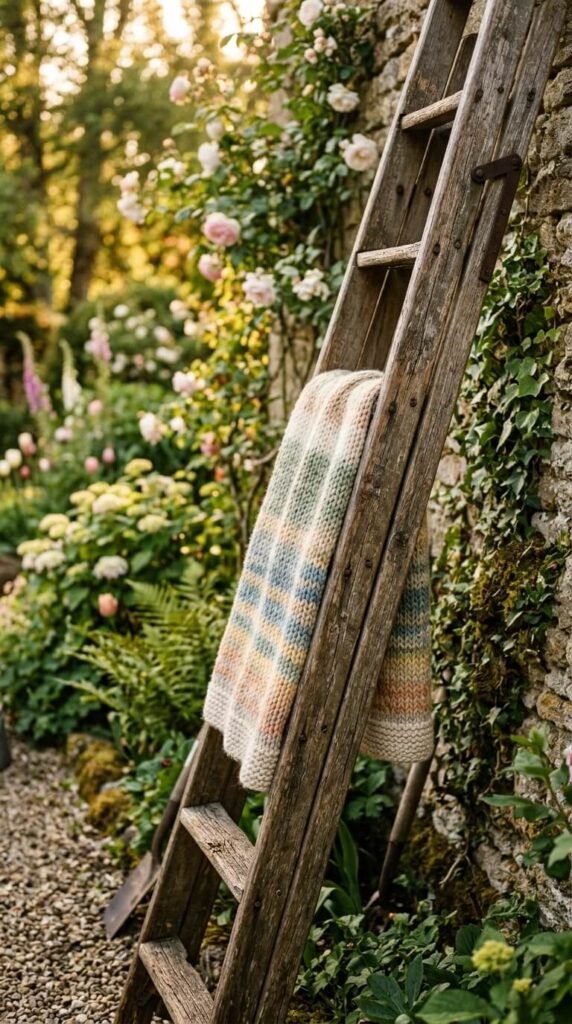
An old wooden ladder makes a simple blanket or towel rack. Lean it against a wall in a mudroom or garden shed. Check that the rungs are still sturdy before using it for anything heavy. Sand rough edges lightly, but skip repainting to keep the aged look. These are common at barn sales, sometimes free to anyone willing to haul them away. Use it to display seed packets or small potted herbs on each rung. A little bit of practical repurposing turns a forgotten tool into a display piece.
16. Vintage Doilies
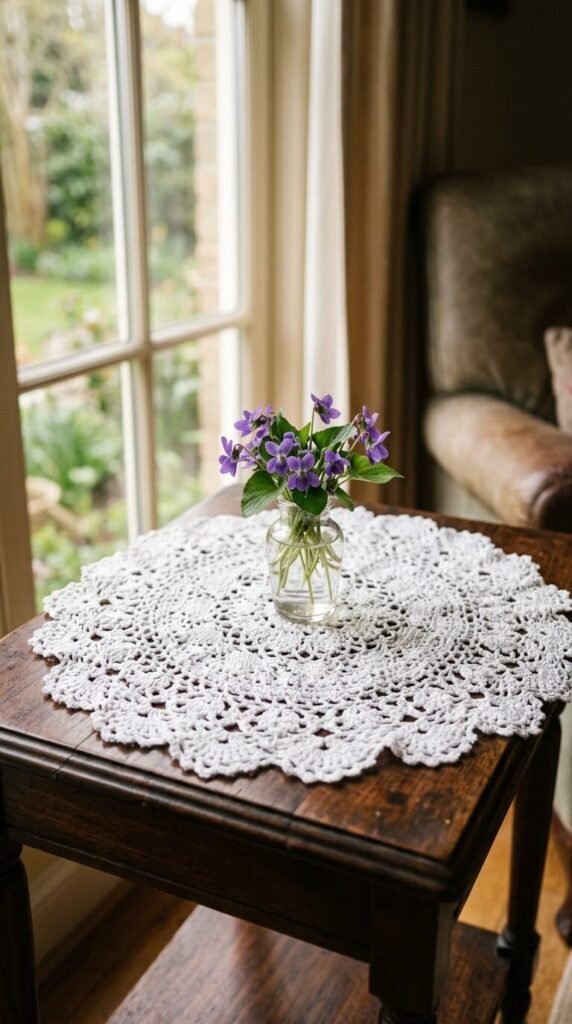
Crocheted doilies are small, cheap, and endlessly useful. Layer a few under a vase or lamp for texture. Stitch several together into a simple table runner. They’re common in estate sale linen boxes, often priced under a dollar each. Hand wash gently in cool water to keep the lace intact. A doily glued to a plain tote bag adds instant charm too. These tiny pieces carry hours of handwork that’s hard to find in anything mass-produced today. Keep a small stack in a drawer for whenever a table needs a little softness.
17. Antique Picture Frames
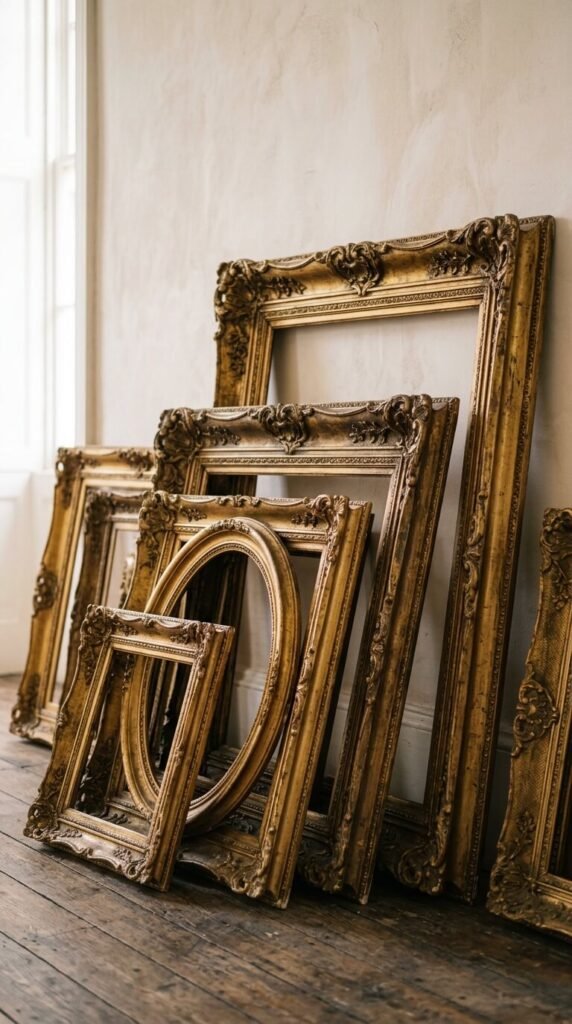
Empty antique frames are easy to find and easy to reuse. Paint the inside edge to frame a chalkboard for a kitchen message center. Use a larger one as a decorative mirror frame instead. Thrift stores often sell these for a couple dollars since the original art is long gone. Layer several sizes on a mantel, leaning rather than hung. Light sanding brings back a bit of shine without stripping the age. These frames add instant depth to a wall, even with nothing inside them.
18. Vintage Mason Jars
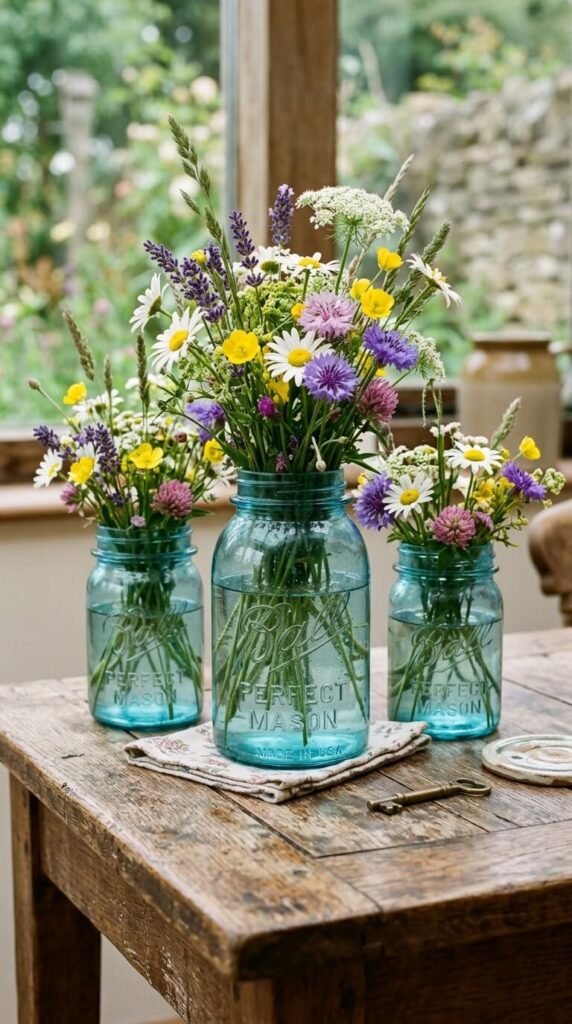
Old blue-tinted mason jars have a softness modern glass doesn’t quite match. Use them as vases, drinking glasses, or simple candle holders. The zinc lids can rust, so skip using them for actual canning. Flea markets often price these low, especially chipped ones. Group a few different sizes together on a windowsill. Fill with wildflowers for a five-minute centerpiece. These jars are a good starting point if you’re new to vintage collecting — cheap, common, and easy to spot.
19. Old Botanical Seed Catalogs
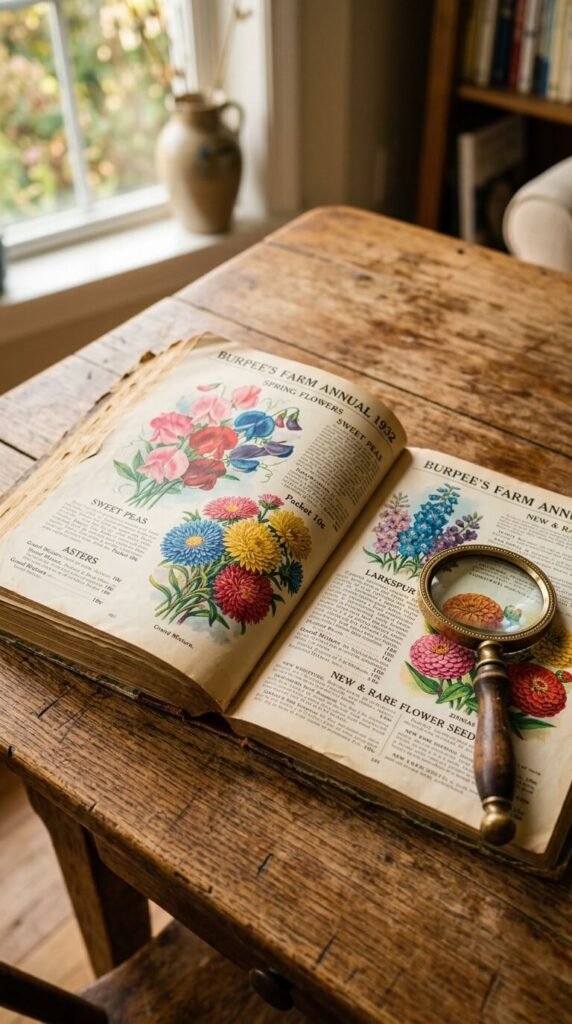
Seed catalogs from decades past are full of bright, hand-drawn illustrations. Cut pages out and frame them individually for cheap wall art. Whole catalogs also make good coffee table pieces if the binding is intact. Look for these at paper shows or tucked inside old farmhouse boxes. Even torn pages can be used for simple collage projects. They’re usually inexpensive since most buyers want the seeds, not the paper. A stack tied with twine looks good on an open shelf too.
20. Weathered Garden Statues

A statue covered in moss has more personality than a brand new one. Leave the moss alone — it took years to grow and can’t be faked. Tuck a smaller statue among garden beds where it peeks through new growth. These are common at estate and barn sales, sometimes heavy but cheap. Check for cracks before moving anything large. A chipped statue still works fine as a garden focal point. This is one of those finds that looks better every year it sits outside.
21. Vintage Tin Signs
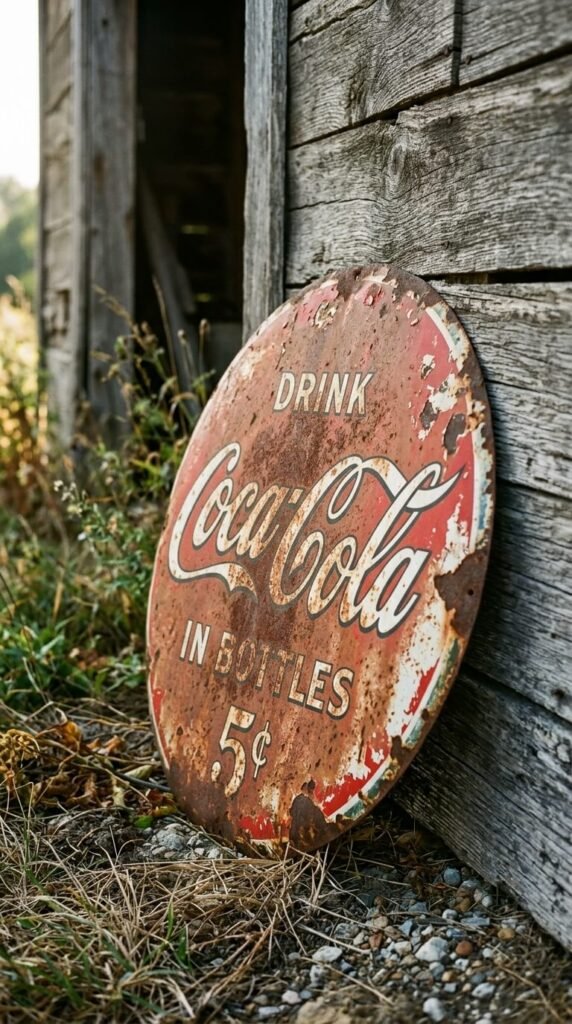
Old tin signs bring color and texture without costing much. Look for rusted edges and faded paint — that’s what makes them feel authentic. Lean one against a wall instead of hanging it for a more casual look. Flea markets and barn sales are the best places to find these cheap. Avoid anything that’s been repainted; it loses the original charm. A single sign can anchor an entryway or mudroom easily. These pieces work well mixed with newer decor too, adding a bit of unexpected age to a room.
22. Old Wire Egg Baskets
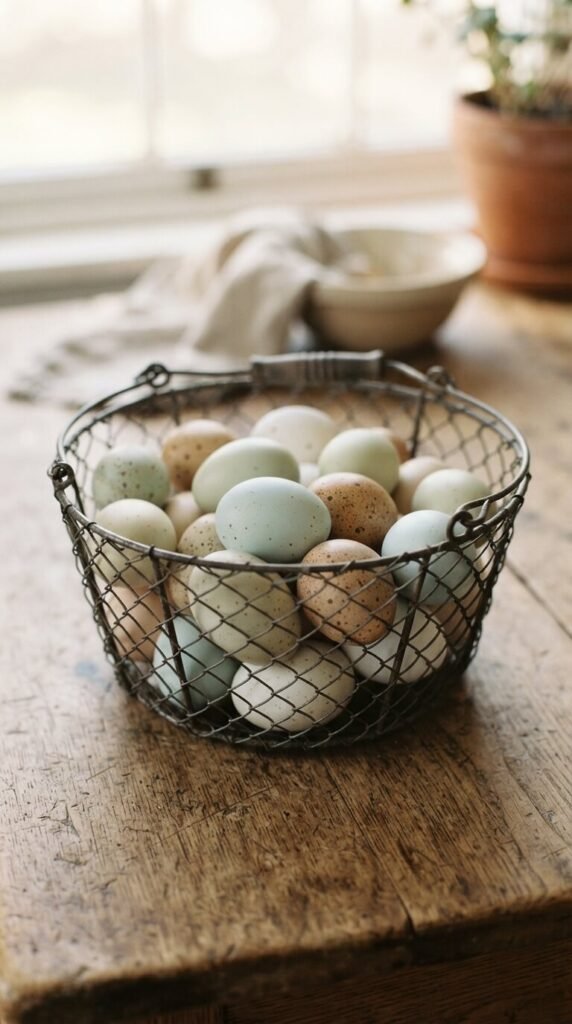
Wire egg baskets are simple, sturdy, and easy to repurpose. Use one to hold fruit, mail, or garden produce. The wire construction ages well and rarely needs repair. These show up often at farm auctions for just a few dollars. A quick rinse removes dust without damaging the metal. Line the bottom with a cloth napkin for softer storage. Hang one on a kitchen wall as simple functional decor. Small and practical, this is an easy first piece for anyone starting a vintage collection.
23. Antique Hand Mirrors
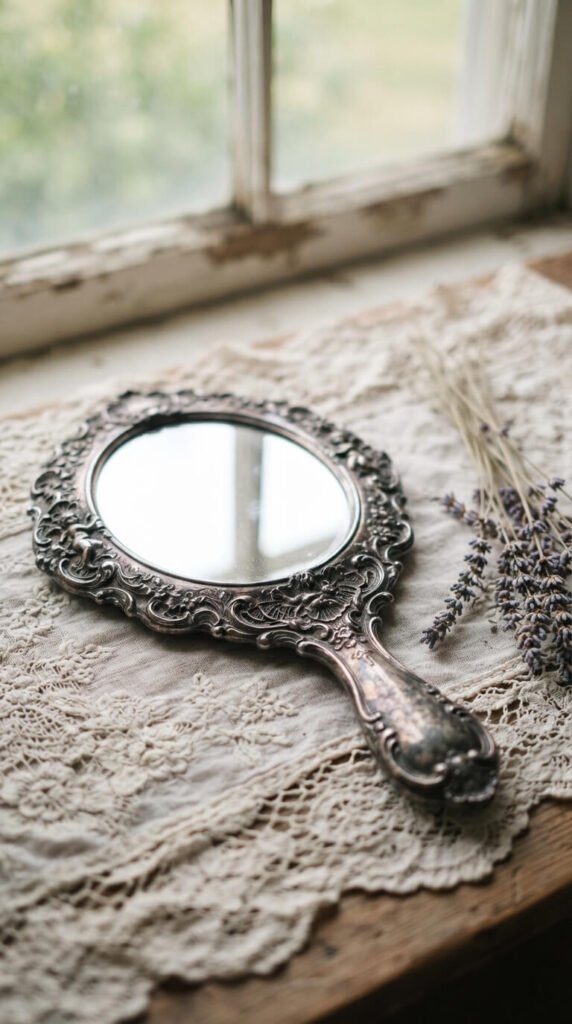
An old hand mirror doesn’t need to be functional to be worth keeping. Prop one on a vanity tray as a small decorative piece. Tarnished silver only adds to the look — skip the polish. These are common finds at estate sales, often bundled with other small items for a low price. Check the glass for cracks if you plan to actually use it. A cluster of two or three mirrors on a dresser looks intentional, not cluttered. Small details like this carry more history than they take up space.
24. Vintage Rocking Chairs
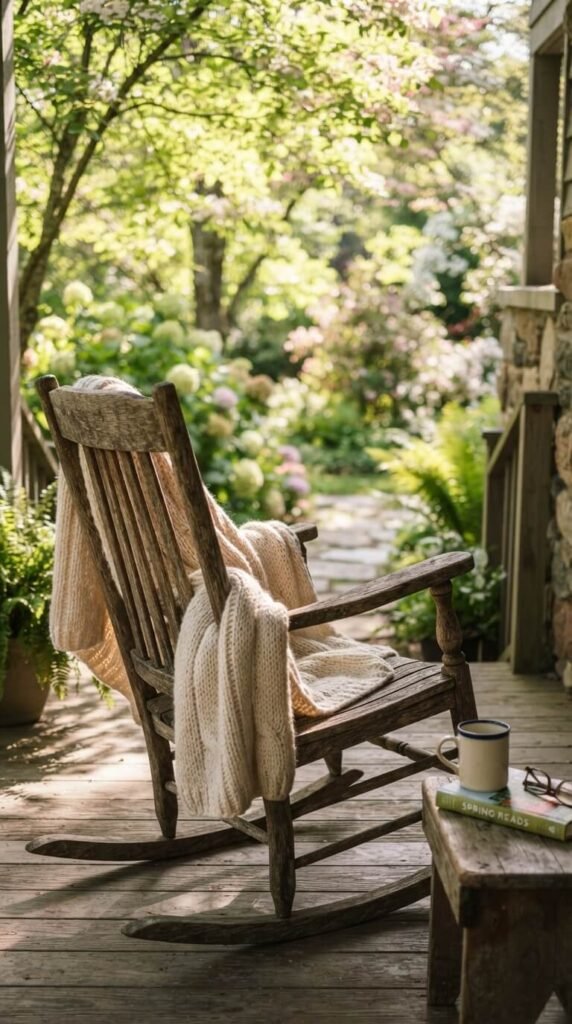
A creaky old rocking chair has more character than anything flat-packed. Check the joints for wobble before bringing one home. A little wood glue and clamping fixes most loose spots. Leave the worn paint or finish as is — it tells its own story. These are common at estate sales and sometimes free on local listings. Add a simple cushion for comfort without covering up the wood grain. Set it on a porch for spring mornings. Few pieces feel as lived-in as a chair that’s been rocked for decades.
25. Old Botanical Ribbon Spools
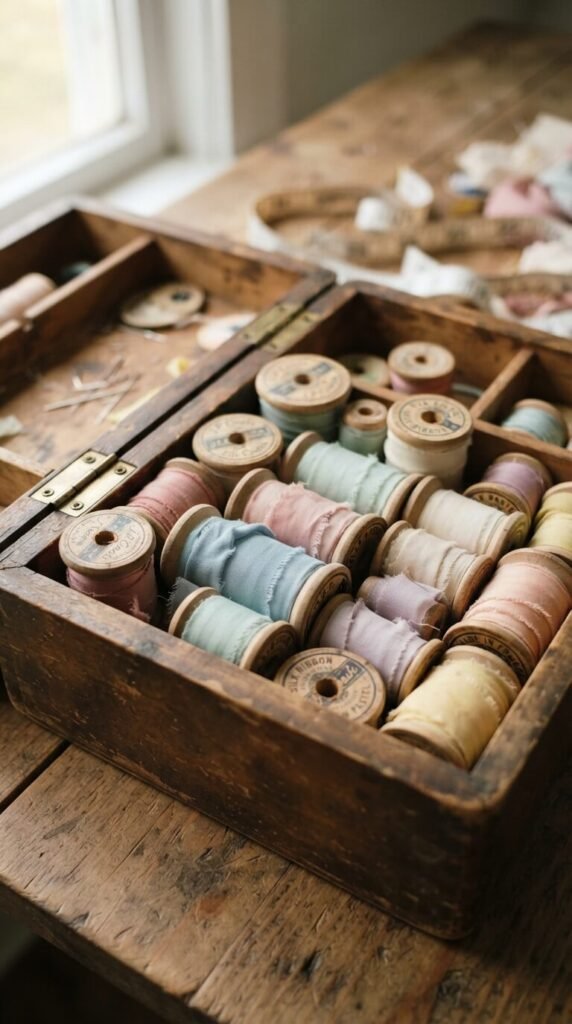
Old ribbon spools are small but add a surprising amount of color. Use leftover ribbon to tie small bundles of dried flowers. Display the spools themselves in a shallow bowl or open box. These are common finds in old sewing kits at estate sales, often just a few cents each. Faded colors work better than anything new-looking for this kind of display. Tie a scrap around a mason jar for a quick spring touch. Nothing here costs much, but the effect adds up fast.
Conclusion
Spring is a good excuse to slow down and look twice at things other people overlook. A chipped teacup, a rusted trowel, a faded quilt — none of these need to be perfect to earn a spot in your home. Start small. Pick one or two items from this list, check your local thrift store or a relative’s attic, and see what you find. The stories attached to these pieces are part of what makes a home feel real instead of staged. Keep hunting, keep repurposing, and let this season’s finds add a little history to your space.