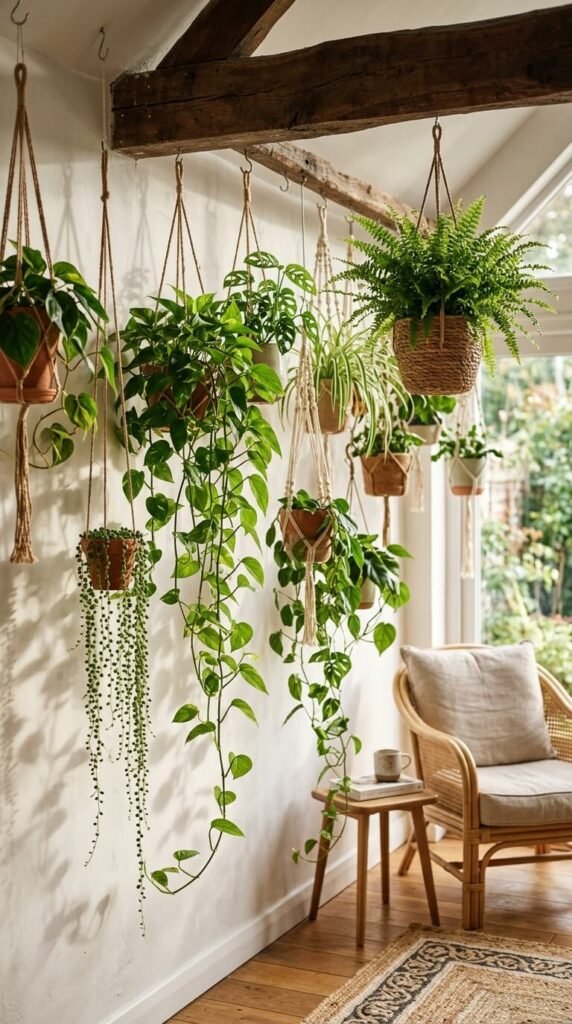
Hanging planters are one of the easiest ways to bring life into any space without sacrificing floor or counter room. Whether you have a tiny apartment balcony or a sprawling backyard patio, a well-placed hanging planter pulls the eye upward and makes a room feel taller, lusher, and more alive. The best part? You don’t need a big budget or a green thumb to make it work. From simple macramé hangers to repurposed colanders, the options are endless. This guide walks you through 25 creative ideas — each one practical, affordable, and doable for real people in real homes.
1. Classic Macramé Plant Hanger
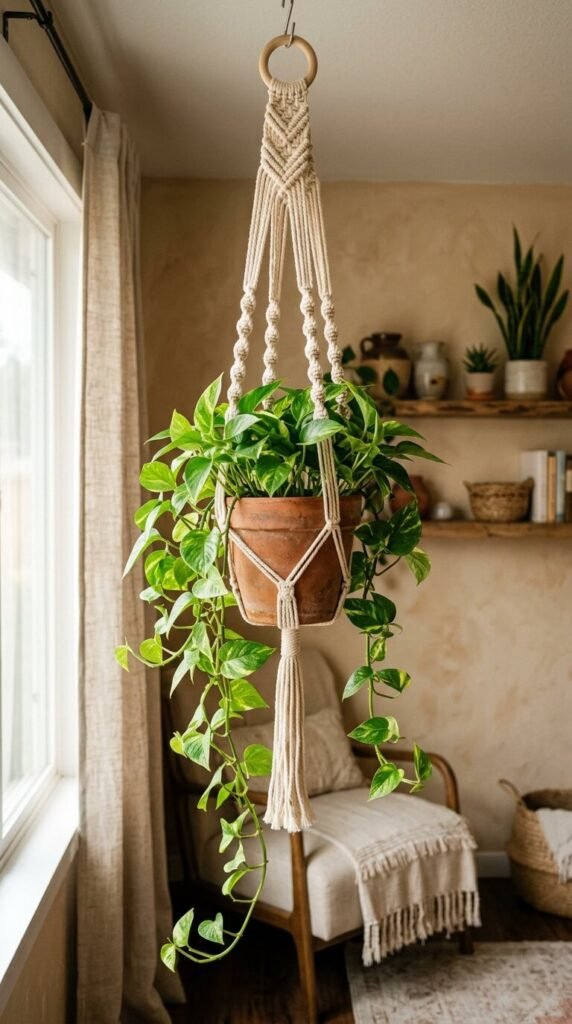
Macramé hangers are a timeless choice — and they’re beginner-friendly. You can find DIY kits at craft stores for under $15. Natural cotton rope works best. The knots hold a standard pot securely. Hang one near a bright window for trailing plants like pothos or ivy. The texture adds a boho warmth to any wall. If you don’t want to DIY, pre-made versions on Etsy start around $12. Simple, affordable, and classic.
2. Repurposed Colander Planter
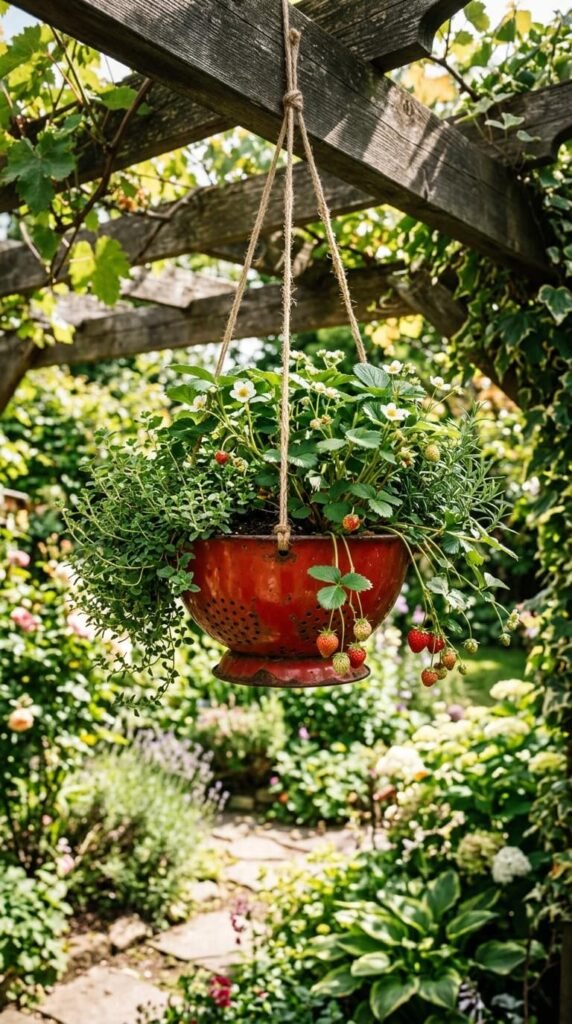
Old colanders make surprisingly charming hanging planters. The built-in holes offer perfect drainage — no need to drill anything. Pick one up at a thrift store for $2–$5. Thread jute twine through three holes evenly spaced around the rim. Hang it from a porch beam or pergola. Strawberries and trailing herbs look especially good spilling over the edges. This is a weekend project that costs almost nothing and looks intentional.
3. Coconut Coir Hanging Basket
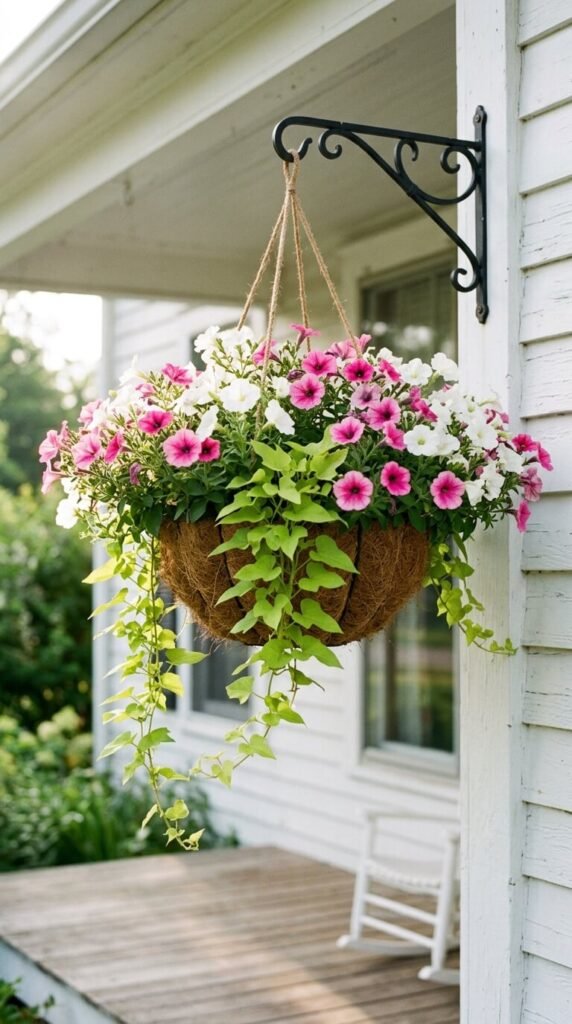
Coconut coir baskets are the go-to for outdoor porches. The natural fiber holds moisture well and lets roots breathe. You can find them at garden centers for $5–$10. Fill them with a mix of trailing and upright plants for a full, layered look. Petunias, lobelia, and sweet potato vine are classic combos. Line the basket with the coir liner before adding soil. Water daily in summer — they dry out fast. A small investment with big visual payoff.
4. Terracotta Pot on a Leather Strap
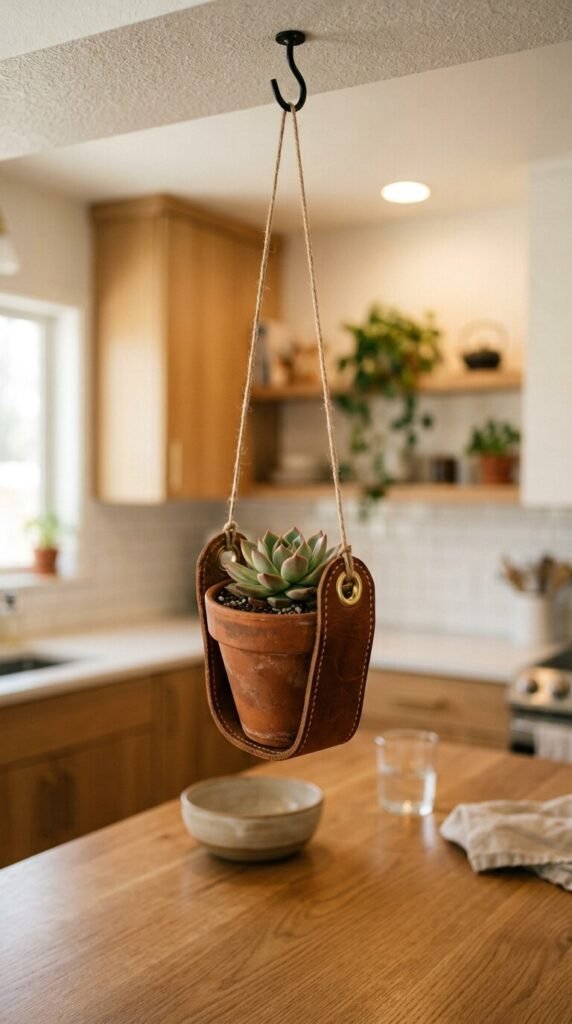
Leather straps give terracotta pots a clean, modern look. Cut three equal lengths of thick leather cord. Punch holes and thread them through brass rings. The result feels handcrafted but polished. This works well in kitchens or home offices where you want something minimal. Terracotta is also breathable, which succulents and cacti love. You can DIY this for under $10 if you buy leather cord from a craft store. Simple materials, elevated result.
5. Hanging Glass Orb Terrarium
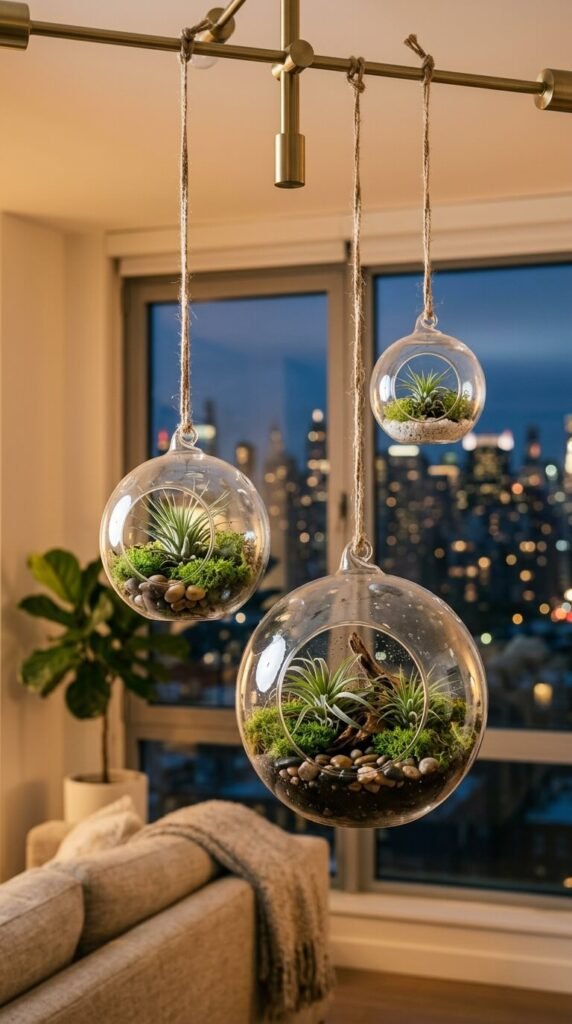
Glass orb terrariums create a floating, airy look. They’re perfect for air plants (tillandsia), which need no soil at all. Hang three at different heights for a layered effect. You can find glass globes at IKEA or craft stores for $5–$15 each. Add a layer of sand, some decorative moss, and a single air plant. Mist lightly once a week. These look especially dramatic when grouped near a window where light passes through the glass.
6. Wooden Dowel Multi-Planter
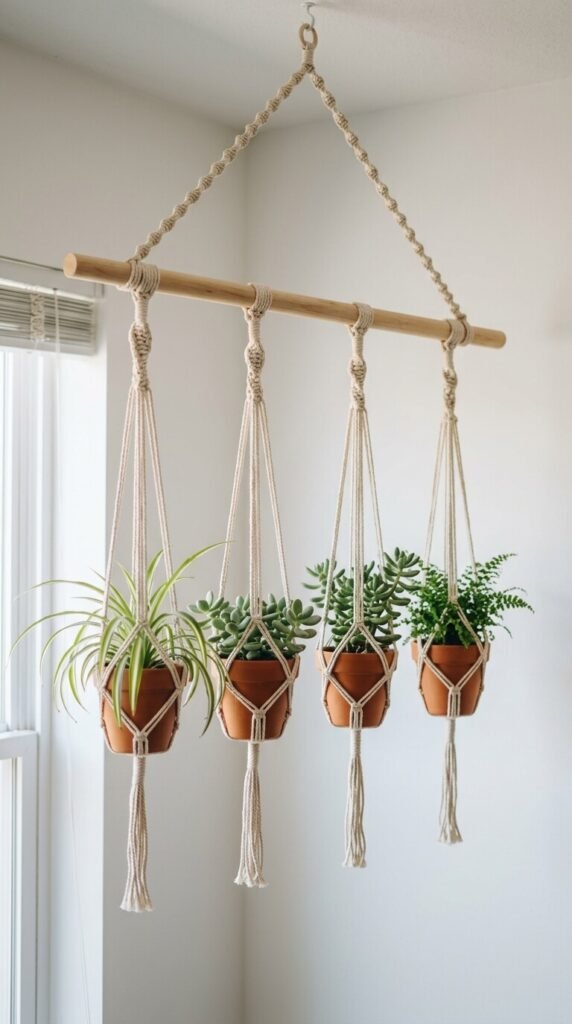
One dowel, four plants — this is a space-smart setup. Suspend a wooden dowel horizontally from the ceiling using rope or chain. Hang individual pots at even intervals with S-hooks or twine. It reads like a living mobile. A standard wooden dowel from the hardware store costs under $3. Paint it white or stain it to match your décor. Mix plant heights and textures for visual interest. Great above a dining table or in a sunlit hallway.
7. Upcycled Tin Can Cluster
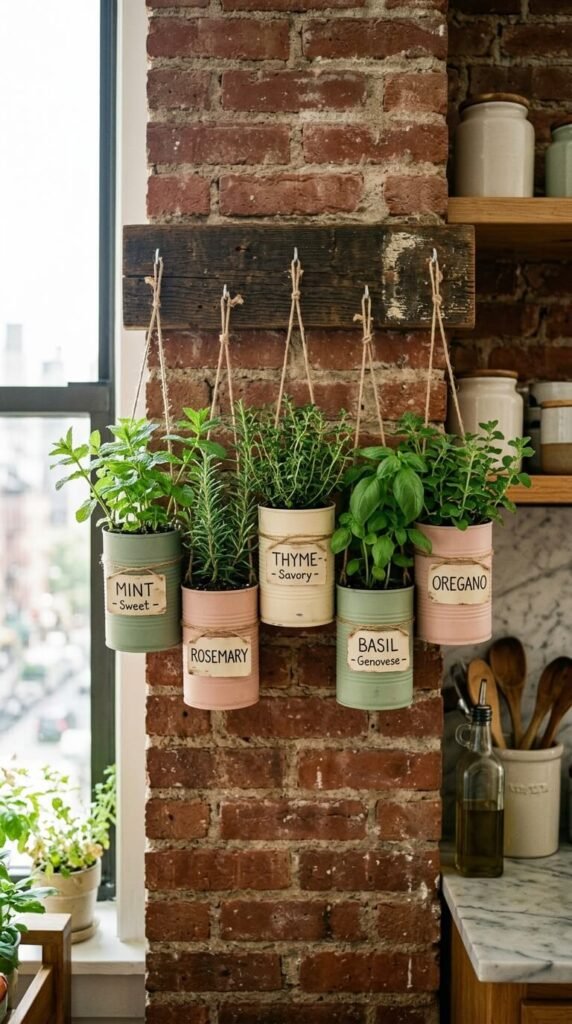
Save your soup cans. Sand the edges, punch a drainage hole in the bottom, and paint them in muted tones. String them at different heights from a wall-mounted plank using thin wire. Each can becomes a small pot for herbs, succulents, or small trailing plants. A set of five costs almost nothing if you’re reusing cans you already have. It’s a fun project to do with kids, too. Label each one with a paint pen for a kitchen herb wall that’s both useful and decorative.
8. Rope Ladder Planter
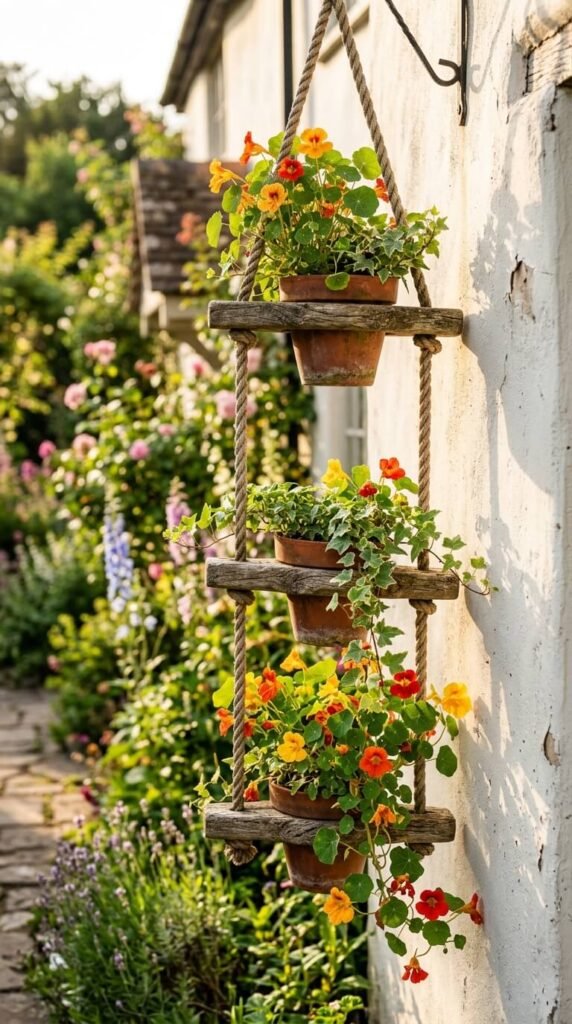
A rope ladder turned planter is one of the more underrated ideas out there. Tie horizontal dowels between two vertical ropes at even spacing. Rest small pots on each rung. Hang the whole thing flat against a wall. Plants on each level create a cascading waterfall effect when they trail down. You can build this in an afternoon with basic rope and wooden sticks. It’s especially beautiful with nasturtiums or trailing ivy that spill from one level to the next.
9. Hanging Herb Garden in Mason Jars
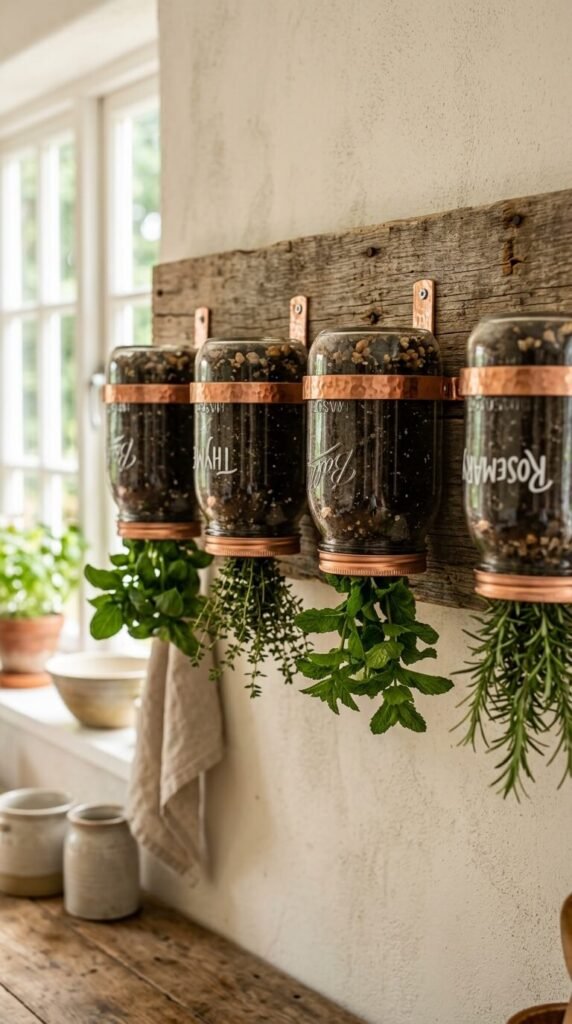
Mason jar herb gardens are practical and pretty. Drill drainage holes in the lids. Fill jars with potting mix and plant your favorite herbs. Attach metal clamps to a piece of wood and hang the whole board on your kitchen wall. Basil, thyme, mint, and parsley all work well here. Keep them near a south-facing window for best growth. The whole project costs about $15–$20 depending on how many jars you use. Fresh herbs within arm’s reach while cooking — hard to beat.
10. Beaded Bohemian Planter Hanger
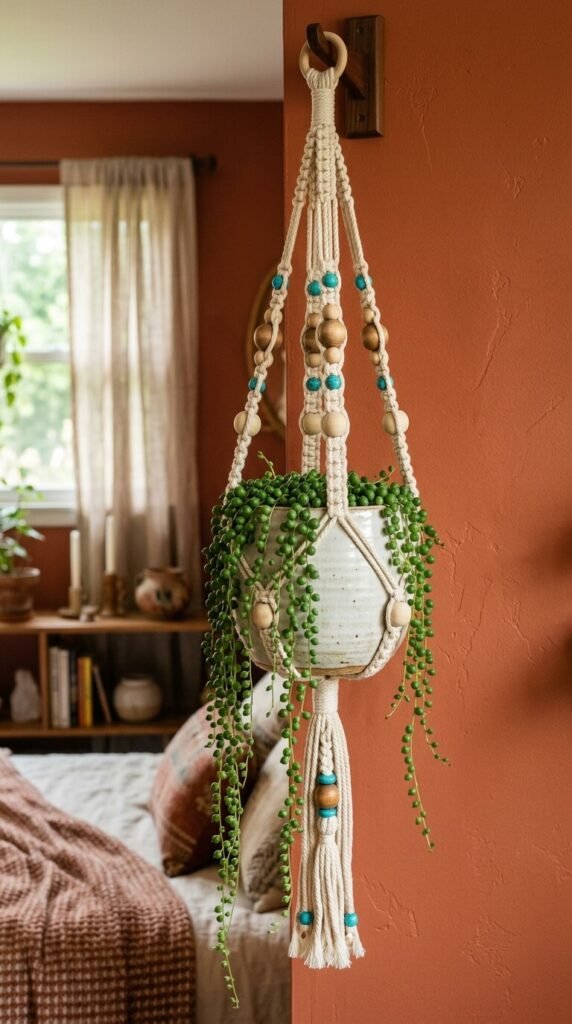
Wooden beads threaded between macramé knots add a tactile, artisan feel. You can customize the bead colors to match your room — natural wood, black, or painted tones all work. String of pearls or burro’s tail succulents look gorgeous cascading from the pot below. DIY kits with beads included run about $18–$25. Or source rope and beads separately at any craft store. This one doubles as wall art. It’s the kind of piece that gets compliments before anyone even notices the plant.
11. Hanging Planter Made from a Rain Boot
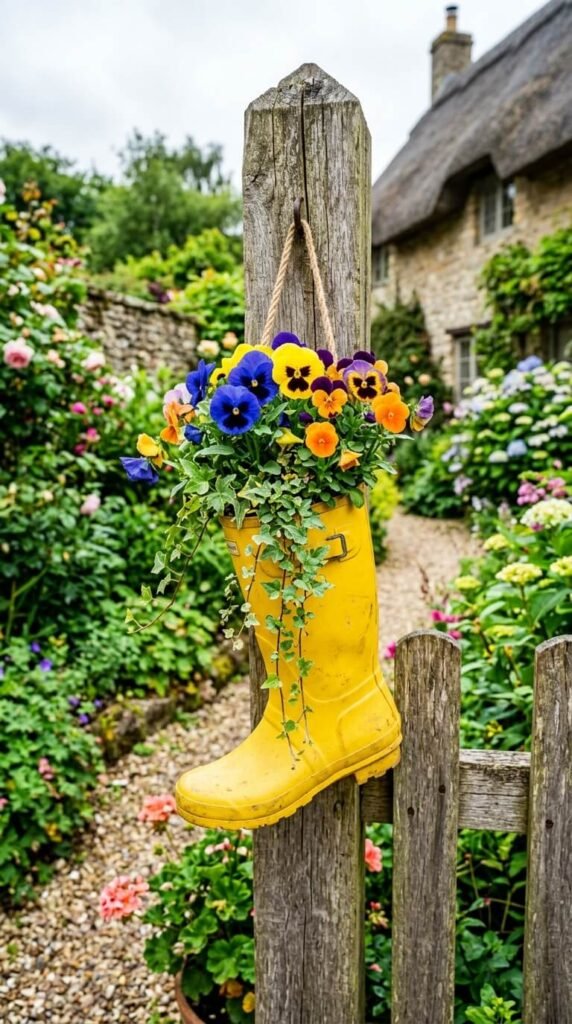
Yes, really — an old rain boot. Punch a hole in the toe for drainage. Fill with potting soil. Plant colorful pansies or violas inside. Hang it from a garden hook or fence post using its existing loop handle. This is the kind of quirky garden idea that makes people smile. Kids love it. It costs nothing if you have an old boot sitting in the garage. Even a cracked or worn-out boot works fine. Swap in seasonal plants to keep it fresh year-round.
12. Wire Basket with Moss Lining
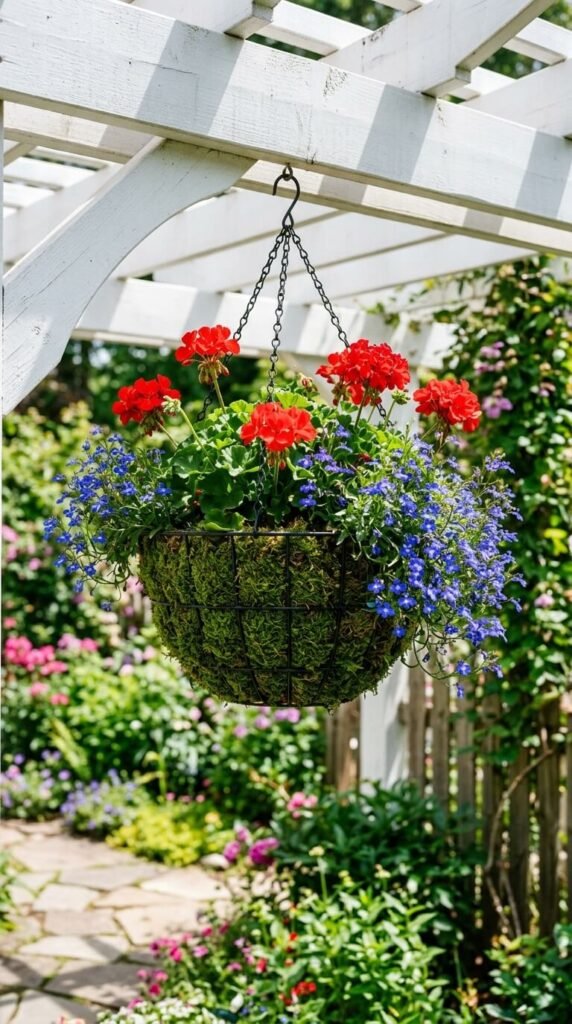
Wire baskets lined with sheet moss have a natural, organic look. The moss holds moisture while letting excess water drain. Pick up a wire basket frame at any garden center for $6–$10. Lay sheet moss against the inside, fill with soil, and plant through the sides as well as the top for 360-degree color. Geraniums, lobelia, and calibrachoa all do well. Water regularly — moss baskets dry out in heat. But when they’re full and blooming, they look like floating flower balls.
13. Hanging Planter from Driftwood
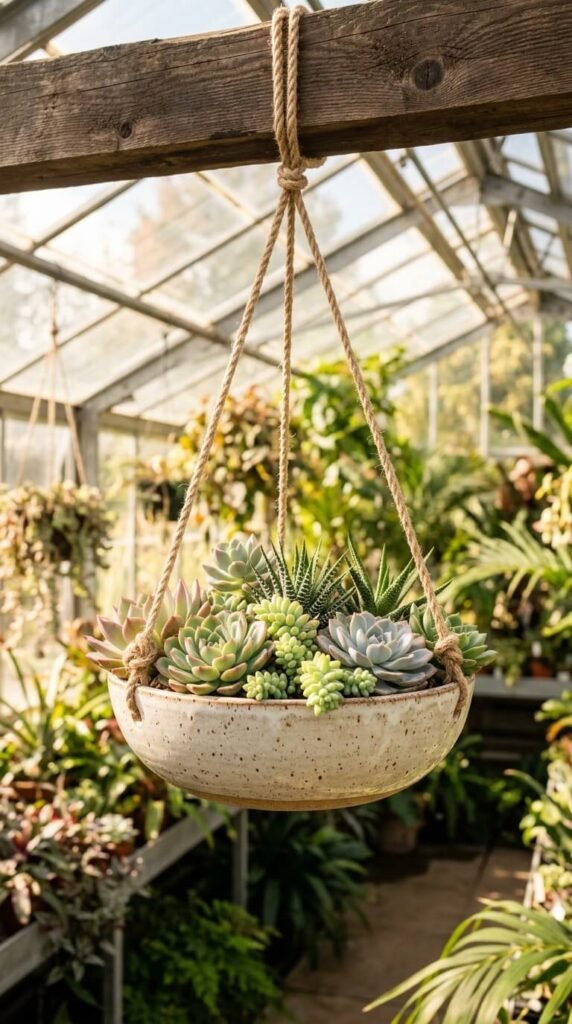
Driftwood hangers bring a coastal, natural feel indoors. Find a piece of driftwood on a beach walk or buy one for a few dollars at a craft store. Drill or tie pot hooks into the wood at uneven heights. Hang the whole piece horizontally from the ceiling. Unevenness is the point — it makes each piece feel unique. Succulents or small air plants work well here. The organic shape of the wood does most of the visual work. No two pieces are identical.
14. Mounted Pallet Wall Planter
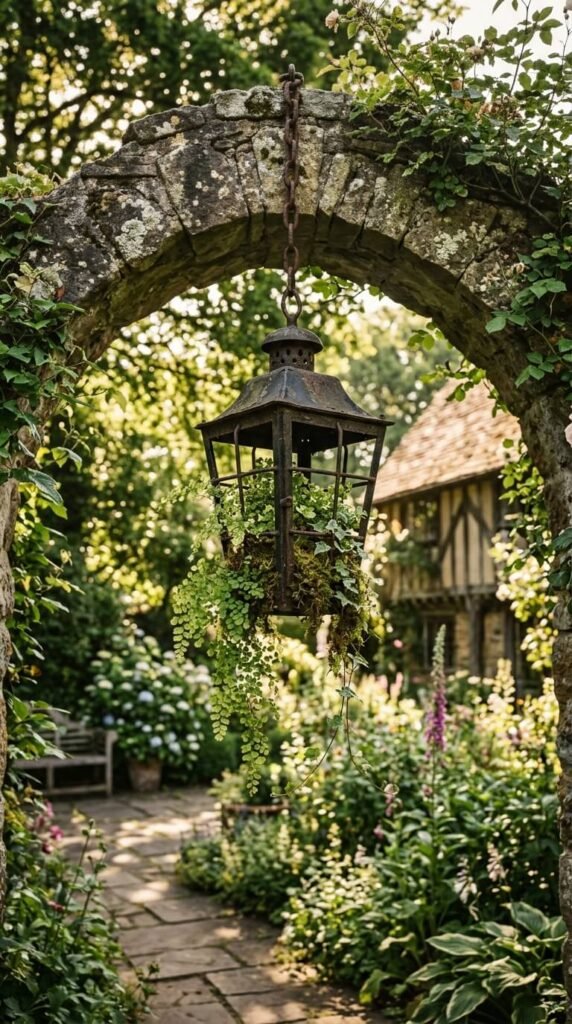
A single pallet can hold six or more plants. Nail small wooden ledges between the slats to rest pots on. Hang wire baskets from the bottom edge. Mount the whole thing flat on a fence or exterior wall. Free or cheap lumber, and you can often find pallets for free behind hardware stores or grocery stores. This works especially well for a kitchen garden wall with herbs and edible flowers. Sand and seal the wood to extend its life outdoors.
15. Hanging Succulent Bowl
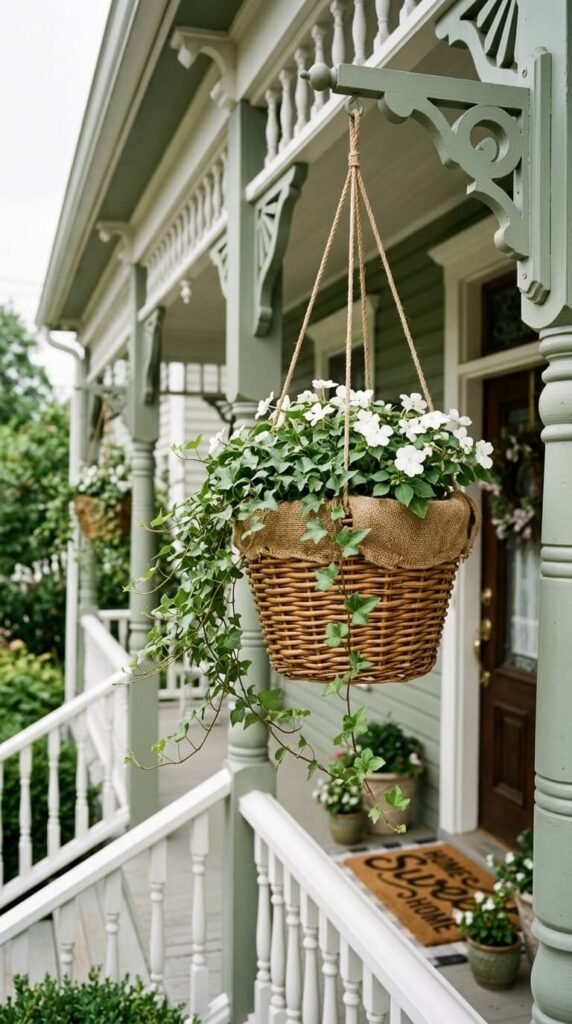
Shallow bowls make beautiful succulent displays. Use a wide, low ceramic or concrete bowl with a drainage hole. Plant a mix of echeveria, sedum, and aloe in a tight mosaic pattern. Thread three lengths of rope through holes drilled near the rim and knot below. Hang from a beam or ceiling hook. Succulents are slow growers, so the arrangement stays neat for months. Water every two to three weeks. They love the bright indirect light you get near south-facing windows.
16. Hanging Planter from a Vintage Lantern
Old lanterns with open tops make unexpected planters. Remove the candle tray and fill the base with soil and small ferns or moss. The glass panels protect the plant from wind while still letting in light. Hang from a garden arch or porch hook. You can find vintage lanterns at thrift stores, flea markets, or garage sales for under $10. Pair with shade-tolerant plants for a moody, cottage-garden feel. These look especially atmospheric at dusk when surrounding lights cast a warm glow.
17. Hanging Wicker Basket Planter
Wicker adds warmth and texture that plastic or wire can’t replicate. Line a wicker basket with burlap or coconut liner to hold soil in. Trailing plants like ivy, lobelia, and bacopa spill beautifully over the rounded edges. These look right at home on a front porch or shaded veranda. You can find wicker baskets at thrift stores for $3–$8. Bring them inside during heavy rain to extend their life. With the right lining, they hold up well for a full growing season.
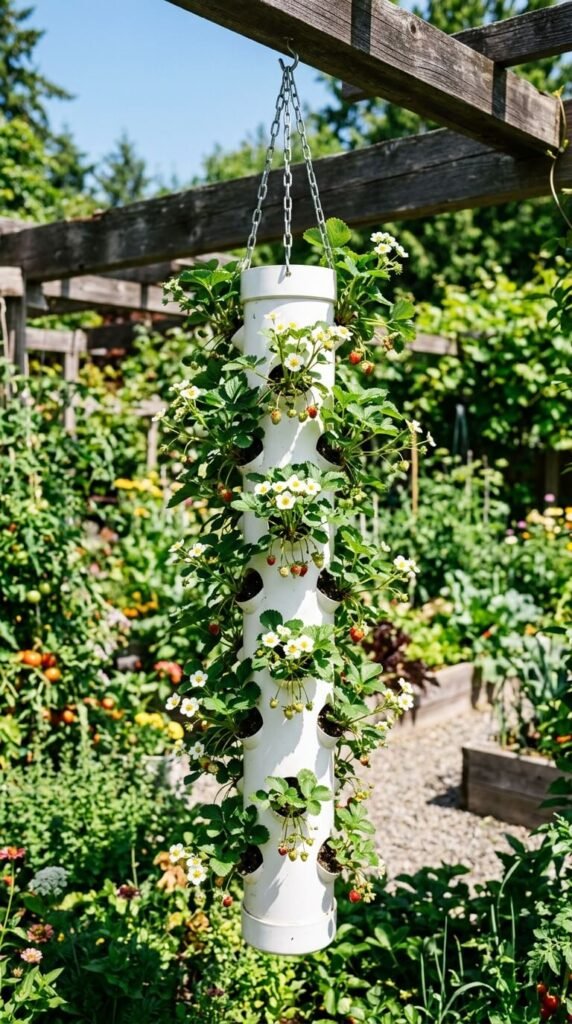
18. Hanging Strawberry Planter Tower
Grow strawberries vertically with a DIY pipe planter. Use a PVC pipe or purchased tower planter with side holes. Fill with strawberry crowns and potting mix. Hang it from a sturdy pergola or shed beam. Strawberries actually thrive this way — no bending, no slugs, and the fruit hangs freely. One tower can hold 12–20 plants in a small footprint. Water from the top and it feeds down through each level. This setup works with lettuce and herbs too.
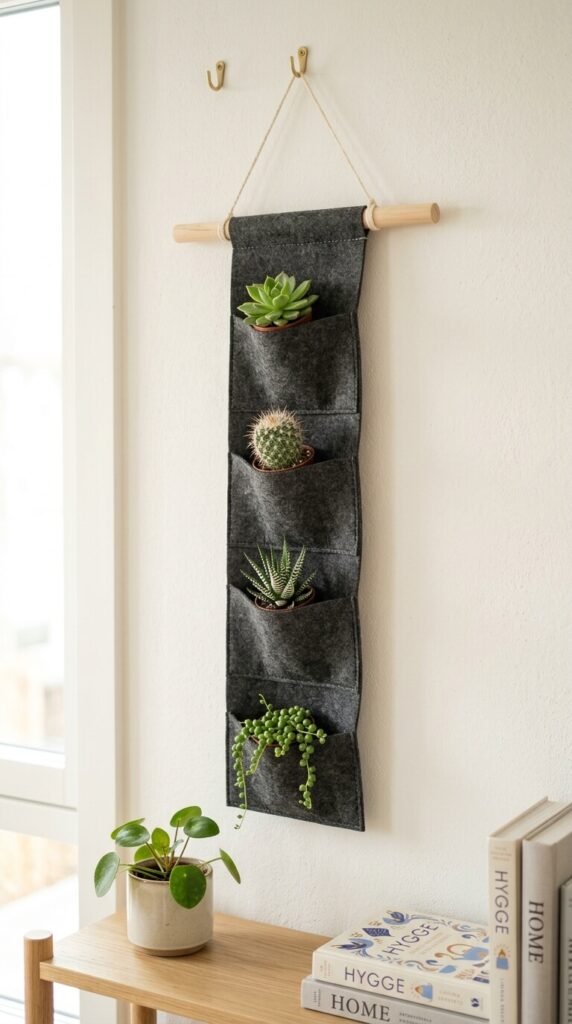
19. Hanging Felt Pocket Planter
Felt pocket planters are ultra-lightweight and wall-friendly. Sew or buy a felt strip with multiple pockets. Each pocket holds a small succulent or cactus — plants that don’t need much water. Hang the strip from a dowel using simple loops. The felt absorbs minimal moisture, so water sparingly. These work well in dorm rooms or apartments where wall damage is a concern. Use adhesive hooks to hang without drilling. An entire felt planter system costs under $20 to make from scratch.
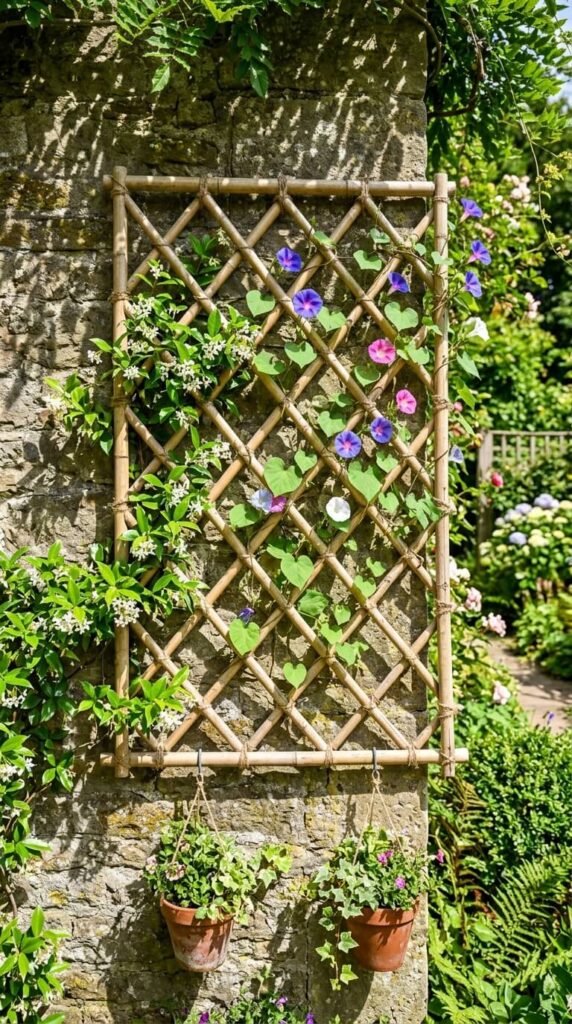
20. Hanging Bamboo Trellis Planter
Bamboo trellises do double duty — they support climbing plants and can hold hanging pots at the bottom. Attach the trellis flat to a garden wall or fence. Train jasmine, morning glory, or climbing roses through the grid. Hook small pots from the lower rungs. You get vertical coverage plus a hanging display in one structure. Bamboo is naturally rot-resistant, so it holds up outdoors for several seasons. Bamboo stakes from a garden center cost around $5–$10 for a bundle.
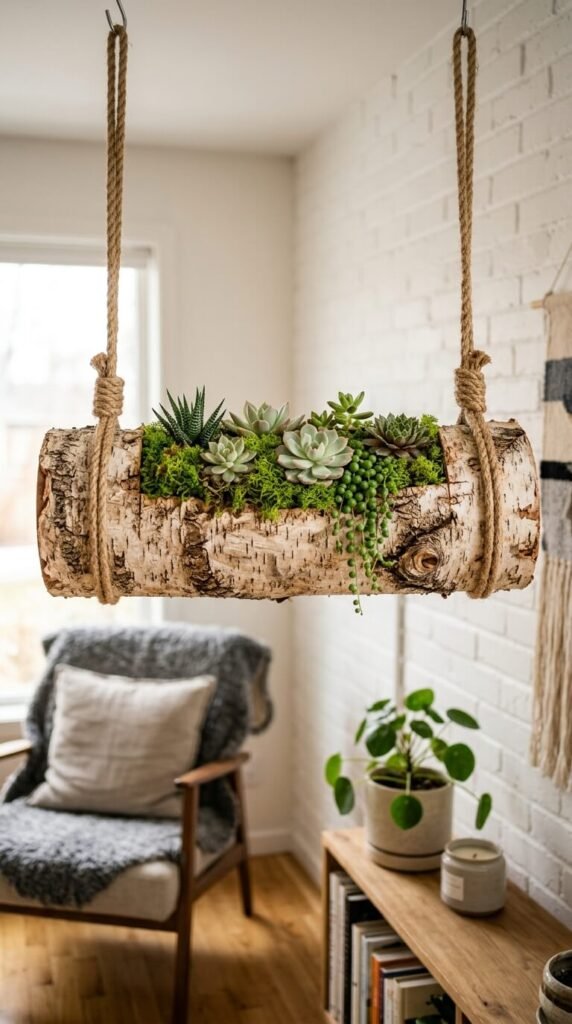
21. Hanging Birch Log Planter
A hollowed birch log makes a dramatic, sculptural planter. Look for fallen or pruned birch wood. Carve out the center, add drainage holes, and fill with succulents or moss. Hang horizontally using rope tied at each end. The white papery bark looks stunning against a dark or white wall. This is a slow project but a striking one. Preserved moss (available at craft stores) works if you want a low-maintenance version that stays green without watering.
22. Hanging Cement Sphere Planter
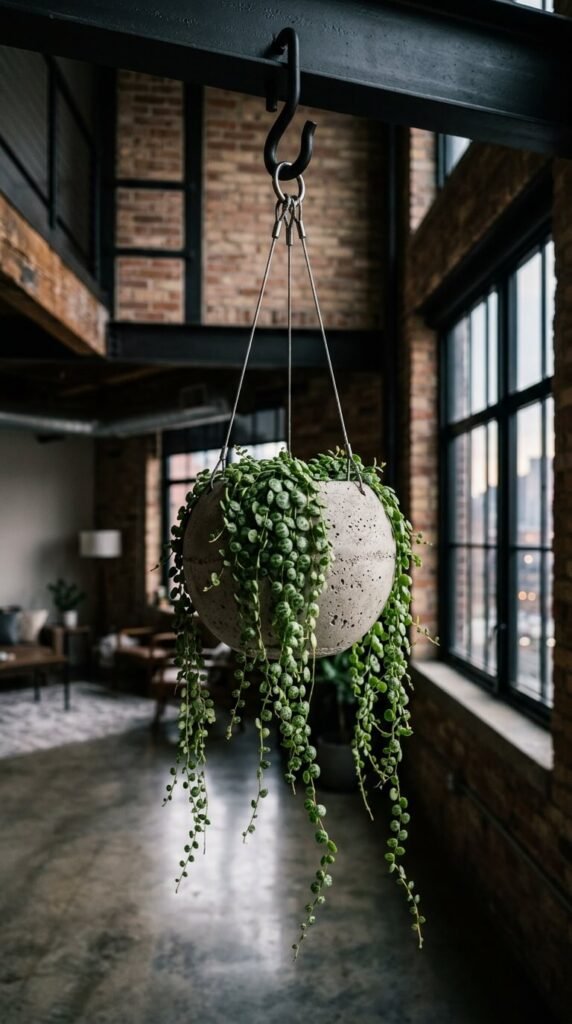
Cast your own cement sphere planter for a modern industrial look. Use two balloons as molds — one inside the other — and pour a thin cement mix between them. Pop the balloon when dry, drill a drainage hole, and attach steel cables for hanging. The whole thing costs under $10 in materials. Plant a trailing succulent or string of turtles from the top opening. The raw cement texture pairs well with exposed brick, dark walls, or loft-style spaces. Completely unique and made by you.
23. Hanging Window Box
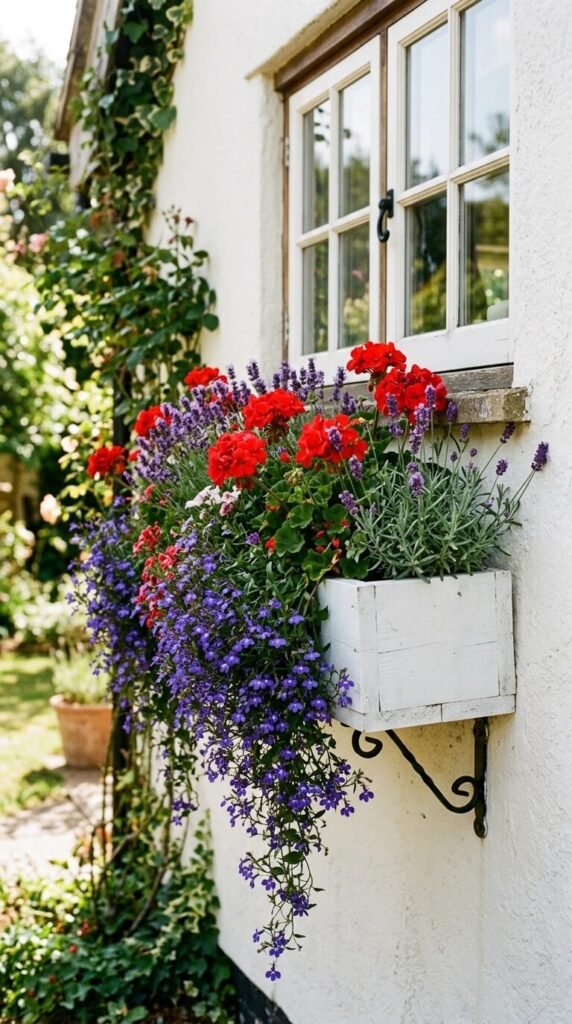
Window boxes aren’t just for sills — hang them as floating garden strips. Mount a rectangular planter box using sturdy wall brackets at balcony height or below a window. Fill with a mix of tall plants at the back (like lavender or salvia) and trailing ones at the front (lobelia, alyssum). This works on apartment balconies too, where floor space is limited. A standard window box runs $15–$30. The long horizontal format creates a lush, layered ribbon of color.
24. Hanging Rope Coil Planter
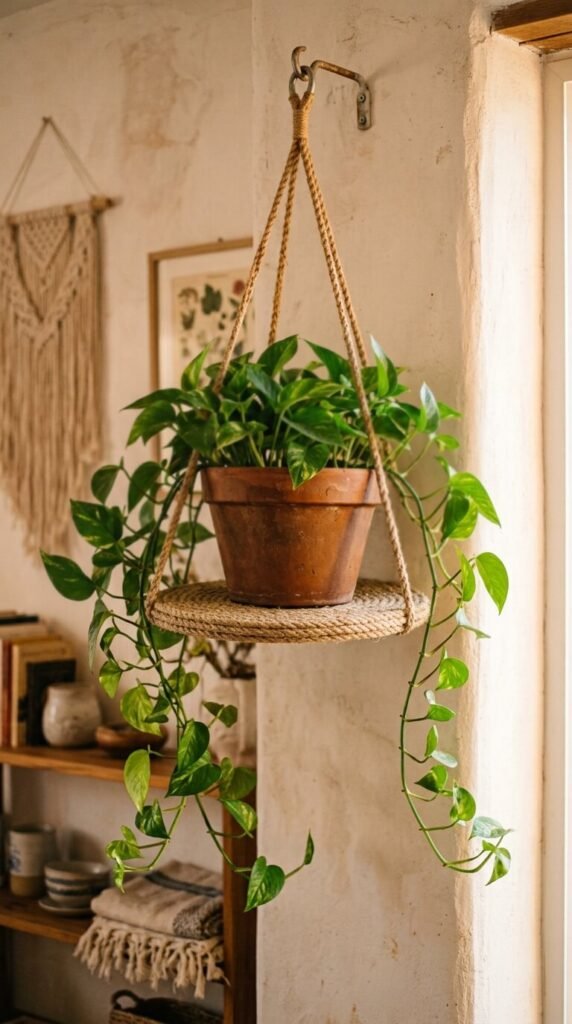
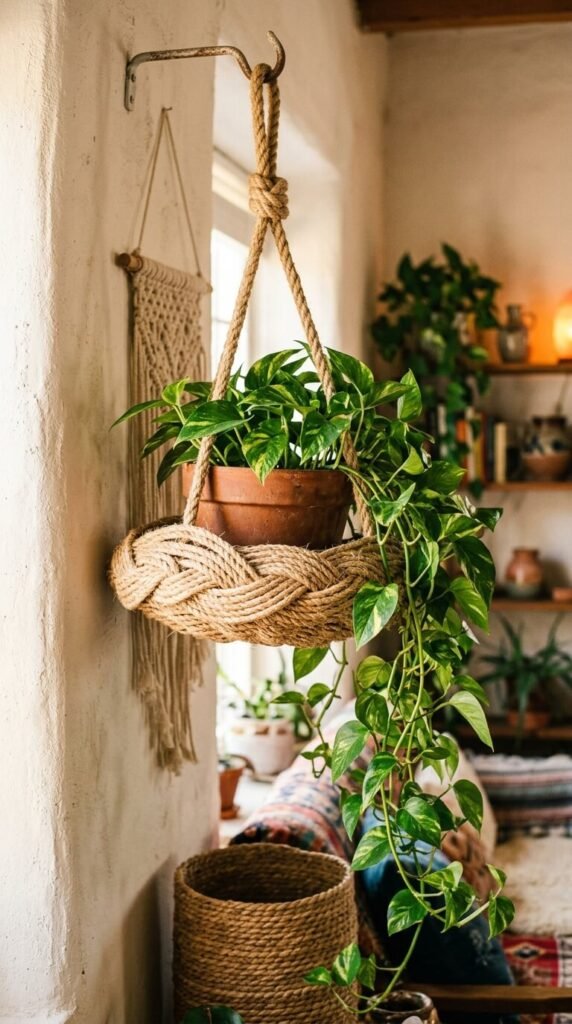
Rope coil planters are both functional and decorative. Coil thick sisal or jute rope into a flat disc shape using strong glue between each row. Build up the sides slightly to cradle a round pot. Once dry, add three hanging cords through the outer coil. The finished product looks like woven art. It costs very little — just a roll of sisal and craft glue. Any round pot fits, so you can swap plants seasonally without remaking the hanger itself.
25. Hanging Self-Watering Globe Planter
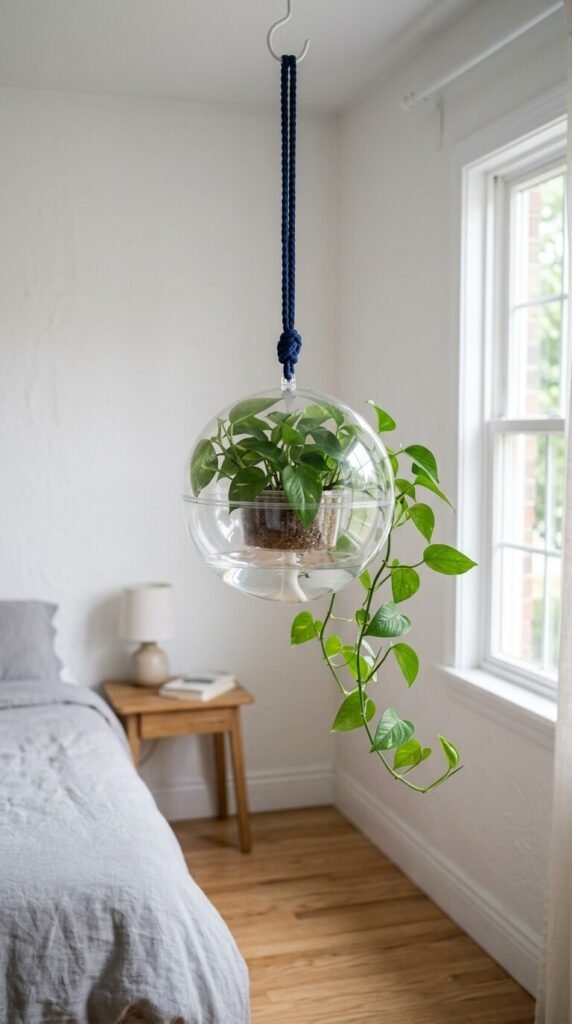
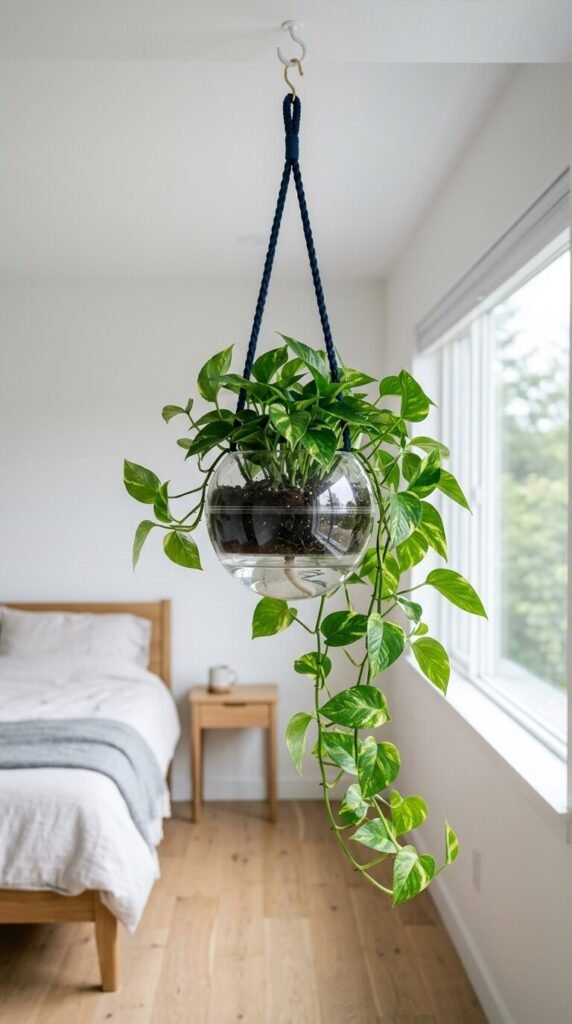
If you travel often or forget to water, a self-watering globe is your solution. These hanging planters have a built-in water reservoir at the bottom. Roots draw moisture up as needed. Fill the reservoir every one to two weeks. Clear versions let you see the water level at a glance. Trailing plants like pothos, philodendron, or spider plants thrive in these. They range from $15–$40 depending on size and material. A practical choice that removes the biggest reason most people say they can’t keep plants alive.
Conclusion
Hanging planters are one of those rare home projects where a small investment goes a long way. A single well-placed hanger can change the feel of an entire room, balcony, or garden wall. The 25 ideas here range from completely free (repurposed boots and tin cans) to small splurges (self-watering globes and glass orbs) — but all of them are achievable without professional help or a big budget. Start with one idea that fits your space and your skill level. Once you see how much life a hanging plant adds to a room, you’ll want to try another. And then another.