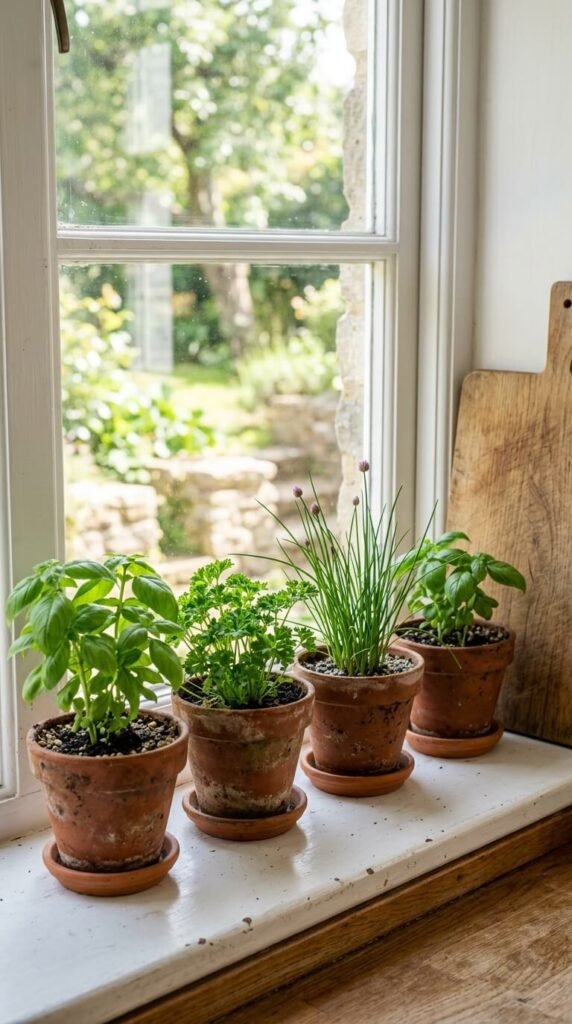
Growing herbs at home is one of the smartest things a home cook can do. You get flavor on demand, without the $4 grocery store bundles that wilt before Tuesday. The right herb garden display does double duty — it looks good in your space and keeps plants alive and within arm’s reach while you cook. Whether your kitchen is tiny or your backyard has room to breathe, there’s a setup here that fits. These 28 ideas run the range from a single mason jar on a windowsill to a full outdoor raised planter. All are practical, most are budget-friendly, and every single one will change how you cook.
Windowsill Row of Terracotta Pots
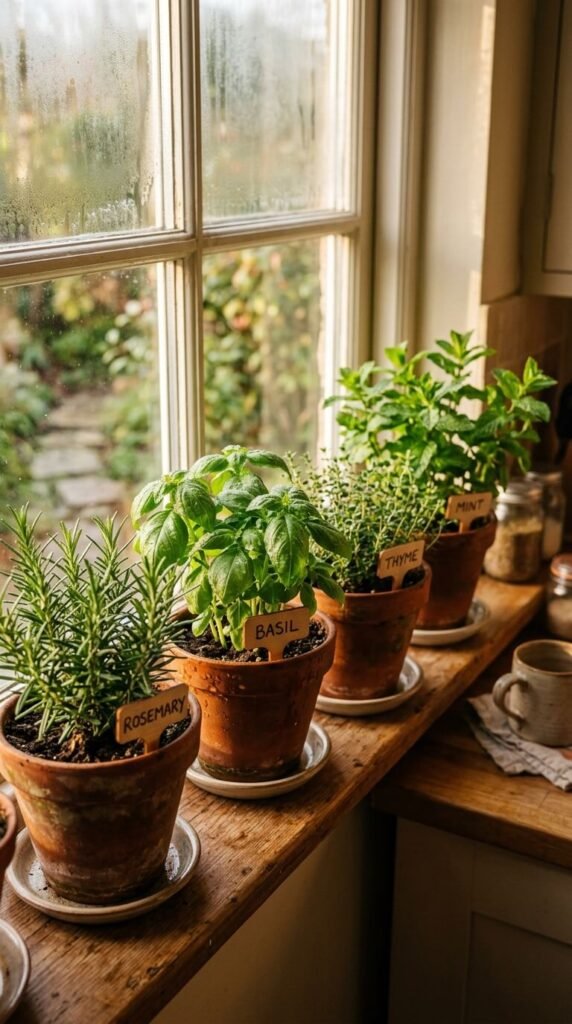
A classic for good reason. Line up three to five small terracotta pots along a south-facing windowsill and you’re done. Terracotta breathes, so roots stay healthy and you won’t overwater as easily. Keep basil, parsley, and chives here — they all like light and don’t mind being snipped regularly. Budget tip: a three-pack of 4-inch terracotta pots runs under $5 at most garden centers. Add a strip of chalkboard labels so you’re not guessing which is thyme and which is oregano.
Hanging Macramé Herb Planter
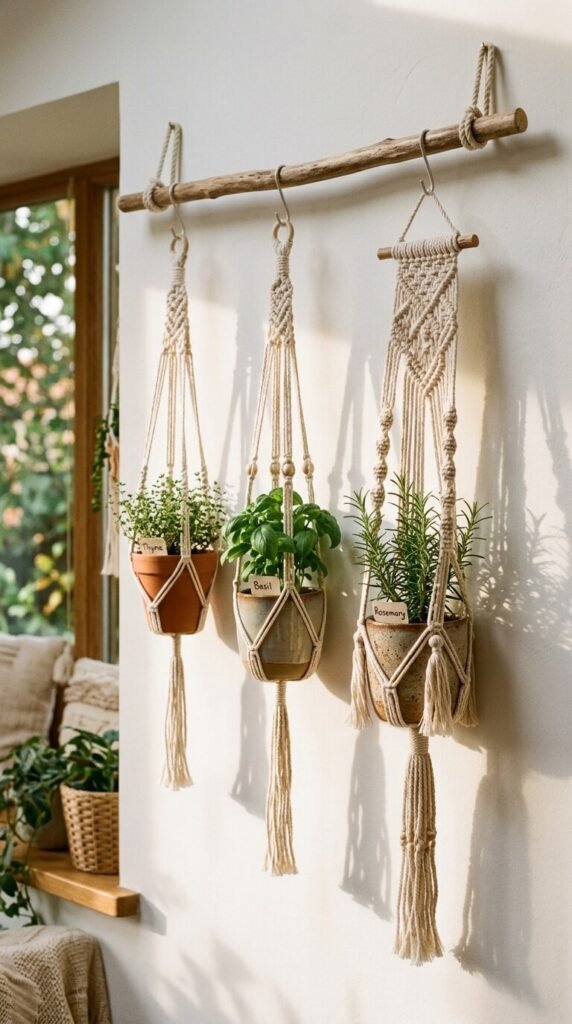
This one earns its wall space. A macramé hanger keeps pots off your counter while adding texture to a plain wall. You can hang three or four pots from a single wooden dowel. DIY kits cost around $10–$15 and take an afternoon to make. Lightweight herbs like thyme, oregano, and marjoram work best — they don’t get too heavy and can handle slight dryness between waterings. Mount the dowel near a window and you have a functional display that doubles as decor.
Magnetic Tin Planters on the Fridge
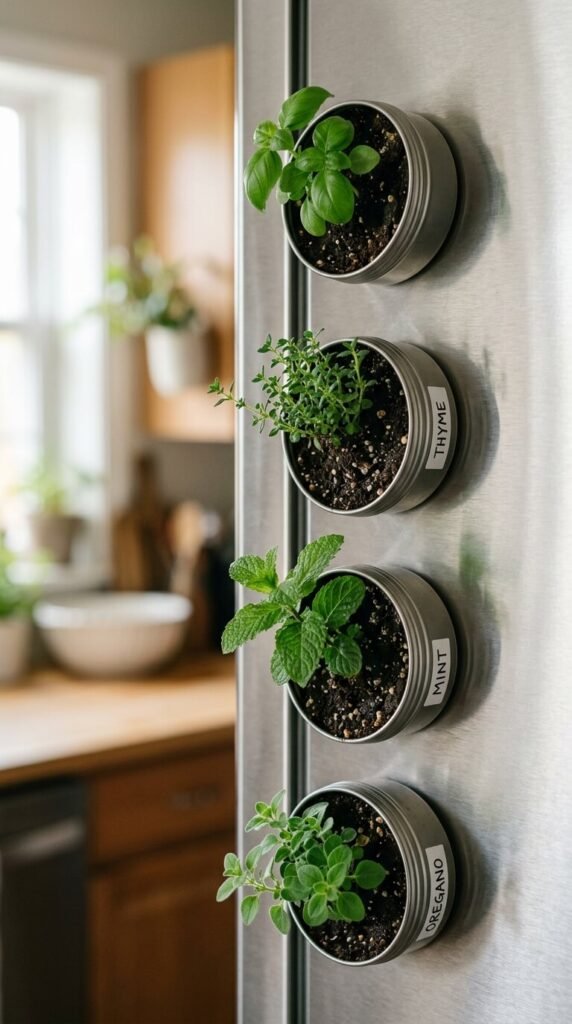
Got a magnetic fridge side? Use it. Small metal tins with strong magnets attached to the base hold compact herbs like basil and cilantro beautifully. You can buy magnetic planter sets online for $15–$25, or DIY with craft store tins and heavy-duty disc magnets. Line the tin with a plastic bag before adding soil so it doesn’t rust. This is one of the best space-saving hacks for tiny kitchens with zero counter room.
Tiered Wooden Shelf Display
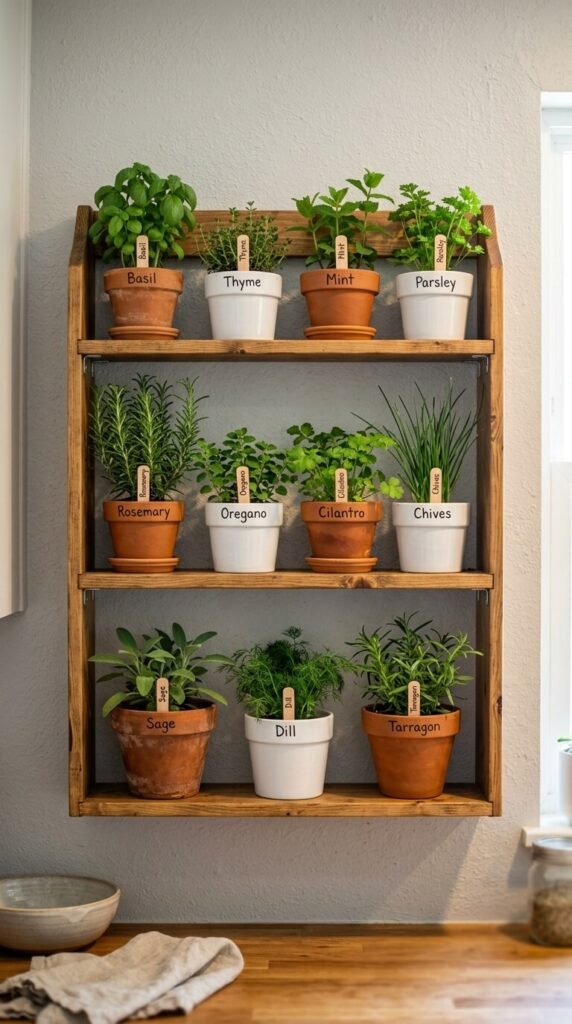
A tiered shelf turns a blank wall into a working herb station. Floating shelves from IKEA or a thrift store work perfectly. Keep taller plants like rosemary on the bottom, mid-height like sage in the middle, and compact plants like thyme on top so none shade the others. Space the shelves at least 10 inches apart so plants have room. A three-shelf setup can hold up to 12 pots — more than enough for a well-stocked kitchen garden.
Upcycled Wooden Crate Planter
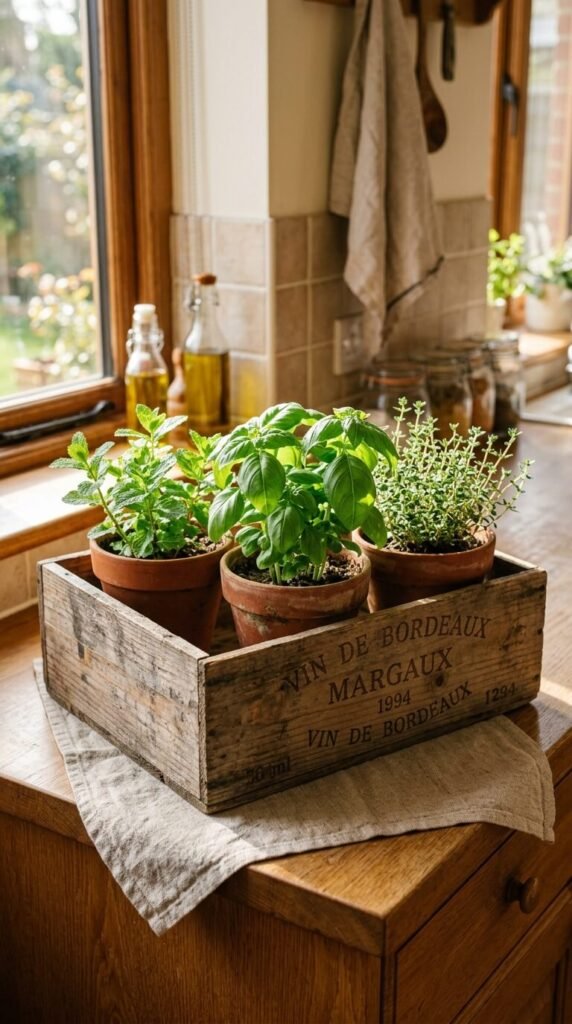
Old wooden wine crates from a liquor store are often free or a dollar each. Line the crate with a plastic trash bag, poke drainage holes, fill with potting mix, and plant directly or drop pots in. The rustic look is a bonus. This works outdoors on a patio too. It’s portable, so you can move it when guests come or when weather turns. A crate that holds six herbs costs you less than $5 in supplies if you already have soil on hand.
PVC Pipe Vertical Herb Tower
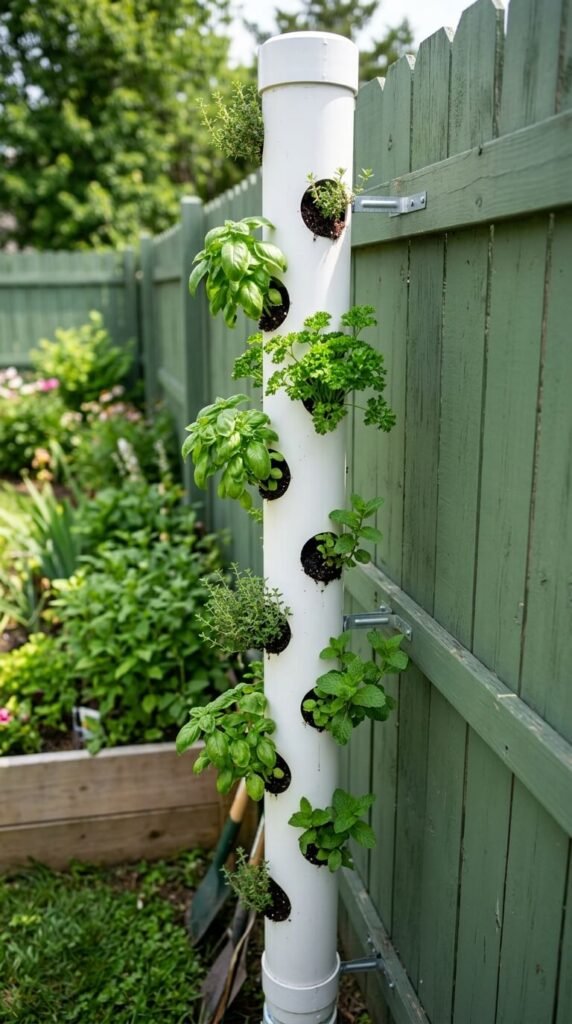
Cut holes in a large-diameter PVC pipe, cap the bottom, fill with soil, and plant herbs in each hole. This tower holds six to ten varieties in less than one square foot of ground space. 4-inch diameter pipe works for most herbs. Mount it on a fence post or anchor it in a bucket of gravel for stability. The entire build costs under $20 if you buy a short section of PVC at a hardware store. Great for small patios with no garden beds.
Mason Jar Herb Garden on a Wooden Board
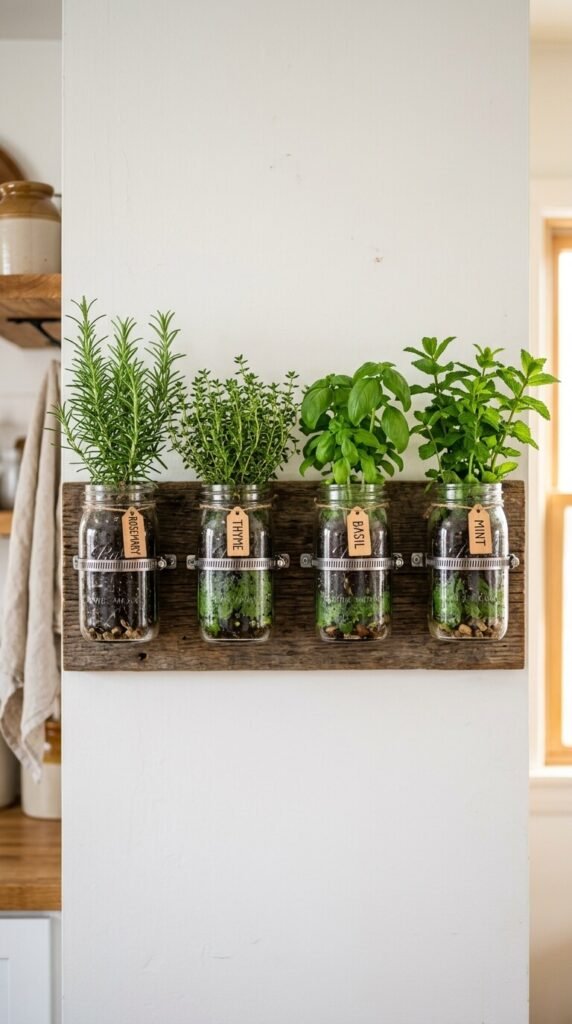
Screw hose clamps onto a piece of reclaimed wood, slide in mason jars, and you have a wall-mounted herb display for under $20 total. The glass lets you watch root growth, which is satisfying. Plant herbs directly or use the jars as sleeves for smaller nursery pots. Keep this near your stove so snipping herbs mid-cook takes five seconds, not a trip across the kitchen. A 16-ounce wide-mouth jar fits most herb rootballs with room to grow.
Outdoor Raised Bed Herb Section
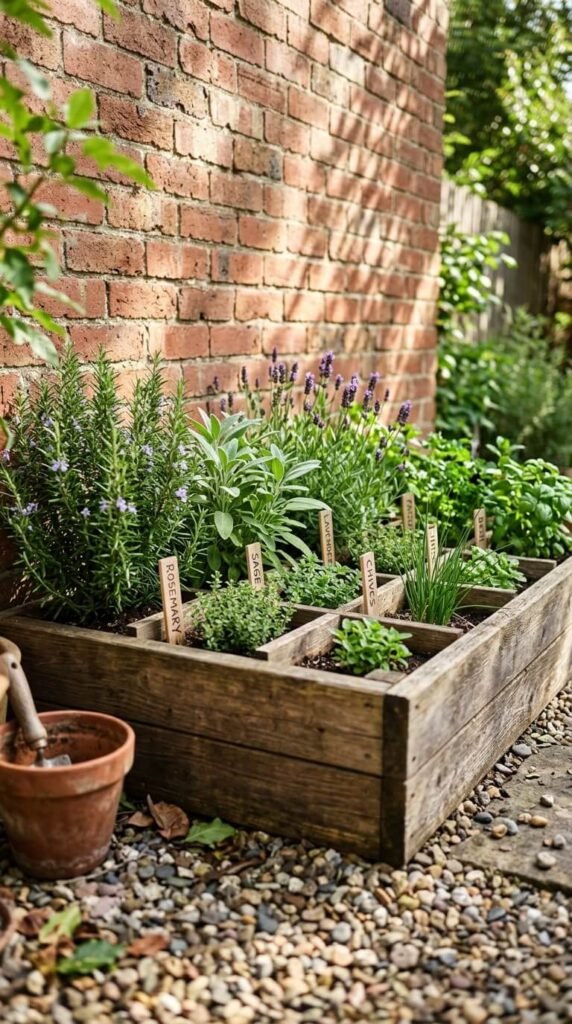
If you have outdoor space, dedicate one section of a raised bed to cooking herbs. Divide it with small cedar boards to keep mint from taking over everything else. Rosemary, sage, lavender, and thyme do well together since they all like dry conditions and full sun. A 4×2-foot section holds six to eight varieties comfortably. Raised bed kits start around $30–$50 at hardware stores, or build your own with fence boards and screws for half the price.
Ceramic Pot Cluster on a Kitchen Island
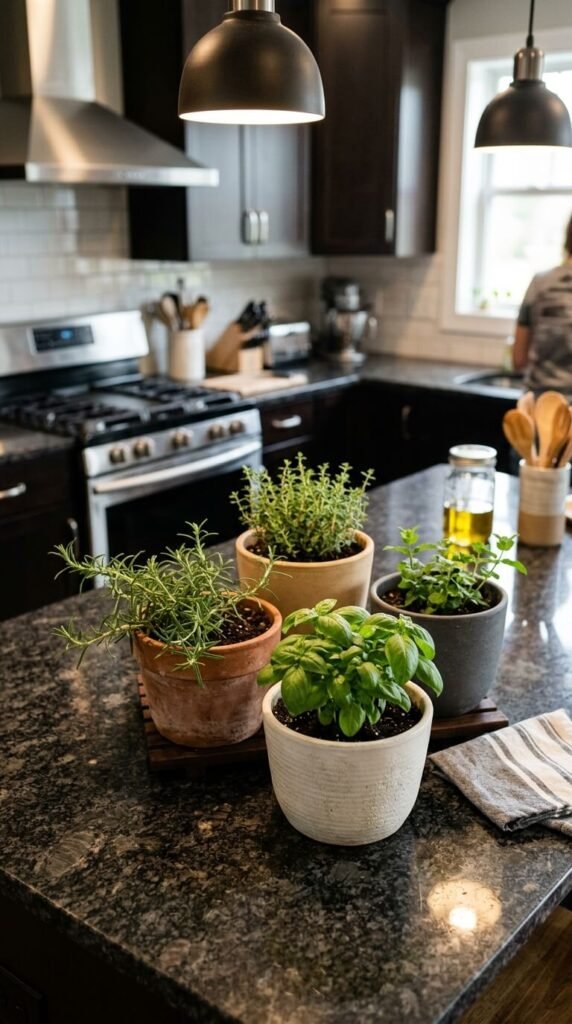
Grouping pots in clusters looks more intentional than lining them up in a row. Pull together three to five ceramic pots in coordinating colors — whites, creams, or terracottas — and set them near your prep area. Odd numbers look more natural. Basil near the pasta station. Rosemary by the roasting tray. This makes the herbs part of your cooking workflow rather than just decoration. Ceramic pots hold moisture longer than terracotta, which means less frequent watering.
Balcony Rail Planter Boxes
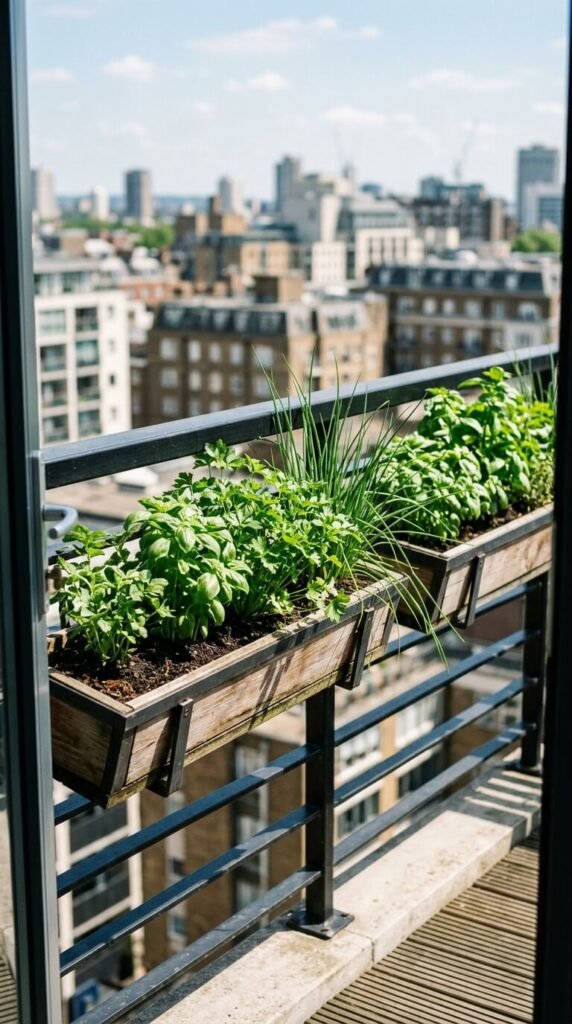
Rail planters clip or bolt onto balcony railings and hang outside the railing for maximum sun exposure. They’re long and narrow — perfect for a row of herbs you can reach through the railing to harvest. Plastic rail planters with built-in reservoirs cost $10–$20 each and hold water longer than clay. Plant basil, parsley, and chives in one box, then add a second for oregano and thyme. Urban apartment herb gardening doesn’t get much easier than this.
Repurposed Colander Hanging Planter
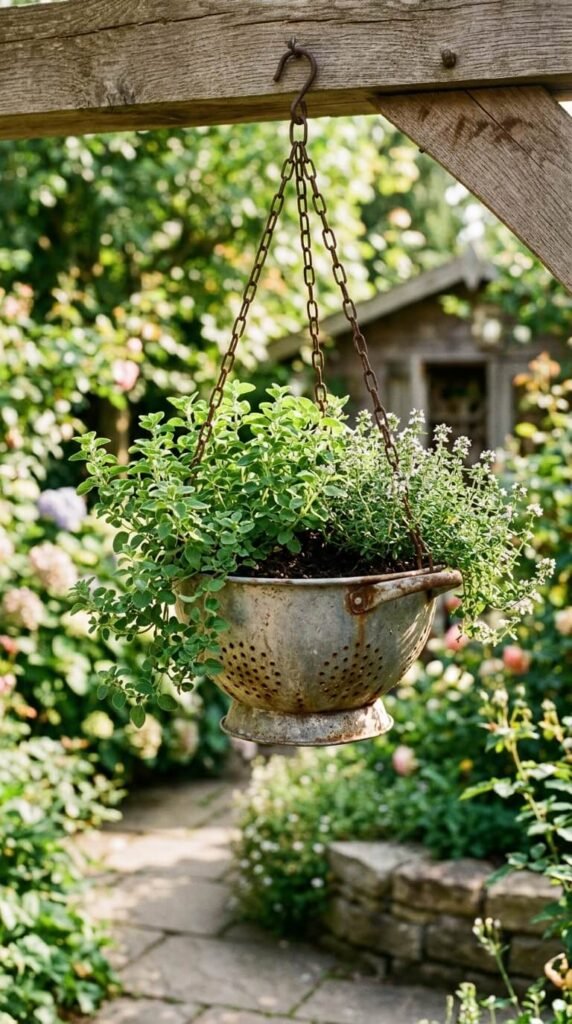
A metal colander already has drainage holes — it’s basically a planter with a handle. Hang it from three lengths of chain or rope at equal intervals and you have a hanging herb basket. Thyme, oregano, and marjoram trail beautifully over the edge. Pick up a colander at a thrift store for $1–$3, add chain from a hardware store, and the whole build costs less than $10. Works indoors near a window or outdoors under a covered porch.
Ladder Shelf Herb Stand
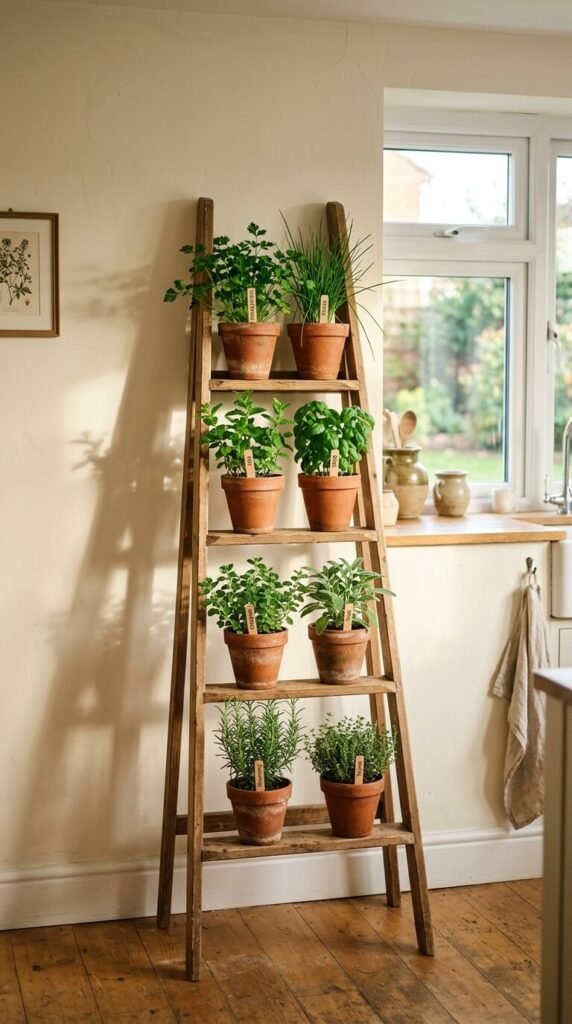
A small wooden ladder shelf — the kind you’d normally use for blankets or towels — makes a perfect herb stand. Lean it against a wall near a window and use each rung as a shelf for pots. Shorter herbs go on top where light is brightest. These are widely available at home goods stores for $25–$50, or you can build a simple A-frame version from 1×2 lumber for under $10. The angled design means each shelf gets slightly different light — useful for herbs with different sun preferences.
Tin Can Upcycle Herb Garden
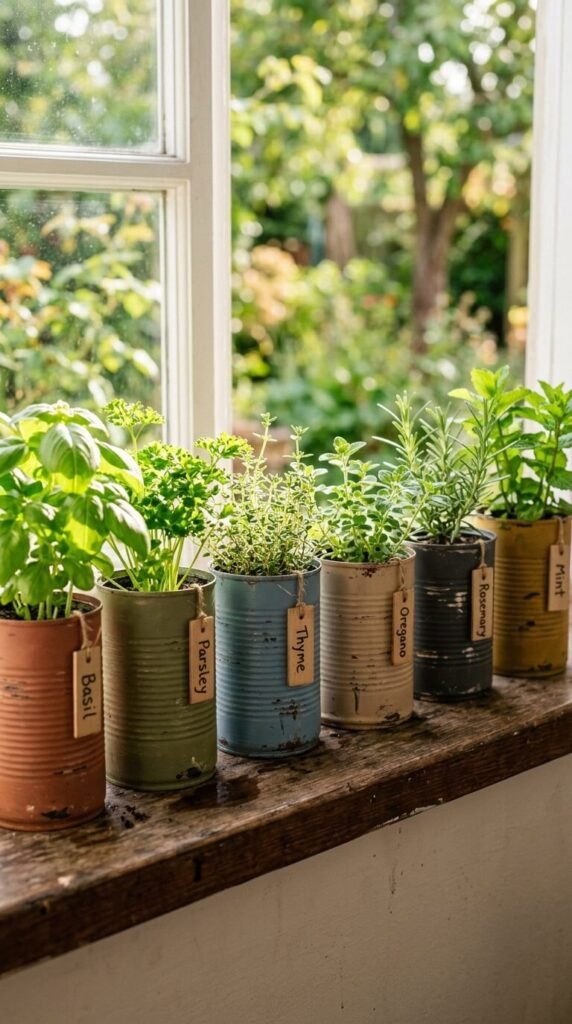
Save your pasta sauce and bean cans. Punch a few drainage holes in the bottom with a nail and hammer, paint them if you like, and you have free planters. Spray paint in matte black or terracotta gives them a polished look. These are sized just right for individual herb plants. Line up six on a windowsill or mount a wooden board and cluster them together. Total cost is just potting soil and seeds — under $5 if you’re starting from seed.
Hanging Pocket Felt Planter
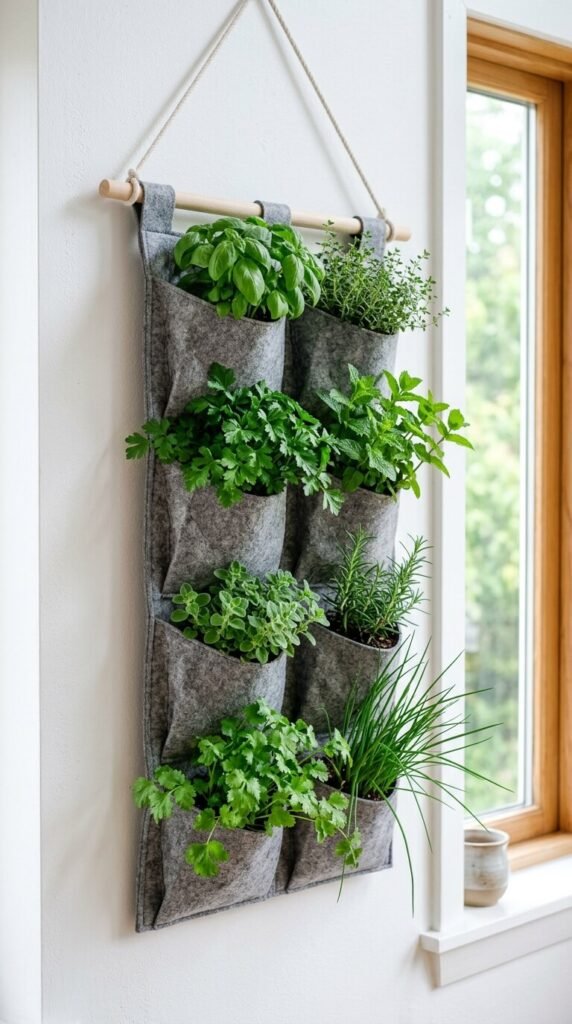
Felt pocket planters hang flat against a wall and hold six to twelve individual herbs in separate pockets. They’re inexpensive — usually $15–$25 for a full panel — and install with two screws or a curtain rod. Each pocket drains independently, so herbs with different watering needs can live side by side. Perfect for apartments with no counter space. Hang one in a sunny hallway or laundry room door. The felt material breathes well, which keeps roots from rotting.
Old Drawer Herb Planter
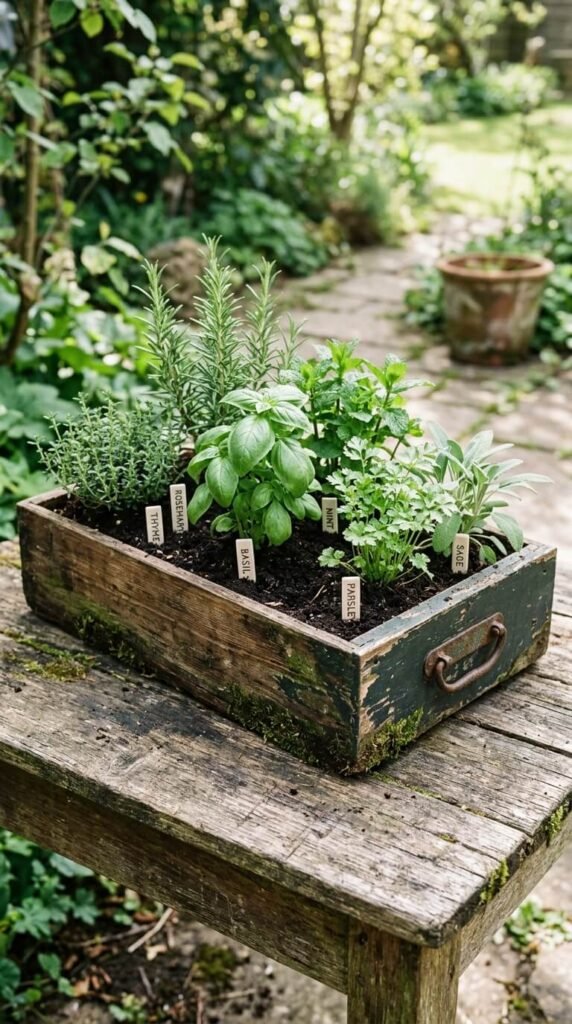
Pull an old drawer from a thrift store dresser and line it with landscape fabric before filling with soil. The shallow depth is fine for herbs — most don’t need deep roots. Paint the outside to match your deck or patio furniture. Drill a few holes through the bottom for drainage and you’re ready to plant. A single drawer can hold six to eight individual herb plants in a single flat row. This is one of the most photogenic and practical repurpose projects you can make in an afternoon.
Copper Pipe Herb Rack
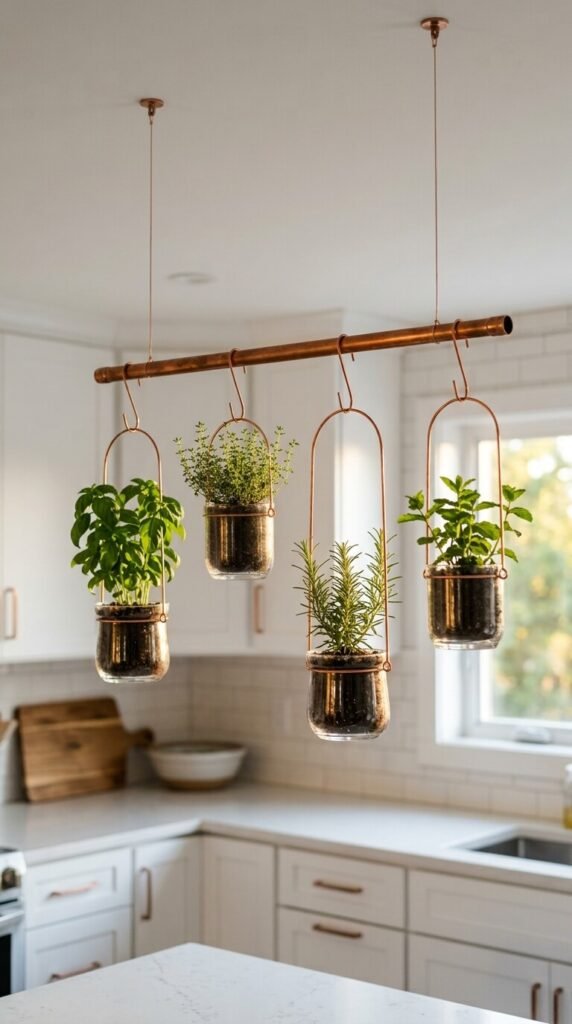
Copper pipe fittings are cheap and look expensive. Build a simple hanging rack using a short length of 3/4-inch copper pipe and end caps. Hang it from the ceiling with copper wire and attach small hooks to suspend glass cups or test tubes of herbs. Herbs grown in water — like mint, basil, and green onion — thrive in this setup. Total cost is under $30 for a setup that looks like it belongs in a design magazine.
Outdoor Pallet Herb Wall
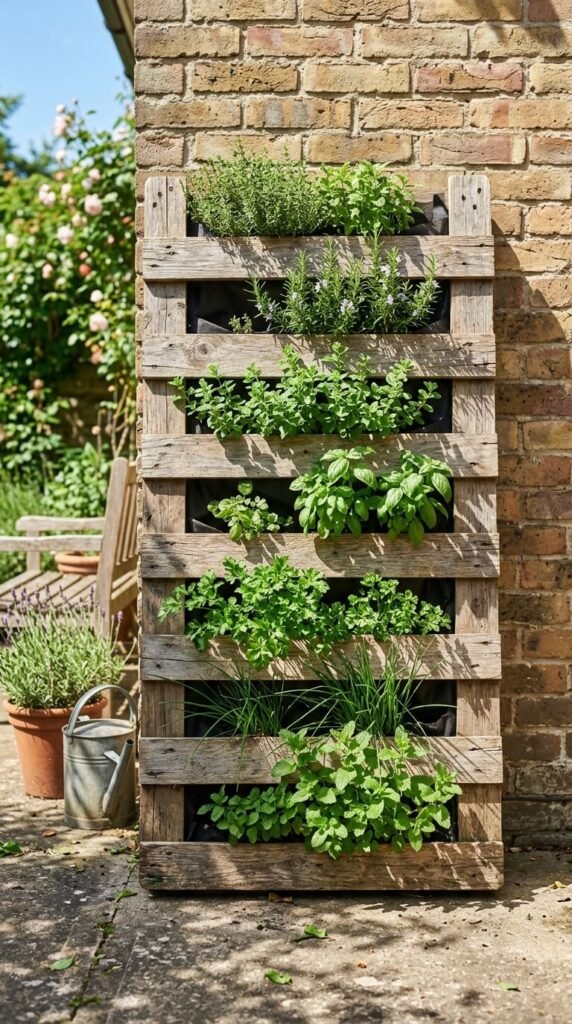
A shipping pallet leaned against a fence or wall becomes a vertical herb garden when you staple landscape fabric between the slats. Fill each row with potting mix and plant herbs sideways so they grow out through the openings. Free pallets from hardware stores or furniture shops make this a nearly zero-cost build. Lay it flat to water it for the first week so soil settles. Then stand it upright once plants root in. A single pallet holds 20+ plants.
Test Tube Herb Display
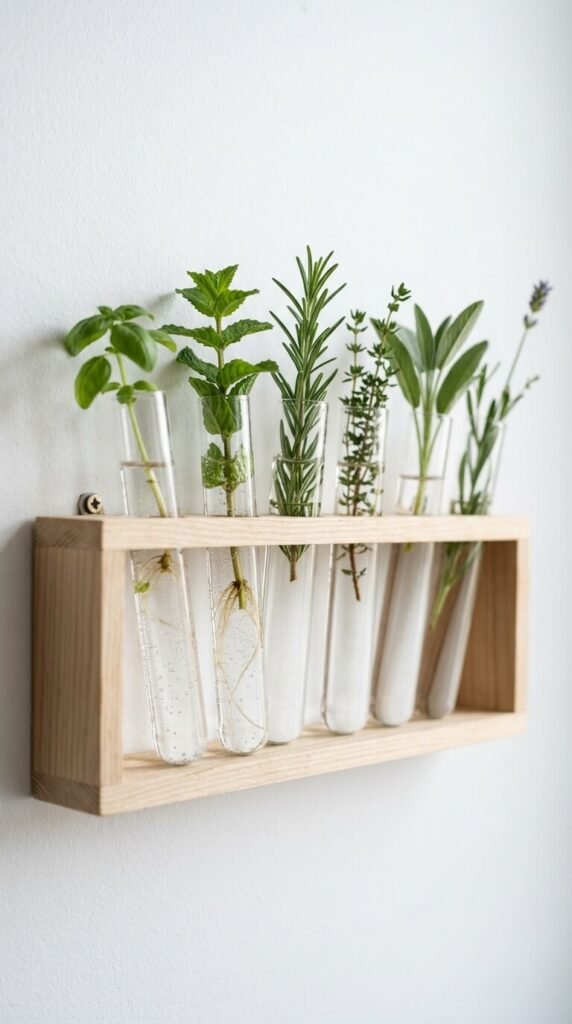
Mount a wooden test tube rack on a wall and fill each tube with water and a herb cutting. Mint, basil, and green onions root in water within a week. This requires no soil, no pots, no drainage — just water changes every few days. Wall-mounted test tube racks are available online for $10–$20 and look clean and modern. It’s also a great way to root cuttings before potting them up into soil planters. Start with three tubes and scale up.
Countertop Herb Trough Planter
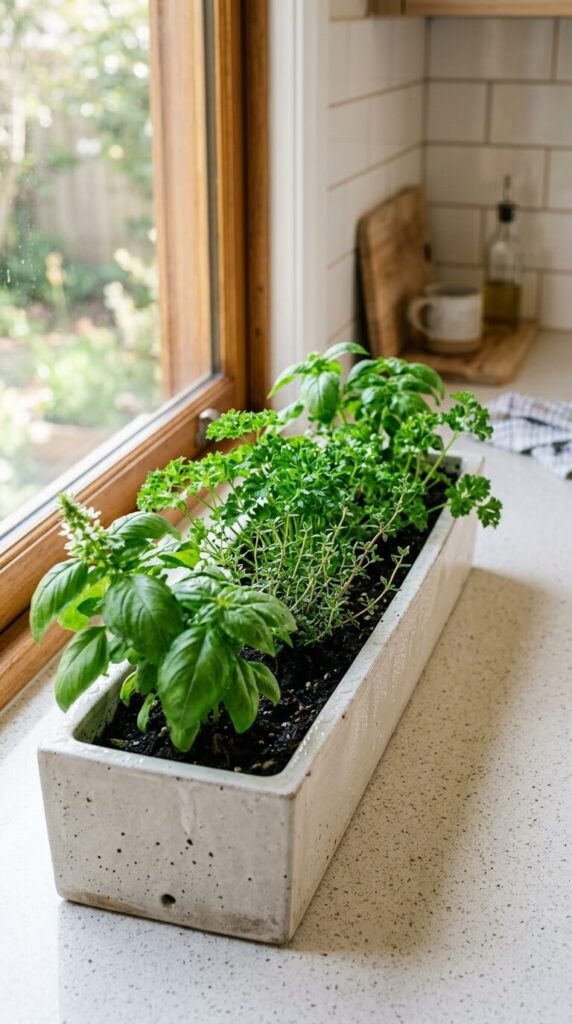
A long, narrow trough planter sits along the back edge of a countertop and holds five to eight herbs in a single row. Concrete or ceramic trough planters look built-in, like a mini kitchen garden. You can find them for $20–$40 at home goods stores, or cast your own from quick-set concrete in a cardboard mold for under $5. Plant herbs in order of height so taller rosemary doesn’t shade compact thyme. This is the most “chef’s kitchen” herb display on this list.
Hanging Glass Globe Herb Planters
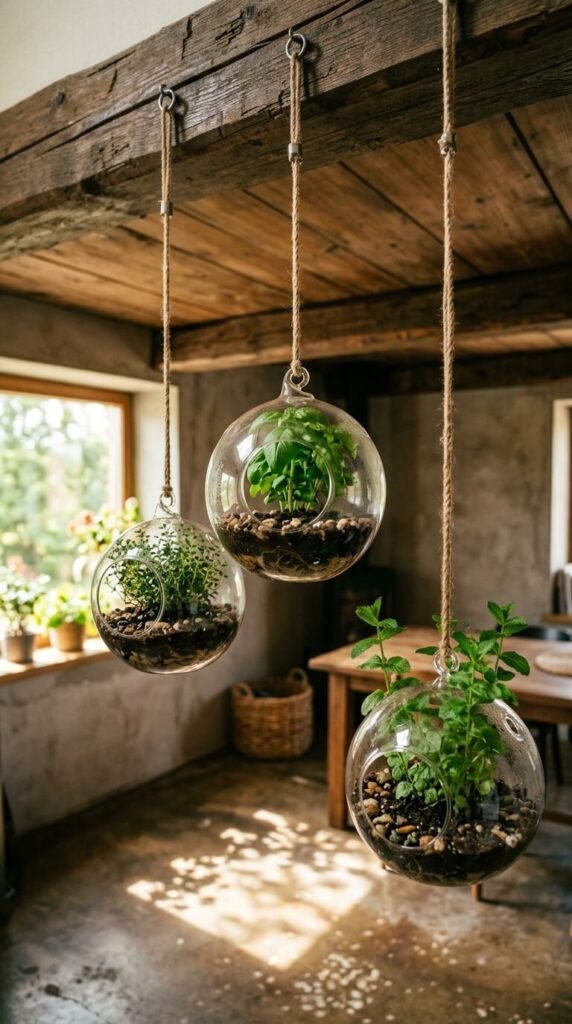
Hanging glass globes work for herbs grown in water or in a small soil base. Suspend three at different heights from a ceiling hook or curtain rod. Each globe holds one plant, so you’re creating a living mobile. These work best for slow-growing herbs like thyme and marjoram. Glass globe planters typically run $5–$12 each. The transparent glass means you can monitor root and water levels without disturbing the plant. It’s a low-maintenance display once it’s set up.
Floating Wooden Box Shelves
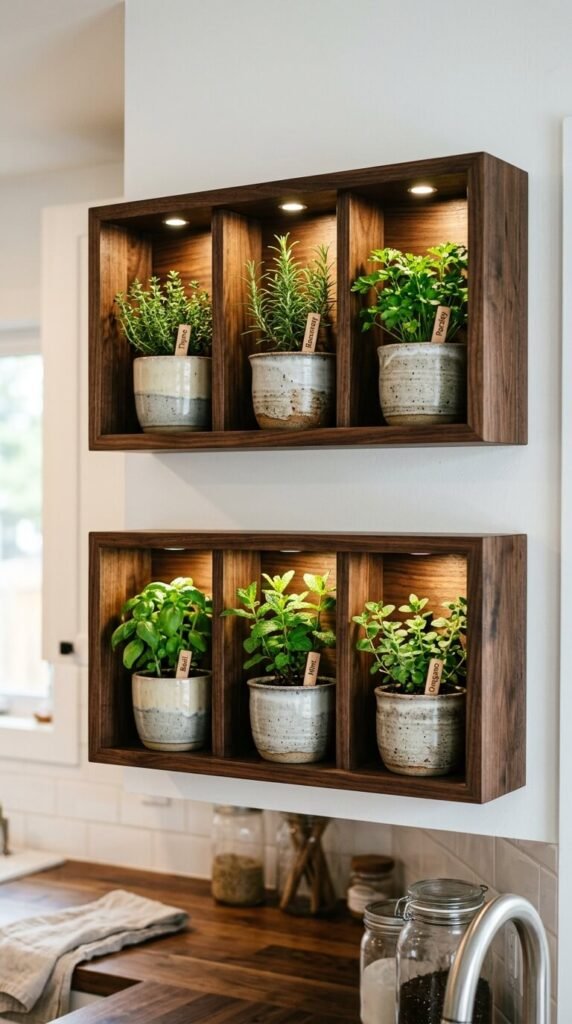
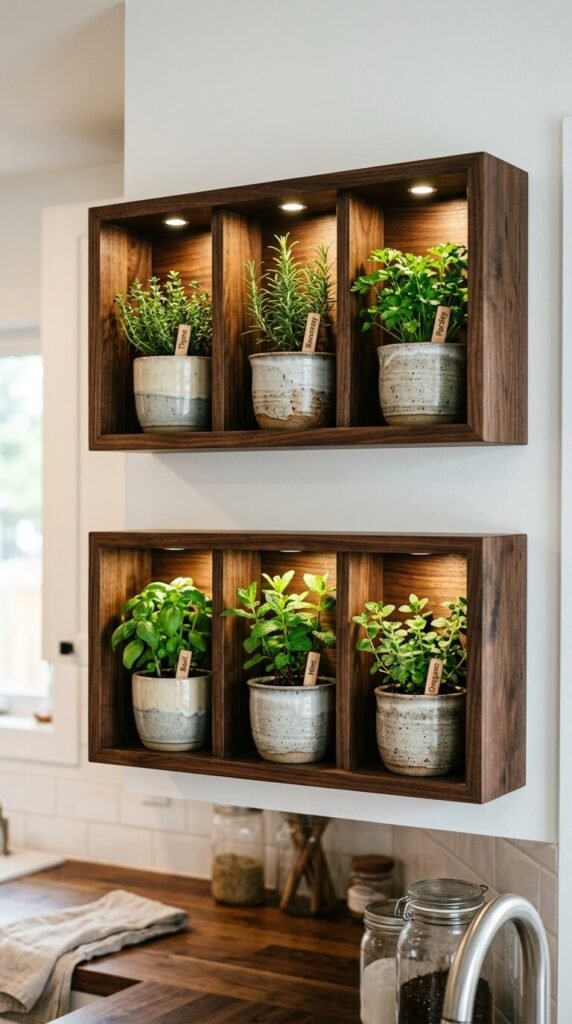
Shadow box shelves are deeper than standard floating shelves, which means pots sit recessed and don’t tip off as easily. Build them from 1×6 lumber cut into three pieces — top, bottom, and back — and mount to studs. Stain or paint to match your kitchen. Two shadow boxes, each holding three pots, gives you six herbs for under $20 in materials. They look intentional and custom without requiring any special woodworking skills. A drill and some screws is all you need.
Vertical Fence Herb Pockets
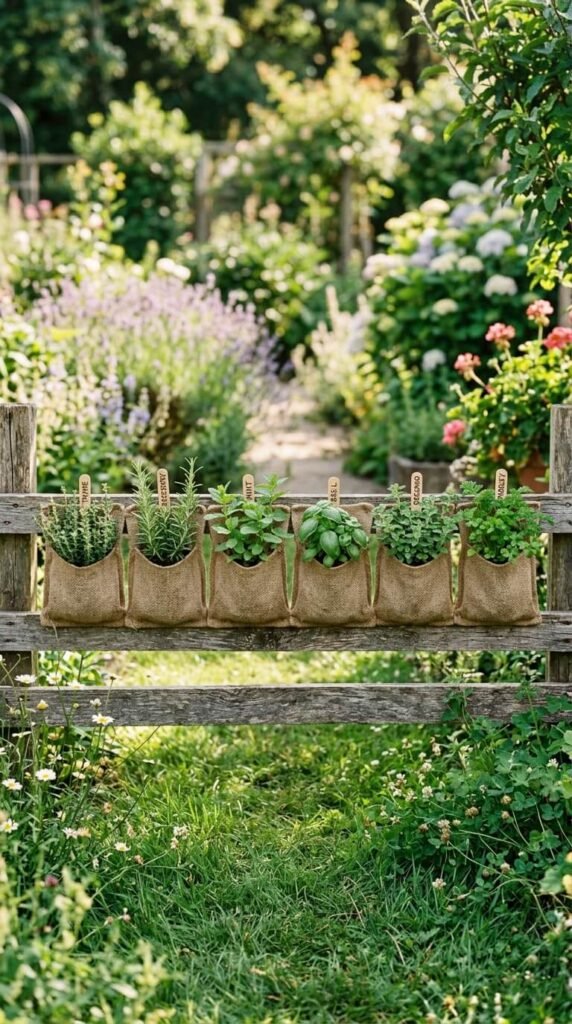
Sew or buy small fabric pockets and staple them directly to a garden fence rail. Each pocket holds one herb plant. Burlap or canvas drains well and is sturdy enough to hold soil and roots. Space them every 8–10 inches so plants don’t crowd each other. You can do an entire fence panel for under $15 if you buy pre-made garden pouches. This is especially useful for herbs like parsley and cilantro that you harvest often and want close to the garden door.
Kitchen Island S-Hook Herb Rack
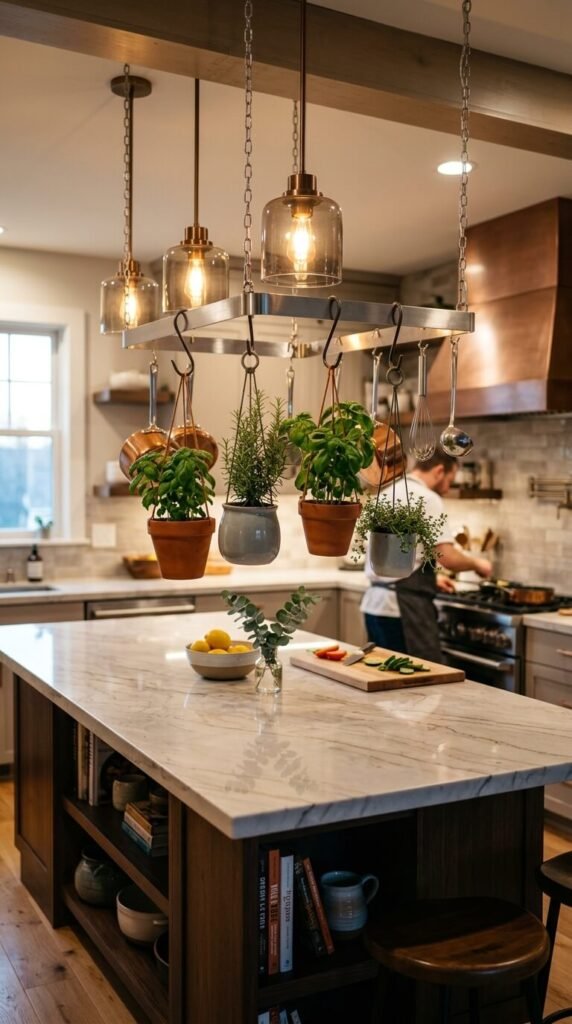
If you already have a hanging pot rack over your kitchen island, use it for herbs too. Add a few S-hooks and hang small pots with built-in hangers or wire wrapped around the pot rim. Basil and rosemary do well in hanging positions near kitchen lighting. The rack puts herbs within reach during cooking without using counter space. Wire wrap around a nursery pot costs nothing. A set of S-hooks runs $3–$5. This is genuinely a zero-extra-furniture solution.
Tabletop Grow Light Herb Garden
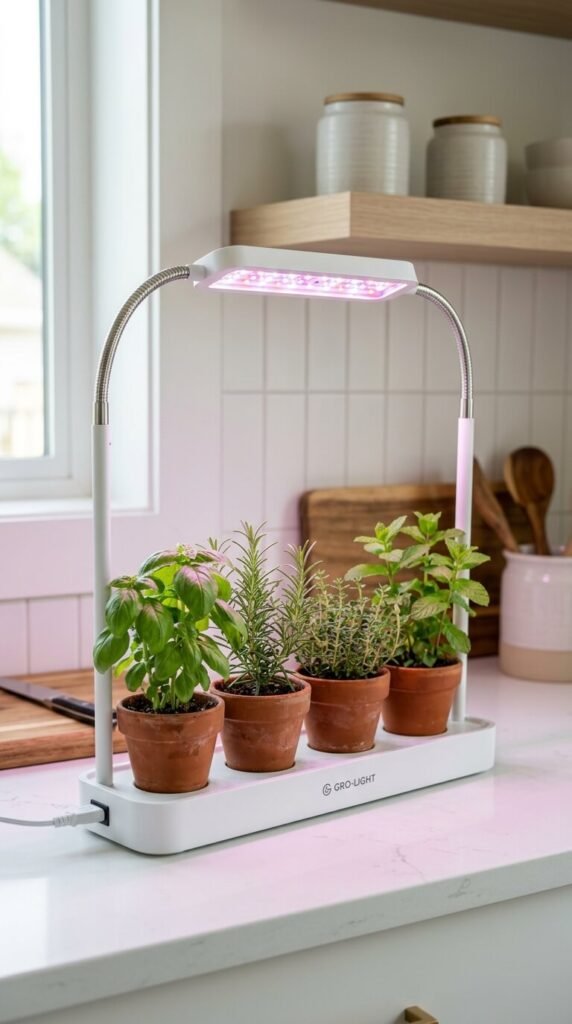
A small tabletop grow light unit solves the no-natural-light problem completely. These desktop setups come with built-in LED lights, drainage trays, and timer functions. Herb kits with lights start around $25–$60. You can grow basil, cilantro, and parsley year-round regardless of your window situation. The light does what sunlight would. This is the best option for north-facing apartments or anyone who has failed with herbs because of light, not effort.
Wicker Basket Herb Grouping
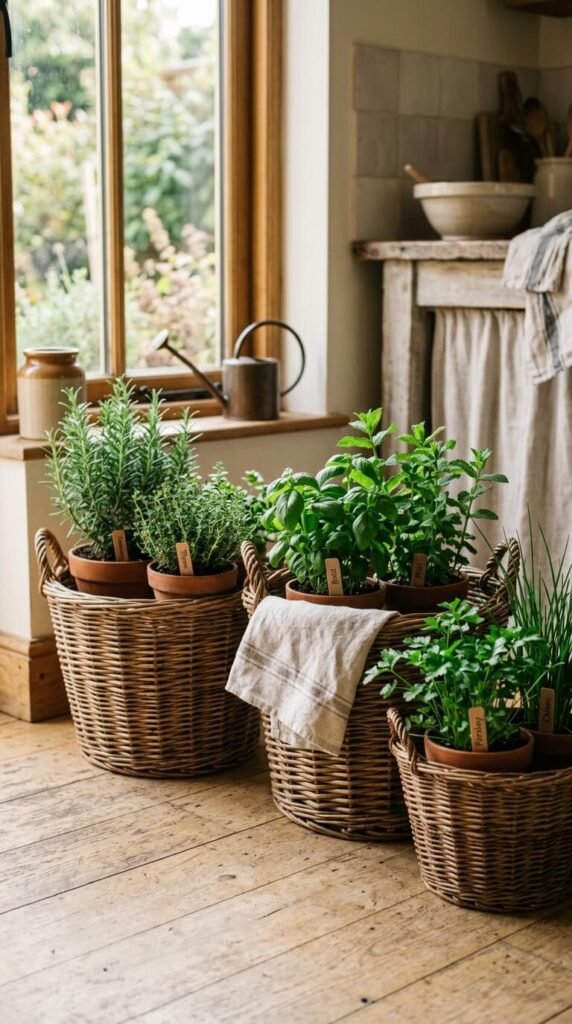
Drop nursery herb pots directly into wicker baskets and group them together on the floor near a bright window or on a low open shelf. The baskets hide plastic nursery pots and look polished without any extra cost. Use baskets in different sizes for visual interest. Water carefully so the basket doesn’t get waterlogged — or keep plastic saucers inside. A trio of wicker baskets from a thrift store or discount home store runs $3–$10 total.
Hanging Wooden Crate Planter
Mount a small wooden crate directly to the wall using keyhole brackets on the back. Fill it with three small herb pots sitting side by side. Crates from craft stores run $3–$8 and already have the right depth for small pots. This is the fastest version of a wall-mounted herb display — no building, no drilling complex hardware. Hang two side by side for six herbs total. Paint or stain the crates first for a cleaner look, or leave the raw wood for a rustic feel.
Mini Greenhouse Herb Cabinet
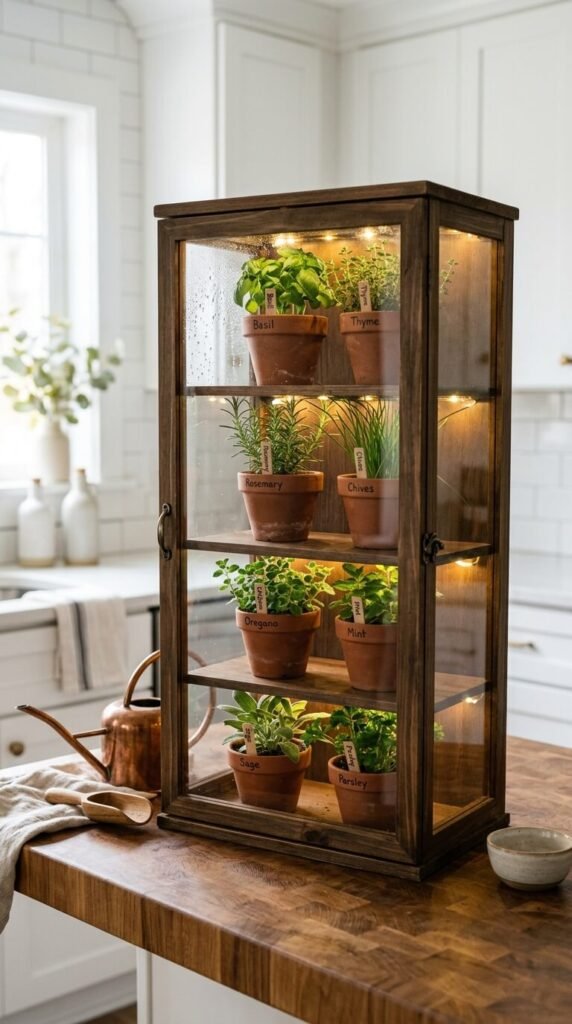
A tabletop mini greenhouse — basically a small glass cabinet — extends your herb growing season and protects plants from drafts. These small units keep humidity slightly higher, which herbs like basil appreciate. Tabletop greenhouse kits cost $20–$50 at garden centers or online. Four small shelves can hold 12 or more herb pots. This is especially useful in winter when windowsill temperatures drop. It’s more of a long-term investment than most setups here, but it pays off with year-round harvests.
Concrete Block Herb Planter Stack
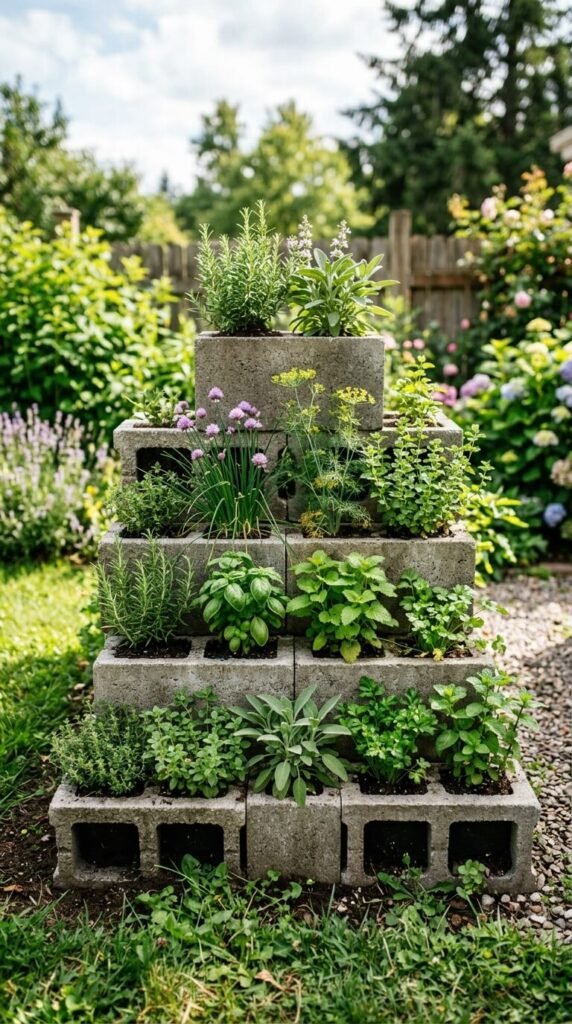
Standard cinder blocks — the ones with two hollow openings — make surprisingly good planters when stacked. Each hollow fits one herb plant. Stack two high and plant six herbs in a footprint of less than two square feet. Cinder blocks cost $1–$2 each at hardware stores. Arrange them in an L-shape, a row, or a freestanding tower. The gray concrete looks clean and modern outdoors, especially on a patio. You can paint them too. This is the most budget-maximizing structure on this entire list.
Conclusion
You don’t need a big garden or a big budget to grow herbs that actually make a difference in how you cook. A handful of pots on a windowsill. A pallet leaned against a fence. A test tube rack on the wall. Any one of these 28 setups gets you from “buying sad grocery store herbs” to “snipping what you need right now.” Start with two or three herbs you actually cook with — basil, rosemary, thyme — and build from there. The setup that works best is the one you’ll actually maintain. Pick something that fits your space, your budget, and your cooking style, and get started this week.