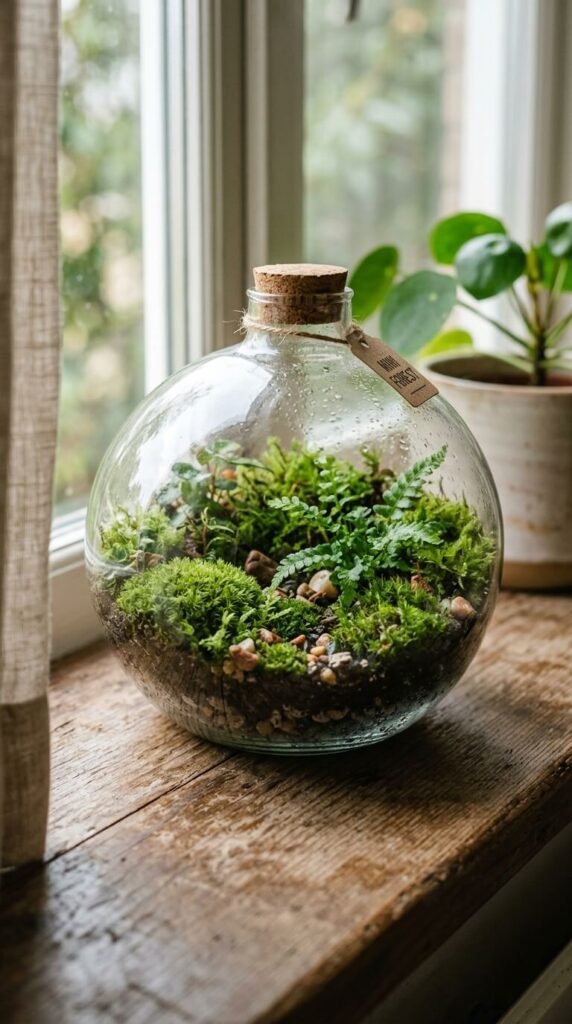
Tiny gardens packed inside glass — there’s something almost magical about a miniature terrarium sitting on a windowsill. Whether you have a sun-drenched shelf or a dim apartment corner, there’s a terrarium design that fits your space, your budget, and your skill level. These self-contained little worlds are low-maintenance, wildly creative, and honestly pretty addictive to build. From desert cacti to lush tropical moss, every jar, bowl, or bottle can become something worth showing off. Here are 28 miniature terrarium ideas to spark your next weekend project.
1. Classic Closed Moss Terrarium
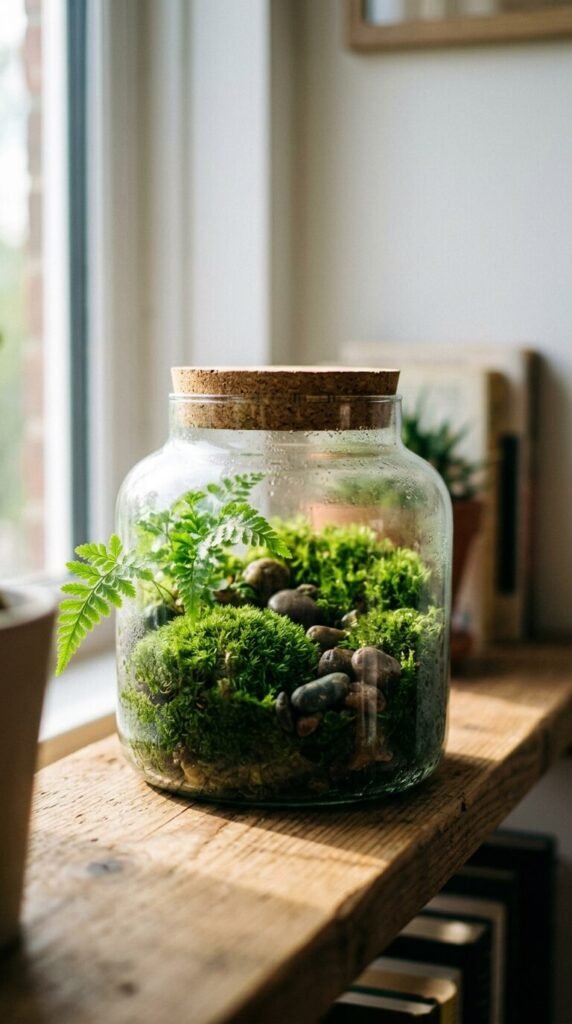
Closed terrariums are the easiest starting point for beginners. Seal the lid and the moisture recycles itself. You barely need to water it. Layer pebbles at the bottom for drainage, add activated charcoal, then potting soil, then moss. Sheet moss and cushion moss both work great. Find them at garden centers or forage from a shaded yard. A $5 mason jar is all you need. Keep it out of direct sun — bright indirect light keeps the moss green and happy without burning it.
2. Desert Cactus and Succulent Bowl
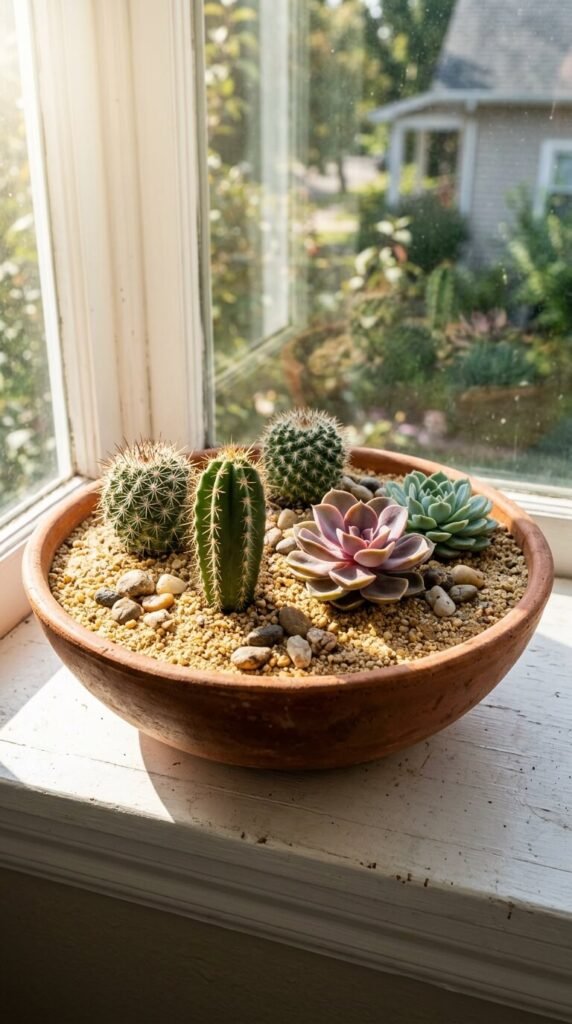
Succulents and cacti are made for forgetful plant parents. Water once every two weeks and they’re happy. Use a bowl with drainage holes, or layer extra gravel at the bottom. Sandy, fast-draining soil is a must. Grab a $3 succulent mix from any hardware store. Arrange your plants by height — tallest cactus at the back, small rosettes up front. Add white quartz pebbles or colored sand for a polished desert look. This one thrives on a sunny kitchen counter.
3. Hanging Glass Orb Terrarium
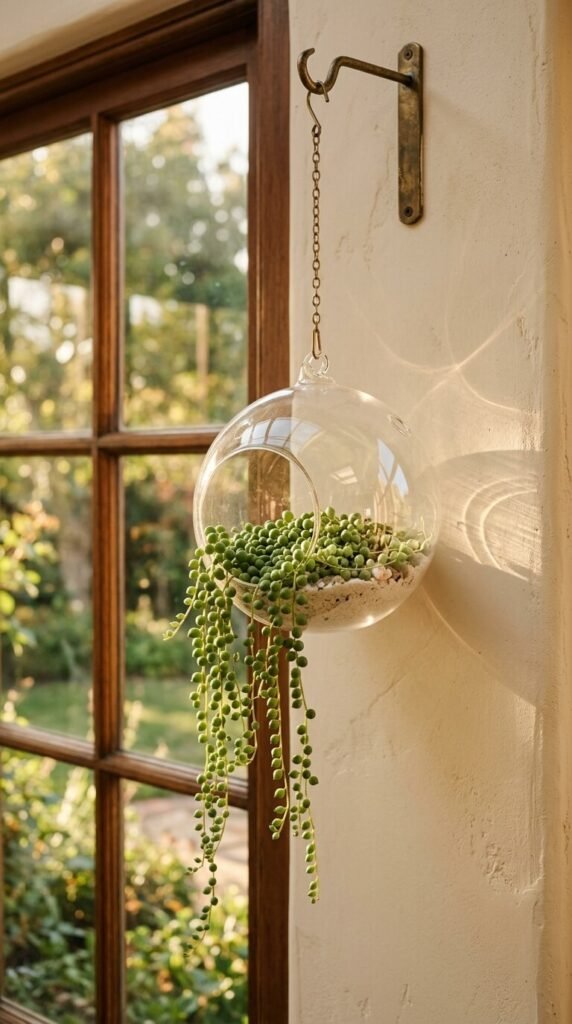
Hanging terrariums turn any blank wall or ceiling hook into a feature. Air plants are perfect here — no soil required. Just tuck tillandsia inside the orb with some sand, decorative moss, or a few small crystals. Mist the air plant once or twice a week. Glass orbs come in packs of three on Amazon for around $10. Hang them at different heights for a layered look. Works beautifully in a reading nook, a bathroom corner, or above a dining table.
4. Woodland Fairy Garden Terrarium
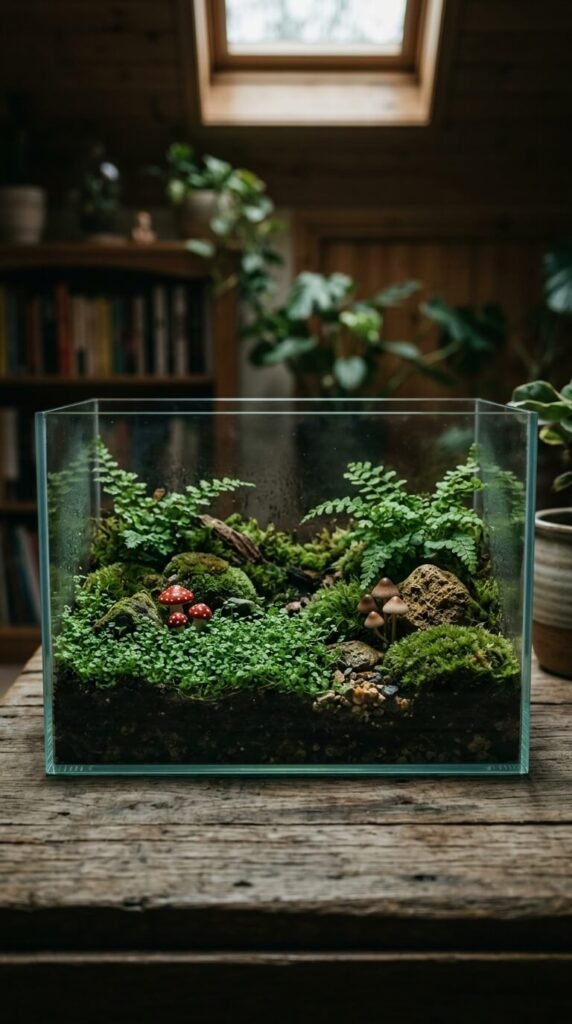
This one leans into pure imagination. Mini figurines from the dollar store become a tiny forest scene. Use a low, open fish tank or a rectangular glass container. Plant baby’s tears as a ground cover — it spreads like a tiny lawn. Add small ferns, pebbles shaped like boulders, and a little wooden bridge or fairy door. Keep the soil moist and place it in medium indirect light. Kids love helping build these. The whole setup costs under $20 if you already have a spare tank.
5. Air Plant Geometric Terrarium
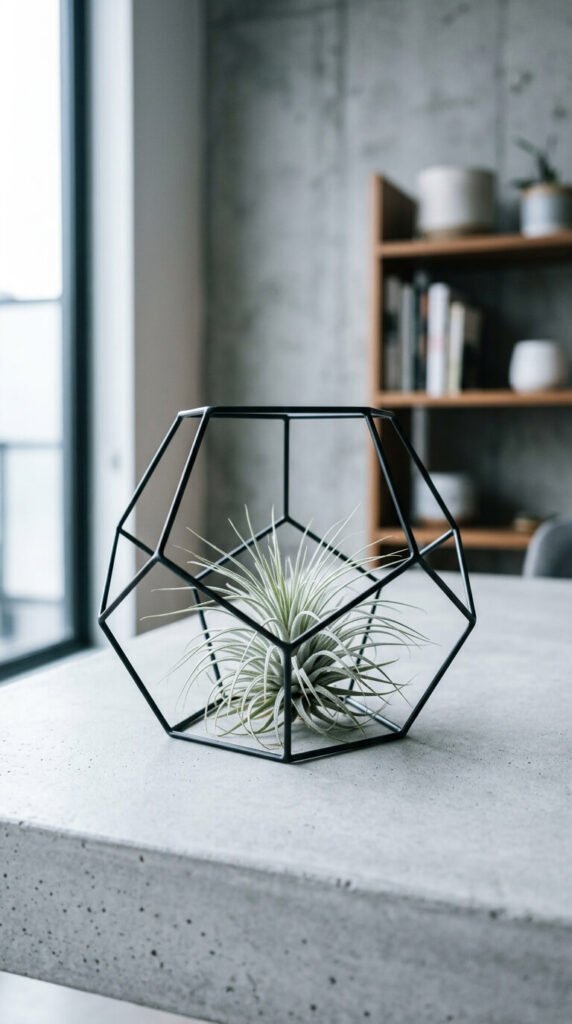
Geometric terrariums have that modern, Instagrammable look without much effort. Air plants need zero soil — they absorb water through their leaves. Set one or two tillandsia inside an open-frame geometric shape, add a small piece of driftwood or a few smooth stones, and you’re done. Remove the plant every week or two to soak in water for 30 minutes, then let it dry upside down before putting it back. These frames cost $8–$15 online and look great on a work desk or bookshelf.
6. Bottle Terrarium with Ferns
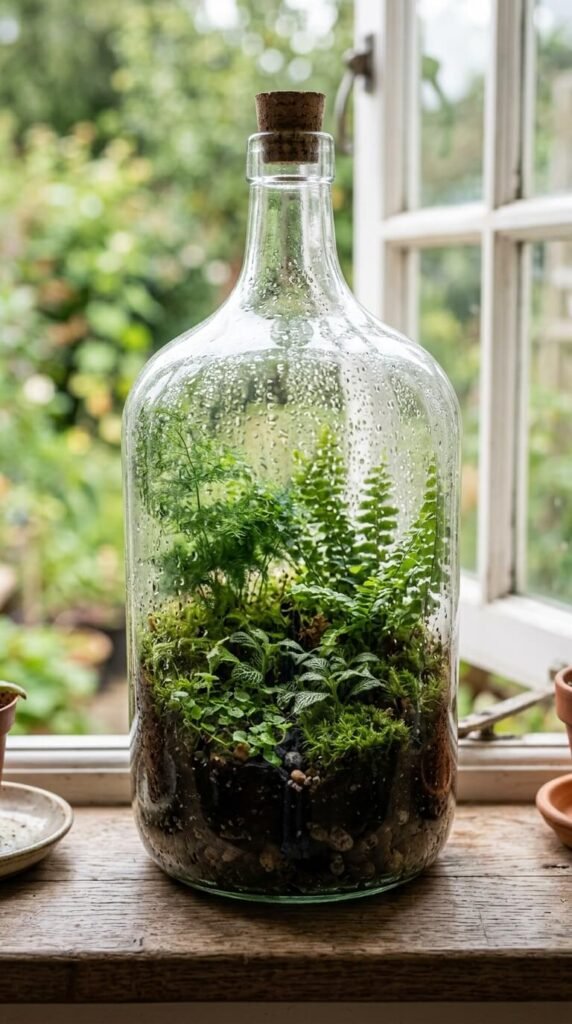
A carboy or wide-mouthed bottle makes a stunning closed ecosystem. The narrow neck traps humidity — perfect for ferns. Use long chopsticks or skewers as tools to lower plants inside. Layer gravel, charcoal, soil, then tuck in small fern varieties like button ferns or lemon button ferns. Spray lightly with water, seal, and place in a bright spot away from direct sun. Once sealed and balanced, you may only need to open it every few months. It’s a slow-burn conversation piece.
7. Mini Zen Garden Terrarium
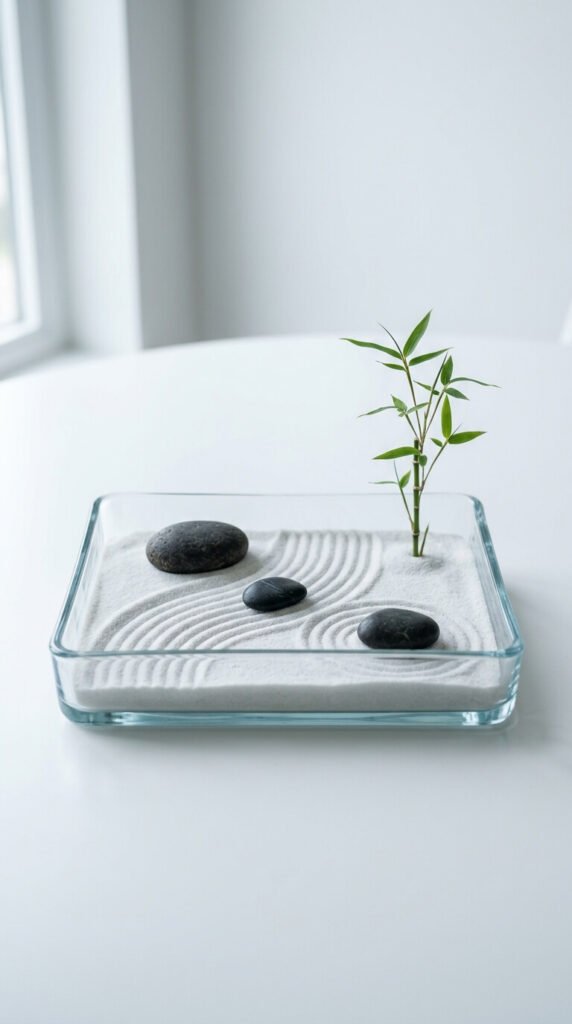
Zen gardens belong inside glass too. Raked sand and a few stones create a calming focal point on any desk. Use a wide, shallow glass dish — even a baking dish works. Fill it with fine sand (play sand or decorative sand from craft stores). Add three smooth river rocks and a tiny succulent or bamboo shoot in one corner. Use a fork to rake patterns. No drainage needed for a mostly-dry zen garden. This costs under $10 and takes about 20 minutes to build.
8. Tropical Humidity Terrarium
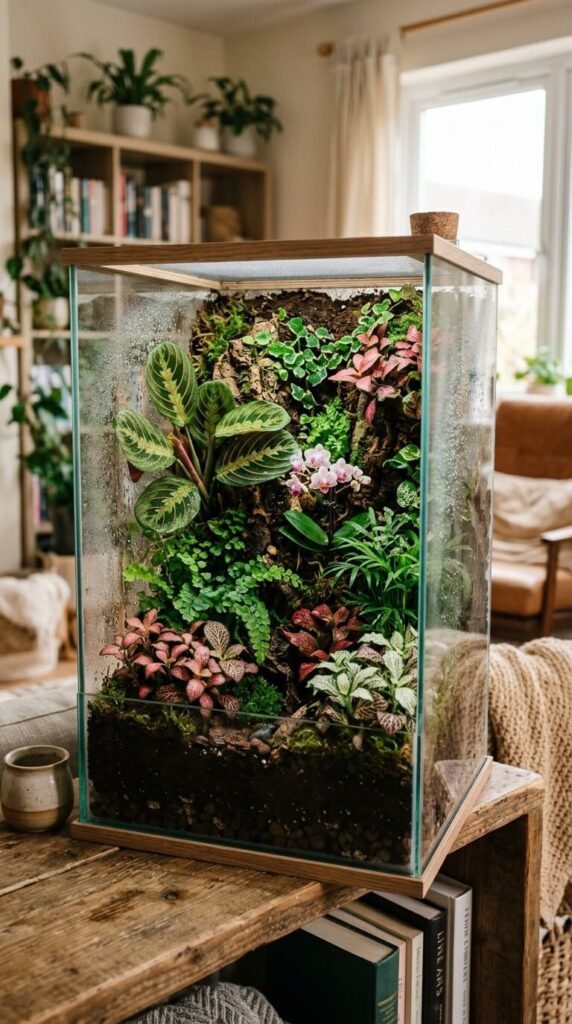
Tropical plants love humidity — and a closed terrarium gives them exactly that. Fittonia, prayer plants, and mini orchids thrive in this setup. Use a large glass tank or a sealed glass jar with a wide opening. Layer your standard gravel-charcoal-soil base. Pack the plants in fairly close — tropical terrariums look better when they feel full. Mist the inside before sealing. Bright indirect light is ideal. Avoid direct sun or the heat will cook the plants. This is one of the more lush, showstopper designs you can build.
9. Terrarium in a Light Bulb
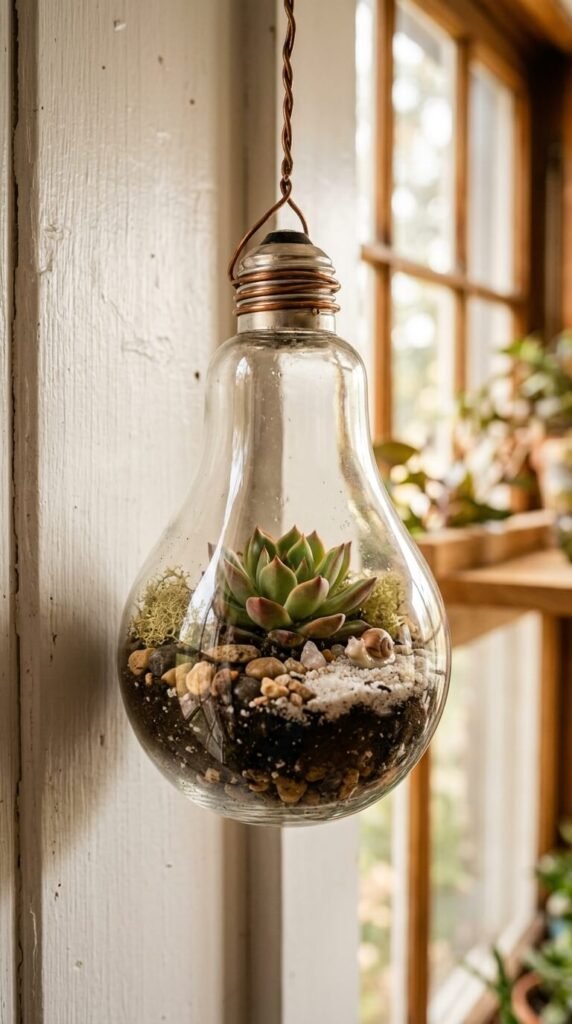
Upcycled light bulb terrariums make a big visual impact for almost no cost. Pull out the filament assembly, clean the inside, and you have a tiny vessel. Use a large decorative bulb — the kind sold at craft fairs or thrift stores. Fill carefully using a funnel: a pinch of soil, a small air plant or succulent cutting, a few grains of sand. Hang with copper wire for a warm industrial look. You can often find oversized clear bulbs at dollar stores or flea markets for $1–$3 each.
10. Driftwood and Moss Arrangement
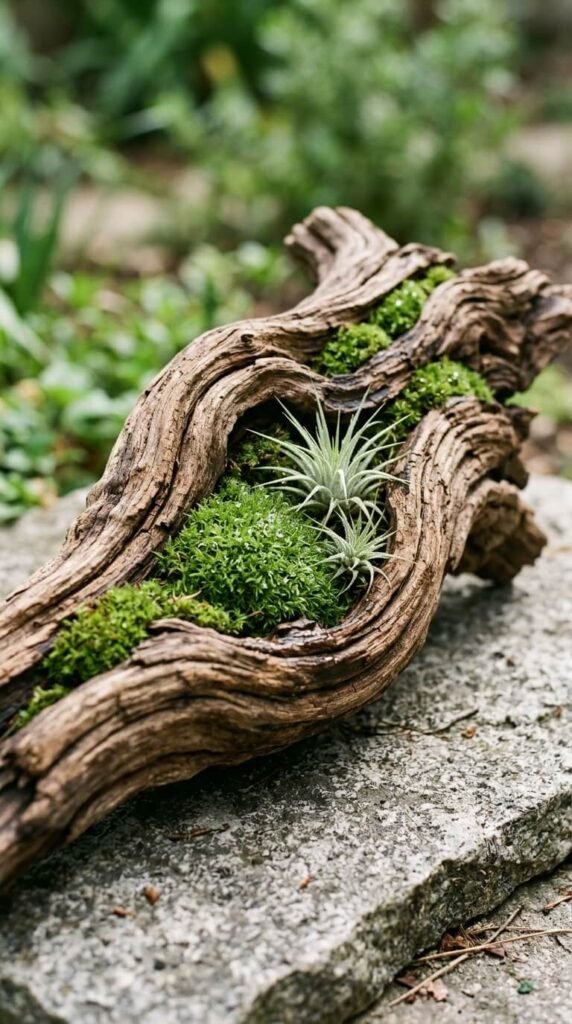
No glass required for this one. Driftwood from a beach or craft store becomes the terrarium vessel itself. Tuck cushion moss or sheet moss into natural hollows and crevices in the wood. Add small air plants like tillandsia ionantha in the deeper grooves. Mist the whole arrangement a few times a week. Display on a wooden slab, a stone tile, or inside a shallow glass tray. This works beautifully as a long centerpiece on a dining table or along a mantle shelf.
11. Apothecary Jar Herb Terrarium
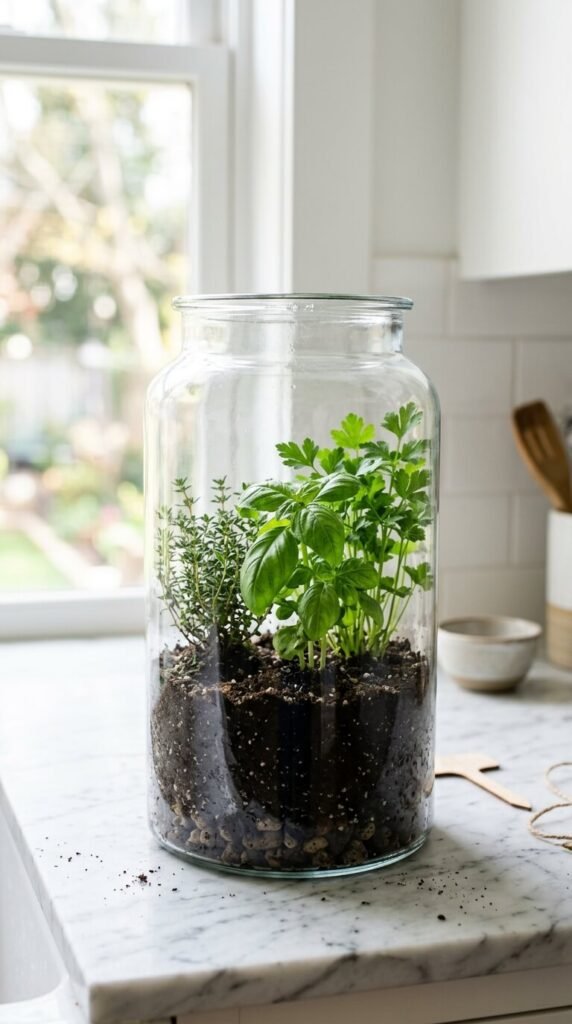
Functional and decorative — an apothecary jar terrarium grows real herbs you can actually cook with. Keep the lid off for better airflow since herbs need circulation. Use standard potting mix, plant compact varieties like thyme, dwarf basil, or parsley. These need at least 6 hours of light daily, so a south-facing windowsill is ideal. Water when the top inch of soil dries out. Apothecary jars show up regularly at thrift stores for $2–$4. A small container of herbs feels infinitely more charming in a jar like this.
12. Bonsai Terrarium Display
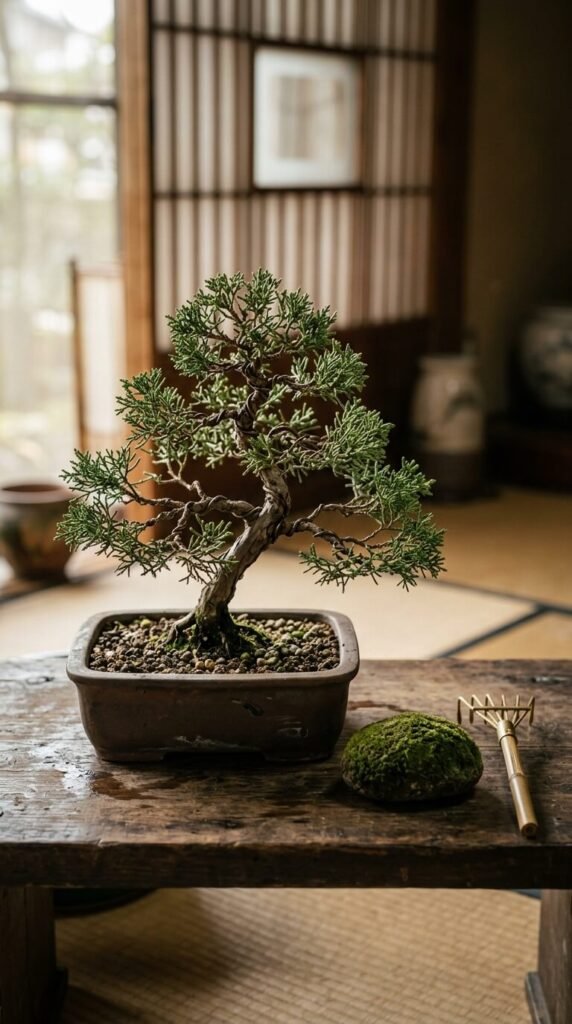
Bonsai and terrariums don’t always combine — but a shallow open dish with a young bonsai and moss ground cover nails the aesthetic. Juniper or ficus bonsai starters cost around $10 at garden centers. Plant in well-draining bonsai soil inside a wide ceramic dish. Pack cushion moss around the base to cover soil and add texture. Add a smooth stone or two. Keep outdoors or near a very bright window. This isn’t fully enclosed, but the composed arrangement has strong terrarium energy and serious visual payoff.
13. Aquatic Terrarium (Paludarium Style)
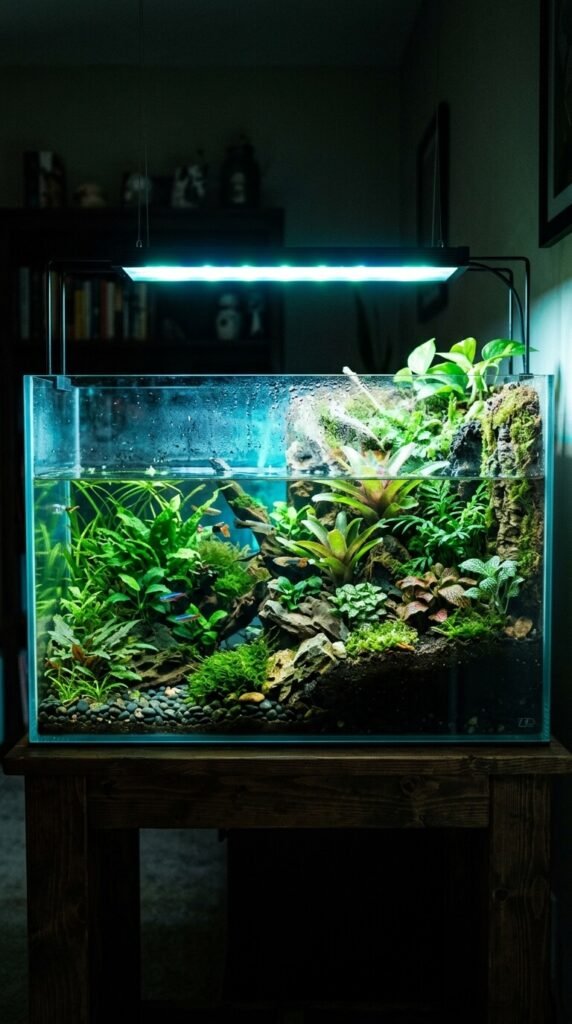
A paludarium is half aquatic, half land — and it’s one of the most dramatic terrariums you can build. Use a fish tank divided into water and land zones. Fill one side with aquarium gravel and water, add aquatic plants like java moss or anubias. Build up the land side with rocks, soil, and tropical plants. You can even add a small waterfall feature with a cheap aquarium pump. The sound of moving water makes it even more relaxing. This takes a weekend to build but becomes a permanent talking point in any room.
14. Vintage Cloche Bell Jar Terrarium
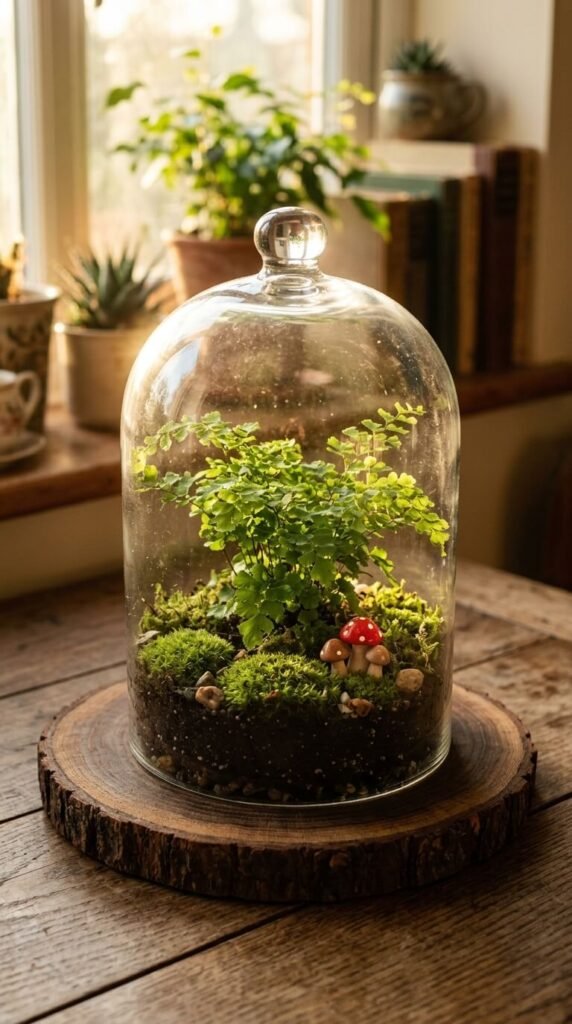
A glass cloche over a simple plant arrangement looks like something from a Victorian greenhouse. Bell jars are widely available at home decor stores for $10–$20. Place a wooden slice or slate tile as the base. Set a small fern, maidenhair fern, or orchid on top. Surround it with moss, decorative stones, or miniature figurines. Lift the cloche every few days to air it out and mist the plant. This is one of the quickest ways to make a single plant look like an art installation.
15. Miniature Beach Scene Terrarium
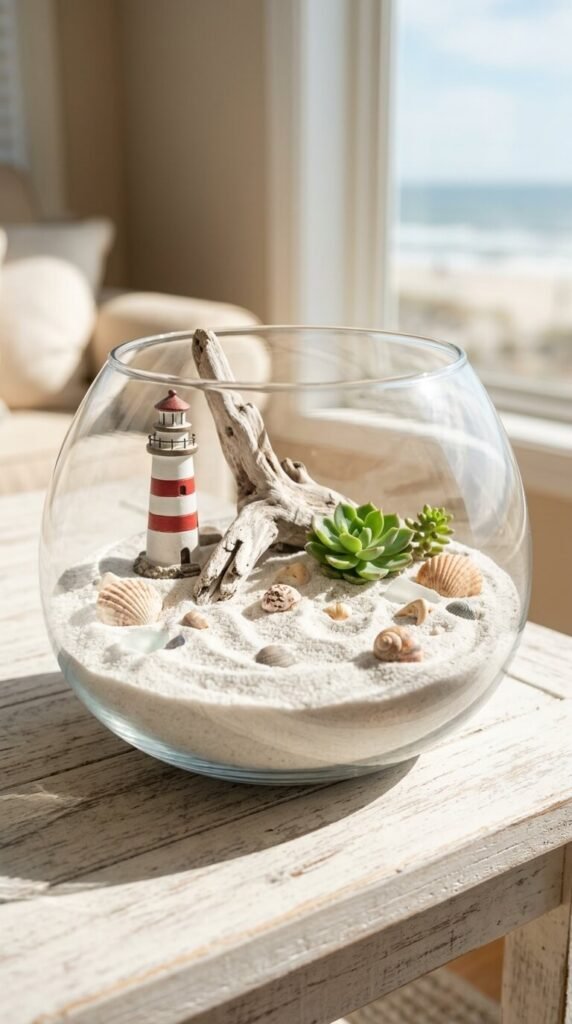
Bring the coast inside with a beach-themed terrarium. No plants required — this is a dry decorative design. Use a wide glass bowl or fish bowl. Layer fine white or cream-colored sand as the base. Add small seashells collected from a beach trip or dollar store, a tiny driftwood piece, and a miniature lighthouse or anchor figurine. For a living version, add one small air plant or a piece of preserved sea grass. This one fits beautifully in a bathroom or on a coastal-themed shelf.
16. Concrete Planter Mini Terrarium
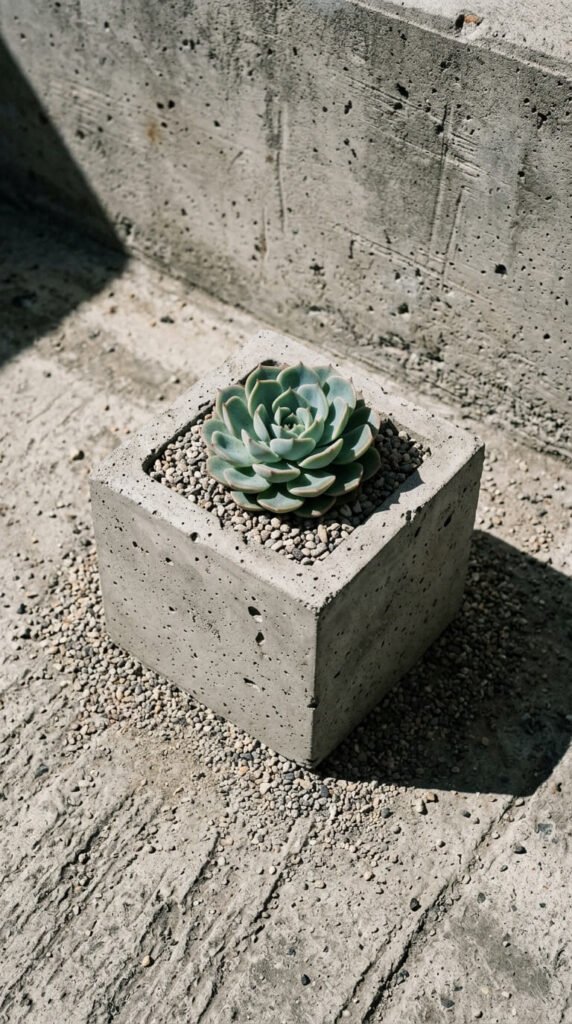
DIY concrete planters have a raw, modern look that pairs perfectly with succulents. You can make your own with $3 worth of quick-set concrete. Use cardboard boxes as molds — one big, one small inside it as a void. Pour concrete in the gap, let it cure overnight, then peel away the cardboard. Sand rough edges lightly. Plant a small succulent or cactus directly in the concrete planter with fast-draining soil. The contrast of rough grey concrete against a vivid green succulent is quietly stunning on a modern desk.
17. Tillandsia and Crystal Terrarium
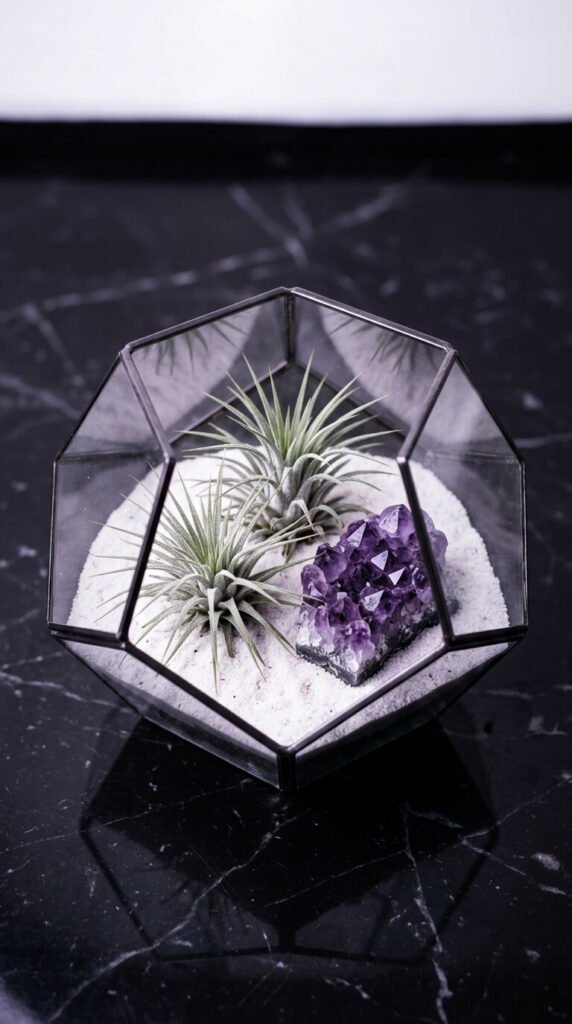
Crystals and air plants make an unexpectedly beautiful pairing. No soil, no mess — just visual drama. Pick a wide open glass bowl or a geometric glass shape. Layer the bottom with white or black sand. Arrange a cluster of raw crystals — amethyst, rose quartz, or citrine are all affordable at crystal shops or online for $5–$15. Nestle one or two tillandsia air plants between the crystals at interesting angles. Mist the air plants twice a week. This one looks curated and intentional with almost zero effort.
18. Terrarium Inside a Book Nook
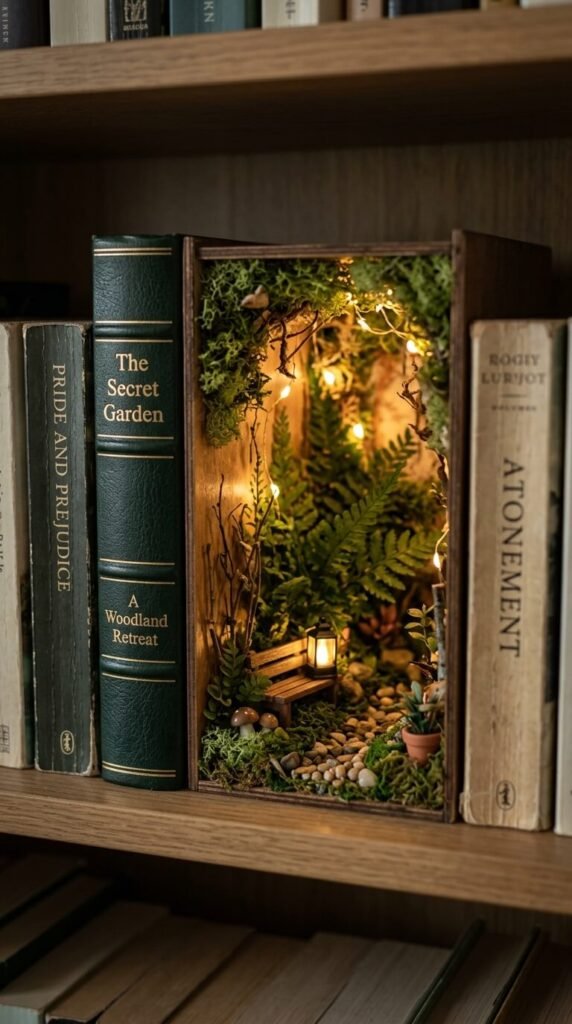
A book nook terrarium is tiny, hidden, and completely charming. Build one inside a hollow decorative box shaped like a book spine. Book nook inserts are sold online for $15–$30, or you can hollow out a large hardback you don’t mind repurposing. Line the interior with moss, small preserved plants, or fake succulents with tiny fairy lights woven through. Slide it between real books on a shelf. The glow from the lights makes it look like a secret garden glimpsed through a gap in the books.
19. Carnivorous Plant Terrarium
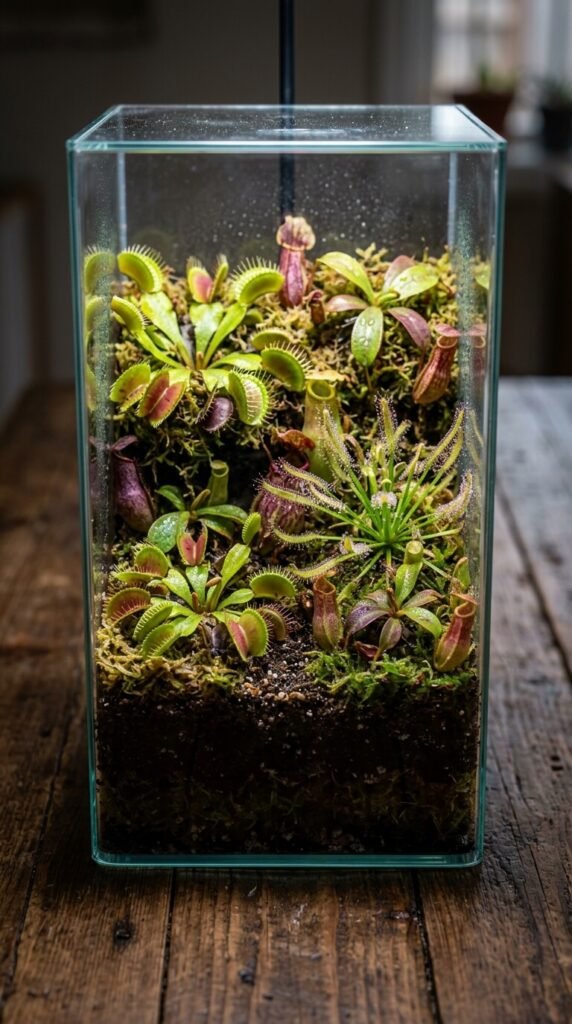
Venus flytraps, sundews, and pitcher plants look otherworldly — and they actually catch bugs. This terrarium doubles as pest control. Use only sphagnum moss and peat as the growing medium — no regular potting soil, which kills carnivorous plants. Fill a shallow tray with distilled water and set the pot inside it so the plant can drink from below. Use only distilled or rainwater — tap water will kill them. Bright, direct sunlight for at least 4 hours daily. These plants are surprisingly affordable at most garden centers.
20. Recycled Wine Bottle Terrarium
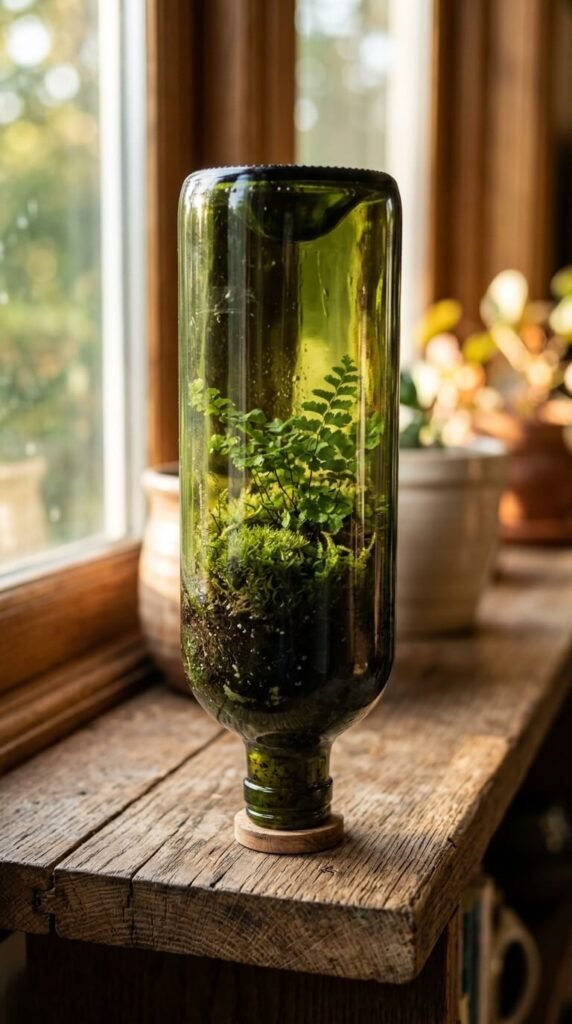
Cut the bottom off an empty wine bottle and flip it — instant terrarium. Glass cutters and bottle-cutting kits cost around $15 online. Score the bottle, apply alternating hot and cold water to snap it cleanly, then sand the edge smooth. Flip the bottle over a small drainage tray and plant through the open base. Use moss, small ferns, or even a single succulent. The green glass tint gives everything inside a moody, cinematic look. It’s a great way to give empty bottles a second life instead of recycling them.
21. Stacked Stone and Succulent Terrarium
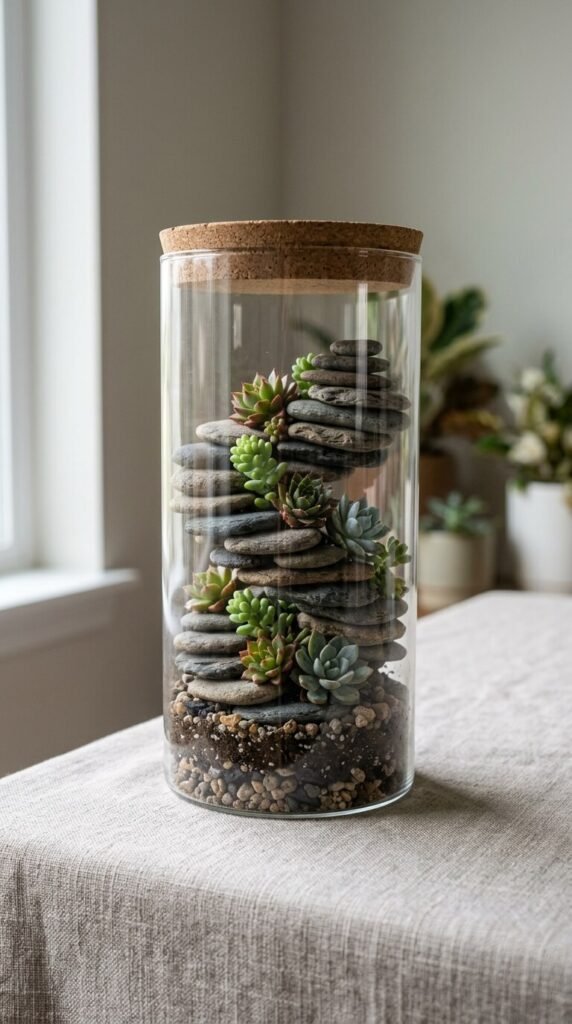
Layering small flat stones between succulent cuttings creates structure inside a cylindrical glass vase. No soil needed if you use air plant cuttings or dried succulents. For living succulents, tuck a little soil between each stone layer. The roots will find their way down. Use a tall cylinder glass vase from a dollar store or thrift shop. Alternate grey river stones with green succulent rosette cuttings from an existing plant. Water sparingly — the stones trap heat and the succulents want to dry out between drinks.
22. Kokedama Ball Inside a Glass Bowl
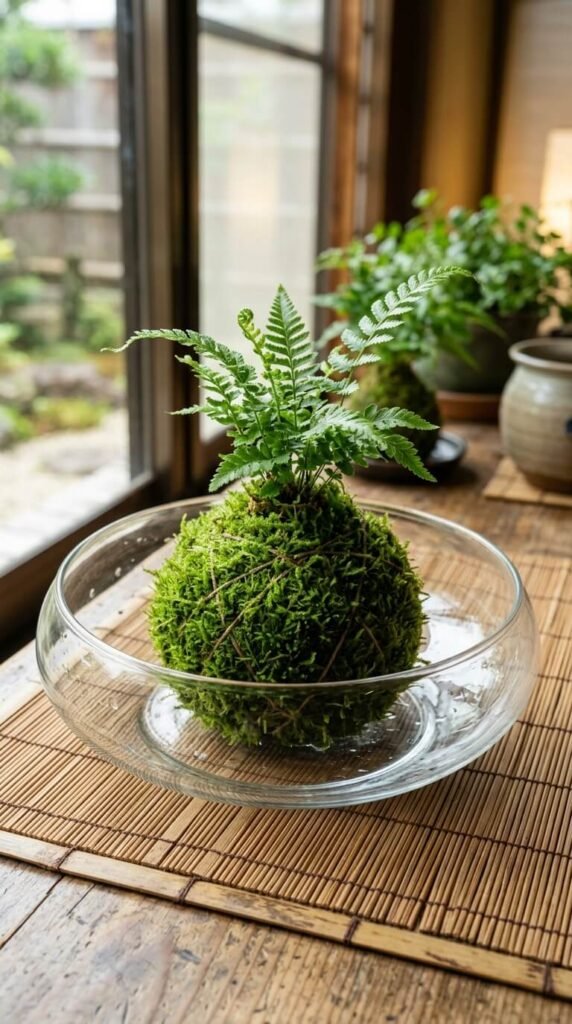
Kokedama — Japanese string moss balls — look like plant sculptures. Placing one inside a glass bowl creates a hybrid terrarium-display piece. Make your own kokedama by wrapping damp soil and a plant root ball in sphagnum moss, then binding tightly with cotton twine. Let it dry slightly, then set it inside a wide glass bowl filled with pebbles. A baby fern, peace lily, or pothos all work well. Soak the whole ball in water for 10 minutes every week. Display on a dining table or a low shelf for maximum visual impact.
23. Rainy Season Closed Terrarium
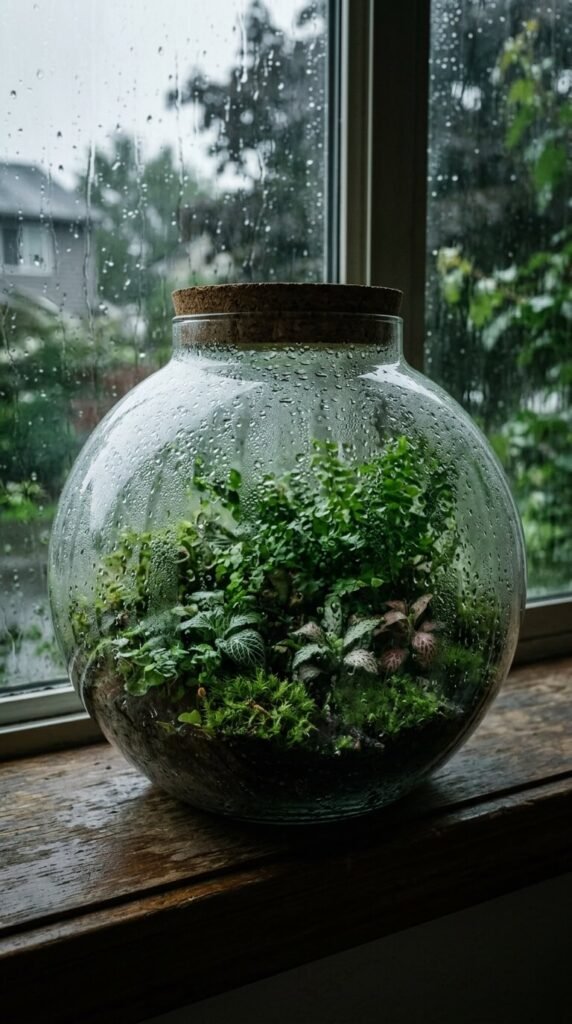
A fully sealed, moisture-heavy terrarium basically runs itself. Once balanced, it can go weeks without any attention. The trick is getting the moisture level right at the start. After planting (mosses, ferns, baby’s tears), mist lightly, seal the lid, and watch. If condensation covers more than 60% of the glass, open the lid for a few hours. If the inside looks dry, add a light mist and reseal. Once you hit that sweet spot, the water cycle maintains itself. It’s genuinely low-effort and endlessly calming to watch.
24. Miniature Mountain Landscape Terrarium
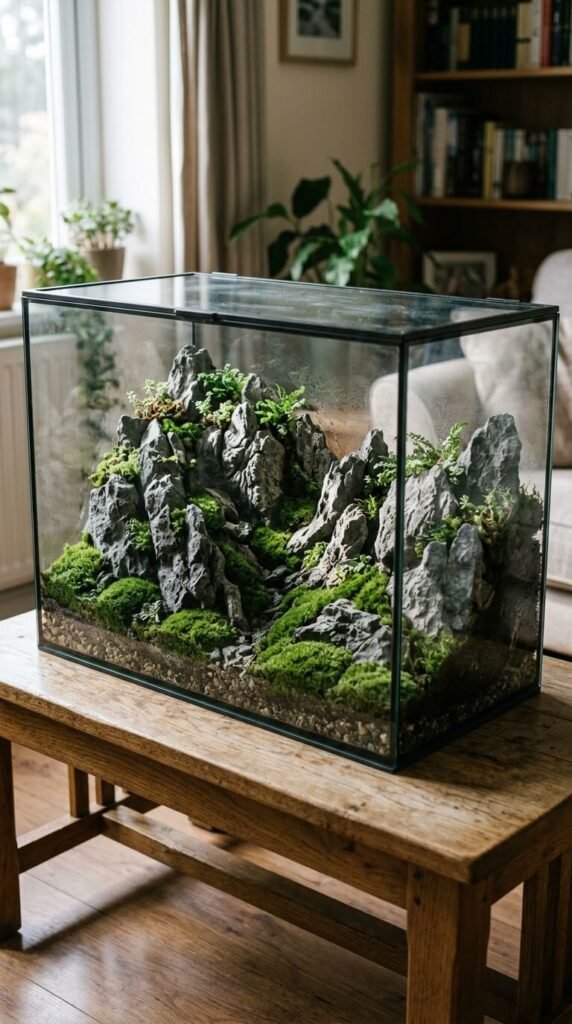
Stacking rocks inside a glass tank lets you build a tiny mountain range. Use slate pieces, shale, or any layered flat rock to create peaks and ridges. Moss fills the valleys between rock formations. Add small alpine plants like sedum at the base of the rocks. Use minimal soil — just tuck it into crevices where plants will root. Spray lightly and leave mostly open for air circulation. The result looks like an aerial view of a landscape. This design rewards slow, thoughtful arrangement rather than rushing.
25. Orchid and Bark Terrarium
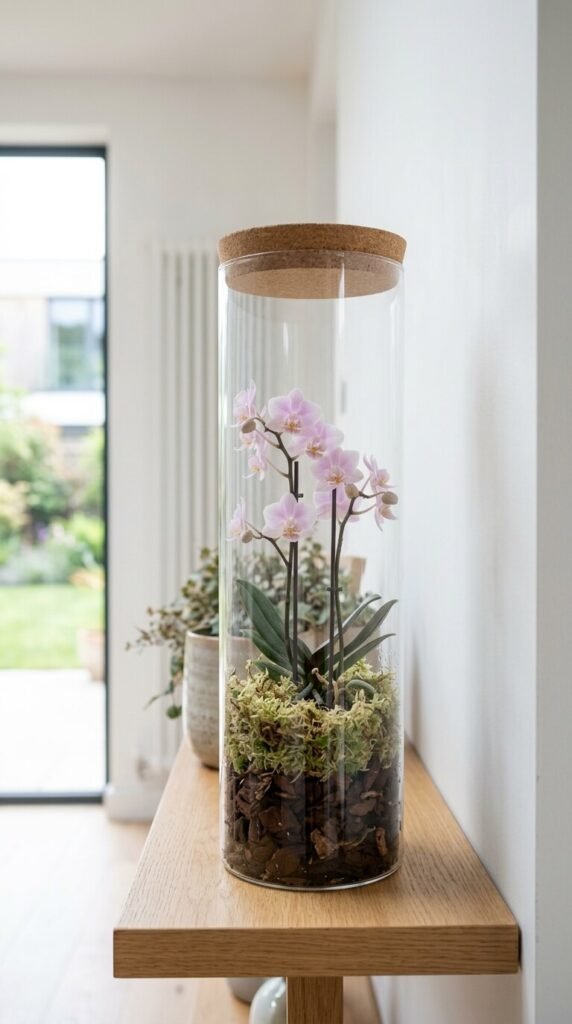
Miniature orchids are more affordable and easier to grow than people think. Phalaenopsis mini orchids run about $10 at grocery stores and garden centers. Plant in a bark-based orchid mix inside a tall glass cylinder. No drainage holes needed if you keep a thick bark layer at the bottom. Add sphagnum moss around the base and on top of the bark for humidity. Water by pouring a small amount into the bark every week and tipping out any excess. Place in bright indirect light. When it blooms, the glass frame makes each flower look like it’s on display.
26. Succulent Wreath Terrarium Frame
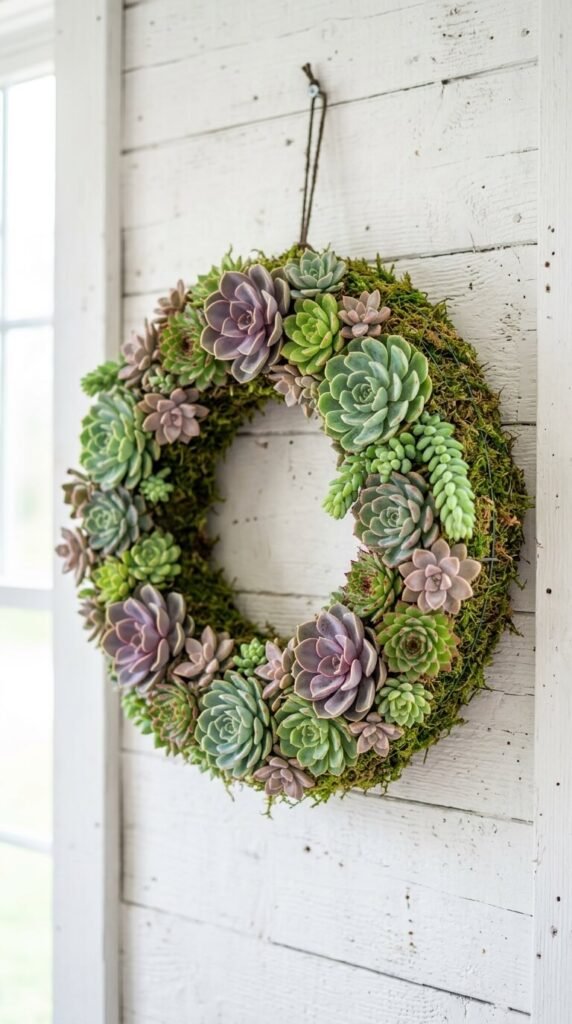
A succulent wreath is a living terrarium you hang on the wall. Use a wire wreath frame filled tightly with sphagnum moss as the growing medium. Push small succulent cuttings directly into the moss — no soil needed. The cuttings will root into the moss over a few weeks. Spray lightly once a week. Hang on a wall that gets indirect light for several hours daily. This is a good project for using up the tiny offsets (pups) that succulents produce. A 10-inch wreath frame costs around $4 at a craft store.
27. Spooky Halloween Terrarium
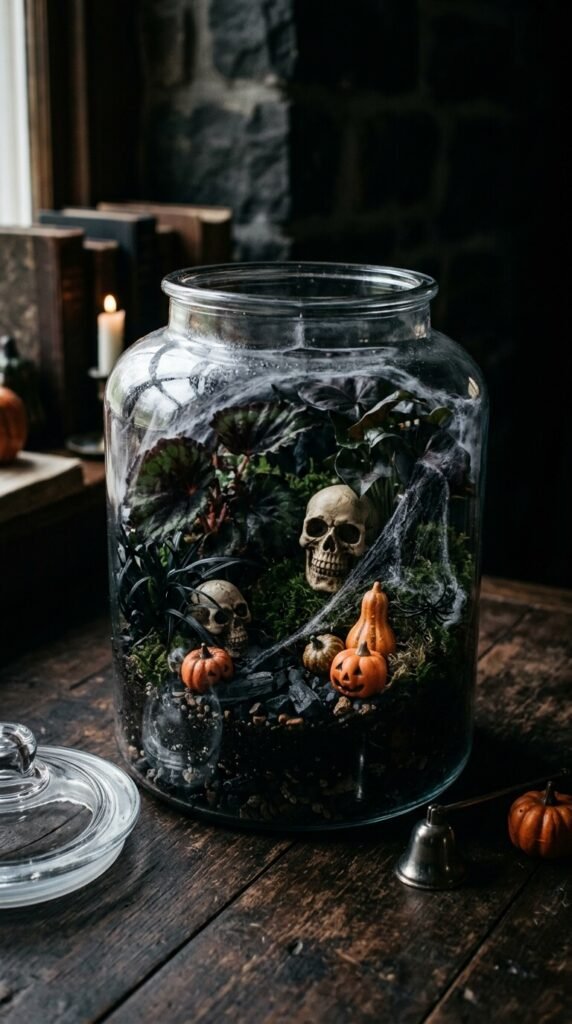
Terrariums aren’t just for botanical minimalists. Lean into a dark, moody theme with black-leafed plants and spooky miniatures. Use black mondo grass, black succulents (like Echeveria ‘Black Prince’), or dark green plants like ZZ plant cuttings. Add miniature skull figurines, tiny pumpkins, or cobweb material from dollar store Halloween sets. Dark volcanic rock or black sand works as the base layer. Display on a mantle or entry table in October for instant atmosphere. The plants survive long after Halloween — just swap out the seasonal decorations.
28. Self-Watering Wicking Terrarium
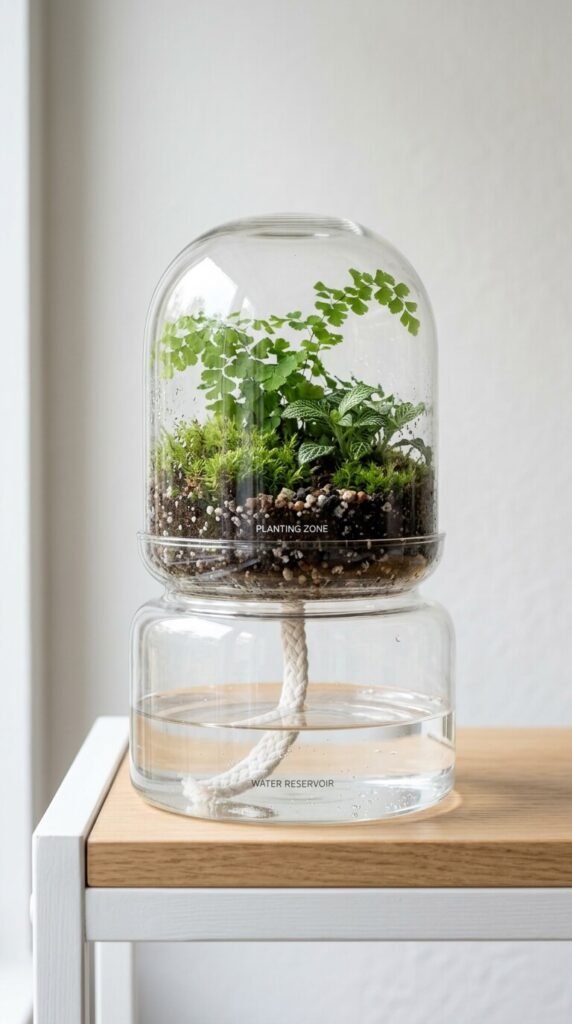
This design solves the most common terrarium problem: forgetting to water. A wicking system pulls water from a reservoir below the soil automatically. Use two glass containers — one slightly smaller that sits inside the other. Fill the outer one with water. Thread a cotton wick through a hole in the inner container’s base so it dips into the water below. Fill the inner container with plants and soil. The wick draws water up as the soil dries. Refill the outer reservoir every week or two. Perfect for ferns, herbs, or any moisture-loving plant you tend to neglect.
Conclusion
Miniature terrariums are one of the most accessible ways to bring nature into your home — no garden required, no green thumb needed. From a $2 thrift store jar filled with moss to a more involved paludarium or wicking system, there’s a design here that fits your space, your budget, and the amount of time you want to put in. Start with one. Pick the idea that excites you most and build it this weekend. Once you see how satisfying it is to create a tiny living world, it’s very hard to stop at just one.