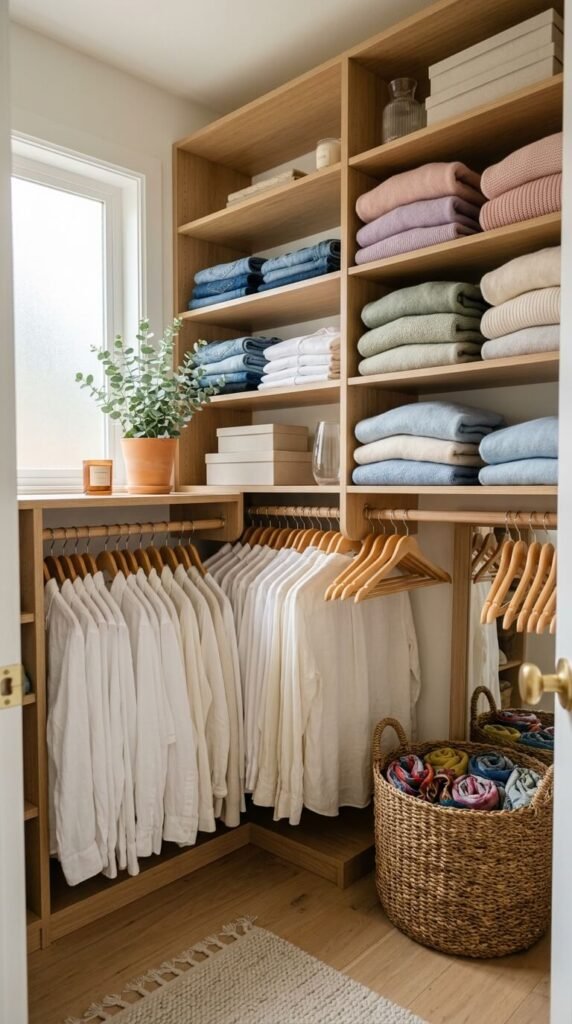
Spring is the perfect time to take back control of your closet. When your space is a jumbled mess, mornings feel rushed and stressful before the day even starts. But a few smart changes can make everything faster, calmer, and easier to manage. You don’t need to spend a fortune or hire a professional organizer. These 28 real, practical closet makeover ideas will help you build a system that actually works — one shelf, one hook, and one bin at a time.
1. Start With a Seasonal Swap
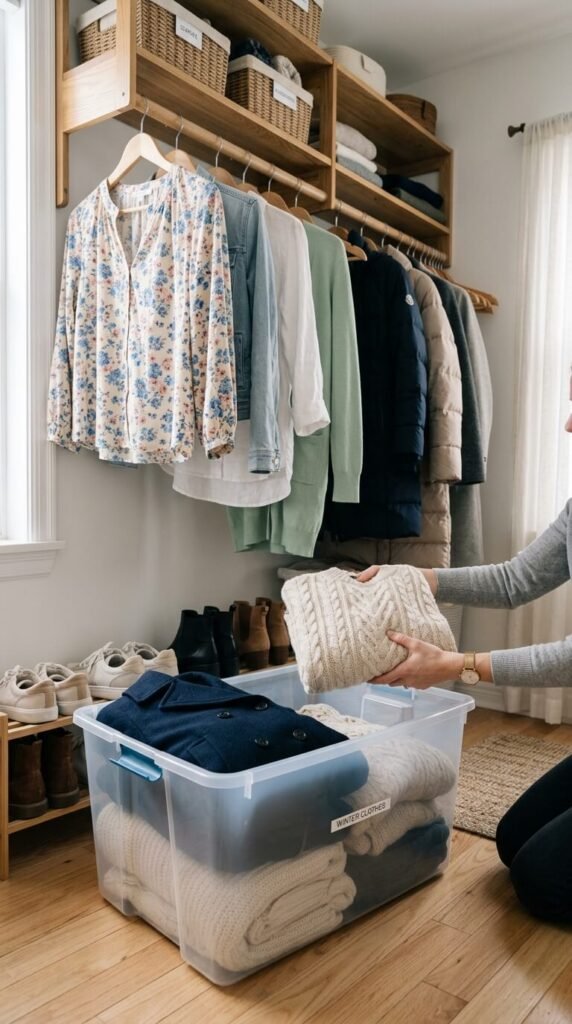
Pull out everything that belongs to winter first. Bulky coats, thermal layers, and wool sweaters don’t need to live at the front of your closet in March. Pack them into vacuum-sealed bags or clear bins and move them to a shelf overhead or under the bed. What’s left is your spring wardrobe — already easier to navigate. This one move alone frees up huge amounts of rod and shelf space, and it takes less than an hour on a weekend morning.
2. Sort by Color, Not by Category
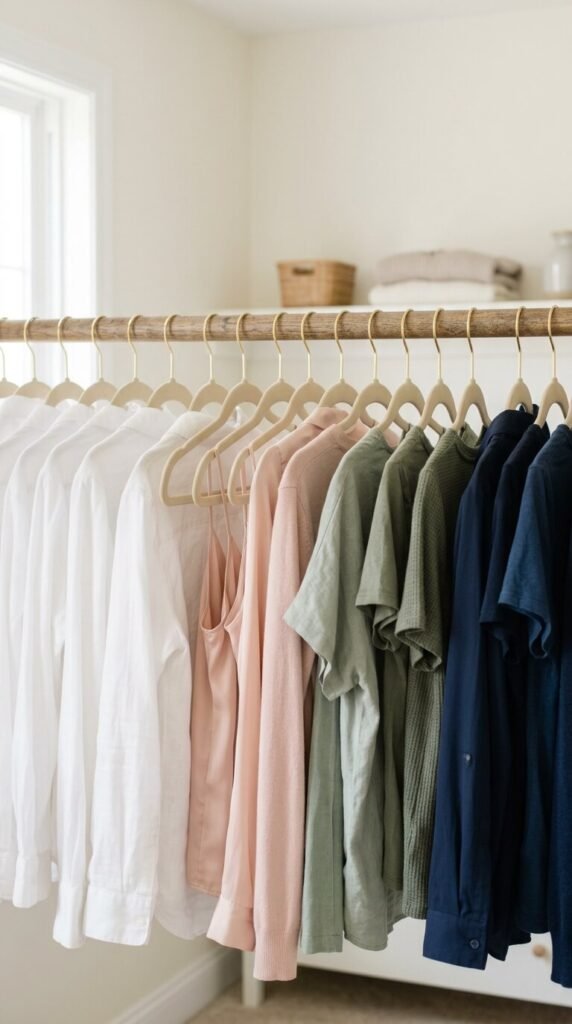
Color-coding your closet sounds like something only Pinterest boards do. But it actually works. When you can see colors at a glance, you get dressed faster. No more digging for that specific blue top. Start with white and light neutrals, move through pastels, then darker shades. Do this for shirts, blouses, or dresses separately. Use matching slim velvet hangers — they save space and make the whole rod look pulled together.
3. Add a Second Hanging Rod
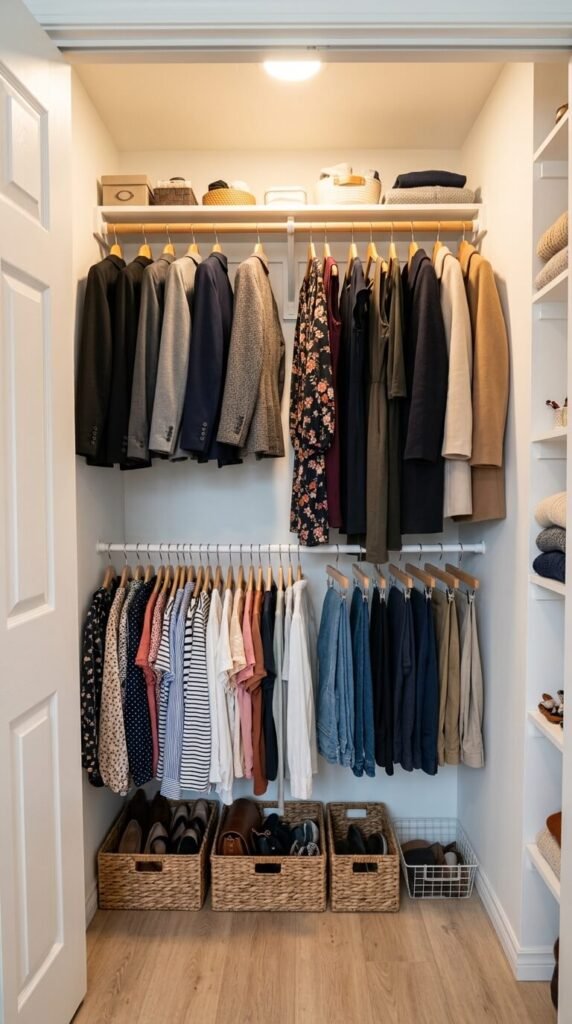
Most closets have one rod with wasted empty space below it. A second rod doubles your hanging capacity for free. You can buy a tension rod for under $15 that requires zero tools. Hang it below the main rod for shorter items — blouses, blazers, folded pants. This works especially well if you have limited shelf space. It’s one of the highest-impact, lowest-cost changes you can make to any closet in under 10 minutes.
4. Use Shelf Dividers for Sweaters
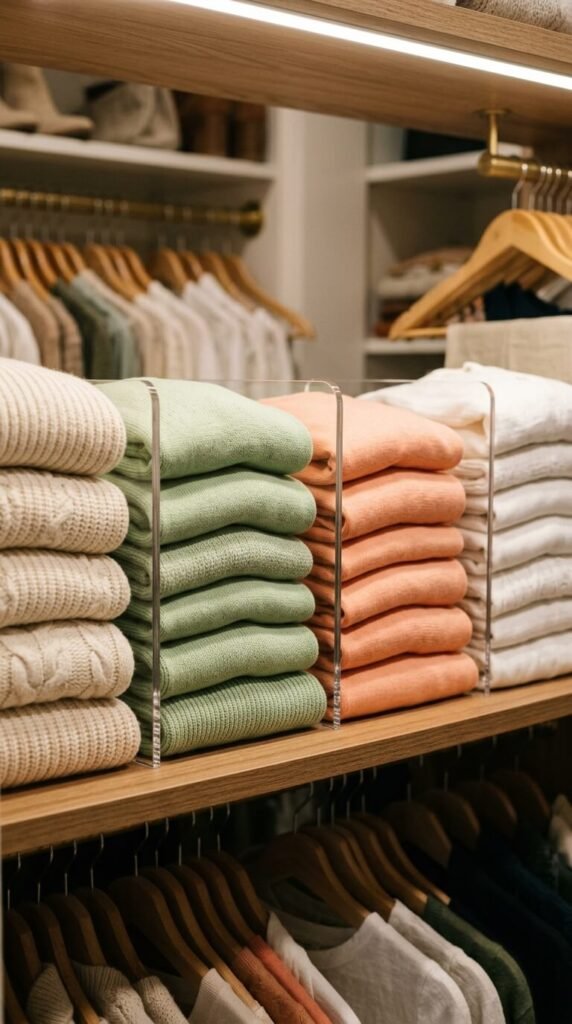
Folded stacks always topple. Shelf dividers keep piles upright and in their own lane. Clear acrylic dividers are around $10 for a pack and slide right onto any standard wooden shelf without hardware. Assign each section a color or clothing type. Lightweight spring sweaters fold flat and stack beautifully this way. You can grab the one you want without knocking the whole pile over. Simple, affordable, and genuinely useful.
5. Label Everything Clearly
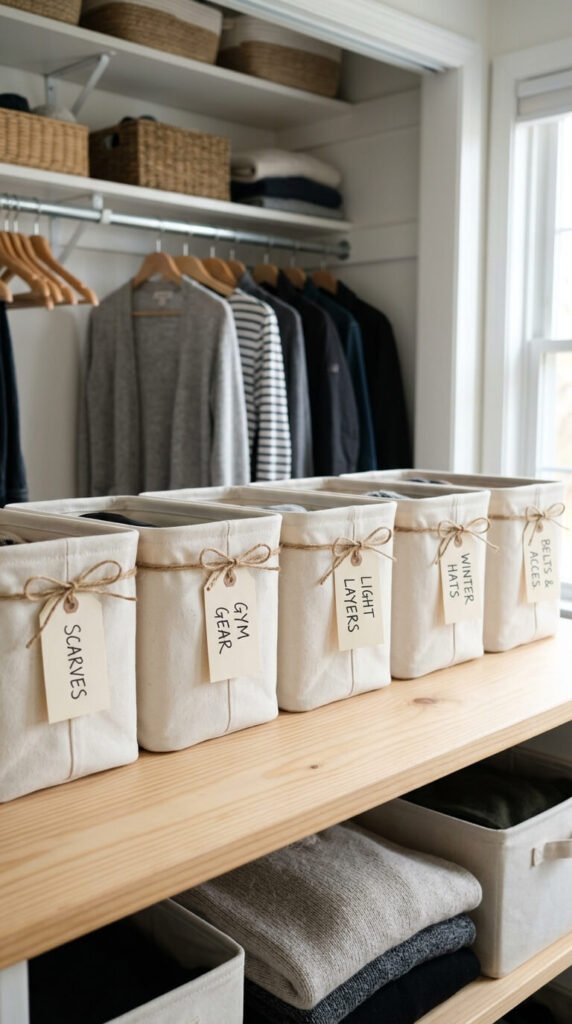
Labels are underrated. When every bin and shelf has a label, you always know where things go — and so does everyone else in your home. Use a label maker, chalkboard tags, or simple cardstock tied with twine. Be specific. “Scarves” is better than “accessories.” “Spring gym gear” is better than “workout stuff.” It takes 20 minutes and costs almost nothing. But it saves you from re-organizing the same bins every three weeks.
6. Install Over-the-Door Hooks
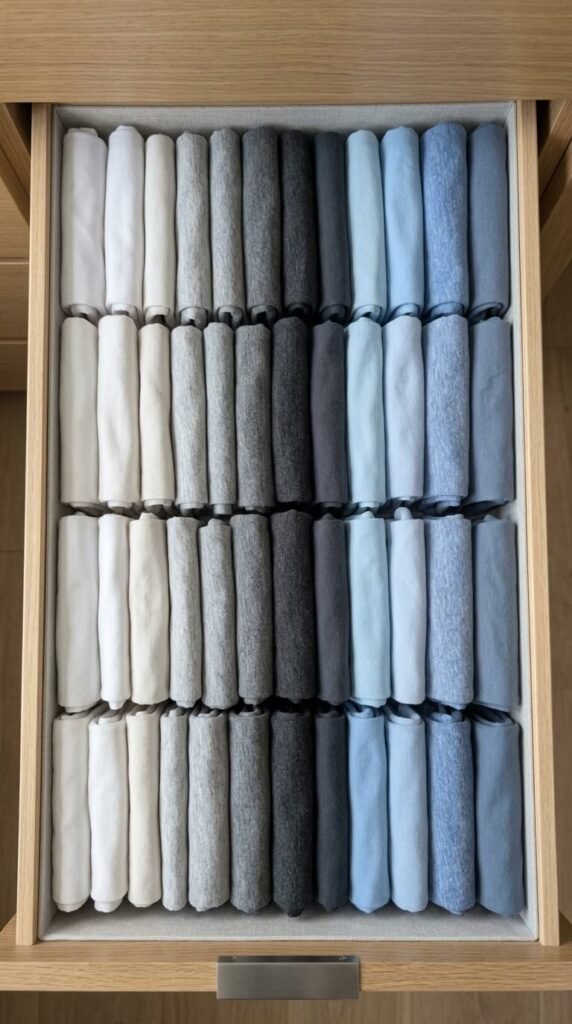
The back of your closet door is wasted space in most homes. An over-the-door hook rack adds instant storage with zero drilling. They come in multi-hook styles for about $10–$20. Hang next-day outfits, bags, or your most-used jacket. It’s also a great spot for tomorrow’s “already planned” outfit so your mornings run without thinking. Heavy-duty versions hold up to 50 lbs and fit most standard interior doors.
7. Fold T-Shirts the File Method Way
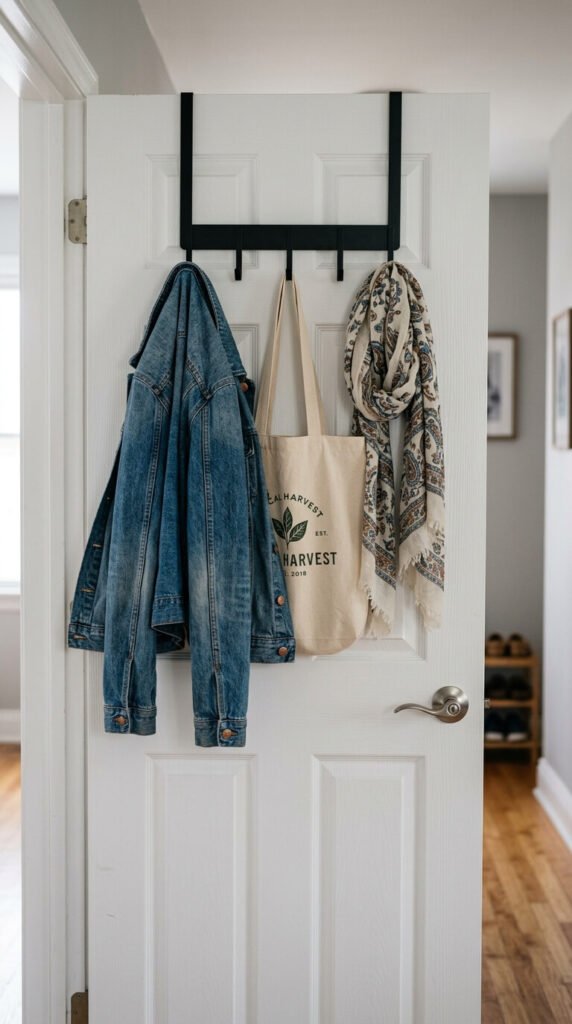
Stacking T-shirts means you only ever see the top one. Fold them into thirds, then fold again so they stand upright in a drawer like files. This is Marie Kondo’s famous filing method. You can see every shirt at once and pull one out without disturbing the others. No refolding needed. It works in deep drawers and shallow ones. Takes five minutes to set up your entire T-shirt collection.
8. Use Slim Velvet Hangers Everywhere
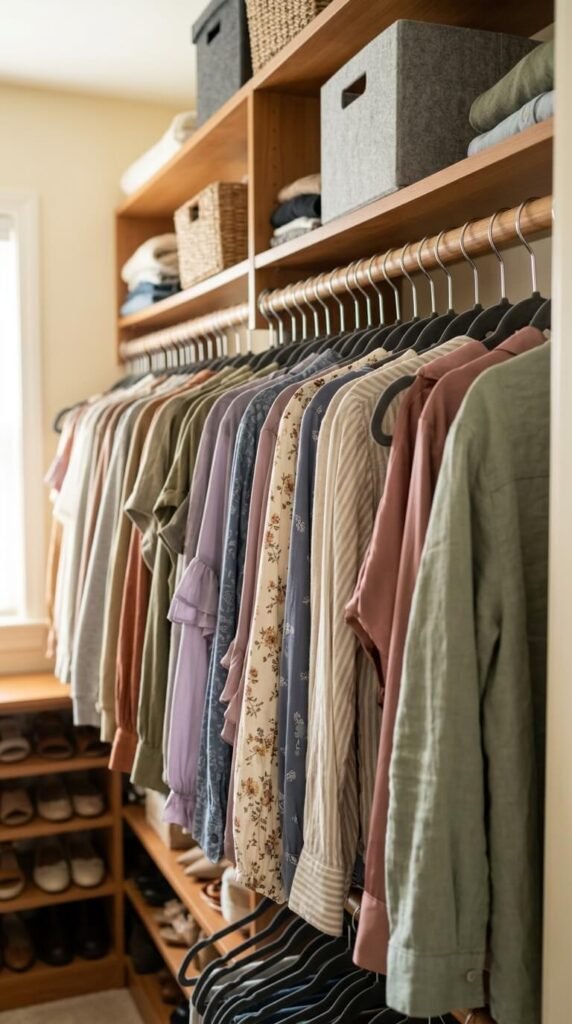
Mismatched chunky plastic hangers take up double the space and make everything look chaotic. Switch to slim velvet hangers and you can fit nearly twice as many clothes on the same rod. They’re grippy so clothes don’t slide off, and they’re uniform so the rod looks instantly cleaner. A pack of 50 costs around $12–$18. Replace hangers one section at a time if budget is tight. The visual difference is immediate.
9. Group Outfits Instead of Clothing Types
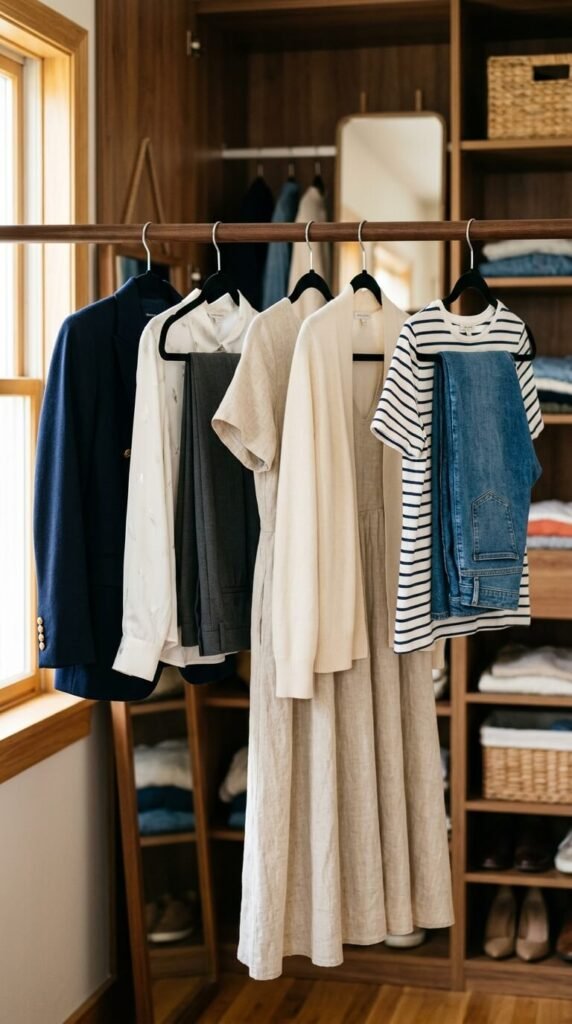
Instead of grouping all shirts together and all pants together, try grouping complete outfits on the rod. Hang a blouse with the pants it goes with. Add the blazer or cardigan next to it. This system means on busy mornings you just grab a group and go. Build 5–7 outfit clusters per season. Update them as weather changes. It sounds unusual but takes all decision-making out of your morning routine.
10. Add a Small Shelf for Bags
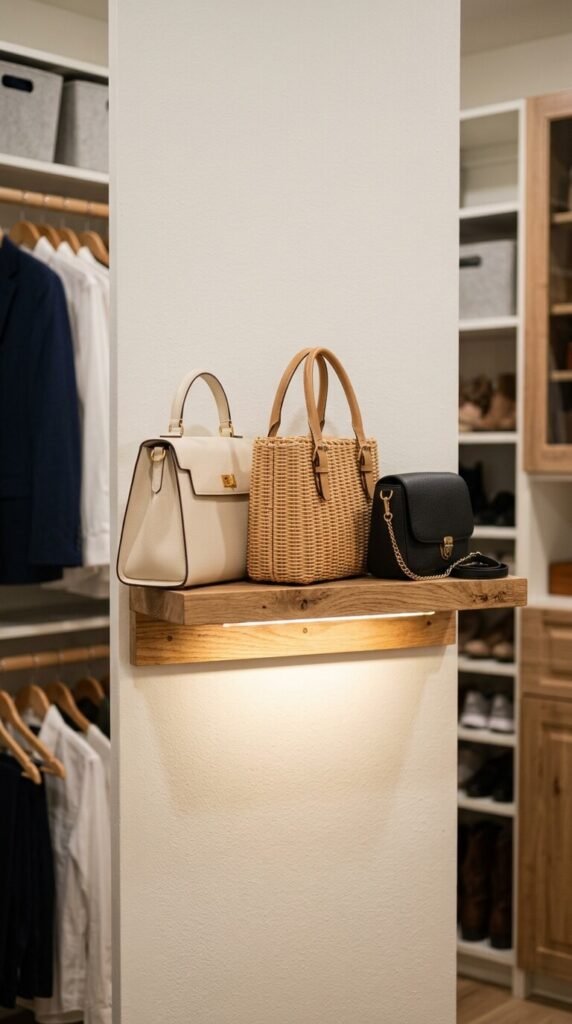
Bags piled on the floor or stacked on a high shelf are hard to access and easy to damage. A simple floating shelf at chest height keeps bags visible and accessible. You can find basic floating shelves at hardware stores for under $15. Mount one or two inside a wall closet or pantry-style wardrobe. Stand structured bags upright. Hang clutches or small bags from adhesive hooks on the wall beside the shelf.
11. Use Clear Shoe Boxes
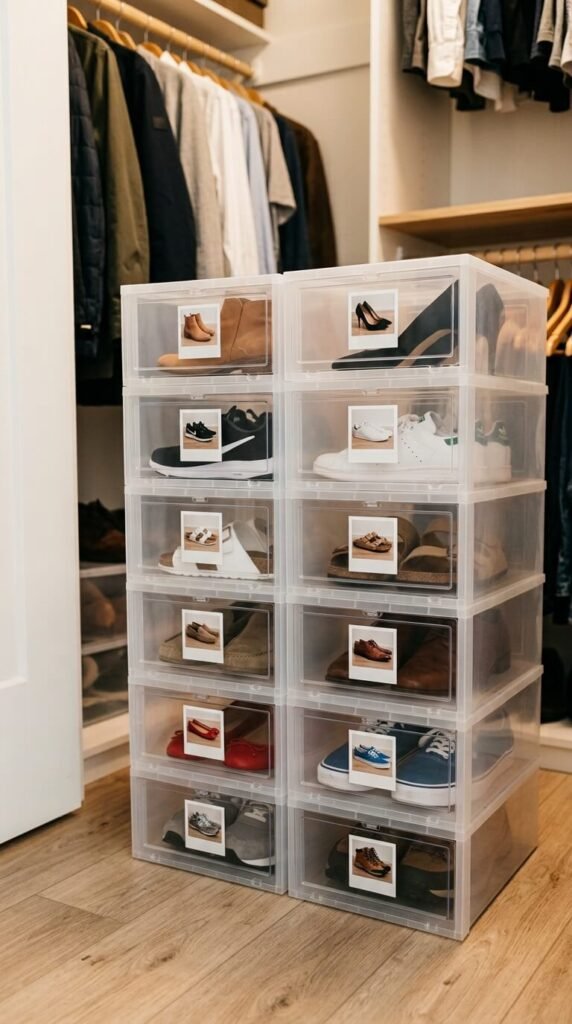
Opaque shoe boxes make you open every box to find what you want. Clear stackable shoe boxes let you see every pair at a glance. They’re roughly $1–$3 per box at most home stores. Add a photo label on the front for even faster finding. Stack them along the floor or on a shelf. They also protect shoes from dust. For spring, rotate out boots and heavy shoes and make room for lighter footwear up front.
12. Create a “Worn Once” Hook
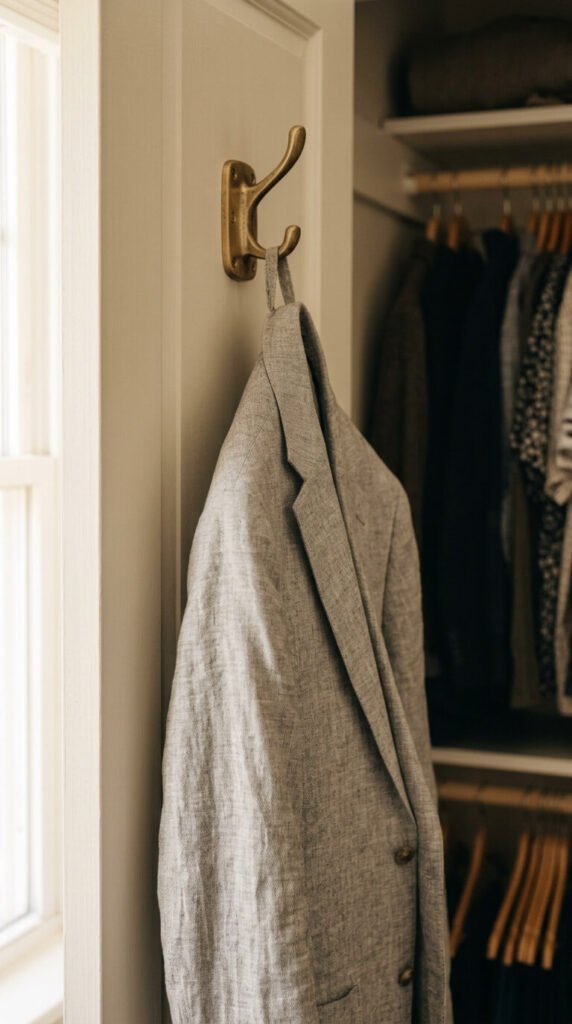
Clothes that have been worn once but aren’t dirty yet always end up on a chair or the floor. Give them a dedicated hook inside your closet. One or two hooks on the wall or door handle this perfectly. A “worn once” zone means those clothes stay off furniture and out of the dirty laundry pile until they actually need washing. Brass adhesive hooks cost about $3–$6 for a pack and need no tools.
13. Bin Your Accessories by Type
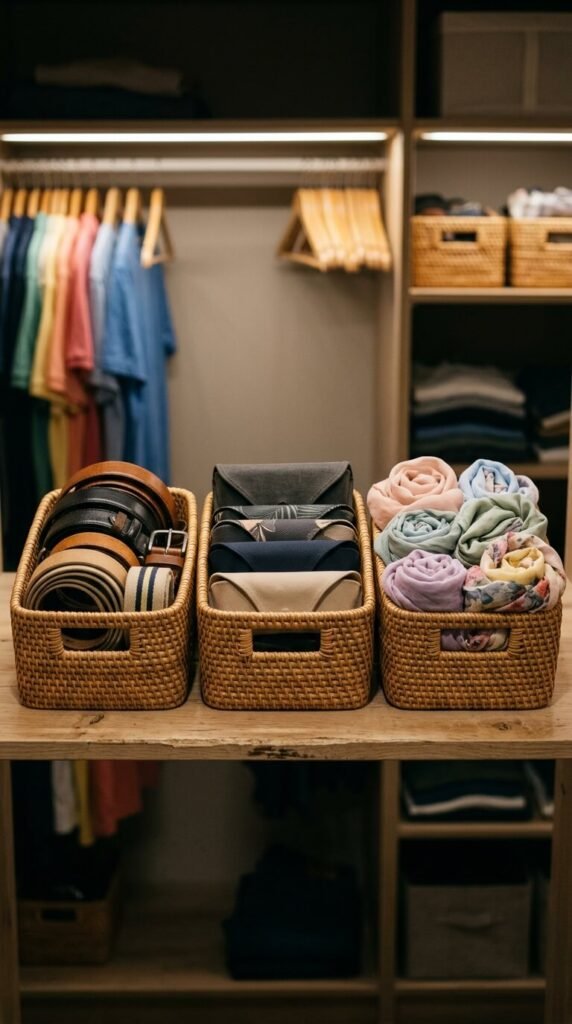
Accessories shoved in a drawer become a mess fast. Sort them into small open-top bins on a shelf — one for belts, one for sunglasses, one for scarves. Woven baskets from the dollar section work perfectly. Roll belts instead of folding them. Stack sunglasses in cases. Scarves fold into small squares or fold lengthwise. With a bin per category, you can find any accessory in under 10 seconds without pulling out everything else.
14. Hang a Pegboard for Jewelry
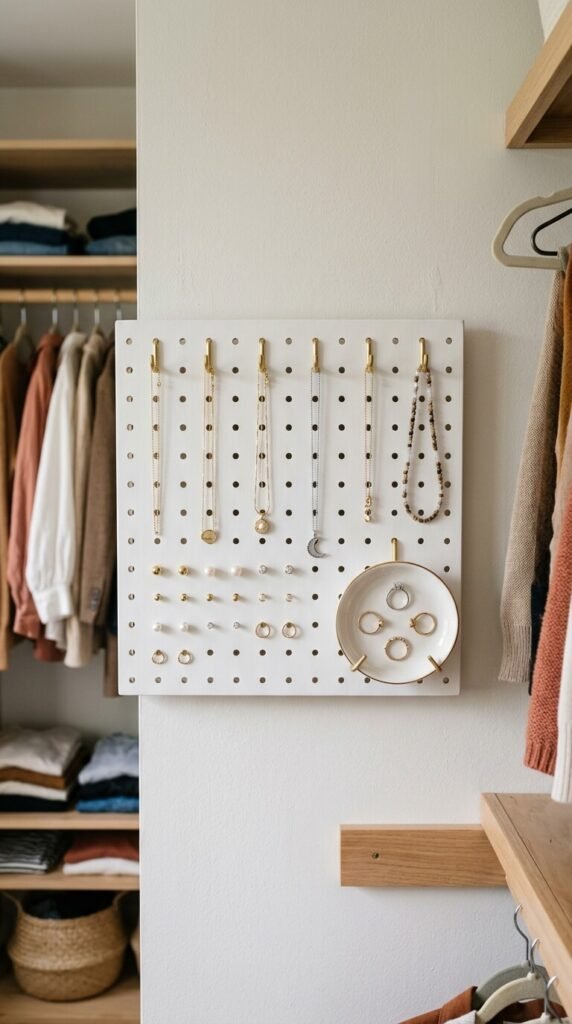
Jewelry tangled in a box wastes time every morning. A small pegboard panel with hooks lets you hang necklaces, bracelets, and earrings so everything is visible. Paint it any color. Add small hooks, tiny shelves, or a little dish for rings. Mount it with two screws or use adhesive strips. A 12×12 pegboard panel costs around $8–$12. It turns your jewelry into part of the decor and cuts your “getting ready” time significantly.
15. Maximize Vertical Space With Stackable Bins
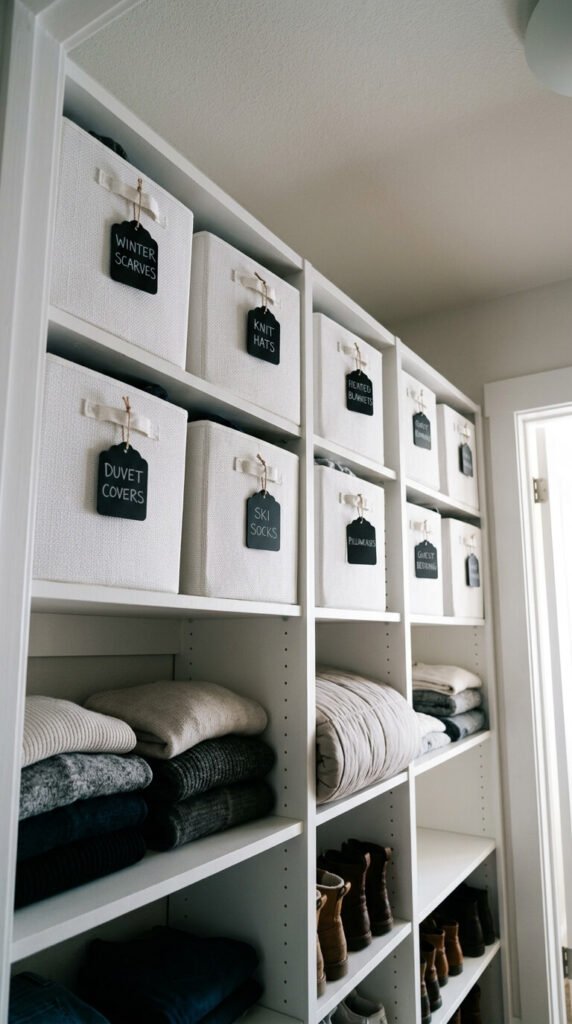
The top half of most closets holds one messy shelf. Stackable fabric bins turn that dead zone into organized vertical storage. Use the upper shelves for things you don’t need daily — seasonal items, extra bags, spare linens. Label each bin. Stackable cube bins or fabric drawer organizers are $8–$15 each and come in sets. Pull down what you need seasonally and the rest stays neatly packed and out of your way.
16. Dedicate a Drawer to Tomorrow
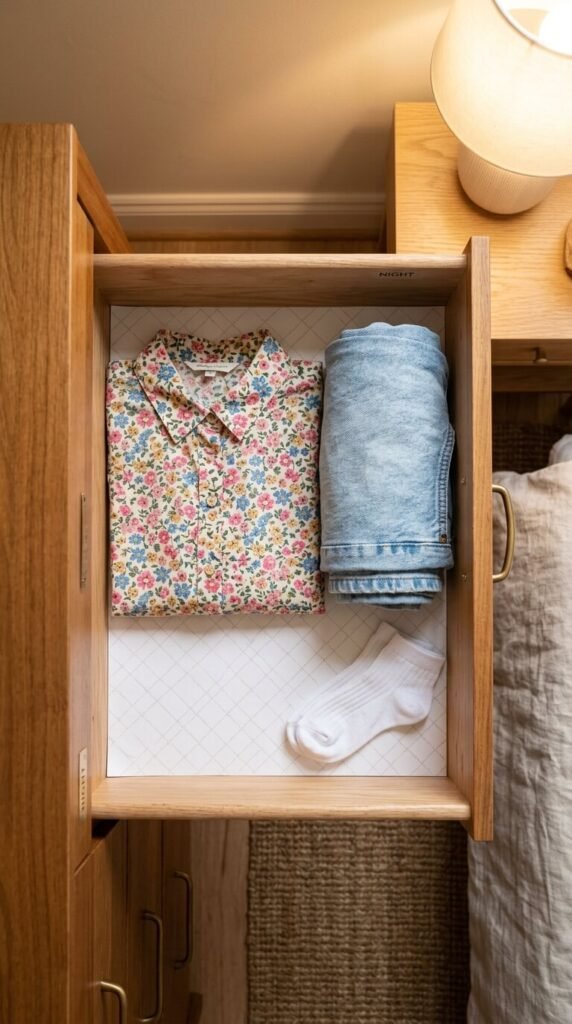
Set aside one full drawer just for tomorrow’s outfit. Every night, pick what you’re wearing, fold it into this drawer, and close it. In the morning you open one drawer and you’re done. No hunting, no indecision. This works especially well for busy weekdays or anyone who struggles with decision fatigue in the mornings. The drawer doesn’t need to be big — even a small top drawer works perfectly for one day’s outfit.
17. Hang a Mirror Inside the Door
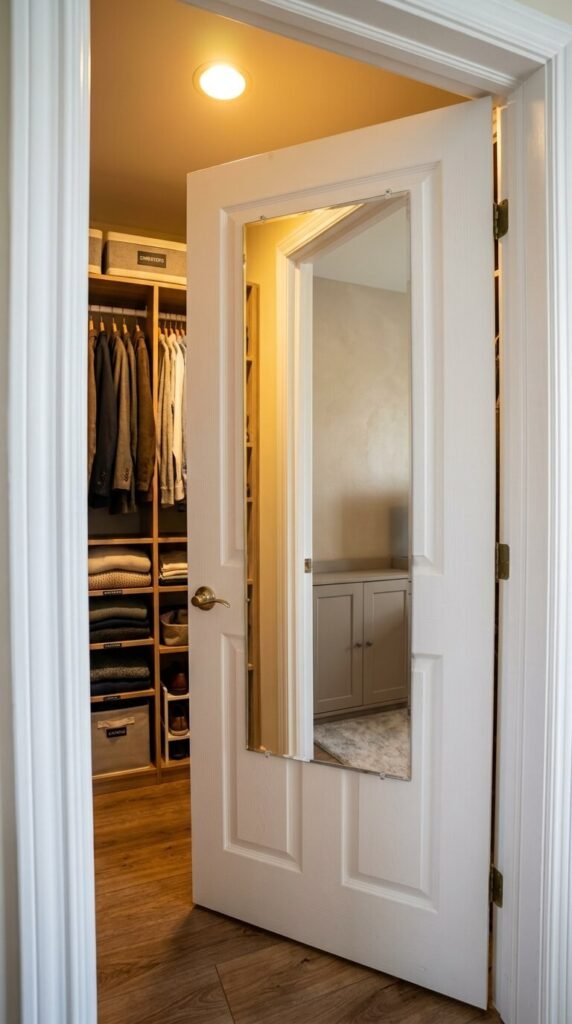
Checking your outfit in a separate room adds steps to your morning. A full-length mirror mounted on the inside of your closet door keeps everything in one place. Adhesive mirror panels from most home stores cost $15–$30 and require no drilling. You can assemble an outfit, hang it up, hold it against yourself in the mirror, and put it back — all in the same spot. Small space, big convenience.
18. Try a Capsule Wardrobe Approach for Spring
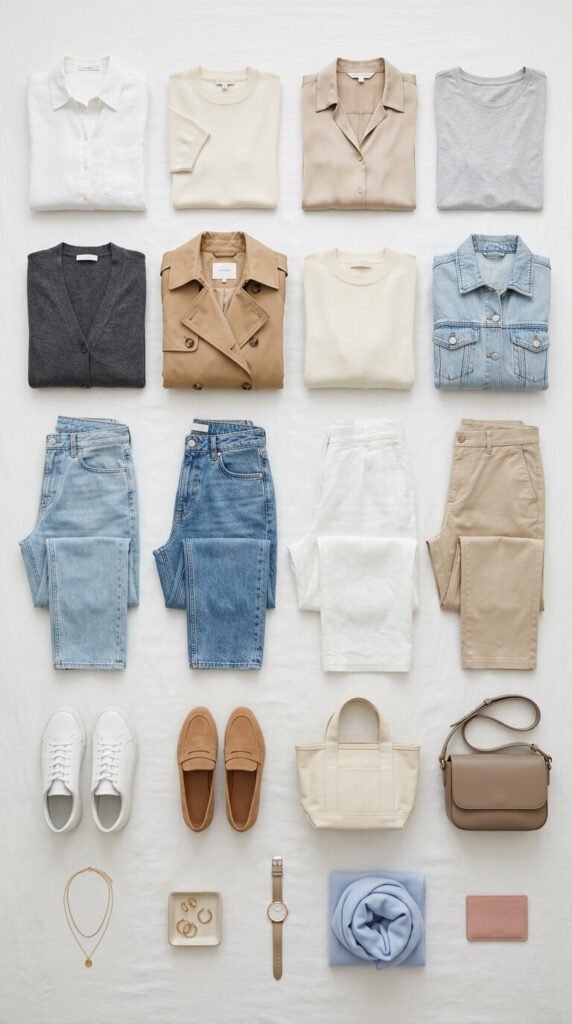
A spring capsule wardrobe is a small, curated set of clothes that all work together. Aim for 20–30 pieces that mix and match easily. Start with neutrals — white, cream, light denim, sage — and add two or three color pieces. When every item goes with everything else, you need a much smaller wardrobe and mornings become effortless. You’ll also stop buying things that don’t work with anything. It’s a mindset shift that pays off quickly.
19. Use Tension Rods Under Shelves
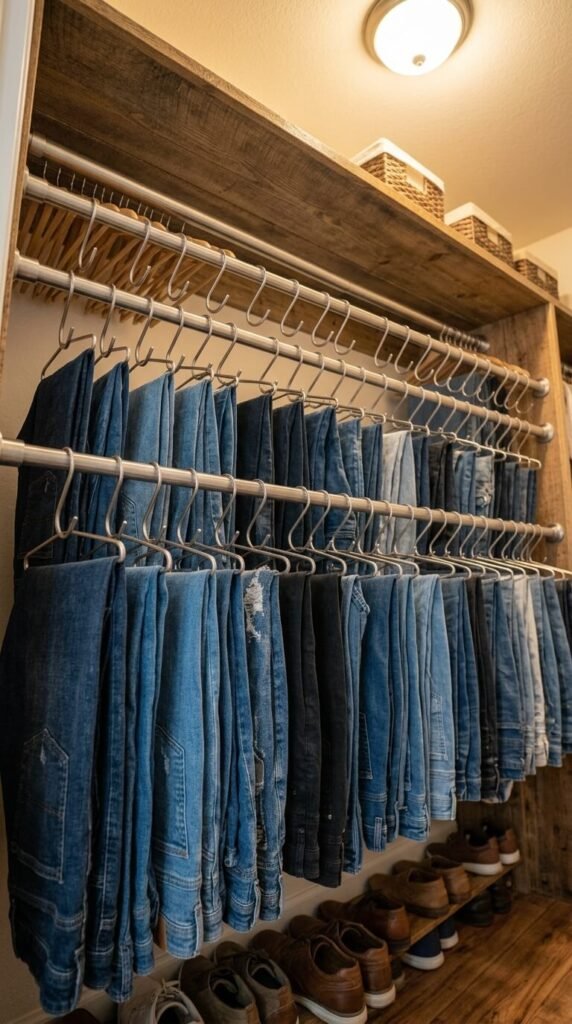
The space directly under a shelf is often unused. Mount small tension rods horizontally and use S-hooks to hang folded jeans by their belt loops or tank tops by their straps. This frees up rod space and shelf space simultaneously. Tension rods cost $3–$8 each. You can hang 4–6 pairs of jeans in the space that used to hold nothing. No drilling, no tools, and completely removable if you change your mind.
20. Add Lighting to Dark Corners
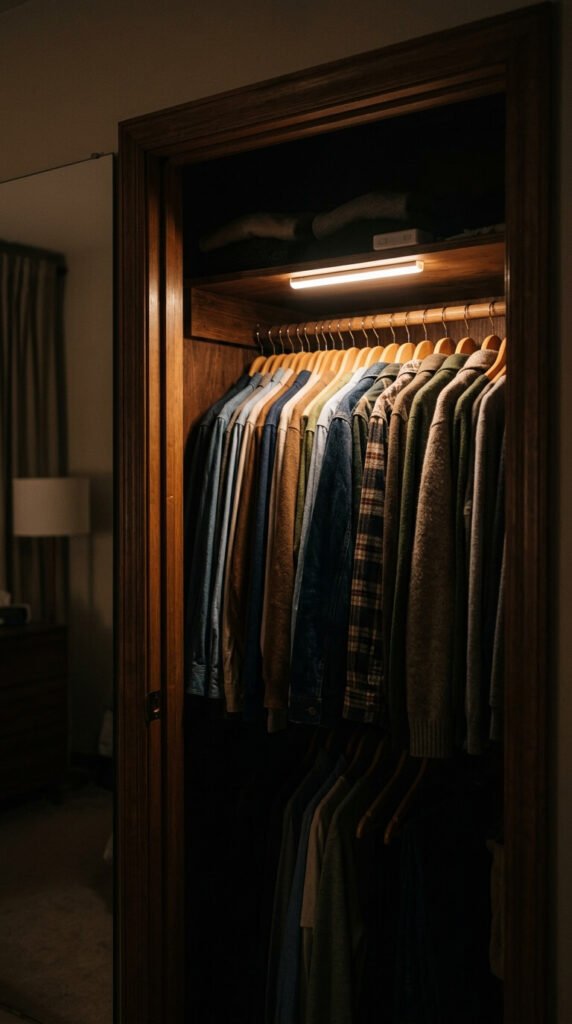
Dark closets waste space because you avoid the corners. Battery-powered LED strip lights or stick-on puck lights change everything. They’re $8–$20 and require zero wiring. Mount them under a shelf or along the rod. You’ll suddenly see every item clearly, including things shoved to the back. Motion-activated versions turn on when you open the door. Good lighting makes a small closet feel bigger and makes getting dressed feel less like a scavenger hunt.
21. Create a “Donate Now” Bin
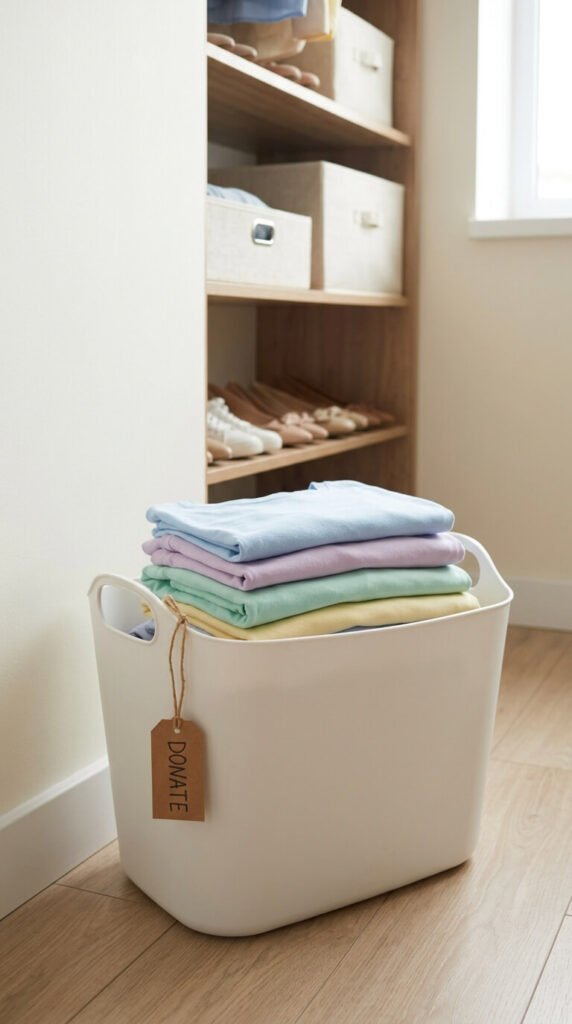
Decluttering fails when you have nowhere to put things immediately. Keep a dedicated donate bin inside or just outside your closet. When something doesn’t fit, looks worn out, or just doesn’t get worn, drop it in the bin right then. No more “I’ll deal with it later” piles on the floor. When the bin is full, take it to a donation center. This habit alone prevents closet re-clutter better than any organizer system.
22. Store Scarves in a Wine Rack
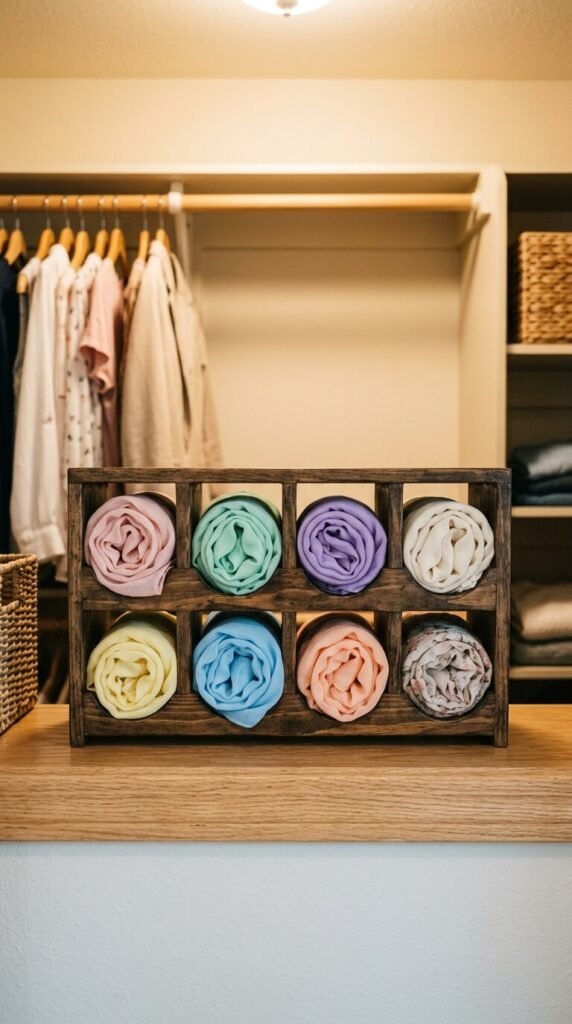
Scarves are notoriously hard to store neatly. A small tabletop wine rack repurposed inside a closet holds rolled scarves perfectly in each slot. You can see every color at a glance and pull one out without unrolling the others. Wine racks are available at dollar stores and thrift shops for almost nothing. This is a DIY storage hack that works better than any “scarf organizer” sold in stores.
23. Build a Shelf With Crates
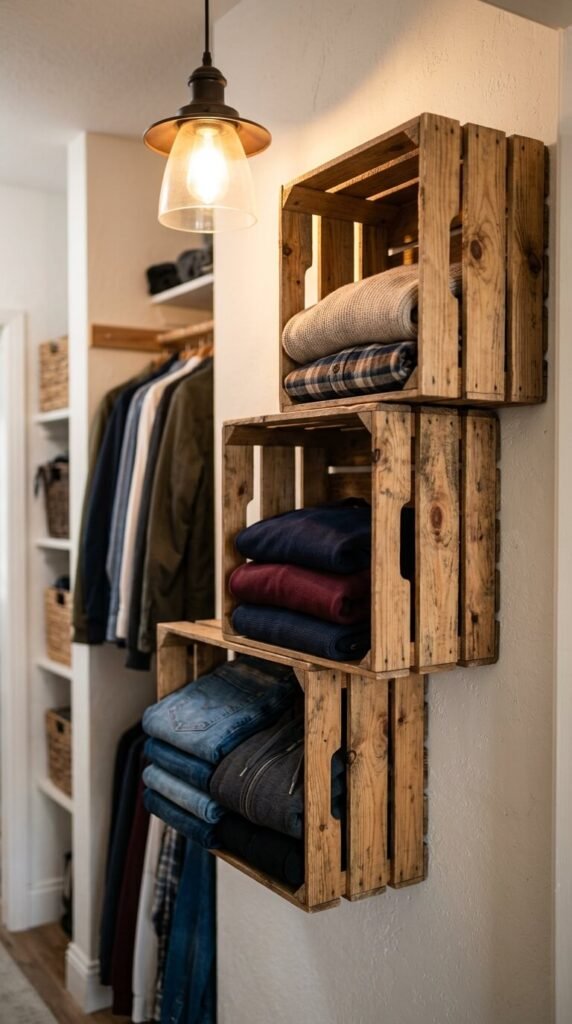
You don’t need custom shelving to add storage. Wooden crates from a craft store or thrift shop ($3–$8 each) can be stacked and mounted as shelves. Sand and paint them or leave them natural. Stack them offset for a casual staircase effect, or side by side for a uniform row. Mount to the wall with basic L-brackets. Each crate holds a folded stack or a storage bin. It’s a weekend DIY that costs under $30 total.
24. Hang a Canvas Shoe Organizer
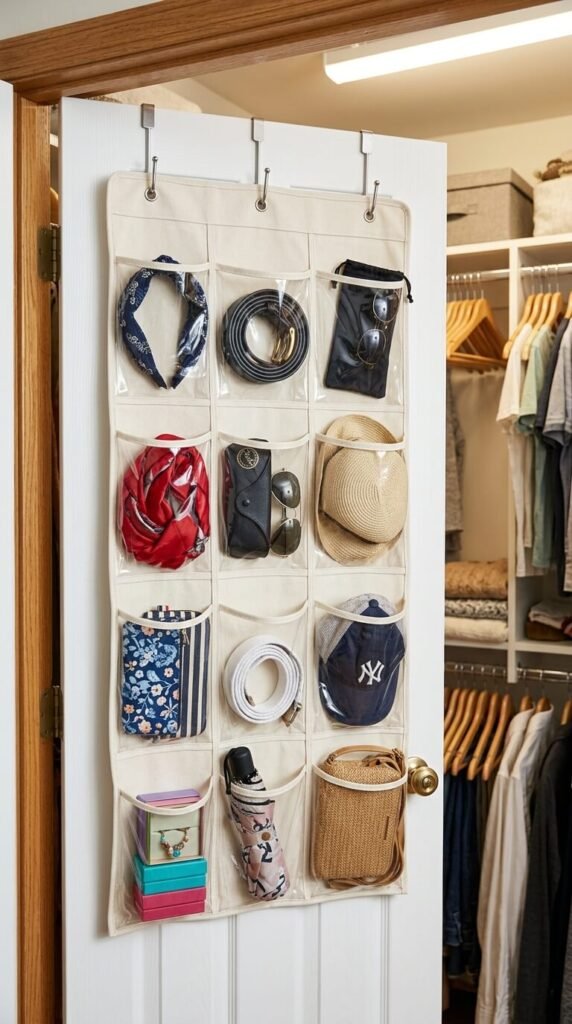
A canvas shoe organizer does more than hold shoes. Hang one on the back of a door and use each pocket for accessories, small bags, gym items, or kids’ gear. They hold 24–36 pockets per organizer and cost around $10–$15. Use it to hold anything that tends to get lost — hair ties, earbuds, charging cables, sunscreen. Every pocket becomes a category. Everything stays visible, off the floor, and within reach.
25. Reorganize After Every Season Change
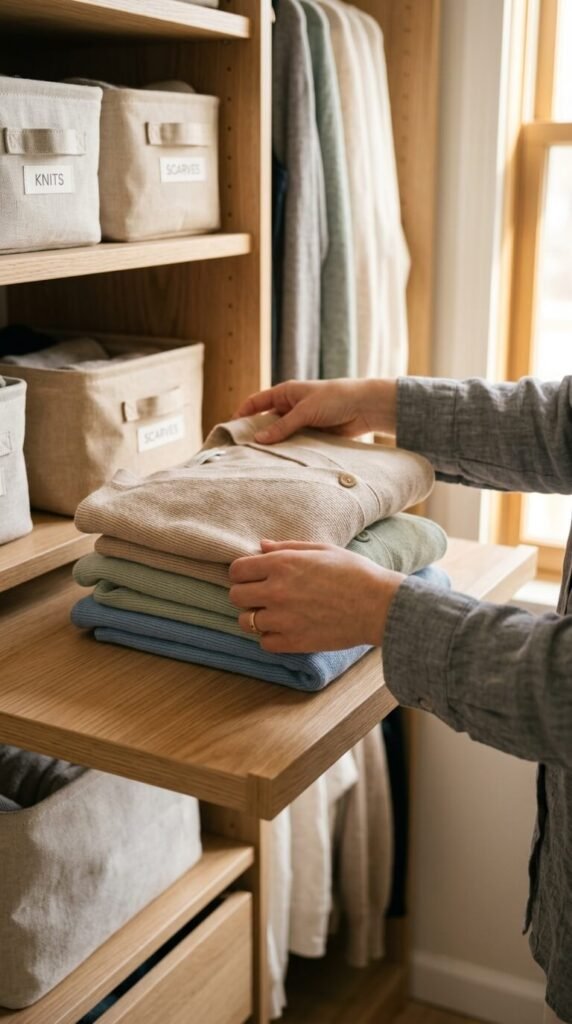
Organization slips without maintenance. Schedule a 30-minute closet reset at the start of each new season. That’s four times a year. Pull out what doesn’t belong, refold what’s gotten messy, swap in seasonal items, and update your donate bin. Treat it like a routine — put it on your calendar like an appointment. A closet that gets four small resets per year stays organized year-round with almost no effort in between.
26. Hang Pants by the Crease
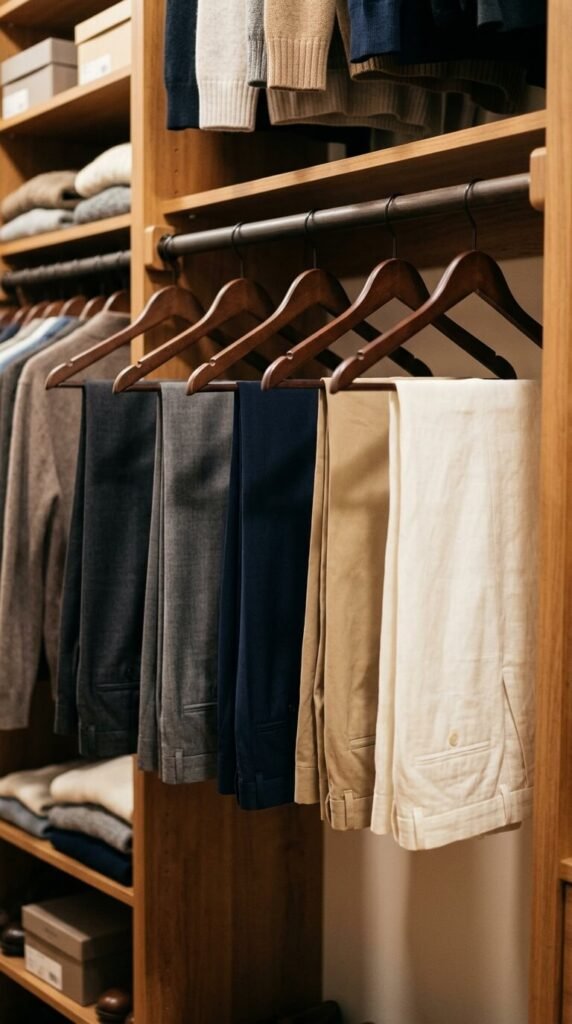
Pants folded over a hanger take up twice the rod space they need. Drape pants over the hanger at the crease — the fold line down the leg — and they take up minimal width. No need for specialty pants hangers. Any slim velvet hanger works. The crease stays pressed and sharp. You can fit three times as many pants on the same length of rod. It also makes it easy to see what you have without flipping through folded piles.
27. Set Up a “Daily Use” Zone at Eye Level
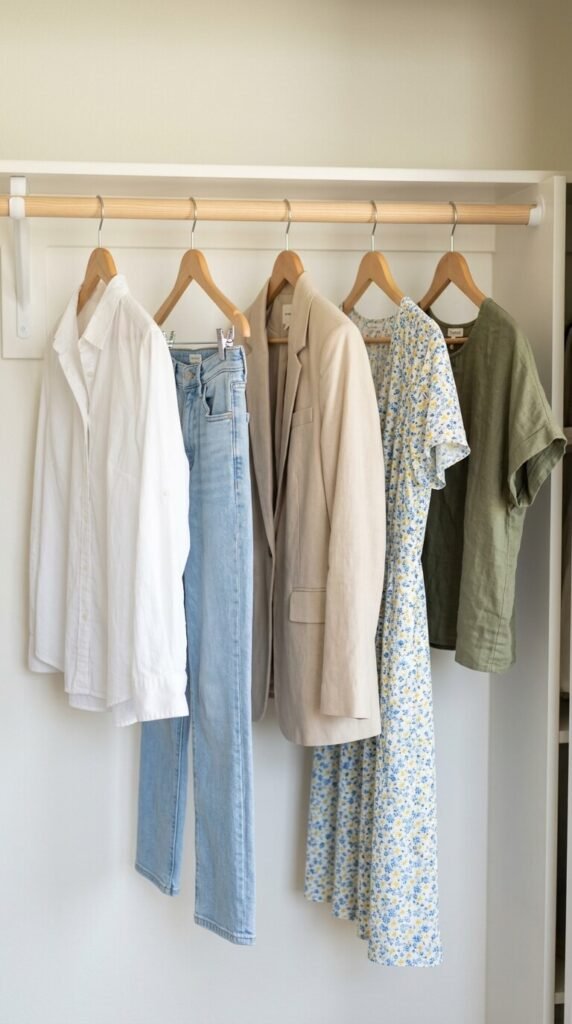
The best storage system puts your most-worn items exactly at eye level and arm’s reach. Everything you wear daily should live in the center of the rod at chest to eye level. Less-used pieces go to the sides, upper shelves, or back sections. You shouldn’t have to search for your go-to items on a busy morning. Build your closet like a store display — the star items front and center, the rest supporting.
28. Use a Wall Calendar or Outfit Planner
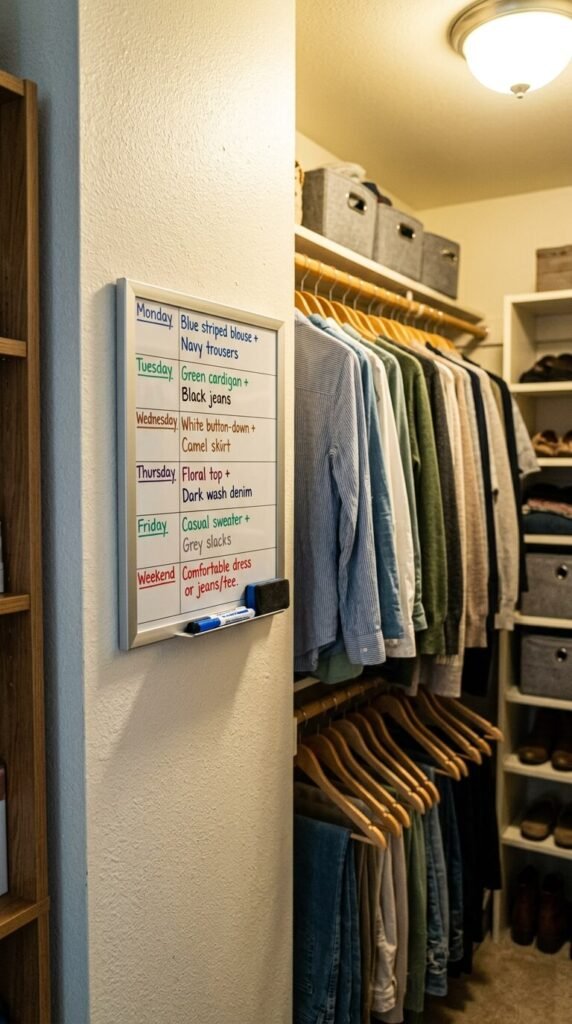
The last piece of a truly organized spring closet is a planning system. A small dry-erase calendar or clip-on notepad mounted inside the closet door lets you plan outfits for the week on Sunday night. Write which items go together for each day. Refer to it in the morning and skip all decision-making. It sounds like overkill until you actually use it. Five minutes of planning on Sunday saves you 10 minutes every single weekday morning.
Conclusion
A spring closet makeover doesn’t require a big budget or a full weekend. It requires a few smart decisions, some basic tools, and a willingness to let go of what isn’t working. Start with the seasonal swap and a second rod. Add labels and lighting. Work through the list one idea at a time and watch your closet transform from a source of morning stress into a system that actually supports you. The best closet isn’t the prettiest one — it’s the one that makes your mornings run without thinking.