There’s nothing more frustrating than spending time arranging a cheerful bunch of daffodils, only to watch them flop over like they’ve given up on life. You arrange them, they droop. You prop them up, they lean sideways. Sound familiar? The good news? Getting daffodils to stand tall is easier than you think — and once you know these tricks, your arrangements will look Pinterest-worthy every single time.
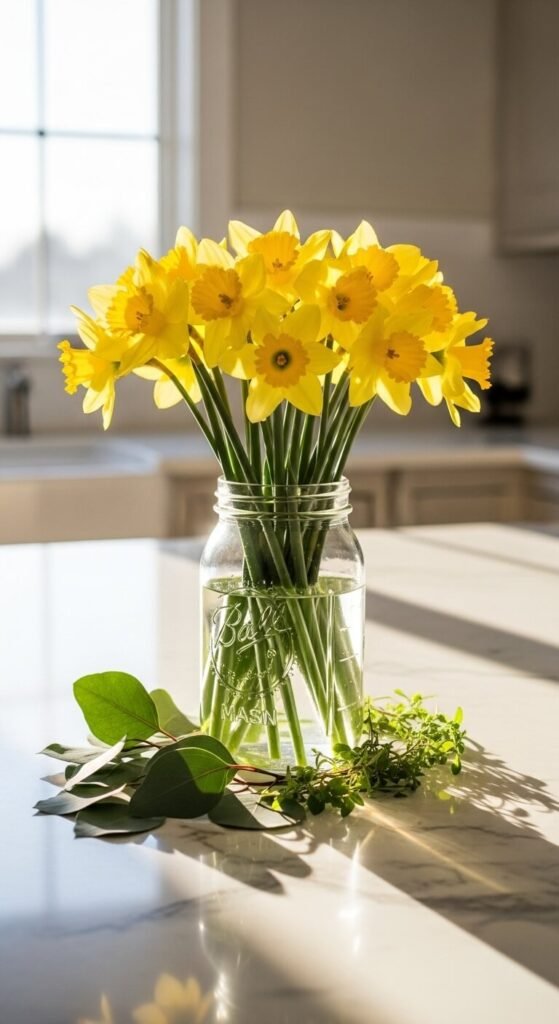
Why Do Daffodils Droop in the First Place?
Before we fix the problem, it helps to understand it. Daffodils are hollow-stemmed flowers, which makes them naturally prone to bending. They also release a sap called narcissus slime that is actually toxic to other flowers and clogs their own stems over time — causing premature wilting and drooping.
A few common culprits behind floppy daffodils:
Stems cut at the wrong angle
Vases that are too tall or too wide
Mixing daffodils with other flowers too soon
Overcrowding in the vase
Water that’s too warm
Step 1: Condition Your Daffodils First
This is the step most people skip — and it makes all the difference.
When you bring daffodils home, don’t put them straight into an arrangement. Instead:
Trim the stems at a 45-degree angle with sharp scissors or a floral knife.
Place them alone in a clean vase of cool, shallow water (about 2–3 inches deep).
Let them sit for at least 2 hours — ideally overnight — in a cool spot away from direct sunlight.
This conditioning period allows the stems to firm up and the sap to leach out into the water, so it won’t harm other flowers later.
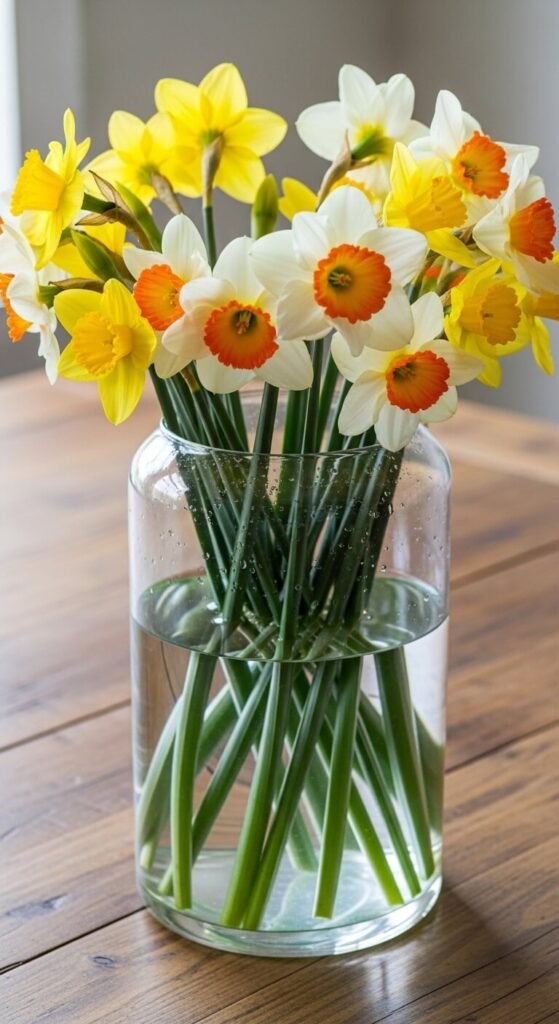
Step 2: Choose the Right Vase
Vase selection is everything when it comes to daffodils standing upright.
What works best:
Short, narrow-necked vases — the neck naturally supports the stems
Cylinder vases that are no taller than the flowers themselves
Mason jars or recycled bottles — their narrowness is your best friend
What to avoid:
Wide-mouthed vases with no structure
Vases that are much taller than the flower heads — stems have too much room to lean
A good rule of thumb: the vase should be roughly half the height of your daffodil stems.
Step 3: Use a Grid or Frog to Hold Stems in Place
If you’re using a wider vessel and want your daffodils perfectly upright, a little hidden structure goes a long way.
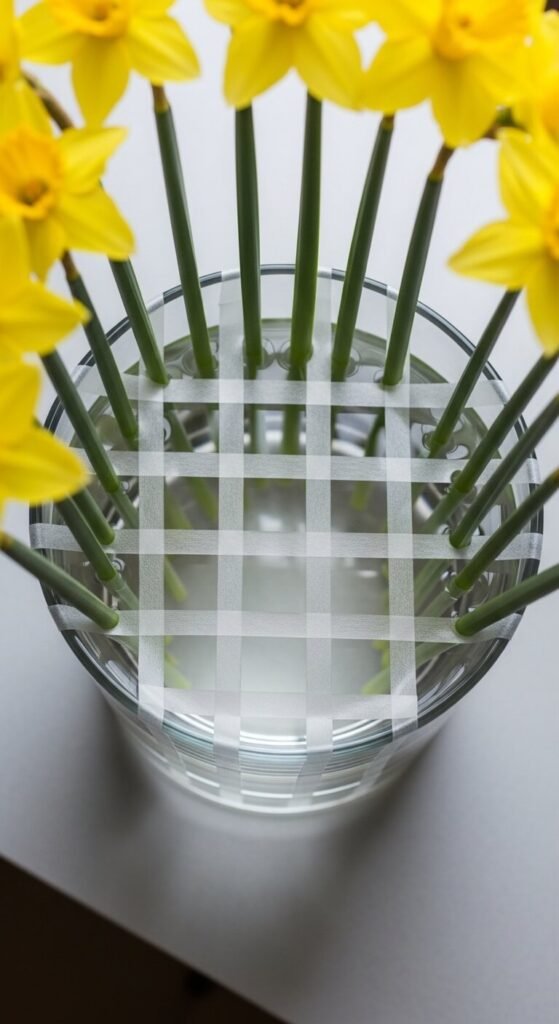
DIY tape grid: Use clear waterproof floral tape and create a grid across the mouth of your vase before adding water. It’s invisible once flowers are in place and acts like a scaffolding system for each stem.
Floral frog: A floral frog (a small weighted pin holder) placed at the bottom of a shallow bowl keeps each stem individually anchored. This is perfect for low, Japanese-inspired arrangements.
Step 4: Cut Stems to the Right Length
Longer isn’t always better. When stems are too long relative to the vase, the flower heads become top-heavy and tip over.
Trim stems so no more than one-third of the stem shows above the vase rim.
Re-cut stems every two days at a slight angle to maintain water uptake.
Remove any leaves that fall below the waterline — they’ll rot and cloud the water.
Step 5: Keep the Water Cool and Clean
Daffodils prefer cool water — warm water speeds up wilting and makes stems go soft.
Change the water every day or every other day.
Keep the vase away from heat sources, sunny windowsills, and fruit bowls (ripening fruit releases ethylene gas, which accelerates flower aging).
Add a small pinch of sugar and a drop of bleach to the water to keep it fresh and bacteria-free.
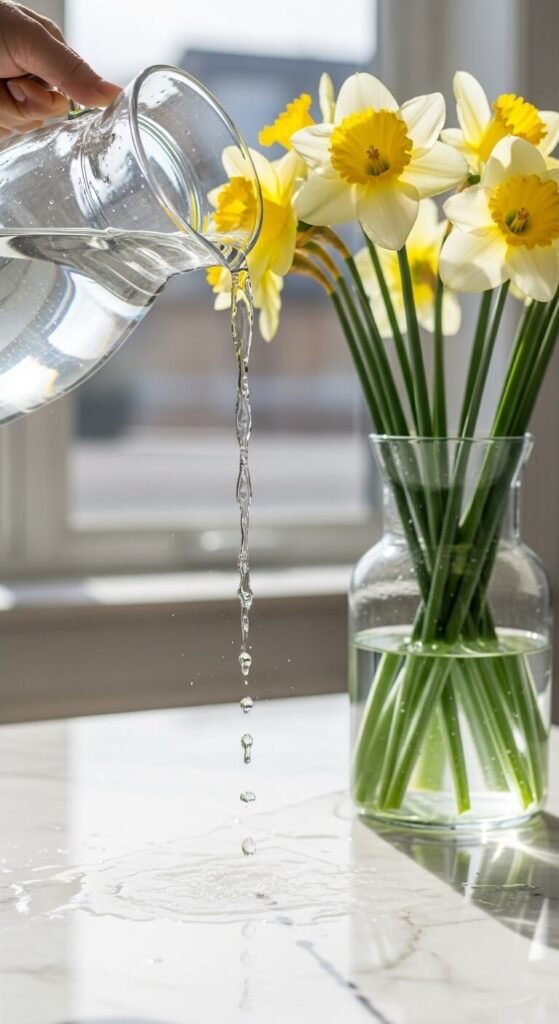
Bonus Tip: Mixing Daffodils with Other Flowers
If you want to pair daffodils with tulips, roses, or other blooms, condition them separately first for at least two hours. Once the initial sap has leached out, rinse the daffodil stems with clean water before adding them to a mixed arrangement. This prevents the narcissus sap from wilting your other flowers.
Final Thoughts
Getting daffodils to stand up straight is all about preparation, the right vessel, and a little hidden support. Condition first, choose a snug vase, use a tape grid if needed, and keep the water clean and cool. That’s truly all it takes.
[Image Prompt] A finished spring centerpiece on a dining table: a cluster of perfectly upright yellow daffodils mixed with sprigs of white baby’s breath in a short amber glass vase, soft bokeh background, warm natural light.