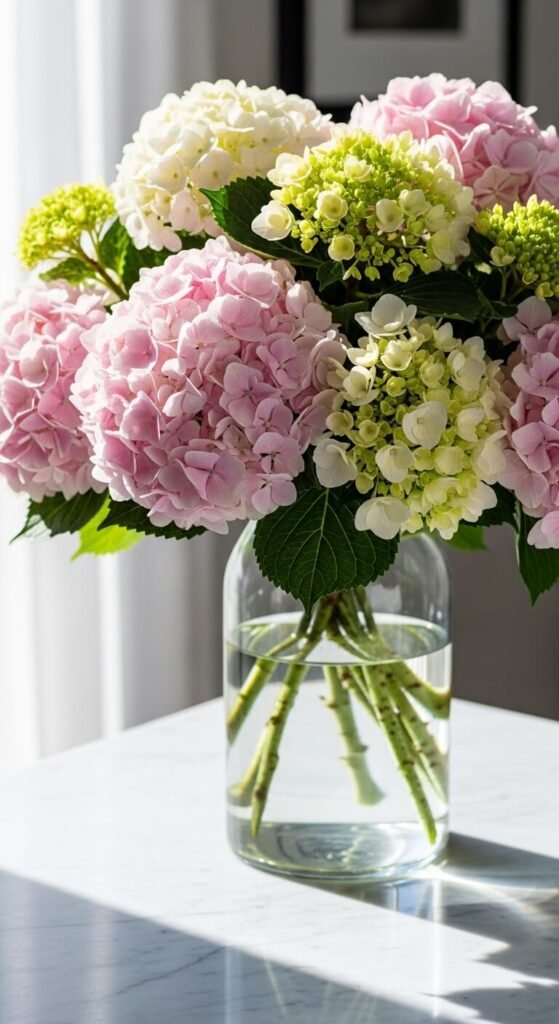
You buy a gorgeous bunch of hydrangeas, spend twenty minutes arranging them into the perfect vase — and by the next morning, they’re drooping like they gave up on life. Sound familiar? You’re not alone. Hydrangeas are notorious for wilting fast, but here’s the thing: it’s almost always preventable. With a few simple tricks, you can keep those fluffy blooms looking fresh and full for days.
Why Hydrangeas Wilt So Quickly
Before fixing the problem, it helps to understand it. Hydrangeas are thirsty flowers — they absorb water through both their stems and their petals. Their large, dramatic blooms need a serious amount of hydration to stay perky. The most common reasons they wilt too fast include:
- Air bubbles in the stem blocking water from traveling upward
- Improper cutting that seals off the water channel
- Wrong water temperature (yes, that matters!)
- Too much direct sunlight or heat near the arrangement
- Bacteria buildup in the vase water
Once you know why it happens, the fixes feel surprisingly simple.
Step 1: Cut the Stems the Right Way
This is the single most important step. Never just snip the stem straight across.
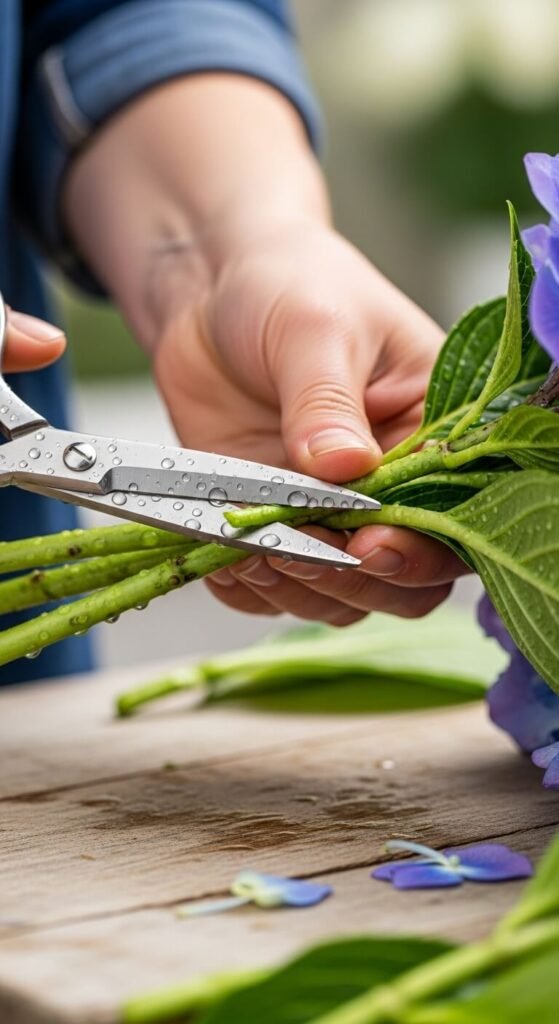
- Cut at a sharp 45-degree angle — this increases the surface area for water uptake
- Use sharp scissors or floral shears (dull blades crush the stem)
- Re-cut the stems while they’re submerged in water to prevent air from entering immediately
- Remove at least 1–2 inches from the bottom before placing in a vase
Some florists also recommend scoring the bottom inch of the stem by making a small vertical slit — this opens up even more channels for water absorption.
Step 2: Condition the Flowers First
Before arranging, give your hydrangeas a deep conditioning soak. Here’s how:
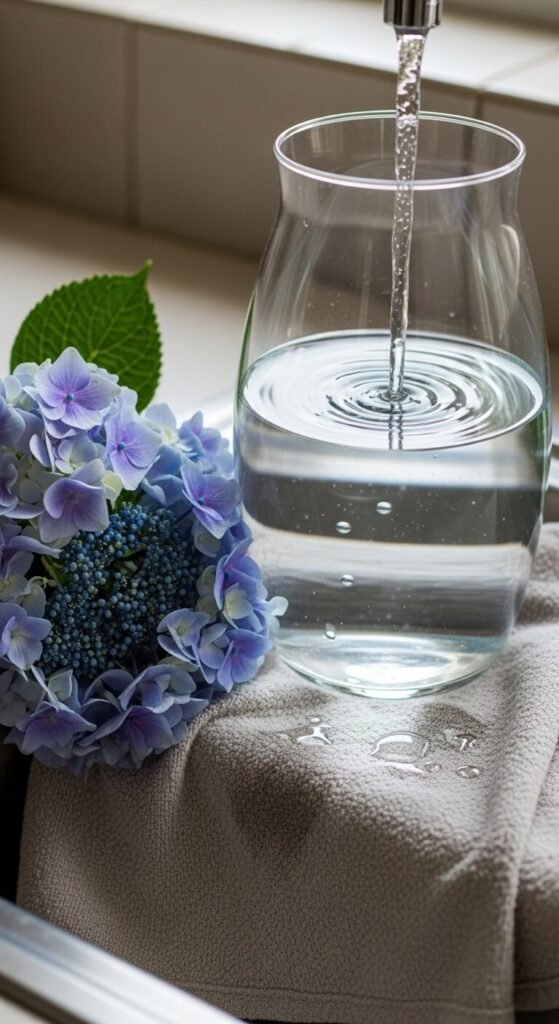
- Fill a clean bucket with cool or lukewarm water
- Cut the stems and immediately submerge them — all the way up to the base of the blooms if possible
- Let them soak for at least 2–4 hours, or overnight for best results
- Keep the bucket in a cool, dark place while they hydrate
This step is often skipped, and it makes a huge difference. Fully hydrated blooms hold their shape far longer once arranged.
Step 3: Choose the Right Vase and Water
Your setup matters just as much as the stems themselves.
- Use a clean vase — bacteria from old residue breaks down stems fast. A quick rinse with white vinegar works great.
- Fill with cool, fresh water (not cold, not warm)
- Add a floral preservative packet if you have one, or mix in a teaspoon of sugar + a few drops of bleach as a DIY version
- Change the water every 1–2 days and re-cut the stems each time
Step 4: Revive Wilting Hydrangeas Fast
Already wilting? Don’t throw them out yet. Try this rescue trick:
- Remove the blooms from the vase
- Re-cut the stems at an angle
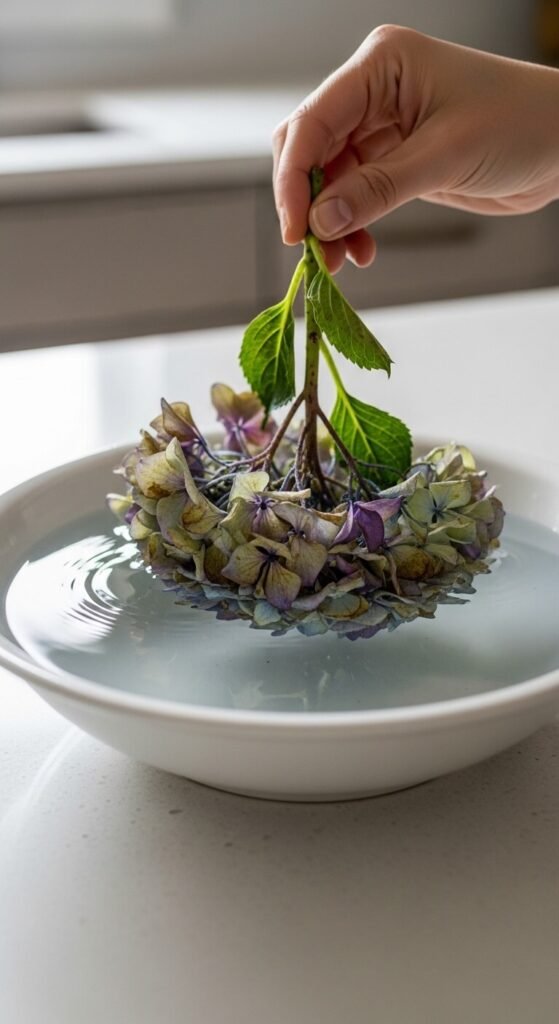
- Submerge the entire flower head in a bowl of cool water for 20–30 minutes
- Let the petals absorb water directly — they’ll often perk right back up
This works because hydrangea petals can absorb moisture independently. It’s basically a spa day for your flowers.
Step 5: Find the Perfect Spot in Your Home
Even perfectly conditioned hydrangeas will wilt fast if placed in the wrong spot.
- Avoid direct sunlight — bright indirect light is ideal
- Keep them away from heat sources like radiators, appliances, or sunny windowsills
- Don’t place them near fruit bowls — ripening fruit releases ethylene gas, which ages flowers faster
- A cool room will always extend their vase life
Keep Those Blooms Beautiful
Hydrangeas don’t have to be the flowers that “always die too fast.” With the right prep — angled cuts, a good conditioning soak, clean water, and a cool spot — they can stay stunning for up to a week or more.
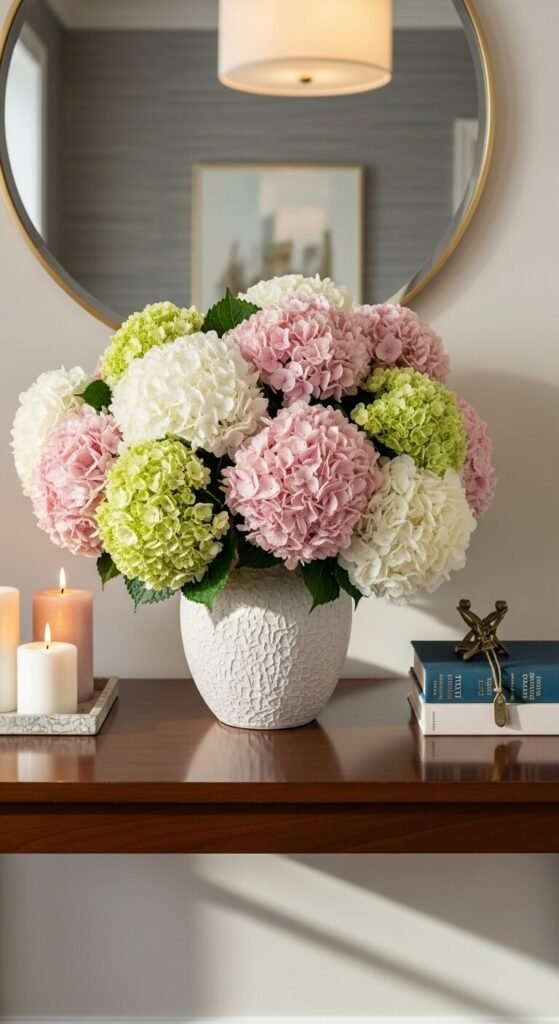
Save this guide for your next flower haul — and pin it so you never deal with droopy hydrangeas again! 🌸