There’s something almost magical about stepping into your kitchen and snipping a handful of fresh basil or rosemary right off a living plant. No grocery runs, no sad wilted herbs from a plastic clamshell — just pure, fragrant freshness at your fingertips. The good news? You don’t need a backyard, a green thumb, or even a lot of time to make it happen. An indoor herb garden is one of the simplest and most rewarding things you can bring into your home this spring.
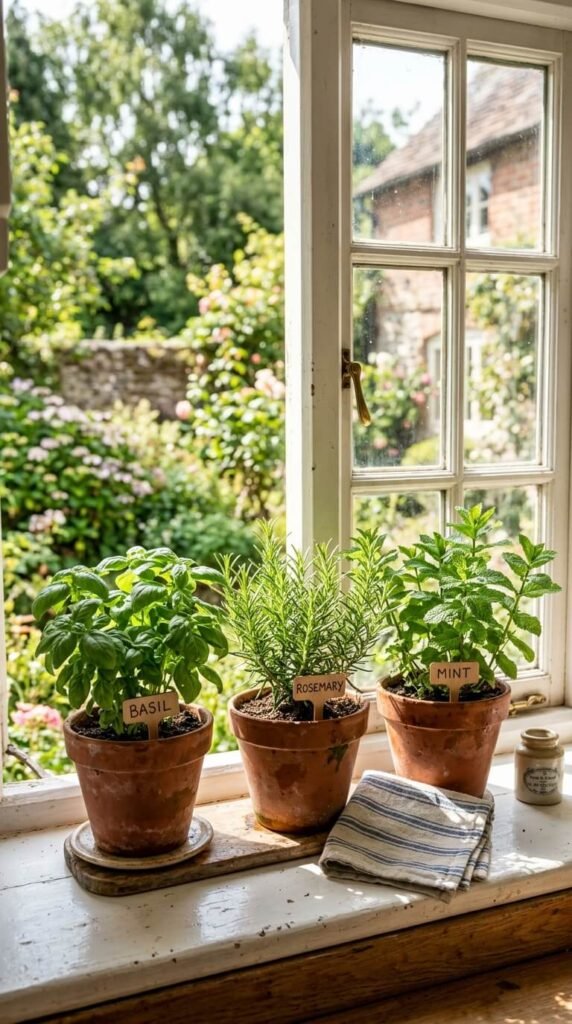
Choosing the Right Herbs to Grow Indoors
Not every herb thrives inside, so start with varieties that genuinely love an indoor environment. These are the easiest wins for beginners:
- Basil – loves warmth and sun, perfect for spring
- Mint – grows aggressively (keep it in its own pot!)
- Chives – low maintenance and practically foolproof
- Parsley – steady grower, great for everyday cooking
- Thyme – drought-tolerant and wonderfully fragrant
- Cilantro – fast to sprout, though it bolts quickly in heat
If you’re just getting started, basil and chives are your most forgiving first choices. Once you’ve got the hang of it, you can expand your collection with oregano, sage, or even lemon balm.
Picking the Perfect Spot
Light is everything for indoor herbs. Most culinary herbs need at least 6 hours of bright light per day, so your placement matters more than almost anything else.
- A south-facing windowsill is the gold standard
- East or west-facing windows work well for less sun-hungry herbs like mint and parsley
- No sunny windowsill? A grow light placed 4–6 inches above your plants for 12–14 hours a day does the job beautifully
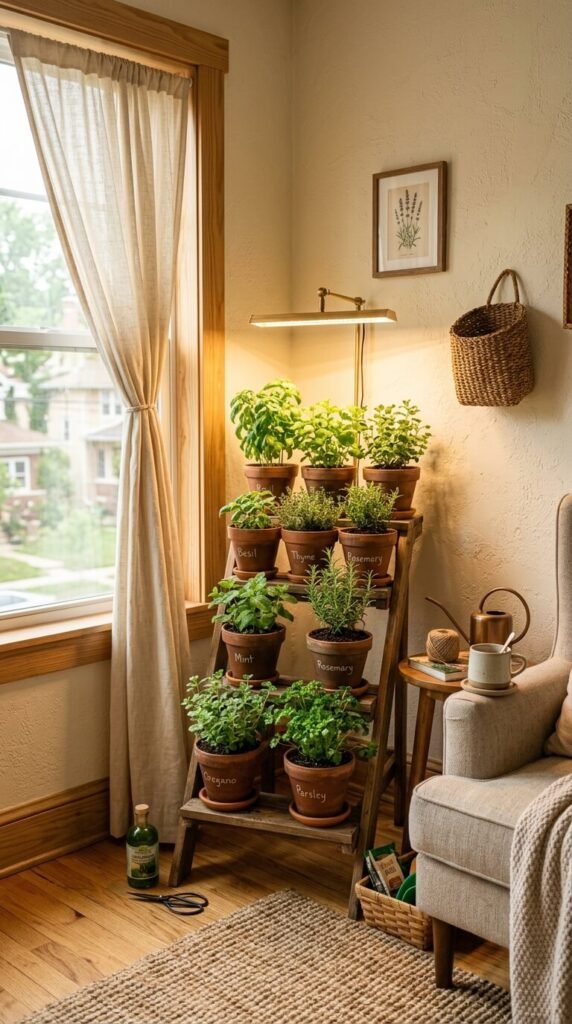
Avoid placing herbs near air conditioning vents or drafty spots — they hate temperature swings just as much as you do.
What You’ll Need to Get Started
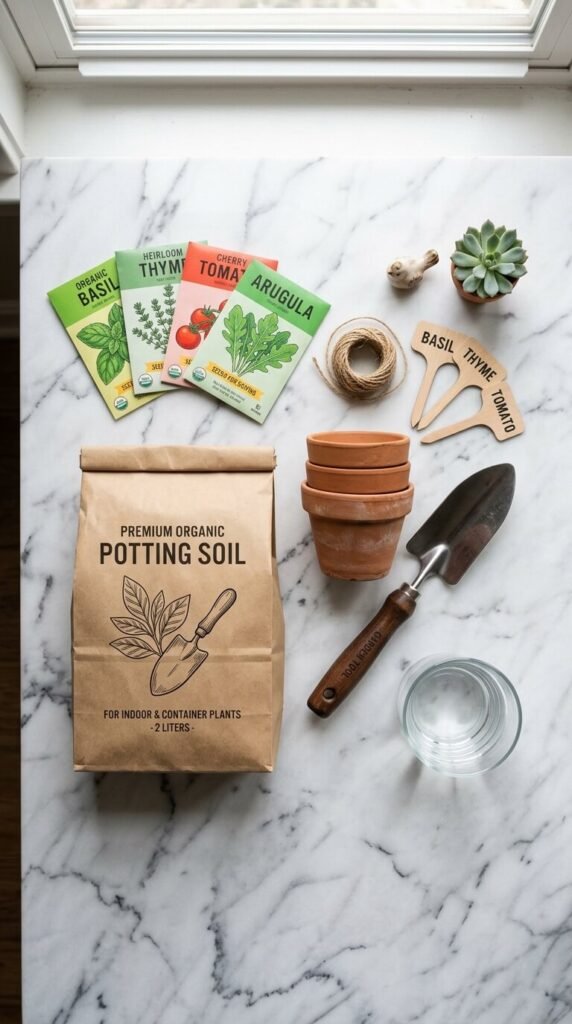
The setup is refreshingly simple. Here’s your starter kit:
- Containers with drainage holes – terracotta, ceramic, or even upcycled tin cans work great
- Well-draining potting mix – a standard herb or vegetable mix is ideal
- Seeds or starter plants – starter plants from a nursery give you a head start
- A small watering can or spray bottle
- Saucers or trays to protect your surfaces
Avoid pots without drainage holes — soggy roots are the number one herb killer. If you fall in love with a pot that has no hole, just use it as a decorative outer cover for a draining inner pot.
Planting and Caring for Your Indoor Herb Garden
Planting from seed: Fill your pot to about an inch from the top, scatter seeds lightly, cover with a thin layer of soil, and mist gently. Most herbs germinate within 7–14 days when kept warm.
Planting from starters: Gently loosen the root ball, set the plant in fresh soil at the same depth it was growing, and water thoroughly right after planting.
Ongoing care tips:
- Water when the top inch of soil feels dry — not on a rigid schedule
- Feed with a diluted liquid fertilizer every 2–3 weeks during the growing season
- Pinch off flower buds as soon as they appear to keep your herbs leafy and productive
- Rotate pots a quarter turn every few days for even light exposure
Most herbs bounce back quickly from light neglect, so don’t stress if you miss a watering day here and there.
Harvesting Without Killing Your Plants
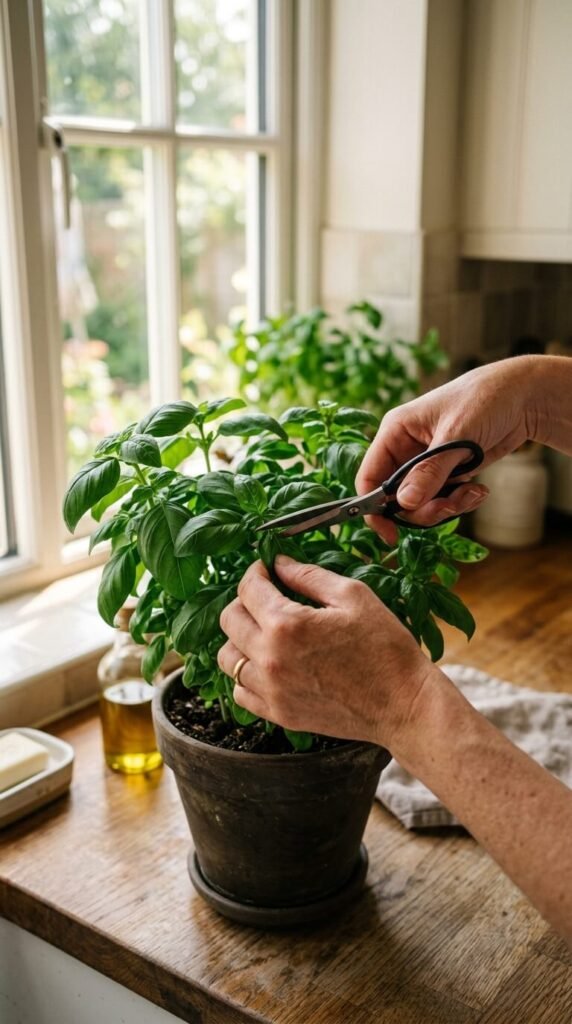
This is where beginners often go wrong — over-harvesting too soon. Wait until your plant has at least 6–8 healthy leaves or stems before snipping anything.
When you do harvest, cut above a leaf node (the spot where two leaves branch off). This encourages the plant to grow bushier rather than tall and spindly. Never remove more than one-third of the plant at a time, and your herbs will reward you with continuous new growth all spring long.
Bring Spring Freshness Into Every Room
An indoor herb garden isn’t just practical — it genuinely transforms a space. The scent of fresh mint or lemon thyme drifting through your kitchen on a spring morning is a simple pleasure that costs almost nothing to create.
Start with two or three pots this week, get comfortable with the routine, and watch how quickly it becomes second nature. Before long, you’ll be reaching for your own fresh herbs without even thinking about it.
Save this guide and start your indoor herb garden this weekend — your cooking (and your windowsill) will thank you! 🌿