There’s something about gingham that just feels like home. That simple, cheerful checked pattern has been dressing farmhouse kitchens, cozy porches, and sun-filled living rooms for centuries — and it shows absolutely no signs of slowing down. Whether you’re building a full farmhouse aesthetic from scratch or just want to add a little country charm to one corner of your home, gingham is the easiest, most affordable way to get there.
Why Gingham Works So Well in Farmhouse Décor
Gingham is one of those rare patterns that feels simultaneously classic and fresh. It’s humble enough to pair with rustic wood and vintage ironware, yet graphic enough to hold its own against bold neutrals and linen textures.
Here’s why it’s a farmhouse staple:
- It reads as “handmade.” The simple, woven geometry of gingham instantly suggests tradition and craftsmanship.
- It plays well with others. Stripes, florals, solid neutrals — gingham coordinates without competing.
- It comes in every color. From the classic red-and-white to navy, sage green, dusty rose, or even black-and-white, there’s a gingham palette for every farmhouse mood.
Start with Soft Furnishings: Pillows, Throws & Table Linens
The easiest — and most budget-friendly — place to introduce gingham is through soft furnishings. You don’t have to commit to gingham wallpaper to make an impact.
Try these quick wins:
- Toss a gingham throw over the arm of a linen sofa or a wooden rocking chair on the porch.
- Layer gingham throw pillows with solid-colored or floral cushions for a collected, lived-in look.
- Dress your dining table with a gingham runner or tablecloth under a simple centerpiece of mason jars and wildflowers.
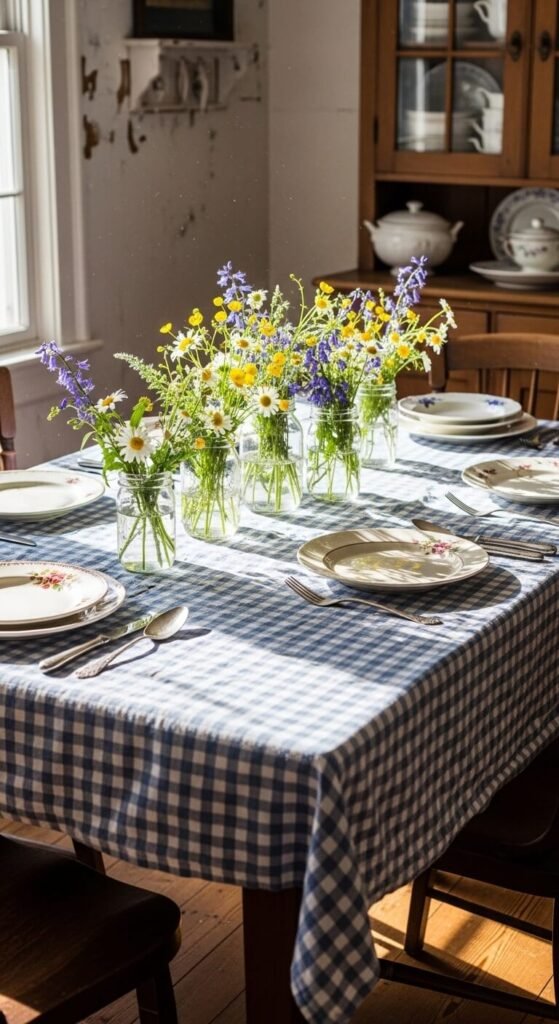
Pro tip: For the most authentic farmhouse feel, mix scales. Use a small-check gingham for napkins and a larger-check version for a nearby curtain or pillow. The contrast adds depth and feels intentional, not matchy-matchy.
Bring It to the Windows
Nothing transforms a room quite like new curtains — and gingham panels are a farmhouse decorator’s secret weapon.
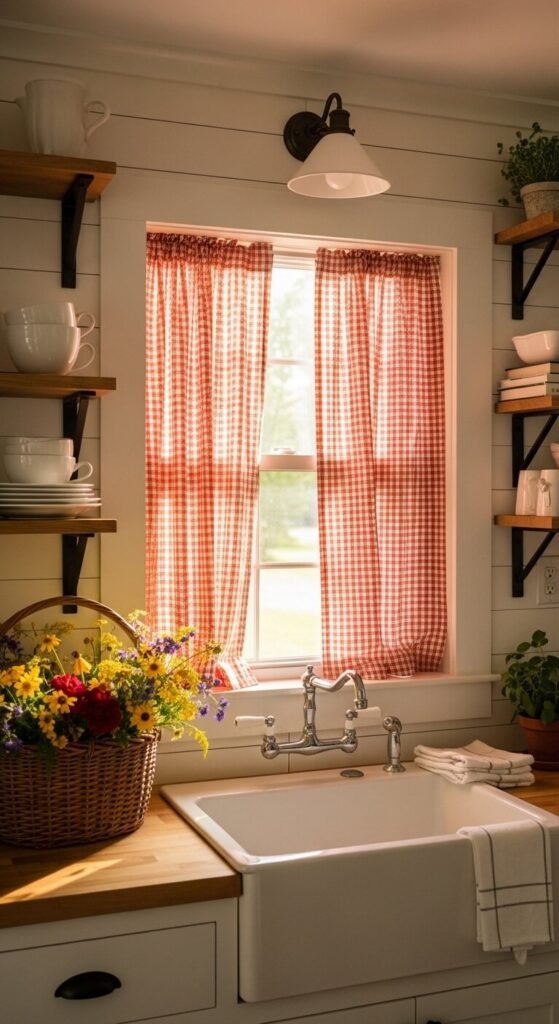
- In the kitchen, go classic with red-and-white café curtains hung at the lower half of the window. They let in the light while adding a diner-esque, nostalgic touch.
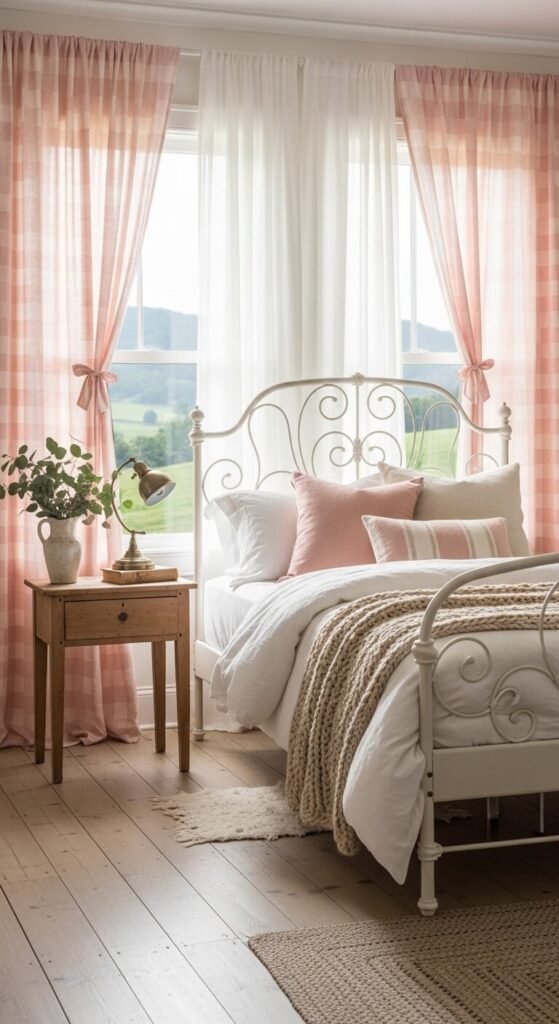
- In the bedroom, try soft green or blush gingham tab-top curtains paired with white walls and natural wood furniture for a serene, countryside feel.
- In a mudroom or entryway, a short gingham Roman shade in navy or black-and-white adds structure and character without overwhelming a small space.
Layer Gingham into Your Kitchen & Pantry
The kitchen is arguably gingham’s natural habitat. This is where the pattern truly shines.
- Line open wooden shelves with a strip of gingham fabric cut with pinking shears for a sweet vintage detail.
- Use gingham contact paper inside cabinet doors or on the backs of open shelving for an unexpected pop.
- Swap out plain dish towels for gingham ones — hang them from an oven handle or a hooks rail for a farmhouse-perfect moment.
- Fill a wire basket with gingham-wrapped packages of homemade jam, tea tins, or baked goods for a charming, Pinterest-ready vignette.
Mix Gingham with Other Farmhouse Patterns
Gingham doesn’t have to stand alone — and in fact, it looks best when paired thoughtfully.
Classic farmhouse pattern combos:
- Gingham + ticking stripe — A timeless duo. Try gingham pillows with a ticking stripe bench cushion.
- Gingham + floral — Keep the gingham small-scale so the floral can breathe. Think gingham napkins beside a floral centerpiece.
- Gingham + plaid — Use them in different rooms or different scales to avoid visual overload.
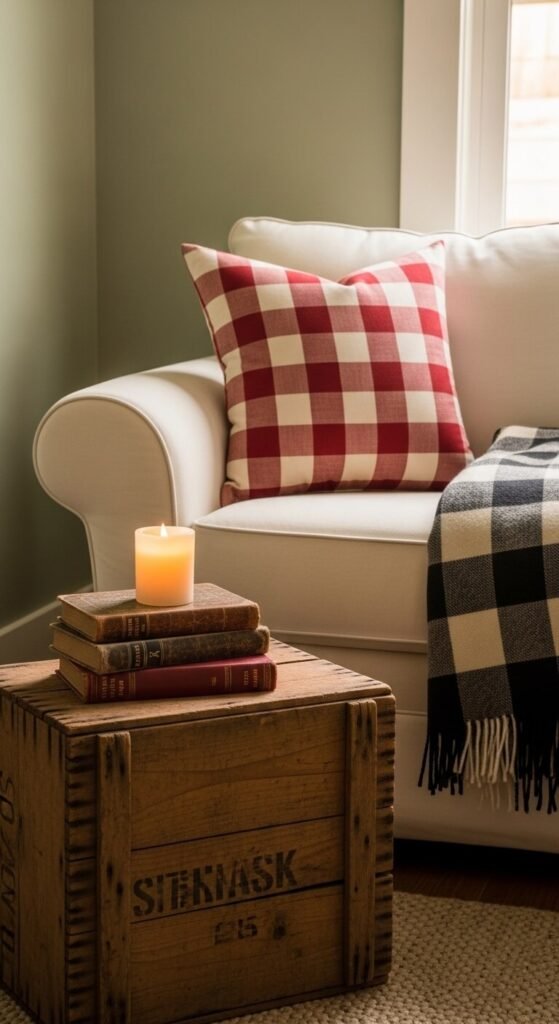
The golden rule: vary your scales and keep your color palette tight. Two or three colors across all your patterns will keep things cohesive and intentional.
A Few Final Styling Tips
- Don’t over-gingham. One or two gingham moments per room is charming. Five starts to feel like a theme park.
- Anchor gingham with natural textures — raw wood, jute, galvanized metal, and linen are its best friends.
- Lean into imperfection. Slightly faded gingham, mismatched checks, worn linen — these “flaws” are what make farmhouse style feel authentic, not staged.
Gingham is one of those endlessly versatile, endlessly lovable patterns that never tries too hard — and that’s exactly what makes it so perfect for farmhouse decorating. Whether you go all-in on a full kitchen makeover or simply add one gingham throw to your reading nook, the result will always feel warm, welcoming, and wonderfully timeless.
Save this article for later and pin your favorite gingham ideas — your farmhouse-perfect home is closer than you think! 🏡