There’s something quietly magical about a tiny world tucked into a garden corner — a miniature door nestled against a tree root, a pebble pathway leading nowhere in particular, a thimble-sized watering can sitting beside a patch of moss. Fairy gardens have a way of making children (and let’s be honest, adults too) stop, crouch down, and believe in something enchanting.
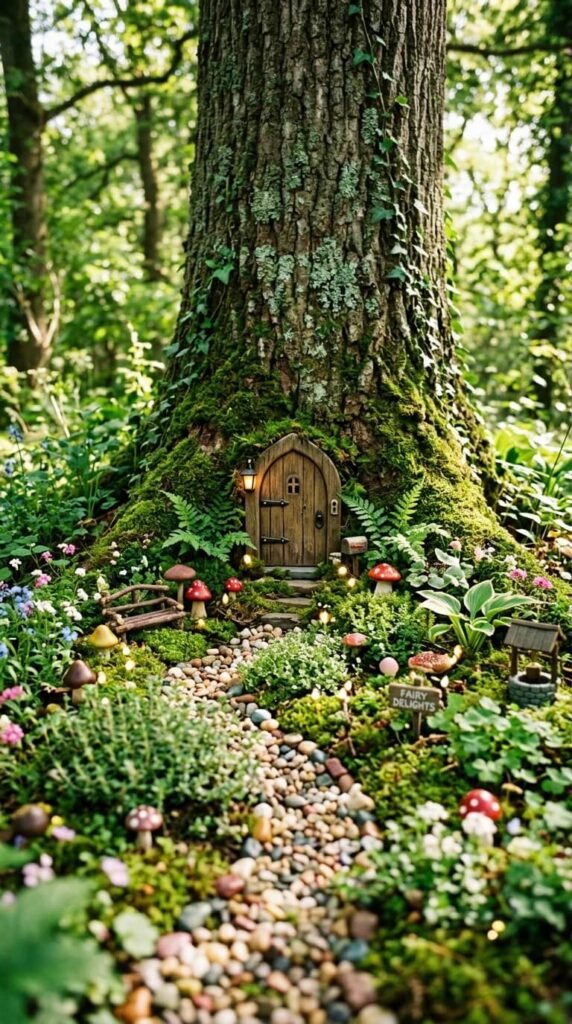
Whether you’re creating a magical corner in your backyard, a container on your porch, or a windowsill world indoors, designing a fairy garden is one of the most rewarding creative projects you can share with a child. Here’s how to build one that truly sparks wonder.
Start With the Right Container or Space
Your fairy garden can live almost anywhere — and that’s part of the fun. Options include:
- A terracotta pot or ceramic planter (great for beginners)
- A wooden crate or half-barrel for more elaborate scenes
- A dedicated garden bed for a full-scale magical landscape
- A shallow tray or baking dish for an indoor version
Choose a spot with good drainage and appropriate sunlight for the plants you’ll use. A slightly shaded location often feels more mysterious and fairy-like — think dappled light and cool soil.
Choose Plants That Feel Miniature and Magical
The plants you pick set the entire mood. You want texture, variety, and a sense of scale — everything should feel just right for a tiny fairy visitor.
Best fairy garden plants include:
- Irish moss or Scotch moss — forms a lush green carpet
- Baby tears — delicate and low-growing
- Creeping thyme — releases a lovely scent when touched
- Miniature ferns — add drama and a woodland feeling
- Succulents — look like alien trees in a fairy world
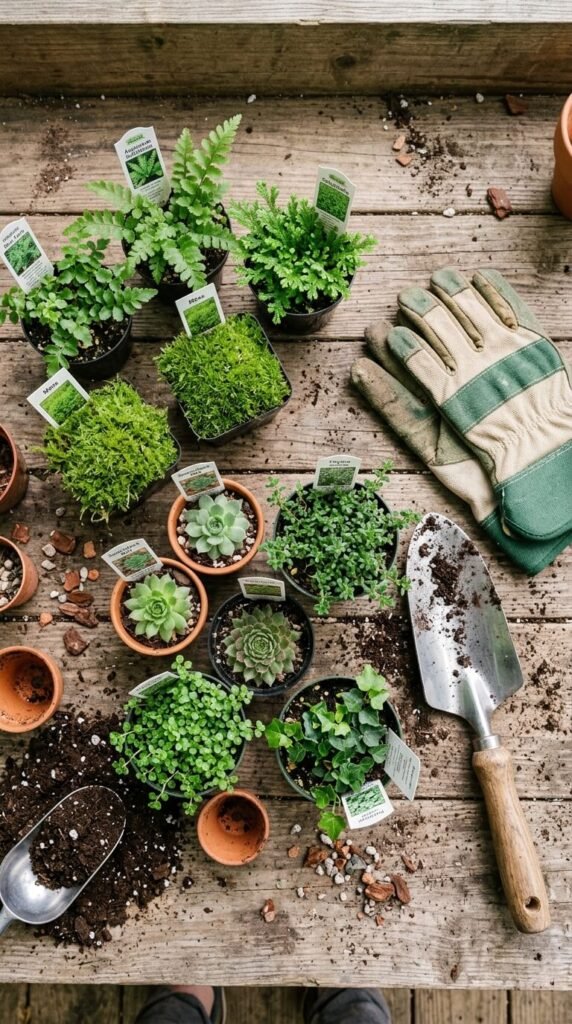
Avoid fast-growing plants that will quickly outgrow the scene. The goal is a garden that stays in scale with the miniature world you’re building.
Build the Scene With Paths, Structures, and Furniture
This is where children absolutely light up. Tiny furniture, little bridges, and hidden details turn a plant arrangement into a story.
Structure ideas:
- Pebble or gravel pathways winding through the garden
- A miniature wooden or stone bridge over a shallow “river” of blue glass beads
- A tiny fairy house (purchased or hand-crafted from natural materials)
- A bird bath made from a bottle cap or a slice of stone
- A small mirror to mimic a pond or lake
Natural found materials work beautifully:
- Twigs become fences or pergolas
- Acorn caps become bowls or bird baths
- Pinecones look like giant trees at fairy scale
- Smooth river pebbles create instant pathways
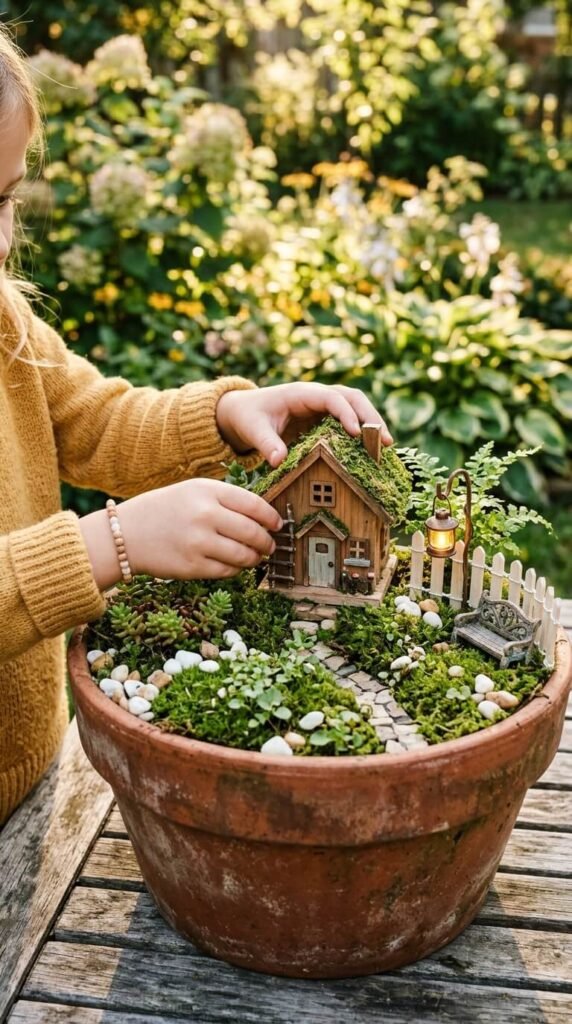
Invite children to hunt for these materials in the yard — it becomes part of the magic.
Add Details That Invite Imagination
The details are everything. A fairy garden with tiny “forgotten” objects feels genuinely inhabited rather than simply decorated.
Try adding:
- A miniature mailbox with a tiny rolled letter tucked inside
- A clothesline made of thin string and toothpicks with mini fabric scraps
- Tiny food like painted clay berries or a miniature picnic spread
- A small lantern or solar light that glows at dusk
- A “fairy door” pressed into the side of a pot or attached to a tree
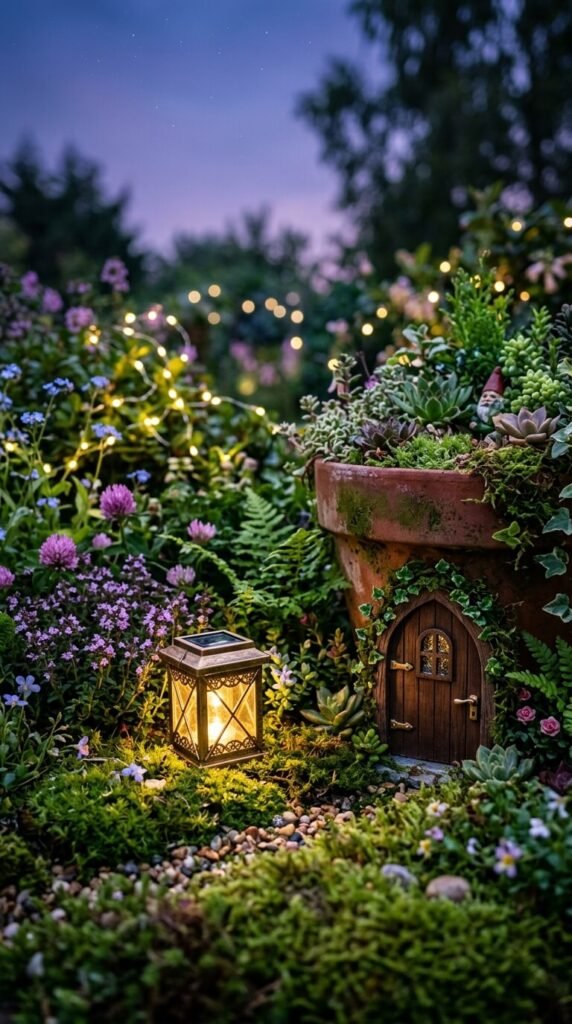
These storytelling touches encourage children to return to the garden again and again — rearranging, adding new characters, and spinning new tales.
Keep It Evolving and Involve the Kids
The best fairy gardens are never really “finished.” Let children add to theirs over time — a new found stone, a painted twig, a clay creature they sculpted themselves. This ongoing involvement keeps the wonder alive far longer than any finished project would.
Set a simple rule: the fairy garden grows as your imagination does.
Fairy gardens remind children that magic doesn’t require screens or batteries — just a handful of plants, a few tiny treasures, and a little patch of earth to call their own. Pin this guide and start building your own enchanted world this weekend. Your little ones will thank you for it — and so will the fairies. 🌿