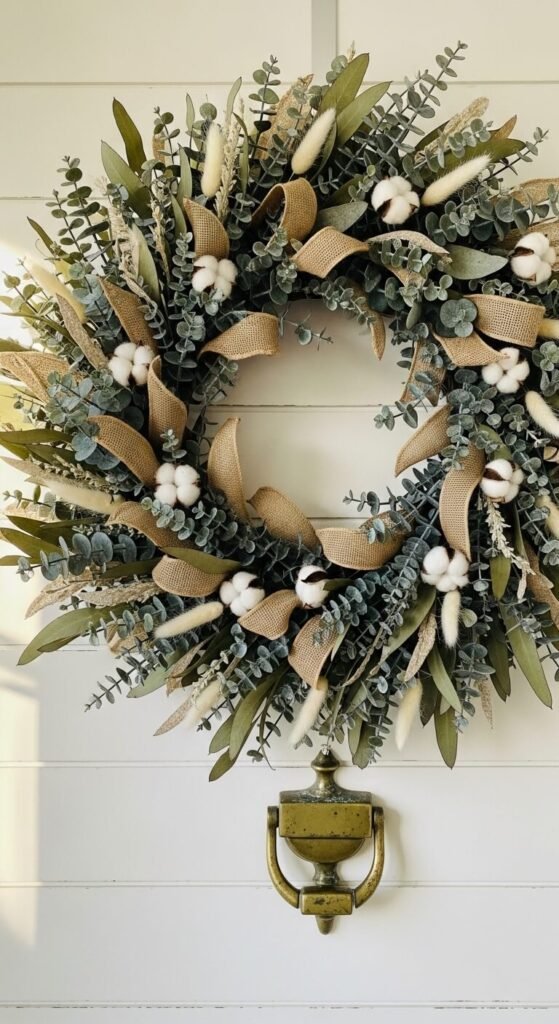
There’s something about a farmhouse wreath hanging on a weathered wood door that just stops you in your tracks. It’s warm, it’s simple, and it somehow makes a whole porch feel like home. The good news? You don’t need to be a professional crafter to pull it off. With a handful of natural materials and a little patience, you can create a stunning rustic wreath that looks like it came straight from a countryside cottage.
What You’ll Need Before You Start
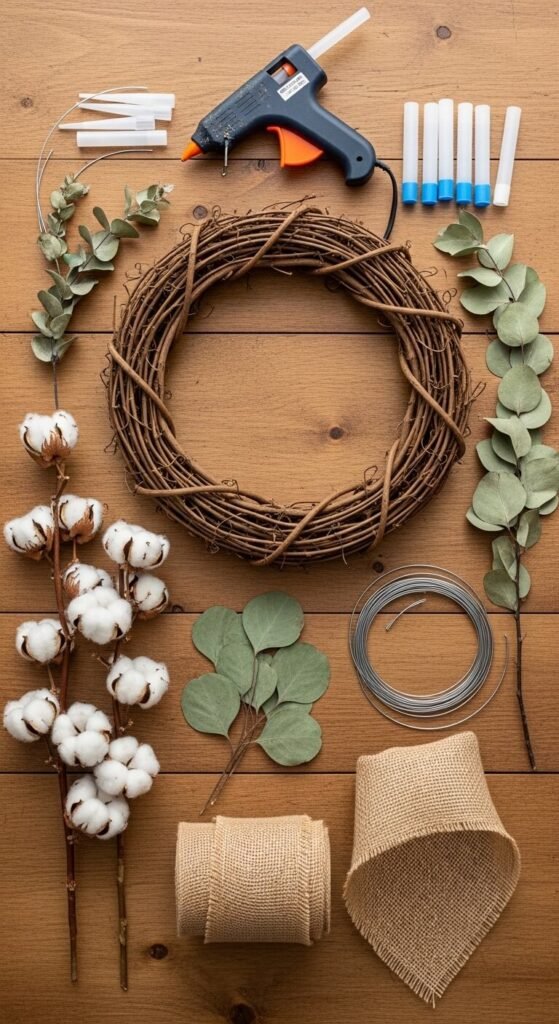
Gathering your supplies ahead of time makes the whole process smoother and more enjoyable. Here’s what to pick up:
Grapevine or wire wreath base (12–18 inches depending on your door size)
Dried or faux eucalyptus stems
Cotton stems or dried wheat bundles
Burlap or linen ribbon (2.5–3 inches wide works best)
Dried lavender or baby’s breath for filler
Floral wire and wire cutters
Hot glue gun and glue sticks
Optional: small wooden signs, galvanized metal accents, or dried orange slices
A grapevine base is ideal for farmhouse style — it already has that naturally imperfect, organic texture that gives your wreath instant rustic character.
Step 1 — Build Your Greenery Base
Start by tucking your eucalyptus stems into the grapevine base. No glue needed yet — the branches naturally grip the vine.
Work in one direction around the wreath for a cohesive, flowing look
Layer stems so they slightly overlap, covering any gaps
Vary the lengths slightly to keep it looking natural, not stiff
Aim for about 70% coverage, leaving some of the grapevine visible
This exposed grapevine is key. It’s what gives your wreath that effortless, “I-found-this-in-a-field” energy that farmhouse style is all about.
Step 2 — Add Your Focal Elements
Now comes the fun part — adding the pieces that give your wreath personality.
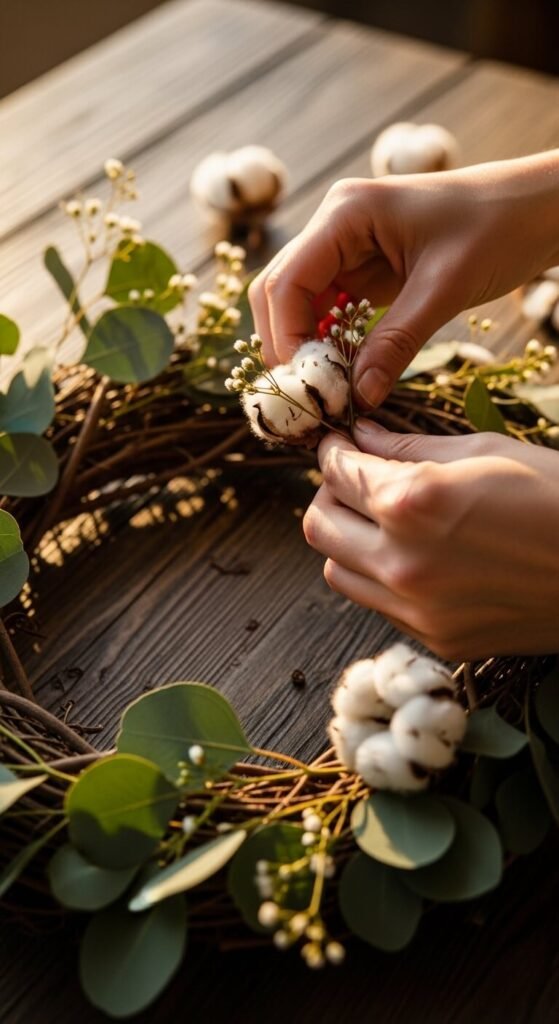
Cotton stems are an absolute farmhouse staple. Tuck 3–5 stems in clusters rather than spreading them out evenly. Grouping creates visual weight and makes the wreath look intentional rather than scattered.
Follow the same approach with dried wheat or lavender — small bundles nestled together rather than single stems dotted around.
Pro tip: Step back every few minutes and look at the wreath from a distance. What looks balanced up close can feel lopsided from across the room.
Step 3 — Tie Your Ribbon Bow
A farmhouse wreath isn’t complete without a generous burlap or linen bow. Here’s a simple method that actually works:
Cut about 36 inches of ribbon
Make two loops of equal size in the center
Pinch the middle and wrap a short piece of wire tightly around it
Fan and adjust the loops until they look full and even
Attach to the top or bottom of your wreath with the wire tails
Don’t try to make the bow too perfect — a slightly asymmetrical bow reads as charming, not sloppy.
Step 4 — Finish with Small Details
The difference between a good wreath and a great wreath is always the details.
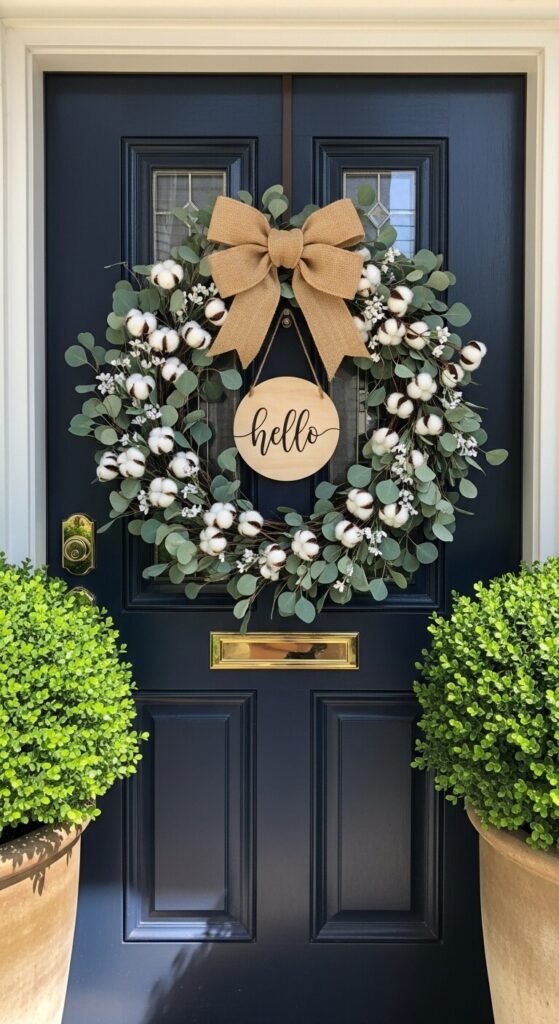
Tuck in a small wooden “hello” sign or a tiny galvanized star
Add a few dried orange slices for warmth and texture
Use your hot glue gun to secure any stems that feel loose
Fluff and bend stems slightly so everything looks naturally dimensional
Caring for Your Wreath
Farmhouse wreaths are low-maintenance, but a little care keeps them looking fresh longer:
Keep out of direct rain — a covered porch is ideal
Spritz dried elements lightly with water once a week to prevent excessive brittleness
Refresh the ribbon each season for an instant update without remaking the whole wreath
You’ve Got This
Making a farmhouse wreath is one of those projects that rewards you far beyond the effort you put in. It’s meditative, creative, and the result is something genuinely beautiful that greets you (and your guests) every single day.