There’s something quietly magical about a terrarium — a tiny living world you can hold in your hands. If you’ve been looking for a weekend project that’s equal parts creative and calming, building a spring terrarium with succulents and soft green moss is exactly what you need. The best part? You don’t need a green thumb to pull it off.
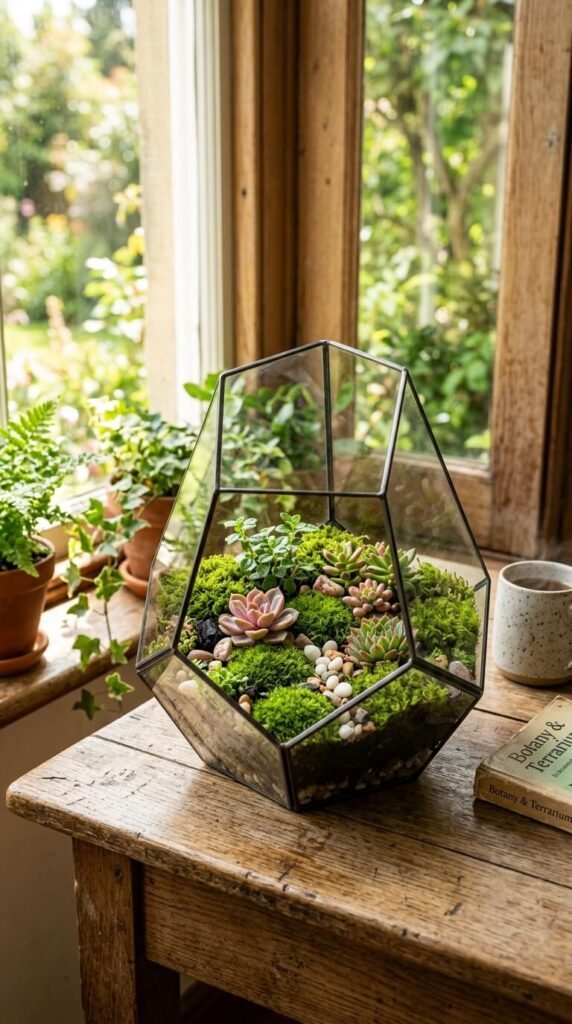
Let’s walk through everything you need to know to build your own from scratch.
What You’ll Need Before You Start
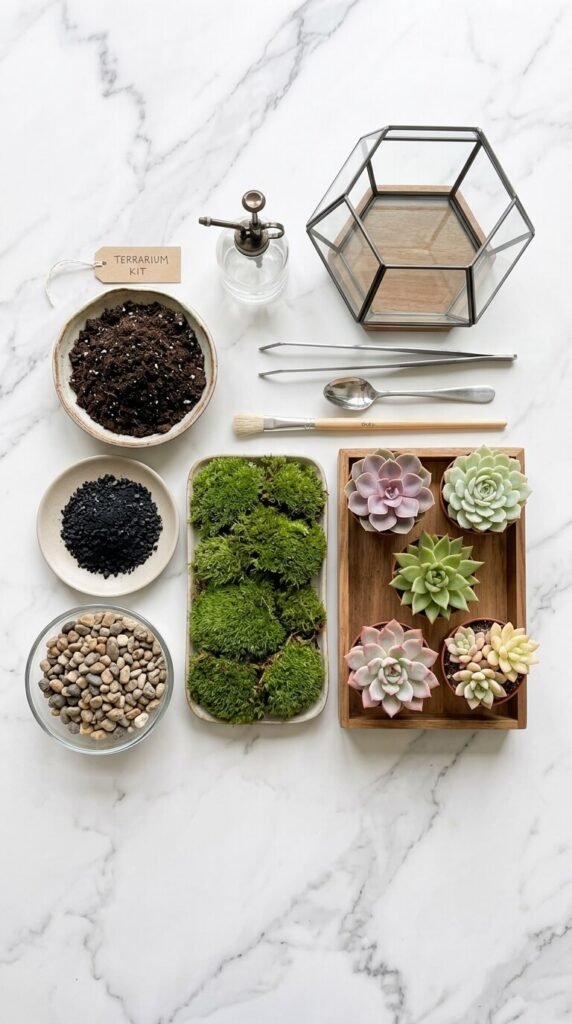
Gathering your supplies ahead of time makes the whole process smoother. Here’s a simple checklist:
- Glass container — an open bowl, geometric terrarium, or repurposed fish tank all work beautifully
- Succulent potting mix — regular soil holds too much moisture for succulents
- Pea gravel or small stones — for drainage at the bottom
- Activated charcoal — keeps things fresh and odor-free
- Sheet moss or cushion moss — look for live or preserved varieties at garden centers
- 3–5 small succulents — mix colors and textures for visual interest
- Tweezers or a long spoon — for placing plants in tight spaces
- A spray bottle — for gentle watering
You can find most of these at your local garden center or craft store. Succulents like echeveria, haworthia, and sedum are ideal spring picks — they’re compact, colorful, and incredibly forgiving.
Building Your Base Layers
Think of your terrarium like a tiny ecosystem. The layers you build at the bottom aren’t just pretty — they’re functional.
Step 1: Add your drainage layer. Pour about an inch of pea gravel or small stones into the bottom of your container. This prevents water from pooling around the roots.
Step 2: Sprinkle activated charcoal. A thin layer (about ½ inch) on top of the gravel keeps the environment clean and prevents bacteria from building up over time.
Step 3: Add potting mix. Scoop in 2–3 inches of succulent potting mix. You want enough depth that your plants have room to root comfortably.
Planting Your Succulents
Now comes the fun part. Before you place anything permanently, lay your succulents on top of the soil and experiment with arrangements. Think about height variation — taller plants toward the back, trailing or rosette-shaped ones toward the front.
When you’re happy with the layout:
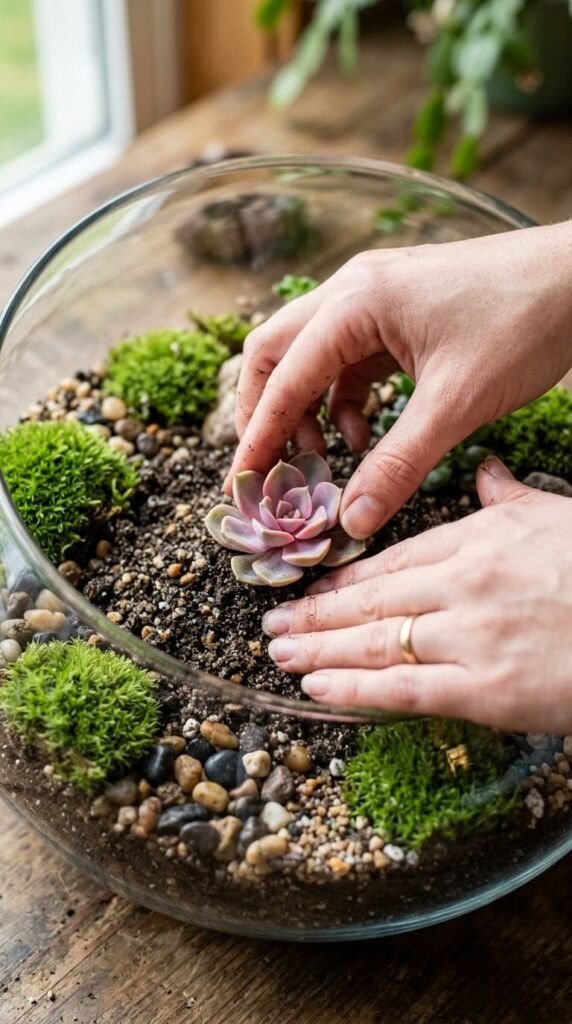
- Use your fingers or tweezers to create small holes in the soil
- Gently remove each succulent from its nursery pot, loosening the roots slightly
- Nestle each plant into its hole and press the soil lightly around the base
- Leave a little breathing room between plants — they’ll grow into the space
Don’t overcrowd. Succulents need airflow, and a slightly minimalist arrangement almost always looks more elegant anyway.
Adding Moss for That Lush Spring Feel
Moss is where your terrarium goes from “nice” to stunning. It fills in the gaps between plants, adds rich texture, and gives the whole thing that fresh, forest-floor energy that’s so popular on Pinterest right now.
Press small pieces of sheet moss or cushion moss around the base of your succulents and along the edges of the container. Use your fingers or tweezers to tuck it in snugly. You want it to look natural — patchy and organic, not perfectly uniform.
A mix of moss types adds even more depth. Try pairing flat sheet moss with a rounder, bubblier cushion moss for contrast.
Caring for Your Terrarium After It’s Built
Succulents and moss have slightly different needs, so balance is key:
- Light: Place in bright, indirect sunlight. Avoid harsh afternoon sun that can scorch leaves.
- Watering: Less is more. Water the succulents at their base every 10–14 days. Lightly mist the moss every few days to keep it green.
- Airflow: Keep open terrariums in well-ventilated spots. Closed containers trap humidity, which succulents dislike.
- Maintenance: Remove any yellowing leaves promptly. If moss starts to brown, a gentle mist usually brings it back.
Your Little World Is Ready
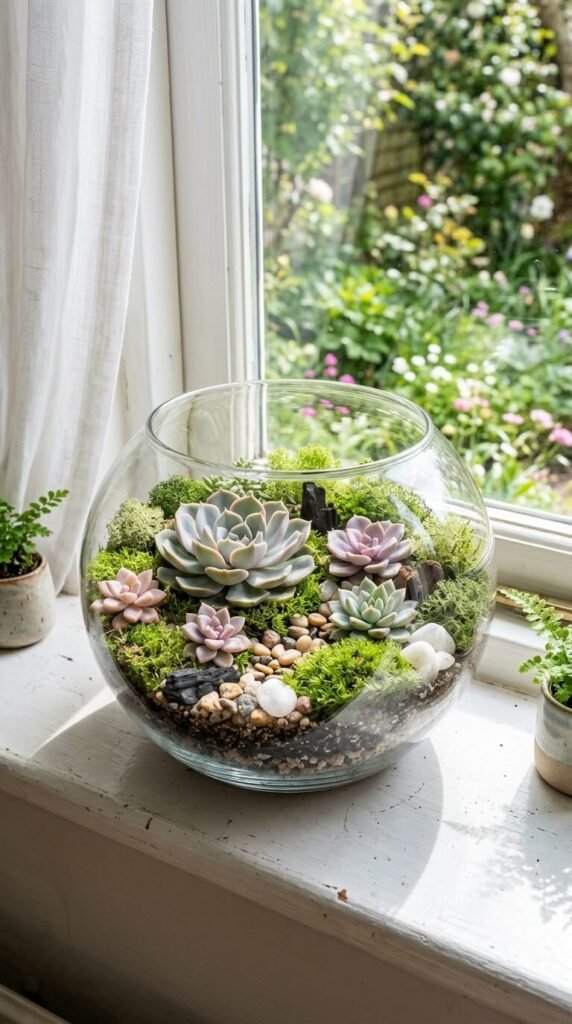
Making a terrarium with spring succulents and moss is one of those projects that looks far more complicated than it actually is. In under an hour, you can create something genuinely beautiful — a living decoration that brings a little bit of nature indoors all season long.
Whether you’re making one for yourself or gifting it to someone who needs a little green in their life, this is a project worth keeping in your back pocket.
Save this article for your next creative weekend — and tag your finished terrarium when you share it! 🌿