Spring is just around the corner, and if your potting bench looks like a tornado hit a garden center, you’re not alone. A cluttered workspace doesn’t just slow you down — it makes gardening feel like a chore instead of a joy. The good news? A well-organized potting bench can completely transform your planting routine, saving you time, reducing stress, and actually making you excited to get your hands dirty.
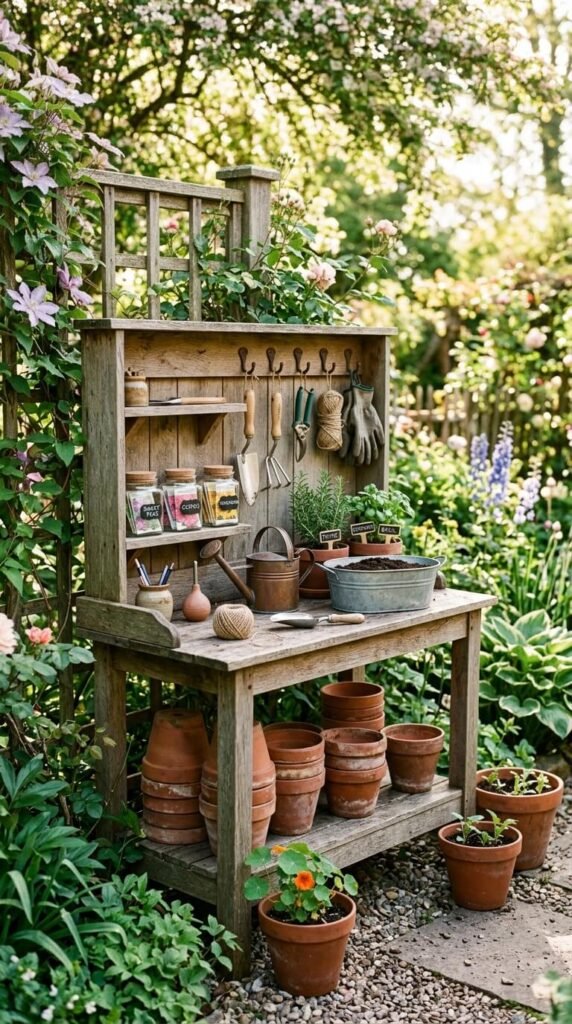
Let’s get that bench ready for your best planting season yet.
Clear Everything Off First
Before you organize, you have to de-organize. Pull everything off your potting bench completely — yes, everything. Toss out dried-up soil bags, cracked pots, and tools you haven’t touched in two years. Wipe down the surface with a damp cloth and let it dry fully.
This reset moment is more important than people think. Starting fresh gives you a blank canvas and helps you see exactly what you’re working with.
Quick declutter checklist:
- Toss broken or cracked containers
- Discard old, compacted potting soil (it loses nutrients over time)
- Clean rusty tools or recycle them
- Consolidate half-empty fertilizer bags into one container
Sort Your Supplies Into Zones
Think of your potting bench like a kitchen counter — everything should have a dedicated zone based on how often you use it. This is the single biggest game-changer for efficiency.
The three essential zones:
- Active planting zone — the center of your bench, kept completely clear for working
- Supply zone — one side for soil, amendments, and fertilizers
- Tool zone — the other side (or above, on hooks) for hand tools, gloves, and twine
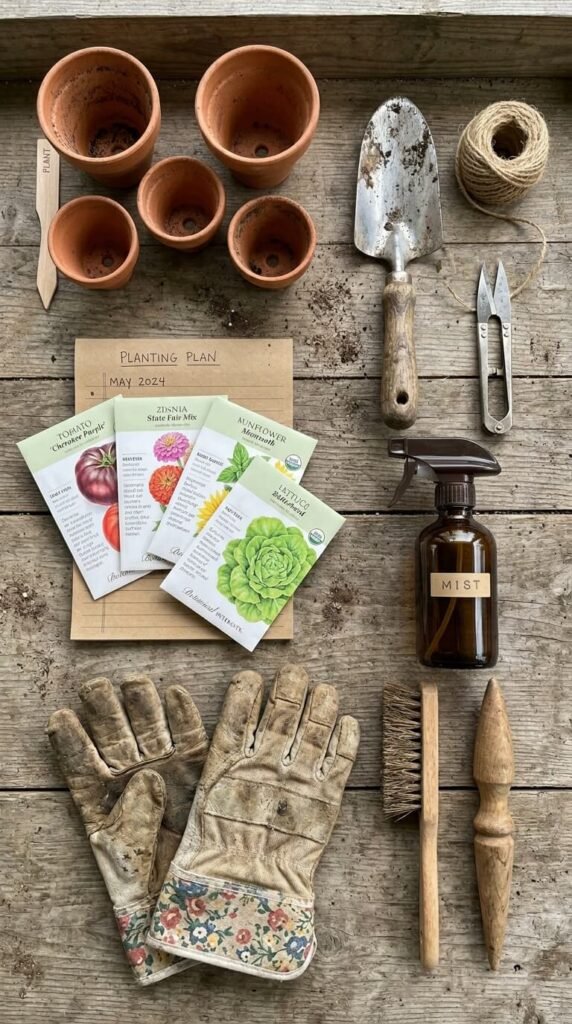
Keep your most-used items within arm’s reach. Anything you only use occasionally can go on a shelf below or in a nearby bin.
Use Vertical Space Wisely
Most gardeners waste the best real estate at their potting bench — the wall or pegboard right behind it. Going vertical instantly doubles your storage without adding a single inch to your footprint.
Smart vertical storage ideas:
- Mount a pegboard and hang hooks for trowels, pruners, and scissors
- Install narrow shelving above the bench for seed packets and small pots
- Use magnetic strips to hold small metal tools
- Hang a canvas shoe organizer for gloves, labels, and twist ties
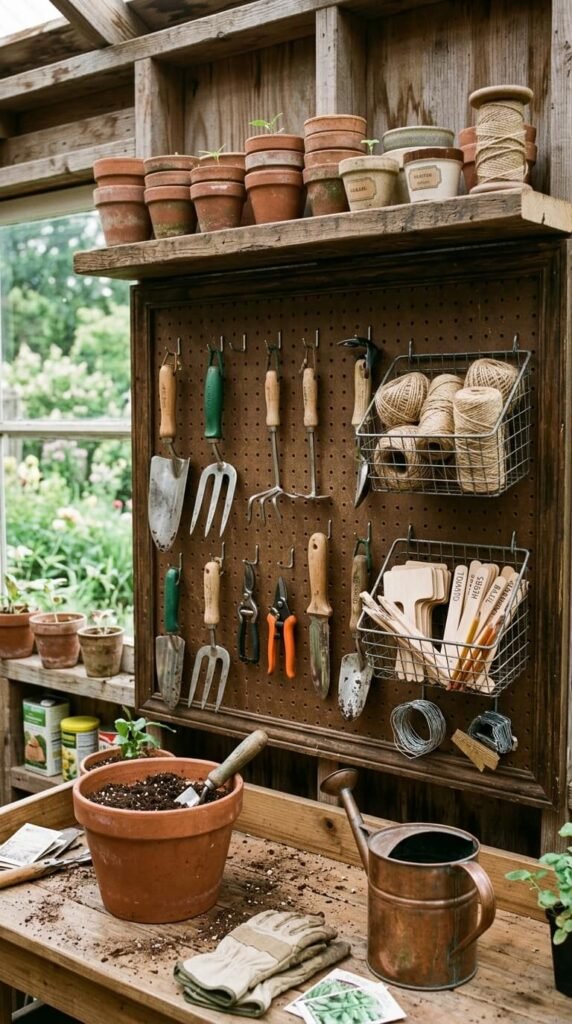
This keeps your work surface open while making sure every tool has a visible, easy-to-grab home.
Label and Containerize Everything
Loose seed packets, random bags of amendments, and scattered pots are the enemy of efficiency. Containerizing your supplies is what separates a beautiful potting bench from one that’s actually functional.
- Store seeds in a small divided container or recipe card box, organized by plant type
- Use mason jars or clear bins for perlite, sand, and compost
- Label everything — including the obvious stuff. You’ll thank yourself mid-planting when your hands are covered in dirt
- Stack pots by size in one corner so you’re never hunting for the right fit
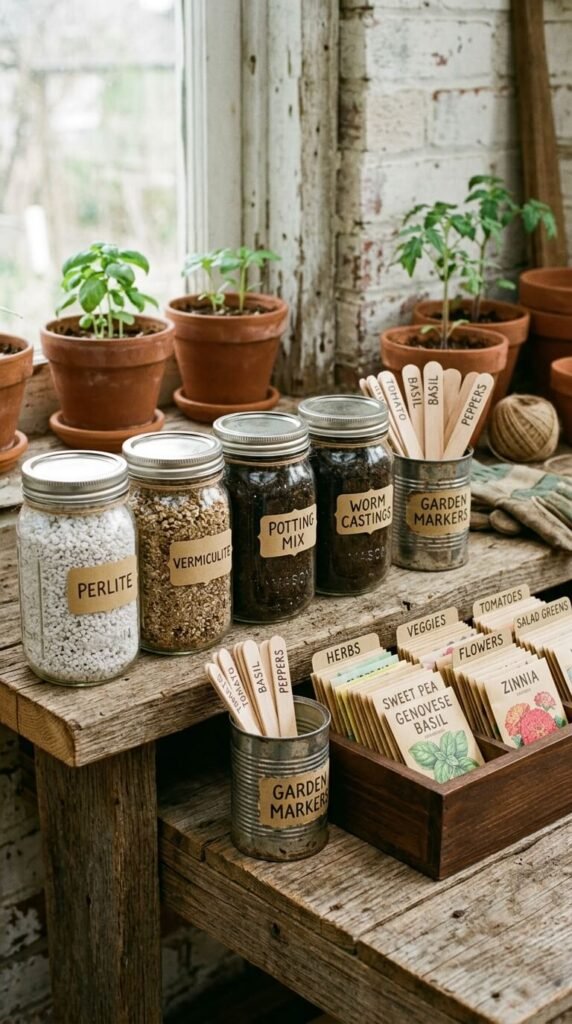
Clear containers are your best friend here — you can see what’s inside at a glance without opening a single lid.
Add the Little Details That Make It Enjoyable
Once the function is sorted, add a few personal touches that make your potting bench a place you want to spend time.
- A small hook for a reusable water bottle or mug
- A notepad and pencil for jotting down planting dates and observations
- A simple tray to catch soil spills and keep the surface cleaner longer
- A small plant or herb pot nearby to make the space feel alive
These small additions take five minutes but make a big difference in how much you enjoy your time out there.
Your Most Productive Spring Starts Here
An organized potting bench isn’t just about aesthetics — it’s about removing every little friction point that stands between you and actually getting your plants in the ground. When your tools are where you expect them and your supplies are clearly labeled and within reach, planting stops feeling overwhelming and starts feeling energizing.
Save this guide and come back to it every spring — a quick 30-minute reset at the start of the season is all it takes to keep your potting bench working hard for you all year long. Now go get those seeds in the ground! 🌱