If you’ve ever walked past a beautifully styled decorative ladder and thought, “How do they make it look so effortless?” — you’re not alone. A spring ladder is one of the most underrated décor pieces you can own. It’s versatile, affordable, and transforms dead vertical wall space into a stunning focal point almost instantly. Whether you’re leaning it in a cozy bedroom corner or making it the star of your entryway, the right styling can make all the difference.
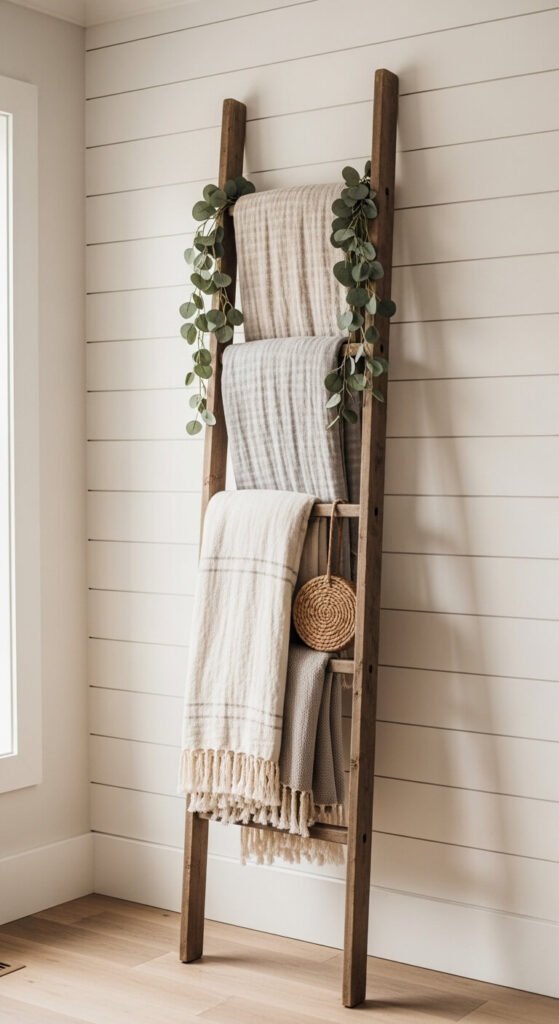
Why a Spring Ladder Works So Well for Vertical Displays
Most rooms suffer from the same design flaw: beautifully styled surfaces but completely ignored vertical space. A spring ladder solves this problem naturally. Its tiered rungs act like floating shelves — without any drilling, hardware, or commitment.
In spring specifically, the ladder becomes a powerful décor tool because:
- Vertical displays draw the eye upward, making rooms feel taller and more airy.
- Layering textures and seasonal colors is easy when you have multiple rungs to work with.
- It’s completely rearrangeable — swap pieces out as the season evolves without touching a single nail.
Step 1: Choose the Right Ladder Style and Placement
Before you drape a single bloom or blanket, placement matters enormously. The ladder should lean at a slight angle (not perfectly flat against the wall) to create depth and dimension.
Best spots for a spring ladder:
- A blank living room wall beside a sofa or armchair
- An entryway corner to greet guests with a seasonal vibe
- A bedroom wall for a soft, romantic look
- A bathroom corner for towels and greenery
As for the ladder itself, light-toned wood, whitewashed finishes, or natural bamboo all feel perfectly spring-ready. Dark or painted ladders work too — just balance them with lighter textiles and soft florals.
Step 2: Layer Your Textiles from Bottom to Top
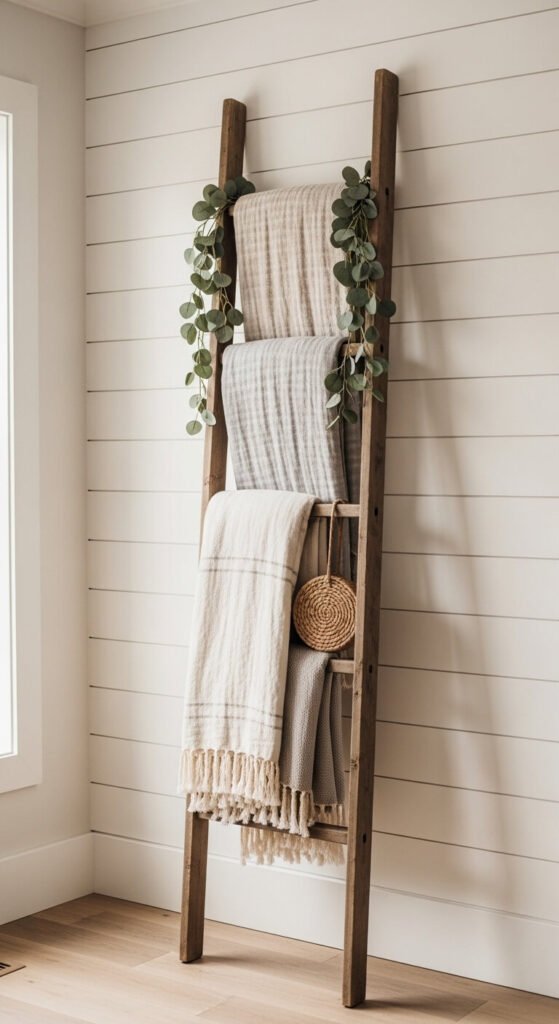
Think of your ladder like a vertical wardrobe. The trick is to vary the weight, color, and texture of textiles across the rungs so it looks intentional — not stuffed.
- Bottom rungs: Heavier, chunkier throws or folded quilts. These anchor the display visually.
- Middle rungs: Lighter linen scarves, a loosely draped cotton blanket, or a woven wall hanging.
- Top rungs: Something airy — a single piece of gauzy fabric, dried pampas grass, or a thin macramé piece.
Pro tip: Drape textiles slightly unevenly — let one end hang a little lower than the other. It reads as casual and styled, never stiff.
Step 3: Add Botanicals for That Fresh Spring Energy
This is where your ladder truly comes alive. Spring styling is all about bringing the outdoors in, and botanicals are your best friend here.
Great options for spring ladder styling:
- Fresh eucalyptus or dried lavender bundles tied with twine
- Small bud vases hung from rungs or balanced on the side rails
- Faux or dried flower stems woven loosely through the rungs
- Trailing ivy or pothos in a small hanging planter near the top
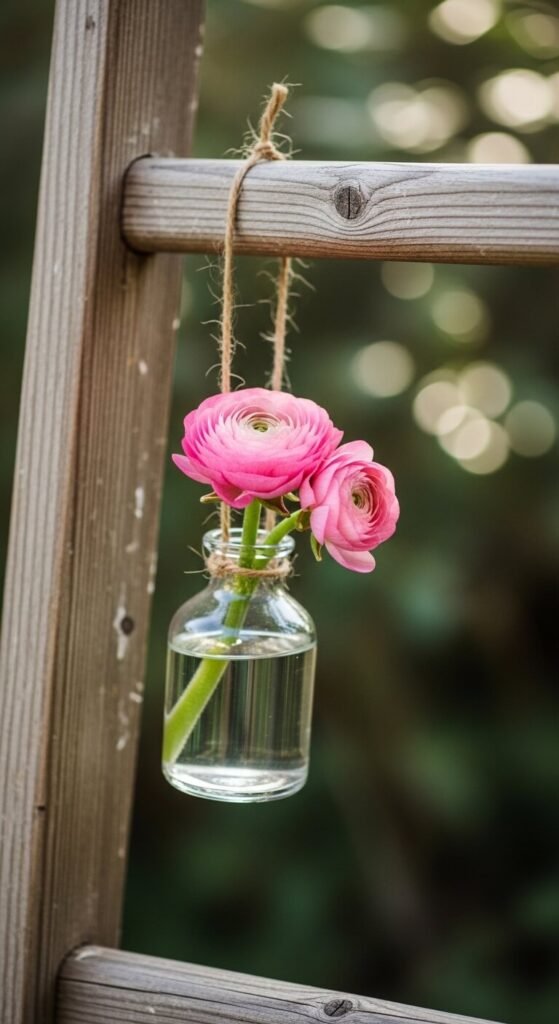
Don’t over-fill every rung — negative space is part of the design. Let some rungs breathe.
Step 4: Ground the Base with a Styled Vignette
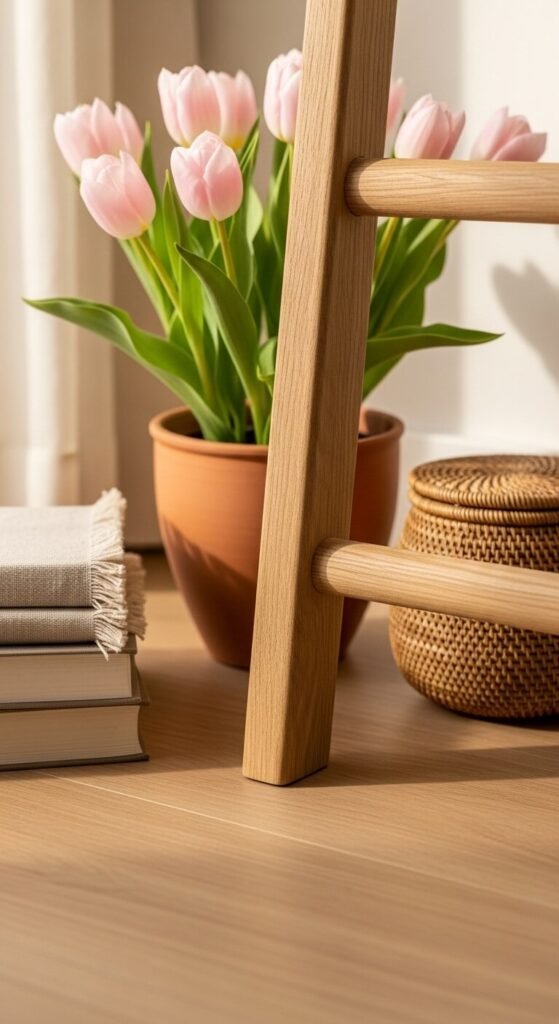
The area at the foot of the ladder is prime real estate. A grounded base makes the whole display feel finished rather than like something you just leaned against a wall.
Try grouping:
- A stack of coffee table books or vintage hardcovers
- A potted plant or lantern
- A woven basket holding rolled towels or extra blankets
- A small tray with candles and a sprig of greenery
Keep it to three items maximum at the base — the “rule of three” works beautifully here.
Step 5: Finish with a Signature Seasonal Touch
Every great styled ladder has one element that makes you stop and say “oh, that’s the thing.” For spring, this could be:
- A hand-lettered cotton banner that says something simple like “bloom”
- A cluster of pastel Easter eggs nestled in a small basket on a rung
- Fresh-cut lilac branches woven loosely through the top rungs
- A string of soft warm fairy lights draped down for evening ambiance
This final layer is your personality showing up in the display. Don’t skip it.
The Takeaway
A spring ladder isn’t just décor — it’s a design strategy. It fills vertical space, invites texture and color, and gives you a flexible canvas you can refresh every few weeks as the season shifts. Start with good placement, build your layers with intention, and don’t forget to ground the base.
Save this guide for your next spring refresh — and share it with a fellow décor lover who still has blank wall space waiting to bloom! 🌿