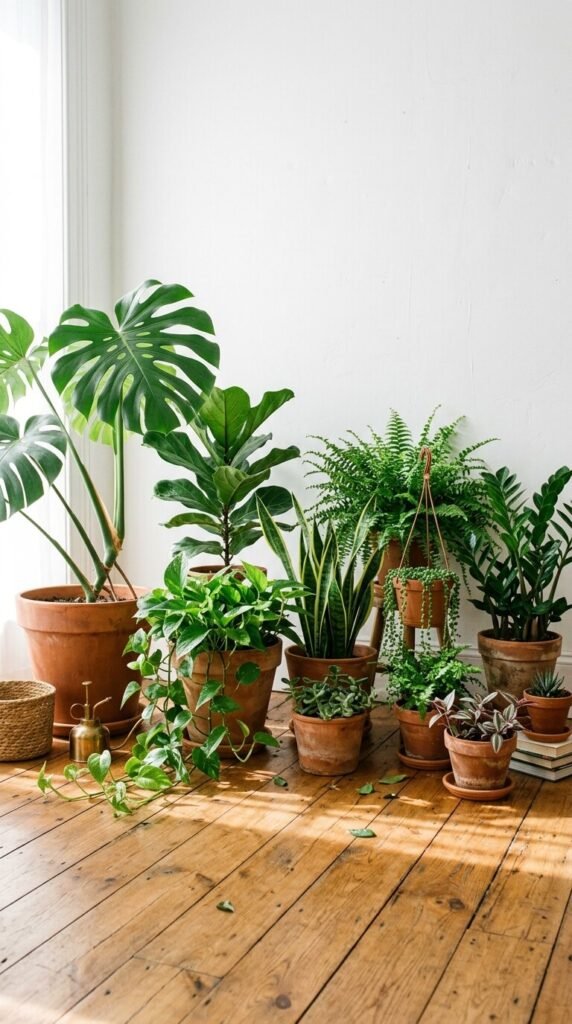
There’s something almost magical about a single potted plant — but a group of them? That’s where the real drama begins. Whether you’re working with a sun-drenched windowsill, a bare patio corner, or an empty living room wall, arranging potted plants in clusters transforms ordinary greenery into a living, breathing design statement. The secret isn’t just owning beautiful plants — it’s knowing how to style them together.
Ready to turn your plant collection into something scroll-stopping? Let’s dig in.
Start with the Rule of Odd Numbers
Designers swear by this one: odd-numbered groupings always look more natural and visually interesting than even ones. A trio of plants, five pots clustered together, or even seven scattered across a shelf — these arrangements feel organic rather than stiff or overly symmetrical.
- Start with 3 plants as your base group
- Build outward in clusters of 3 or 5 if you have a larger space
- Avoid placing two identical pots directly side by side
Think of it like arranging candles on a mantle — three always feels more intentional than two.
Play with Height and Scale
Flat arrangements where every plant sits at the same level look flat — because they are. Varying heights create visual flow and draw the eye upward, making your space feel taller and more dynamic.
Here’s how to build levels:
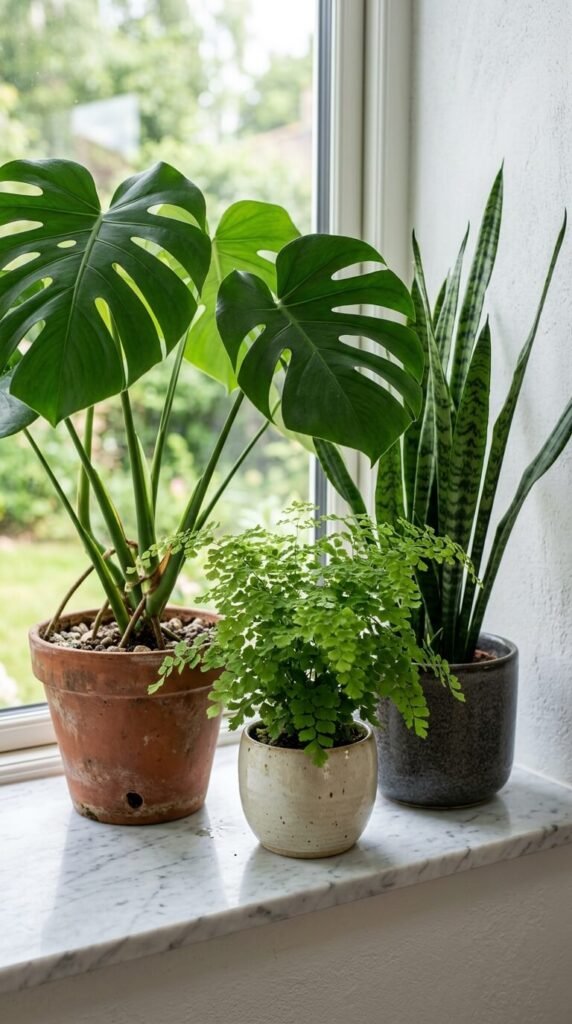
- Tall anchor plant — a fiddle leaf fig, snake plant, or olive tree acts as the centerpiece
- Mid-height fillers — pothos, peace lilies, or rubber plants round out the middle
- Low ground-level plants — trailing succulents, ferns, or small cacti sit at the base
No plant stands? No problem. Stack books, use overturned pots, or grab a few wooden crates from a thrift store.
Mix Textures and Leaf Shapes
A grouping of all round-leafed plants looks monotonous. A grouping of all spiky plants looks harsh. The magic is in the contrast.
Pair plants with different textures and silhouettes to create natural visual tension that keeps the eye moving:
- Broad + narrow: Monstera leaves alongside a tall, slim dracaena
- Soft + structural: Fluffy ferns beside a rigid cactus
- Trailing + upright: A cascading pothos flowing next to a stiff snake plant
The same principle applies to pot shapes — mix a round terracotta pot with a sleek square planter and a woven basket for a curated, collected-over-time look.
Stick to a Cohesive Color Palette for Your Pots
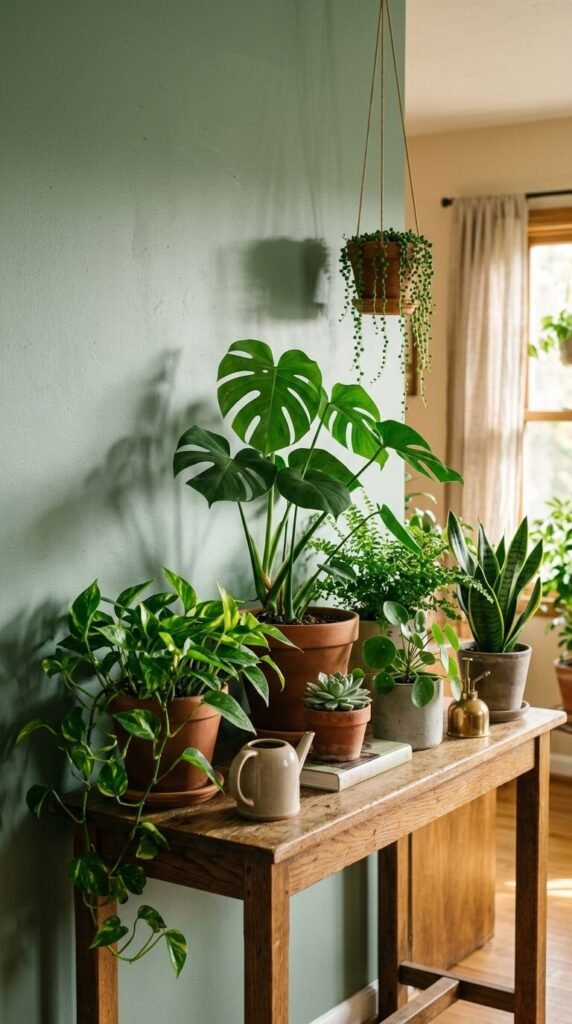
Plants come in endless shades of green — so let your pots do the color storytelling. Choosing pots that share a cohesive palette pulls the whole arrangement together without looking chaotic.
Some palettes that always work:
- Neutral tones: White, cream, beige, and terracotta — timeless and versatile
- Earthy bohemian: Rust, ochre, dark brown, and matte black
- Modern minimalist: All-white or all-black pots with clean lines
You don’t need to be matchy-matchy — slight variations within one palette actually look more intentional. Just avoid mixing too many unrelated colors in one cluster.
Use Your Background as Part of the Design
Your wall, shelf, or floor is part of the composition. Light, texture, and backdrop color all affect how your plant group reads.
A few tricks:
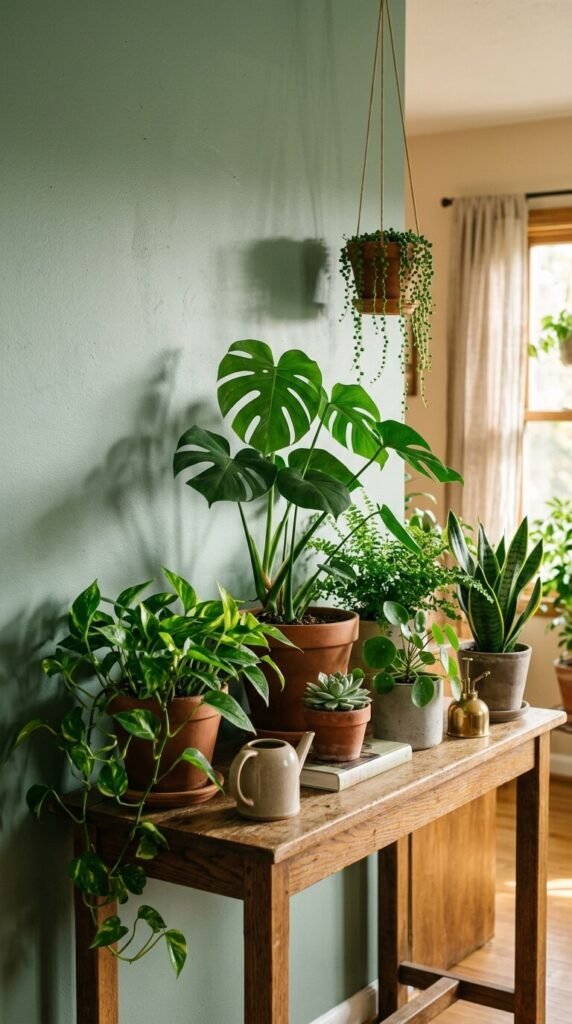
- Style plants against a light wall to make dark green foliage pop
- Use a dark or moody backdrop to make lighter, variegated plants glow
- Add a decorative element nearby — a candle, a small sculpture, or a stack of books — to make the vignette feel complete
Final Thoughts
Styling potted plants in groups isn’t about following rigid rules — it’s about layering height, texture, and personality until the arrangement feels alive. Start small with three plants, experiment with levels, contrast your leaf shapes, and let your pots tell a cohesive color story.
The best part? You can keep rearranging until it feels exactly right. Plants are forgiving, and so is good design.
Save this guide for your next plant styling session — and tag your grouped plant arrangements to inspire others! 🌿